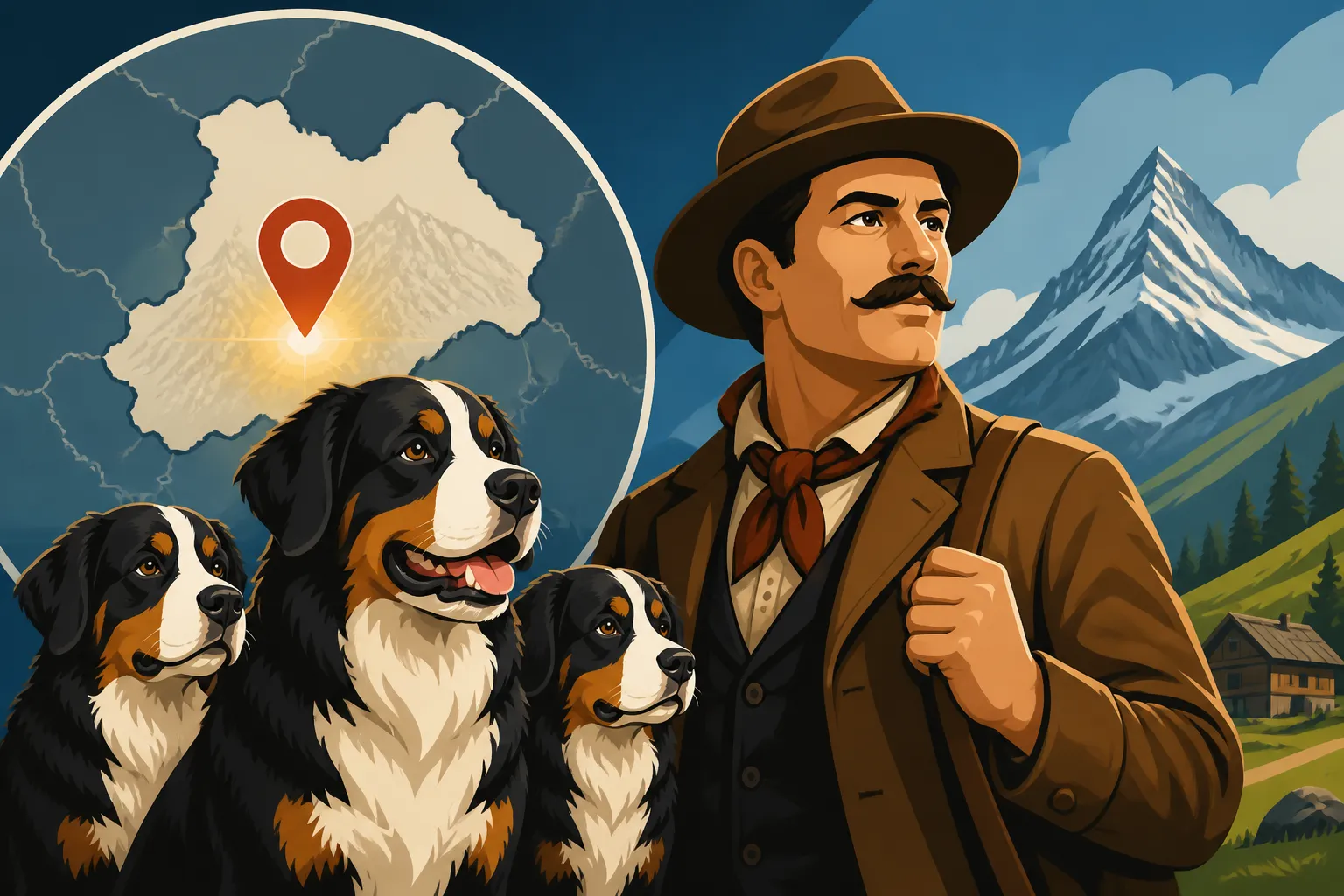
Where Schertenleib Found the Last Bernese Mountain Dogs
For many of us who adore Bernese Mountain Dogs, there's a deep love for their gentle nature, striking appearance, and the way they seem to understand us without a word. But what many don't realize is that this cherished breed almost vanished from existence. It’s a sobering thought, and it naturally leads to questions about how they survived and who played a pivotal role in their preservation. This guide will take you back in time to explore the incredible story of Franz Schertenleib and his tireless quest to find and save the last of these magnificent dogs.
The Bernese Mountain Dog's Brush with Extinction
It's hard to imagine a world without our beloved Berners, but there was a period when these gentle giants were on the brink. Their story isn't just about a beautiful dog; it's about a resilient breed, the dedication of a few passionate individuals, and the changing landscape of Swiss farm life.
A Fading Working Dog Tradition
For centuries, Bernese Mountain Dogs, or their ancestors, were an indispensable part of farm life in the Swiss Alps. They herded cattle, guarded property, and most famously, pulled carts laden with milk, cheese, or other goods to market. Imagine the bustling village squares, with these strong, calm dogs confidently navigating the crowds, their tricolor coats gleaming. They were more than just animals; they were partners in livelihood, woven into the fabric of daily existence. However, as the 19th century drew to a close and the 20th century dawned, modernization began to creep into rural Switzerland. Roads improved, railways expanded, and more efficient forms of transport, like motor vehicles, started replacing the traditional dog carts. The need for a large, strong carting dog diminished significantly. Farmers, facing economic pressures, started opting for smaller, less expensive dogs or simply doing without a dedicated carting breed altogether. It was a gradual shift, but one that had a profound impact on the numbers of these working dogs.
As their traditional roles dwindled, so did their population. Breeding became less focused on specific working traits and more haphazard. There wasn't a strong, unified effort to preserve them as a distinct breed because, frankly, they were just "farm dogs" to many, not something worth special attention or formal breeding programs. This lack of concerted effort meant that their numbers continued to decline, and their distinct characteristics began to blur through crossbreeding with other farm dogs or even stray dogs. The pure strains, the ones with the quintessential Berner look and temperament we recognize today, were becoming harder and harder to find. It was a classic case of an invaluable part of agricultural heritage being quietly phased out by progress, much like old farming methods or traditional crafts.
The Dürrbachler Before Schertenleib
Before they were widely known as Bernese Mountain Dogs, these dogs were often referred to by regional names, one of the most prominent being the "Dürrbachler" or "Dürrbächler," after the small village of Dürrbach in the Canton of Bern. This gives you a clear indication of just how localized and specific their presence was. They weren't a recognized, widely distributed breed with a studbook and formal standards; they were simply the local dogs of the Dürrbach valley and surrounding areas, valued for their utility on farms and in dairies. These Dürrbachlers shared many characteristics with the Bernese Mountain Dog we know today – their striking tricolor coats, their sturdy build, and their calm, dependable temperament. However, there was likely more variation in their appearance and size than what the breed standard would eventually dictate.
These dogs were robust and adaptable, built for the harsh Alpine climate and demanding farm work. They were loyal companions to the farmers, often sleeping in the barn to help guard livestock or pulling heavy loads without complaint. Think of a farmer, rising before dawn, heading out to the milking shed, and his Dürrbachler already there, ready for the day's tasks. They were part of the family, but their existence was purely functional. There was no "dog show circuit" for these hardy working dogs; their worth was measured in their ability to perform their duties efficiently. Without formal recognition or a dedicated breeding community, their future was entirely dependent on their continued utility, which, as we discussed, was rapidly declining. They were a precious, living piece of Swiss heritage, unaware of the threat looming over their very existence. The story of The Dürrbach Valley and the Dogs Named After It really highlights this regional connection.
The Urgency of Preservation
By the late 19th century, the alarm bells were truly beginning to ring for canine enthusiasts in Switzerland. They saw the rapid disappearance of several native Swiss breeds, including the grand Dürrbachler. It wasn't just a sentimental loss; it was the potential loss of unique genetic traits, historical working abilities, and a living connection to Switzerland's agricultural past. There was a growing movement among a small group of dog lovers, breeders, and even some professors, who understood the importance of preserving these indigenous breeds before it was too late. They recognized that once a breed's distinct characteristics were lost to indiscriminate crossbreeding, they could never truly be recreated. It was a race against time, a desperate attempt to gather the remaining examples and establish a foundation for future breeding.
This was the atmosphere into which Franz Schertenleib stepped. He wasn't a wealthy academic or a celebrated dog show judge; he was a modest innkeeper and a passionate enthusiast from the region who deeply loved these Dürrbachler dogs. He saw firsthand how their numbers were dwindling and felt a profound sense of urgency to act. Imagine seeing a cherished part of your local culture slowly vanish, day by day. That sense of impending loss fueled his personal mission. He realized that if someone didn't actively seek out and document the surviving dogs, their unique bloodlines would be diluted or disappear entirely. His efforts weren't driven by profit or fame, but by a genuine, heartfelt desire to save a breed he knew was special and irreplaceable. This critical period really emphasizes why the Bernese Mountain Dog nearly died out.
Franz Schertenleib: The Unsung Hero
In the annals of Bernese Mountain Dog history, Franz Schertenleib stands out as a true hero. Without his dedication, it's highly probable that the breed we know and love today would be nothing more than a historical footnote. He wasn't looking for glory; he was simply looking for dogs.
Schertenleib's Passion for the Dürrbachler
Franz Schertenleib wasn't just casually interested in the Dürrbachler; he had an undeniable, deeply ingrained passion for them. As an innkeeper in the region, he would have seen these dogs regularly, working alongside farmers, pulling their carts, and acting as loyal guardians. He understood their intrinsic value, not just as laborers, but as companions with unique personalities and a noble presence. It wasn't simply a matter of preserving a breed; it was about safeguarding a piece of his homeland's living heritage. He likely developed close relationships with many of the farmers in his area, giving him an intimate understanding of the dogs' temperaments, working styles, and local lore.
His passion went beyond mere admiration. It translated into tangible action. He didn't just talk about the problem; he set out to solve it. This required considerable personal sacrifice – time, effort, and likely his own resources. He was driven by an understanding that these dogs possessed qualities worth saving: their intelligence, their strength, their calm demeanor, and their beautiful tricolor coats. He saw beyond the common farm dog and recognized the potential for a magnificent breed. This deep personal connection is what sets him apart and made his mission so effective. He was the right person, in the right place, at the exact moment the breed needed a champion. Indeed, it's often said that he was The Innkeeper Who Saved the Bernese Mountain Dog.
His Quest Across the Swiss Countryside
Schertenleib's quest was far from a leisurely stroll through picturesque meadows. It was a rigorous, often challenging endeavor that saw him traverse the rugged Swiss countryside, often on foot, seeking out any remaining examples of the old Dürrbachler dogs. He wasn't looking for just any tricolor dog; he was searching for those that embodied the specific characteristics – the build, coat, markings, and temperament – that defined the traditional working dogs of the region. This meant visiting countless farms, talking to farmers, asking questions, and patiently observing dogs that might fit the bill. Imagine him walking from hamlet to hamlet, perhaps with a trusty local guide or even a dog of his own, his keen eye scanning for the distinctive features.
He relied heavily on word-of-mouth, following up on every lead, no matter how faint. A farmer in one valley might mention an uncle in another who had a good "old type" dog, and Schertenleib would follow that thread. He had to convince skeptical farmers, who saw their dogs primarily as livestock, of the importance of what he was doing. He was essentially creating a grassroots registry, mentally noting or perhaps even sketching the dogs he encountered, assessing their health, temperament, and adherence to the type he remembered. It was meticulous, painstaking work, driven by pure dedication rather than any structured funding or official commission. This kind of hands-on, door-to-door approach was crucial in an era before widespread breed clubs and formalized records.
The Specific Valleys and Farms
While Schertenleib's search took him far and wide, his primary focus remained on the heartland of the Dürrbachler – the valleys and farmsteads surrounding the town of Dürrbach, which is now part of Riggisberg, in the Canton of Bern. This specific area was historically known for these type of farm dogs, and it was here that he stood the best chance of finding pure, undiluted bloodlines. He understood that isolation often preserved older types of animals, and the more remote farms nestled in the Alpine foothills were precisely where he would find dogs that hadn't been extensively crossbred with newer, more fashionable breeds.
He visited remote dairy farms, secluded homesteads, and small villages, seeking out dogs that were still actively engaged in their traditional roles. Picture him discussing the merits of a particular bitch with an elderly farmer, or observing a powerful male dog pulling a small cart of goods. These were not pristine show dogs; they were hardy, working animals, often with weathered coats and strong, muscled bodies, reflecting a life of labor outdoors. He was essentially creating a living census of the breed, documenting their existence and laying the groundwork for what would eventually become the official breed standard. His focus on these specific, historically significant locations was paramount to his success in gathering a viable foundation stock. His journey laid the groundwork for the modern breed standard, which is covered in detail in The Bernese Mountain Dog Breed Standard.
The 'Last' Bernese Mountain Dogs: What Schertenleib Found
Schertenleib's tireless efforts eventually bore fruit, though the numbers were dishearteningly small. He didn't find hundreds of dogs; he found a precious few, enough to ignite hope and form the nucleus of what would become the modern Bernese Mountain Dog breed.
Characteristics of the Rediscovered Dogs
The dogs Schertenleib rediscovered were true to the working farm dog type. They possessed a robust and sturdy build, essential for a life of pulling carts and navigating challenging terrain. These were not delicate creatures; they were powerful and substantial, reflecting their purpose. Their coats were, of course, the distinctive tricolor, featuring deep black, rust (or tan) markings, and crisp white blaze and chest markings. This striking coloration was one of the defining features that set them apart. Imagine the contrast against the green pastures and snowy peaks – truly a magnificent sight.
Beyond their physical appearance, their temperament was equally vital. Schertenleib sought out dogs that were calm, good-natured, and dependable. These were essential traits for dogs working closely with livestock and children on a busy farm. They needed to be alert but not overly aggressive, protective yet gentle. A skittish or overly sharp dog wouldn't have lasted long in a working environment. They had a natural intelligence and a willingness to please, making them trainable for their varied tasks. These inherent qualities, observed by Schertenleib, became the cornerstone of the breed's character, traits that enthusiasts still cherish today. When you interact with a Berner today, you're experiencing traits that Franz Schertenleib valued so highly.
The Importance of the Dürrbach Area
It's impossible to overstate the importance of the Dürrbach area as the cradle of the Bernese Mountain Dog breed. While Schertenleib ventured into surrounding regions, it was in and around Dürrbach that he found the most consistent and pure examples of the old "Dürrbachler." This particular valley acted as a natural sanctuary, its relative isolation helping to preserve the original type of dog. Farmers in this area, perhaps more resistant to rapid change or simply more deeply rooted in tradition, continued to keep these large, tricolored farm dogs, even as their numbers dwindled elsewhere.
These Dürrbach dogs became the genetic cornerstone. They provided the essential breeding stock needed to re-establish and formalize the breed. Without the dedicated farmers in this specific region who kept these dogs, even in declining numbers, Schertenleib's mission might have been impossible. The community, even unknowingly, played a crucial role in safeguarding the future of the breed. This concentrated presence meant that Schertenleib could gather enough individuals to form a viable breeding population, minimizing the impact of genetic bottlenecks and ensuring a good starting point for diversity. It truly was a localized effort with a global impact. This regional origin is why we talk about The Swiss Valley the Bernese Mountain Dog Comes From.
Beyond Dürrbach: Expanding the Search
While Dürrbach was pivotal, Schertenleib's search wasn't exclusively limited to this single valley. To ensure a broader genetic base and prevent inbreeding issues, he recognized the need to find dogs from other areas that still retained the desired Dürrbachler characteristics. He extended his search into neighboring cantons and valleys within the larger Bernese Oberland region. This might have included areas like the Emmental, or other parts of the canton of Bern, wherever traditional farming practices still prevailed and isolated pockets of these large farm dogs could be found.
This expansion of his search was a strategic move, showcasing his foresight beyond merely finding any Dürrbachler. He was looking for healthy Dürrbachlers that could contribute to a robust and sustainable breeding program. It’s important to remember that this wasn't an official expedition with a budget; it was a personal quest, relying on local knowledge and sheer determination. His efforts resulted in a collection of dogs from various small, isolated areas, all sharing the core characteristics, yet bringing slight variations that would prove invaluable for the genetic health of the nascent breed. This broader search reinforced the genetic pool, ensuring the future Bernese Mountain Dog would be more resilient.
The Legacy of Schertenleib's Efforts
The impact of Franz Schertenleib's dedicated search cannot be overstated. His actions weren't just about finding a few dogs; they were the first crucial step in transforming a dwindling local farm dog into a beloved and recognized international breed.
From Local Dog to Recognized Breed
Once Schertenleib had identified and gathered a small but vital collection of these Dürrbachler dogs, the next critical phase began: transforming them from an unstandardized local type into a formally recognized breed. This required the input and expertise of others who shared his vision. The creation of a breed standard was paramount – a detailed written description of the ideal Bernese Mountain Dog, covering everything from size and structure to coat color, markings, and temperament. This standard would serve as the blueprint for all future breeding, ensuring consistency and the preservation of desirable traits.
This formalization didn't happen overnight. It involved careful selection of breeding pairs from the dogs Schertenleib found, focusing on those that best exemplified the ideal characteristics. Early breeders had to make tough decisions about which dogs to include in the foundation stock and which lines to develop. This process was guided by the shared understanding of what made the Dürrbachler unique and valuable. It moved the dogs from being simply "farm dogs" to becoming a distinct breed with a defined identity and a future. Without Schertenleib's foundational work, this leap to formal recognition simply couldn't have occurred. The establishment of The First Bernese Mountain Dog Breed Club was a direct consequence of these efforts.
Collaborating with Albert Heim
While Schertenleib was the boots-on-the-ground enthusiast, the academic and scientific rigor came largely from Professor Albert Heim. Heim was a renowned Swiss geologist and cynologist (a person who studies dogs) who recognized the importance of Switzerland's native breeds. He became a champion for the Dürrbachler, using his influence and knowledge to promote their preservation and formalization. The collaboration between the practical, passionate innkeeper and the esteemed professor was instrumental. Schertenleib found the dogs, and Heim helped to give them scientific credibility and a formal structure.
In 1907, a pivotal moment occurred with the founding of the Schweizerische Dürrbach-Klub, later renamed the Bernese Mountain Dog Club. Heim played a key role in drafting the first official breed standard, based on the dogs Schertenleib had unearthed. This club and standard provided the framework for organized breeding, record-keeping, and promotion of the breed. It was Heim who ultimately proposed renaming the Dürrbachler to "Bernese Mountain Dog" (Berner Sennenhund) to acknowledge its broader origin in the Canton of Bern and distinguish it as one of the four Sennenhund breeds. This collaboration effectively elevated the breed from local obscurity to national and eventually international recognition. What Albert Heim Did for the Bernese Mountain Dog cannot be overstated.
| Key Figure | Role in Breed Preservation | Contribution to Bernese Mountain Dog |
|---|---|---|
| Franz Schertenleib | "The Retriever" of the breed; practical enthusiast | Systematically searched for and located the last traditional Dürrbachler dogs. Provided the foundational breeding stock. |
| Professor Albert Heim | "The Architect" of the breed; academic and cynologist | Drafted the first breed standard, named the breed, and played a key role in founding the breed club. Established scientific credibility. |
| Local Farmers | "The Keepers" of tradition | Maintained the traditional Dürrbachler lines on their farms, preserving the genetic material through generations. |
| Dürrbach Club Founders | "The Organizers" of the breed | Formalized breeding efforts, established a registry, and promoted the Bernese Mountain Dog to a wider audience. |
The Enduring Impact on the Bernese Mountain Dog Today
The efforts of Schertenleib and Heim, along with the early club members, created a lasting legacy that directly impacts every Bernese Mountain Dog owner today. Because of their foresight and dedication, we have a recognized, cherished breed with a distinct identity, temperament, and appearance. Every time you admire a Berner's majestic tricolor coat or experience their calm, affectionate nature, you are witnessing the direct result of their work. They ensured that the breed's unique characteristics were preserved, not lost to time.
Their commitment to quality and health in those early days laid the foundation for responsible breeding practices that continue today. The establishment of a breed standard meant that breeders had a clear guide, leading to the consistent type we see. While today's Bernese Mountain Dogs face their own challenges, particularly regarding health and lifespan, the fact that they exist at all is a testament to those who believed in their worth when their future was uncertain. We owe a debt of gratitude to these pioneers for safeguarding this magnificent breed for generations to come. It allows us to enjoy the rich history of What a Bernese Mountain Dog Did on a Swiss Farm and understand its working roots.
Disclaimer
This article is for general informational purposes only and does not constitute professional advice. Laws, prices and regulations vary by location and change over time. Consult a qualified professional for guidance on your specific situation.