The Swiss Valley the Bernese Mountain Dog Comes From
Many people adore the majestic Bernese Mountain Dog, drawn in by their gentle eyes, impressive size, and beautiful tricolor coats. But often, owners don't realize that the very essence of their beloved companion, from its physical traits to its sweet disposition, is deeply rooted in the harsh, beautiful landscape and working traditions of its ancestral home. This comprehensive guide will take you on a journey to the Swiss valleys where these magnificent dogs originated, exploring the history, purpose, and cultural impact that shaped the Bernese Mountain Dog into the loyal family member we know today.
The Storied Origins of the Bernese Mountain Dog
Imagine a time when the stunning alpine valleys of Switzerland were not just tourist destinations but rugged, isolated farming communities. In these remote areas, families relied heavily on their animals for survival and livelihood. It was in this demanding environment that the ancestors of the Bernese Mountain Dog first proved their worth, not as pampered pets, but as indispensable members of the farm. Their strength, intelligence, and unwavering loyalty were not merely desirable traits; they were essential for daily life.
From Humble Farm Dog to Cherished Companion
For centuries, the dogs that would eventually become the Bernese Mountain Dog were simply known as "Dürrbach dogs" or "Sennenhunds" – a general term for dogs of the Alpine herdsmen. They weren't bred for fancy show rings or specific pedigrees but for their ability to perform a variety of crucial tasks on the farm. These dogs were the ultimate multi-taskers, equally capable of herding livestock, guarding property, and pulling carts laden with dairy products or supplies. Their survival depended on their adaptability and their bond with their human families.
These working dogs were integral to the daily rhythm of rural Swiss life, often living alongside their owners in rustic conditions. Their rugged good health and sturdy build were a testament to their demanding existence, allowing them to thrive in cold mountain climates and navigate challenging terrain. This foundational purpose instilled in them the robust physical characteristics and the calm, dependable temperament that still define the breed today.
The Dürrbach Valley: Birthplace of a Breed
While similar large, tricolored dogs could be found throughout the Swiss Alps, a specific concentration of these majestic animals was noted in the Dürrbach Valley, near the town of Burgdorf in the Canton of Bern. This valley, rich in agricultural tradition, became particularly associated with these strong, docile farm dogs. The moniker "Dürrbächler" was often used to describe them, directly linking them to their geographical roots.
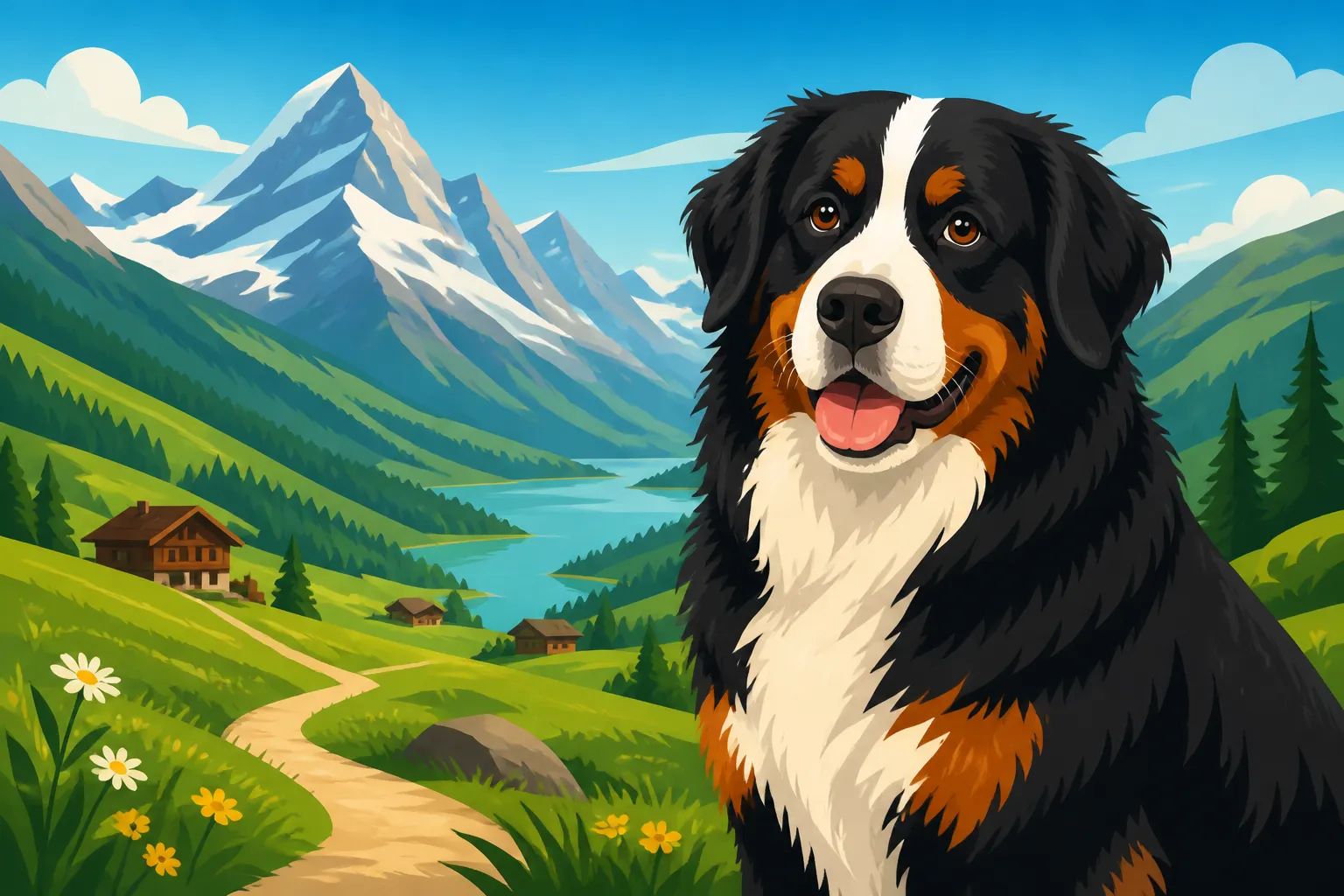
It was here, amidst rolling pastures and snow-capped peaks, that the breed's distinct characteristics solidified. The dogs here were known for their impressive size, striking tricolor coats, and amiable nature, making them invaluable assets to the local farmers. The cold climate of the Dürrbach Valley undoubtedly contributed to the development of their thick, insulating double coats, designed to protect them from the harsh mountain winters. Understanding their valley of origin helps us appreciate why they thrive in cooler temperatures and possess such strong, resilient physiques. The Dürrbach Valley and the Dogs Named After It isn't just a historical footnote; it's the very foundation of the breed's identity.
The Historical Journey: Naming and Recognition
As the 19th century drew to a close and the 20th century began, there was a growing interest in standardizing and preserving native dog breeds across Europe. For the Dürrbächler, this period marked a pivotal transition from a regional working dog to a formally recognized and admired breed. This transformation involved dedicated individuals who saw the unique qualities of these dogs and worked tirelessly to ensure their future.
The Dürrbachler: An Early Identity
Before formal breed standards and official names, the dogs of the Dürrbach region were simply known by their local designation: the Dürrbächler. This name reflected their geographical origin and their practical role within the communities. They were known for their impressive strength, used for pulling small carts loaded with milk, cheese, and other farm produce to local markets. Their calm demeanor and willingness to work made them indispensable partners for farmers, who often had to navigate challenging mountain paths.
The Dürrbächler was more than just a beast of burden; it was a loyal companion that lived closely with its human family. Its gentle nature, combined with its imposing presence, made it an excellent farm guardian, instinctively protective without being overly aggressive. These early traits are the bedrock of the Bernese Mountain Dog's temperament today, highlighting a deep-seated desire to be near their people and contribute to the household.
Albert Heim and the "Berner Sennenhund"
The formalization of the breed largely began with Professor Albert Heim, a Swiss geologist and cynologist (a specialist in dogs). Heim was instrumental in studying and documenting the various native Swiss mountain dogs, including the Dürrbächler. Recognizing their unique characteristics and potential, he advocated for their standardization and preservation. In 1902, the dogs were exhibited at a show, drawing attention to their distinct qualities.
In 1907, a group of dedicated breeders from Burgdorf formed the "Schweizerischer Dürrbach-Klub" (Swiss Dürrbach Club). It was around this time that Professor Heim proposed a new, more encompassing name for the breed: "Berner Sennenhund," meaning "Bernese Alpine Herdsman's Dog." This name distinguished them as originating from the Canton of Bern and linked them to their historical role as Sennenhunds, or Alpine pasture dogs, which also covered their duties as drovers and farm dogs. This formal naming was a crucial step in establishing the breed's identity and securing its place among recognized dog breeds. Albert Heim and the Name Berner Sennenhund is a key moment in their history, cementing their heritage.
Crossing the Atlantic: A New Home
While the Bernese Mountain Dog enjoyed a solid, albeit humble, presence in Switzerland for centuries, its journey to becoming a beloved international breed took time. It wasn't until the early 20th century, following its formal recognition and the establishment of breed clubs, that the Berner Sennenhund began to capture the attention of enthusiasts beyond its native valleys. The first Bernese Mountain Dogs arrived in the United States in the mid-1920s, with recognition by the American Kennel Club (AKC) following in 1937.
This transatlantic journey marked a significant shift for the breed. From being primarily working dogs in isolated Swiss communities, they began their transition into family companions and show dogs in a new world. Their striking appearance, coupled with their calm and affectionate nature, quickly won hearts. However, adapting to new environments and roles also brought new challenges and considerations for breeders, including maintaining the breed's health and temperament while expanding its genetic pool. How the Bernese Mountain Dog Crossed the Atlantic really speaks to the growing appreciation for these magnificent dogs.
Life on the Swiss Farm: The Bernese Mountain Dog's Original Role
To truly understand a Bernese Mountain Dog today, you have to look back at the life they led for generations in Switzerland. These weren't just decorative dogs; they were vital, active participants in the demanding routine of a Swiss farm. Their roles were diverse and challenging, shaping the very instincts and physical attributes we see in them now.
Pulling Carts and Hauling Milk
One of the most iconic images associated with the Bernese Mountain Dog's historical role is that of pulling carts. In the mountainous terrain of Switzerland, with limited access to paved roads or motorized transport, a strong, reliable dog was an invaluable asset for farmers. These dogs were harnessed to small, two-wheeled carts, often laden with heavy milk cans, cheese, butter, or even freshly harvested produce. They would transport these goods from the high alpine pastures or secluded farmhouses down to the valley markets.
This task required not just immense strength but also a steady temperament, obedience, and endurance. The dogs had to be calm enough to navigate bustling market towns and reliable enough to pull their load over uneven, sometimes treacherous, paths. This history of carting contributes to their sturdy build and powerful hindquarters. Many modern Bernese still possess a natural aptitude and enjoyment for drafting, which is a wonderful way to connect with their heritage. The Milk Carts Bernese Mountain Dogs Pulled weren't just a story; they were a daily reality. When you see your Berner pull on the leash, sometimes it's like a whisper of that old instinct.
Loyal Farm Guardians and Drovers
Beyond their carting duties, Bernese Mountain Dogs served as vigilant, yet gentle, guardians of the farm. Their imposing size and deep bark were often enough to deter unwanted visitors, whether they were predators looking for livestock or strangers approaching the homestead. However, unlike some more aggressive guardian breeds, the Bernese were known for their discerning nature. They were protective of their family and property but not inherently hostile, a trait that makes them such wonderful family dogs today.
They also assisted in droving livestock, guiding cattle and other animals in the pastures. While not as agile or intense as dedicated herding breeds like Border Collies, their sheer presence and calm authority were effective in managing flocks. This combination of guarding and droving meant they needed to be attentive, intelligent, and capable of making sound judgments. They were constantly observing their environment, ready to react if needed, but always with their family's best interests at heart.
More Than Just a Worker: Family Companion
It's easy to focus on the Bernese Mountain Dog's working roles, but it's crucial to remember that they were also cherished members of the farmer's family. Living in close quarters, often sharing homes with their human companions, fostered an incredibly strong bond. Their gentle nature and affectionate disposition made them excellent companions for children and a comforting presence in the home. They weren't relegated to a kennel; they were part of the household.
This deep integration into family life is a cornerstone of the Bernese temperament. They thrive on companionship and suffer when left alone for extended periods. Their desire to be near their people, often leaning against legs or following from room to room, is a direct echo of their past. They learned to be attuned to human emotions and needs, making them incredibly empathetic and intuitive companions. This blend of working utility and profound companionship defines What a Bernese Mountain Dog Did on a Swiss Farm.
The Near Extinction and Revival of the Bernese Mountain Dog
Despite their invaluable contributions to Swiss farm life, the Bernese Mountain Dog faced a significant threat to its existence. Like many traditional working breeds, the dawn of the industrial age and advancements in agriculture brought challenges that nearly led to their disappearance. The story of their survival is a testament to the passion and dedication of a few key individuals.
Industrialization's Threat to Farm Dogs
As the 19th century progressed and the 20th century dawned, the face of rural Switzerland began to change. Roads improved, and mechanical transportation, like trains and eventually motorized vehicles, started to replace the need for carting dogs. Agricultural practices became more modernized, reducing the demand for multi-purpose farm dogs that herded, guarded, and pulled. Suddenly, the very roles that had made the Bernese Mountain Dog indispensable began to diminish.
Many farmers, facing economic pressures, could no longer justify keeping large, powerful dogs if their practical utility was reduced. Breeding became less focused on working ability and more scattered, leading to a decline in consistent breed types. There was a real risk that the distinct Dürrbächler, with its unique characteristics, would simply fade away, absorbed into generic farm dogs or disappearing entirely as its purpose waned. It’s a sobering reminder that even beloved breeds can face the brink of extinction. Why the Bernese Mountain Dog Nearly Disappeared is a crucial part of their history.
Dedicated Efforts to Save the Breed
Fortunately, the unique qualities of the Dürrbächler did not go unnoticed by everyone. A handful of dedicated Swiss dog enthusiasts and cynologists, most notably Professor Albert Heim and a local innkeeper named Franz Schertenleib, recognized the impending crisis. They understood the historical and cultural significance of these dogs and were determined to prevent their loss. Schertenleib, in particular, traveled extensively through the Dürrbach Valley and surrounding regions, actively seeking out and acquiring the best remaining examples of the old Dürrbächler type.
Their efforts were vital in gathering a foundational breeding stock that still embodied the traditional characteristics of the breed. This was not an easy task, as many of the finest specimens were scattered and their numbers dwindling. The commitment of these individuals to preserving the Bernese Mountain Dog's heritage laid the groundwork for its eventual revival and global recognition. Franz Schertenleib and the Bernese Mountain Dogs He Found truly saved the breed from obscurity.
The Dürrbach Club and Breed Standard
The culmination of these preservation efforts came in 1907 with the founding of the "Schweizerischer Dürrbach-Klub" (Swiss Dürrbach Club) in Burgdorf. This club, later renamed the "Schweizerischer Klub für Berner Sennenhunde" (Swiss Club for Bernese Mountain Dogs), was instrumental in establishing a formal breed standard. A breed standard is a detailed description of the ideal physical appearance, temperament, and movement of a dog, serving as a blueprint for responsible breeding.
The establishment of the breed standard provided a clear goal for breeders, helping to ensure uniformity and consistency in the Bernese Mountain Dog's characteristics. It moved the breed beyond disparate farm dogs to a recognized and celebrated entity. The club also organized dog shows and promoted responsible breeding practices, encouraging careful selection of breeding pairs to enhance desirable traits and maintain genetic health. This structured approach was essential for the long-term survival and prosperity of the Bernese Mountain Dog, paving the way for its future. The Dürrbach Club Founded in 1907 was a monumental step.
Understanding the Swiss Sennenhund Family
The Bernese Mountain Dog is just one of four distinct breeds of Swiss Mountain Dogs, or "Sennenhunds," all sharing a common ancestry and purpose within the Swiss Alps. While they all boast striking tricolor coats (though with variations) and a history of working alongside farmers, each breed developed unique characteristics suited to specific regions or tasks. Understanding this family helps to put the Bernese Mountain Dog into broader context.
The Four Swiss Mountain Dogs: Cousins in Character
The term "Sennenhund" itself refers to the dogs of the "Senn," or Alpine herdsman, and encompasses four distinct breeds, each named after its region of origin:
- Bernese Mountain Dog (Berner Sennenhund): The only long-haired variety, known for its gentle nature.
- Greater Swiss Mountain Dog (Grosser Schweizer Sennenhund): A larger, short-haired, more powerfully built cousin.
- Appenzeller Sennenhund: A medium-sized, high-energy, short-haired dog with a curled tail.
- Entlebucher Sennenhund: The smallest of the four, a compact, agile dog also with a short coat and often a natural bobtail.
While they share a tricolor pattern (black, rust, and white), their differences in coat length, size, and specific temperamental nuances are quite pronounced. These distinctions reflect adaptations to varying terrains and local preferences for specific working styles. All four breeds embody loyalty, intelligence, and a strong work ethic, characteristics deeply rooted in their shared ancestral duties. Knowing What Sennenhund Means in a Bernese Mountain Dog's Name helps us understand this family connection.
Distinguishing the Bernese from its Kin
While all four Sennenhunds are impressive, the Bernese Mountain Dog stands out primarily due to its magnificent long, silky double coat. This feature is a key differentiator from its three short-haired cousins. Beyond the coat, the Bernese typically exhibits a somewhat softer, more laid-back temperament compared to the often more energetic and assertive Appenzeller or Entlebucher. The Greater Swiss Mountain Dog, while similar in build, is generally larger and has a very different coat texture.
Visually, the proportions also differ. The Bernese has a more rectangular body, while the Greater Swiss is squarer. The Appenzeller is known for its distinctive tightly curled tail carried over its back, a trait not seen in the Bernese. The Entlebucher, with its smaller size and often naturally docked tail, is also easily distinguishable. Each breed carries the proud tricolor markings, but the pattern, distribution, and overall presentation are unique to each, allowing enthusiasts to tell them apart with ease. Comparing The Greater Swiss Against the Bernese Mountain Dog highlights some of these key differences.
Why the Bernese Mountain Dog Has a Long Coat
The Bernese Mountain Dog's long, flowing double coat is one of its most striking features and the primary physical trait that sets it apart from its short-haired Sennenhund cousins. While the exact genetic reason for this variation is complex and goes back centuries, it likely evolved as an adaptation to the specific climatic conditions of the Bernese Oberland region. This area often experiences colder temperatures and more snowfall than some of the other Swiss cantons where the short-haired breeds originated.
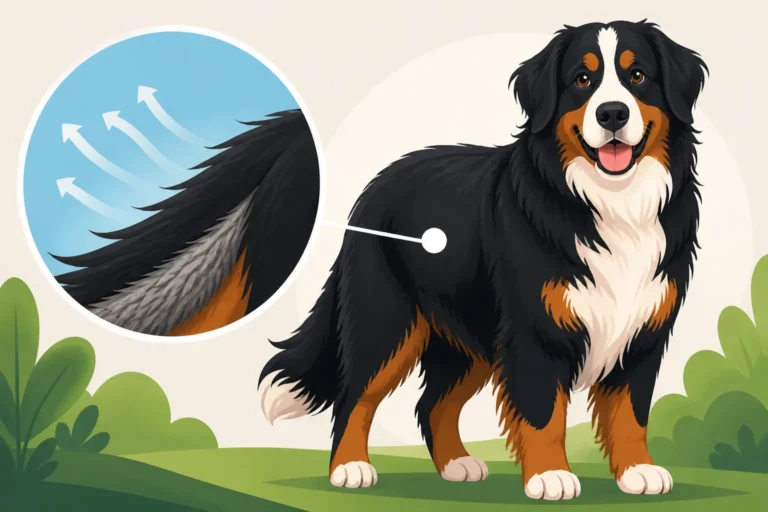
A long, thick double coat provides superior insulation against the bitter cold, wind, and snow of the high Alps. The dense undercoat acts as a thermal layer, trapping warm air close to the body, while the longer, coarser outer coat repels moisture and snow. This natural protection was crucial for dogs spending long hours outdoors, whether guarding livestock or pulling carts in inclement weather. So, while other Sennenhunds adapted with shorter, perhaps more water-resistant coats, the Bernese thrived with its luxurious, insulating fur. Why Only the Bernese Mountain Dog Has a Long Coat is a testament to natural selection and specific regional needs.
| Breed Name | Coat Length | Average Size (Height/Weight) | Key Distinguishing Feature | Original Role |
|---|---|---|---|---|
| Bernese Mountain Dog | Long | Large (23-27", 70-115 lbs) | Long, silky tricolor coat | Carting, guarding, droving, companion |
| Greater Swiss Mountain Dog | Short | Very Large (25.5-28.5", 85-140 lbs) | Larger, very robust build, short coat | Carting, guarding, droving |
| Appenzeller Sennenhund | Short | Medium (19-22", 48-70 lbs) | Curled tail over back, energetic | Herding, guarding |
| Entlebucher Sennenhund | Short | Small-Medium (16-21", 45-65 lbs) | Natural bobtail, agile, compact | Herding, droving |
The Enduring Legacy: Why the Bernese Mountain Dog Captivates Hearts Today
The journey of the Bernese Mountain Dog from the isolated Swiss valleys to beloved family members around the world is a remarkable one. Their history is not just a collection of facts; it's a living legacy that profoundly impacts their behavior, needs, and the very connection we feel with them. Understanding this past helps us appreciate the unique qualities they bring into our lives today.
Temperament Shaped by History
The most endearing qualities of the Bernese Mountain Dog's temperament—their calm demeanor, unwavering loyalty, and affectionate nature—are direct results of their history as multi-purpose farm dogs living in close companionship with humans. They were bred to be dependable partners, capable of both hard work and gentle interaction. This means they generally possess a strong desire to please and a remarkable tolerance for children and other animals, given proper socialization.
Their historical role as guardians instilled a natural watchfulness, but also a sensible, non-aggressive approach to strangers once they perceive no threat. They are not typically high-strung or overly boisterous; rather, they prefer to be close to their "flock"—their human family. This inherent desire for companionship is why they often struggle with isolation and thrive in homes where they are integrated into daily life. Their past dictates their present need for connection and gentle leadership.
Living with a Piece of Swiss Heritage
Bringing a Bernese Mountain Dog into your home means welcoming a living piece of Swiss heritage. Every interaction, from their "Berner lean" (a gentle nudge or full-body lean for attention) to their enjoyment of cool weather, echoes their ancestral past. Their thick double coat, while beautiful, requires regular grooming, especially with quality tools like those you might find on Chewy, to manage shedding and prevent mats, a direct link to their need for insulation in alpine conditions.
Their large size and powerful build, once perfect for pulling carts, now demand owners commit to positive, consistent training for leash manners and general obedience. Without it, a hundred-pound dog pulling on the leash can become quite a challenge. Their inherent love for working and pleasing can be channeled into activities like draft work, obedience, or therapy dog roles, allowing them to express their natural inclinations in a modern context. Providing appropriate mental and physical stimulation helps honor their working roots. Considering The Kind of Home a Bernese Mountain Dog Belongs In means understanding these deep-seated needs.
Honoring Their Past in Our Present
For those of us fortunate enough to share our lives with a Bernese Mountain Dog, recognizing their origins isn't just an interesting fact; it's a guide to responsible ownership. It means appreciating their need for companionship, understanding their physical capabilities and limitations, and respecting their inherent drive to be part of a family unit. It means providing them with the right nutrition, attention to their joint health given their size, and plenty of opportunities for gentle exercise.
By learning about their journey from the Dürrbach Valley to our living rooms, we gain a deeper empathy and a clearer perspective on how to best care for these magnificent creatures. We can provide them with lives that truly honor their heritage as loyal, loving, and hardworking companions. They may no longer pull milk carts down mountain paths, but the spirit of the Swiss Sennenhund lives on in every gentle glance and every contented sigh from our Berners.
Disclaimer
This article is for general informational purposes only and does not constitute professional advice. Laws, prices and regulations vary by location and change over time. Consult a qualified professional for guidance on your specific situation.