The Four Swiss Breeds Beside the Bernese Mountain Dog
Four Swiss mountain dog breeds share tricolor coats and history as alpine working farm companions in Switzerland.

Four Swiss mountain dog breeds share tricolor coats and history as alpine working farm companions in Switzerland.

The Dürrbach Valley in Switzerland shaped the physical traits and working history of the Bernese Mountain Dog.

Bernese Mountain Dog puppy nutrition details proper calcium balance and growth rates to prevent serious skeletal issues.

Bernese Mountain Dog coat care explains managing the water repellent outer guard hairs, dense woolly undercoat, and tricolor markings.

Training a Bernese Mountain Dog for cart pulling involves mastering obedience before attaching the harness to safely haul goods.

Bernese Mountain Dog training requires positive reinforcement and patience to accommodate their sensitive and gentle temperament.

Bernese Mountain Dog ownership costs over an eight-year lifespan, detailing puppy purchase prices, initial vet care, and supplies.

Bernese Mountain Dog puppy prices range from one thousand to over four thousand dollars depending on breeder health testing and lineage.

Genetic predispositions, common ailments, and environmental factors explain why Bernese Mountain Dogs live only seven or eight years.

Cancer kills half of all Bernese Mountain Dogs, driven by genetics, a small gene pool, and aggressive histiocytic sarcoma tumors.

Bernese Mountain Dog owners weigh affection and companionship against shedding, expense, health worries, and heartbreak.

Remote Bernese Mountain Dog purchases require verifying breeders, checking health records, and planning safe transport before sending money.

A Bernese Mountain Dog litter visit helps buyers assess puppy temperament, ask about health records, and evaluate breeder practices.

Bernese Mountain Dog breeders track cancer through family health histories, gathering diagnoses, ages, and veterinary records to evaluate breeding lines.

Regional Bernese Mountain Dog clubs offer practical support, community gatherings, training guidance, and breed health education for owners.
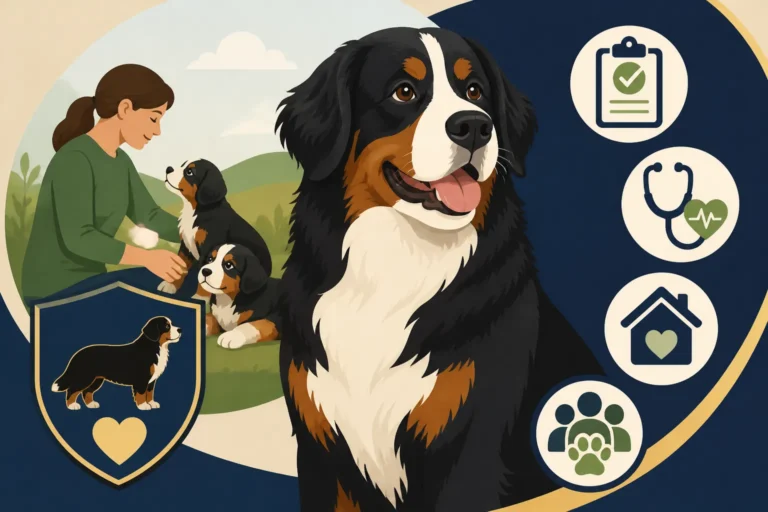
Bernese Mountain Dog Club of America guidance helps buyers evaluate breeder health testing, pedigree records, and puppy placement practices.
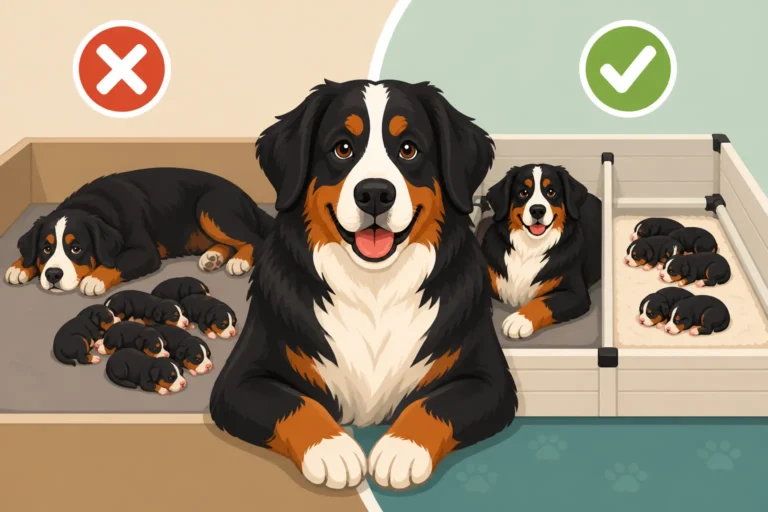
Bernese Mountain Dog birth methods depend on health, puppy size, and labor progress rather than breed size alone.

Breeding a Bernese Mountain Dog requires waiting until physical maturity, completed health screenings, and stable adult temperament are confirmed.
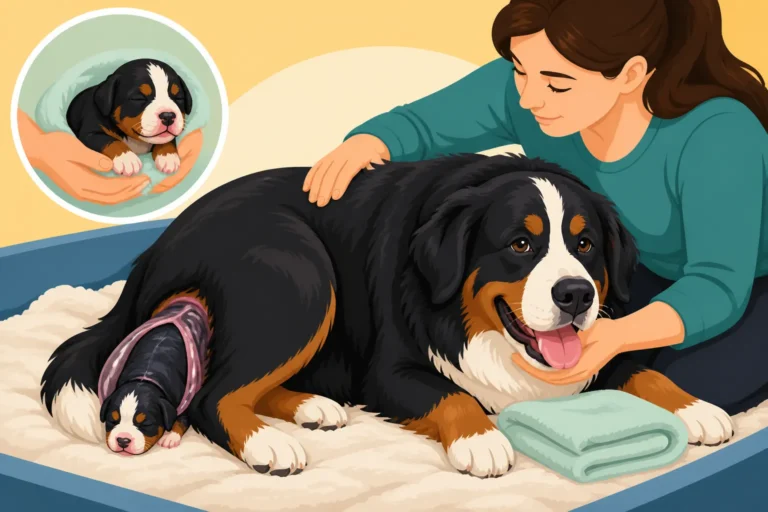
Bernese Mountain Dog labor care explains how to arrange veterinary support, set up a whelping area, and track puppies.

Bernese Mountain Dog litter sizes range from six to eight puppies, and pregnancy planning involves veterinary care and female health factors.