Whether a Mini Bernese Mountain Dog Is a Real Breed
It’s a common dream, isn't it? You fall head over heels for the majestic, gentle nature of the Bernese Mountain Dog, but then reality hits: they are big. They take up space, they can be a handful on the leash, and let's be honest, the thought of veterinary bills for a hundred-pound dog can be daunting. So, the idea of a "mini Bernese Mountain Dog" sounds like a dream come true – all the charm in a more manageable package. But before you get too excited, let's unpack what that term really means and whether such a breed truly exists.
The Allure of a Pint-Sized Berner: Why the Idea is So Appealing
The draw of a smaller version of a beloved giant breed like the Bernese Mountain Dog is incredibly strong, and it's completely understandable why so many people are searching for one. The Berner's temperament is often described as sweet, calm, and devoted, making them ideal family companions. However, their imposing size and some well-known health challenges can give potential owners pause.
Dreaming Big (But Not Too Big): Addressing Space and Lifestyle Needs
Let's face it, not everyone lives on a sprawling farm with acres for their dog to roam. Many of us reside in smaller homes, apartments, or have limited yard space. A full-sized Bernese Mountain Dog, typically weighing between 70 to 115 pounds or more, requires a significant footprint. They need room to stretch out, to navigate hallways without knocking things over, and to simply exist comfortably indoors without feeling cramped. The idea of a smaller version, one that could perhaps curl up more neatly on a sofa or fit into a modest car, is incredibly appealing for those with less physical space but a heart set on the breed's personality.
Beyond just physical space, consider the practicalities of a large dog. Daily walks with a strong, potentially stubborn, 100-pound dog require a confident handler and often specialized equipment, as covered in our guide on Leash Manners on a Hundred Pound Bernese Mountain Dog. Even tasks like bathing, grooming, or simply getting them into the vet's office can be physically demanding. For individuals with mobility issues, or families with very young children, a "mini" version promises the gentle giant personality without the sheer physical challenge. It's about wanting the essence of the Berner without the overwhelming scale.
Health Hopes and Lifespan Longings: Seeking a "Healthier" Alternative
Another significant factor driving the desire for a "mini" Bernese is the breed's heartbreakingly short lifespan and propensity for certain health issues. Bernese Mountain Dogs are known to have a shorter average lifespan compared to many other breeds, often only living Why a Bernese Mountain Dog Lives Only Seven or Eight Years. This reality is a tough pill to swallow for anyone contemplating bringing one into their home. The fear of common ailments like Histiocytic Sarcoma in a Bernese Mountain Dog or Joint Disease in a Hundred Pound Bernese Mountain Dog can make prospective owners wish for a version of the breed that sidesteps these prevalent health concerns.
Many believe, sometimes incorrectly, that smaller dogs automatically equate to fewer health problems and a longer life. While it's true that giant breeds generally have shorter lifespans, simply shrinking a breed doesn't automatically eliminate genetic predispositions. However, the hope remains that a miniaturized Berner might somehow inherit less of the genetic baggage associated with the standard size. This desire for a "healthier" or "longer-lived" Berner is a powerful motivator for exploring these alternative options, even if the reality is far more complex.
Deconstructing the "Mini Bernese Mountain Dog" Label
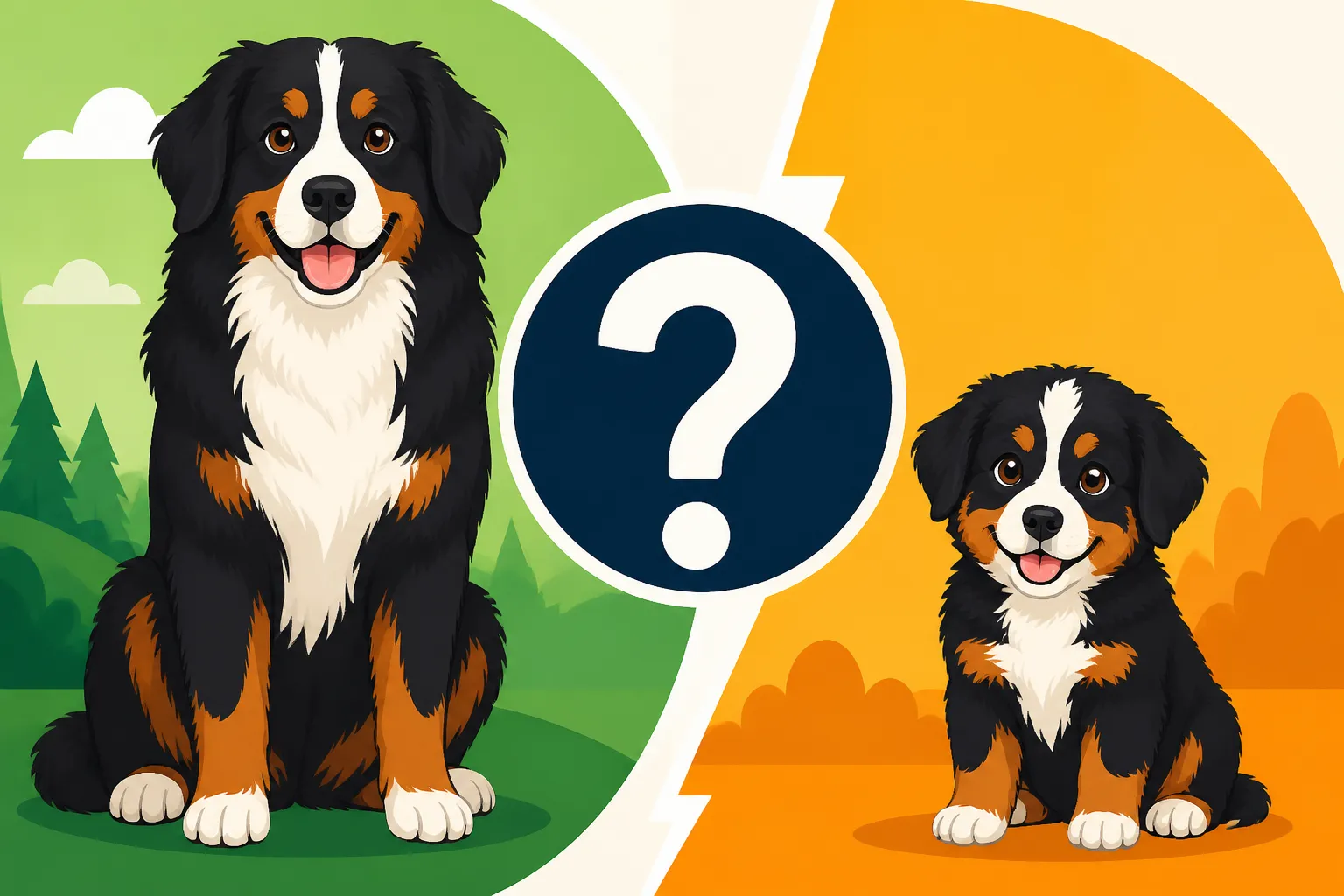
When you see "mini Bernese Mountain Dog" advertised, it's essential to understand that you are not looking at a recognized variation of the purebred Bernese. This term is often a marketing phrase, not a breed descriptor recognized by major kennel clubs or breed associations.
The Official Bernese Mountain Dog Standard: What a Real Bernese Mountain Dog Looks Like
For a dog to be considered a purebred Bernese Mountain Dog, it must adhere to a strict breed standard set by organizations like the American Kennel Club (AKC) or the Fédération Cynologique Internationale (FCI). This standard meticulously outlines everything from their physical appearance, including specific coat colors and markings, to their temperament and, critically, their size. The breed standard for the Bernese Mountain Dog specifies a height range for males and females, which is typically between 25 to 27.5 inches for males and 23 to 26 inches for females at the shoulder. There is no provision for a "mini" or "toy" version within this standard, as detailed in The Bernese Mountain Dog Breed Standard.
If a dog falls significantly outside these established height and weight parameters, it simply isn't a standard Bernese Mountain Dog. Breeders who genuinely care about the integrity and health of the breed strive to produce dogs that conform to this standard, as it reflects the breed's historical function and genetic consistency. Deviating significantly from this standard, especially through deliberate miniaturization, often introduces unpredictable traits and potential health compromises that go against responsible breeding practices.
Understanding Breed Registry and Recognition: The Official Word
Major kennel clubs around the world maintain breed registries for purebred dogs. These registries are crucial for tracking pedigrees, ensuring responsible breeding practices, and upholding breed standards. When a breed is recognized by these clubs, it means there are established guidelines for its appearance, health, and temperament, and breeding stock must meet certain criteria. For instance, to register a Bernese Mountain Dog puppy, both parents must be registered purebreds.
The term "mini Bernese Mountain Dog" is not recognized by any of these reputable kennel clubs. You won't find a category for it in the AKC, the UK Kennel Club, or any international federation. This lack of official recognition means that any dog marketed under this label is either a crossbreed, a small purebred Berner (which may indicate health issues or poor breeding), or a dog that has been intentionally bred down in size through questionable practices. It’s a red flag that indicates you’re not dealing with a purebred variant.
The Genetic Blueprint of Size: It's More Than Just Wishing
Size in dogs is a complex genetic trait, influenced by multiple genes. When breeders talk about "breeding for type," they are aiming to produce dogs that consistently meet the breed standard across generations. To create a significantly smaller version of a giant breed, breeders typically employ one of two methods: either selectively breeding the runts of litters over many generations or, more commonly, outcrossing with a smaller breed. Both methods come with significant genetic risks and challenges.
Selectively breeding smaller dogs can concentrate undesirable genetic traits, including dwarfism-related health problems or other conformational issues that weren't present in the larger ancestors. It can also weaken the overall genetic diversity of the line. Outcrossing, while creating a smaller dog, inherently means the offspring are no longer purebred Bernese Mountain Dogs. Their genetic blueprint is a mix, which means their appearance, temperament, and health outcomes will be a roll of the dice, rather than the predictable traits associated with the purebred Berner. The notion that you can just "make" a mini version of a breed without genetic consequences is a misunderstanding of canine genetics.
How a "Mini" Bernese Mountain Dog Comes to Be (or Doesn't)
So, if there's no official "mini Bernese Mountain Dog," what exactly are people selling and buying when they use that label? It typically boils down to a few distinct scenarios, none of which involve a recognized, smaller purebred.
Intentional Breeding for Smaller Size Within Purebred Lines
Sometimes, less scrupulous breeders might attempt to create a "mini" Bernese by consistently breeding the smallest dogs in their litters, often referred to as "runts." The idea is that over several generations, this selective breeding will lead to a smaller average size. However, this practice is fraught with peril for several reasons. For one, the smallest puppies in a litter can often be genetically weaker or suffer from underlying health issues that contribute to their smaller stature. Breeding them deliberately can perpetuate these weaknesses and lead to an overall decline in the health and vitality of the line.
Moreover, simply shrinking a giant breed doesn't necessarily mean it will shed the genetic predispositions to conditions like The Cancer That Kills Half of All Bernese Mountain Dogs or orthopedic problems. In fact, if not done with extreme care and extensive health screening, it can introduce new or exacerbate existing health issues due to improper proportions or genetic bottlenecks. Reputable Bernese Mountain Dog breeders focus on maintaining the health and integrity of the breed standard, which includes appropriate size, not intentionally miniaturizing them.
The Bernedoodle: A Common, but Distinct, Crossbreed
By far the most common "mini Bernese Mountain Dog" you'll encounter is actually a Bernedoodle. This is a deliberate cross between a Bernese Mountain Dog and a Poodle. Poodles come in various sizes – standard, miniature, and toy – allowing breeders to control the potential size of the offspring. A Bernese crossed with a Miniature Poodle would result in a "mini Bernedoodle," which is significantly smaller than a purebred Berner.
Bernedoodles are popular because they aim to combine the Bernese's gentle nature and striking appearance with the Poodle's intelligence and, often, their lower-shedding coat. While Bernedoodles can be wonderful dogs, they are not Bernese Mountain Dogs. They are a hybrid breed, and their characteristics can be quite variable. You might get a dog with more Poodle traits, or more Berner traits, or a mix of both in unpredictable ways. Their lifespan and health profiles can also be different, though they can still inherit health issues common to both parent breeds. Brands like Ollie often cater to mixed breeds, offering tailored food plans, but it's important to remember a Bernedoodle is its own distinct canine.
Other Mixes and the "Designer Dog" Dilemma
Beyond Bernedoodles, other mixes might be marketed as "mini Bernese." This could involve crosses with other smaller breeds, or even multiple generations of mixed breeding where the original Bernese lineage becomes increasingly diluted. The "designer dog" trend has led to a proliferation of such crosses, often given catchy names. The primary concern with these various mixes, particularly those from less reputable sources, is the complete lack of predictability.
When you purchase a purebred Bernese Mountain Dog from a reputable breeder, you have a reasonable expectation of what the adult dog will look like, how big it will get, and what its general temperament will be, thanks to generations of established breeding. With a random mix or an unverified "mini" breed, you lose that predictability entirely. You might end up with a dog that looks nothing like a Bernese, doesn't have the desired temperament, and could come with a host of unexpected health problems. Always be wary of breeders who can't provide clear lineage and health testing results for both parents, especially when advertising a "mini" version of a well-established breed.
The Hidden Costs and Health Realities of Smaller Bernese Options
While the idea of a smaller, potentially healthier Bernese is appealing, the reality of these "mini" versions or crossbreeds often comes with its own set of challenges, particularly when it comes to health and finances. The initial appeal can quickly give way to unforeseen complications and significant expenses.
Unforeseen Health Complications and Vet Bills
When breeders intentionally miniaturize a large breed or create crossbreeds without meticulous health screening, they can unwittingly introduce or exacerbate health problems. For example, some attempts at miniaturization might lead to conditions like chondrodysplasia (a form of dwarfism) which can cause severe skeletal deformities and pain. Other mixes might inherit a broader range of genetic diseases from both parent breeds, rather than fewer. For instance, while a Poodle might bring a lower shedding coat, it also brings its own list of predispositions, such as patellar luxation or certain eye conditions.
This can mean that your "mini" Berner or Bernedoodle, despite its smaller size, might still face significant health challenges, and these can lead to substantial veterinary bills. Comprehensive health panels, like The Bernese Mountain Dog Health Panel, are crucial for purebreds, and similar diligence is needed for crossbreeds. If you’re considering a non-standard Berner, it’s vital to understand these potential health pitfalls and factor in the cost of potential treatments. Having a solid pet insurance plan from providers like Healthy Paws can be an absolute lifesaver when unexpected health issues arise, especially with breeds or crosses that might have a more complex genetic background. Don't fall into the trap of thinking "smaller" automatically means "cheaper to maintain" in the long run.
Temperament Surprises and Unpredictable Traits
One of the most cherished traits of the Bernese Mountain Dog is their famously gentle, calm, and affectionate temperament. This predictability is a hallmark of a well-established purebred. However, with crossbreeds, especially those of the "designer dog" variety, temperament can be a true wildcard. A Bernedoodle, for example, might inherit the Bernese's placid nature, or it might lean more towards the Poodle's higher energy and sharper intelligence, potentially requiring more mental stimulation and different training approaches than anticipated.
You could also end up with a mix of traits that are less than ideal. A shy Berner, as discussed in Socializing a Reserved Bernese Mountain Dog Puppy, combined with a nervous Poodle, could result in a highly anxious dog. When dealing with mixed breeds, you lose the genetic consistency that allows reputable breeders to predict and shape temperament over generations. This unpredictability means you might not get the specific personality you were hoping for, and managing unexpected behavioral quirks can require significant time, effort, and professional training.
The Truth About Pet Insurance and Non-Standard Breeds
When it comes to pet insurance, the landscape for "mini" or crossbreed dogs can be a bit tricky. While many reputable insurers, like Healthy Paws, are generally excellent at covering a wide range of breeds and mixed breeds, certain conditions or genetic predispositions might be viewed differently. Insurers may ask for detailed veterinary records to establish baselines, and any pre-existing conditions, which can be harder to predict in novel crosses, will typically not be covered. You'll want to investigate how your chosen insurer handles mixed breeds and what potential exclusions might apply.
Furthermore, if a breeder is marketing a dog as a "mini Bernese Mountain Dog" but cannot provide clear health clearances or lineage, it raises red flags that could impact future insurance claims. For instance, if a dog develops severe joint issues (a common concern for large breeds and their crosses, as highlighted in The Bernese Mountain Dog Whose Back Legs Give Out) and there’s no evidence of responsible breeding, an insurer might scrutinize the claim more closely. Always do your homework, not just on the dog, but on the financial safety net you're building around them. The financial implications for treating complex health issues, as detailed in What Oncology Bills Reach for a Bernese Mountain Dog for standard Berners, can be equally, if not more, expensive for a "mini" version with unforeseen genetic issues.
| Characteristic | Purebred Bernese Mountain Dog | Bernedoodle (Bernese x Poodle) | "Mini" Bernese (Unverified) |
|---|---|---|---|
| Breed Standard | Recognized by major kennel clubs (AKC, FCI); strict size & appearance. | Not a recognized purebred; hybrid designer dog. | No official standard; term used for marketing. |
| Size | Large (70-115+ lbs, 23-27.5 inches tall). | Varies (Standard, Mini, Toy, depending on Poodle parent). | Highly variable; usually smaller than purebred Berner but unpredictable. |
| Coat | Tricolor, long, double coat; sheds heavily. | Varies (straight, wavy, curly); often lower shedding; diverse colors. | Varies; may not retain Berner coat quality or coloring. |
| Temperament | Generally calm, gentle, affectionate, predictable. | Variable; blend of Berner and Poodle traits; can be high energy. | Highly unpredictable; depends on genetic mix and breeding. |
| Health | Predisposed to specific issues (cancer, joint disease, bloat). | Inherits predispositions from both parent breeds. | High risk of unforeseen genetic issues, conformational problems. |
| Lifespan | Typically 7-8 years, often shorter than other large breeds. | Can be longer than purebred Berner, but still variable. | Unpredictable; potentially compromised if from poor breeding practices. |
| Cost to Acquire | Usually higher from reputable breeders with health clearances. | Can be high, especially for desirable coat types or specific sizes. | Varies widely; often lower from unethical breeders (red flag). |
| Predictability | High predictability in traits, size, health risks. | Moderate predictability; traits are a genetic lottery. | Low predictability; high risk of unexpected outcomes. |
Making an Informed Choice for Your Family
The journey to find the perfect canine companion is a deeply personal one, and it's natural to explore all avenues. However, when it comes to the idea of a "mini Bernese Mountain Dog," understanding the facts is crucial for making a responsible and happy choice.
Prioritizing Health and Reputable Sources
If you are drawn to the Bernese Mountain Dog's personality but are concerned about their size or health, the best approach is to seek out reputable breeders who prioritize health and longevity within the standard purebred lines. While no dog is guaranteed a long life, ethical breeders conduct extensive health testing on their breeding stock to minimize the risk of hereditary diseases. They'll also be transparent about the health history of their lines, as well as providing insights from databases like What the Berner-Garde Database Records.
If a smaller dog is a non-negotiable factor for your family, then a well-bred Bernedoodle from a reputable breeder might be a more suitable choice. A good Bernedoodle breeder will also perform extensive health clearances on both the Bernese and Poodle parents, similar to the screenings required for purebreds, such as the OFA clearances a Bernese Mountain Dog should have. They should be transparent about the expected size range, temperament, and potential health considerations of their specific crosses. They also won’t market their dogs as "mini Bernese Mountain Dogs" but rather as Bernedoodles. Always ensure you are dealing with a breeder who is open, honest, and allows you to visit their facility, meet the parent dogs, and ask plenty of questions. You can find quality food and supplies from reputable online retailers like Chewy, ensuring your dog's nutritional needs are met, regardless of their breed.
Embracing the True Bernese Experience (Size and All!)
Ultimately, if your heart is truly set on a Bernese Mountain Dog, then you need to be prepared for the full Bernese experience – which includes their majestic, often imposing, size. They are a big dog, and part of their charm is that gentle giant presence. Embracing this means ensuring you have the space, the lifestyle, and the financial resources to care for a large breed with specific needs.
This includes proper nutrition, especially during their critical growth phases, as detailed in How Fast a Bernese Mountain Dog Puppy Should Grow. It means having the strength and commitment for training and daily exercise, and understanding the potential costs associated with their care throughout their life, which can be significant, as explored in What Buying a Bernese Mountain Dog Actually Costs. If you can embrace the size, you'll be rewarded with one of the most loving, loyal, and beautiful companions a person could ask for. A "mini Bernese Mountain Dog" might sound appealing, but the real deal, with all its grandeur, is an experience truly unlike any other.
Disclaimer
This article is for general informational purposes only and does not constitute professional advice. Laws, prices and regulations vary by location and change over time. Consult a qualified professional for guidance on your specific situation.