Franz Schertenleib and the Bernese Mountain Dogs He Found
It’s a truly disheartening thought to imagine a beloved dog breed fading into obscurity, lost to time and the relentless march of progress. For Bernese Mountain Dog enthusiasts like us, the very idea that these magnificent, gentle giants almost disappeared from the Swiss countryside is enough to make your heart ache. But thankfully, the story of the Bernese isn't one of loss, but of a passionate revival, largely thanks to the unwavering efforts of one dedicated individual. This guide will take you through the incredible journey of Franz Schertenleib and his pivotal role in rescuing the Bernese Mountain Dog breed from the brink of extinction.
The Bernese Mountain Dog on the Brink: A Fading Legacy
Before their resurgence, the dogs we now know as Bernese Mountain Dogs were simply the sturdy, dependable companions of Swiss farmers and dairymen. They weren't a recognized breed with official pedigrees; they were working dogs, bred for purpose rather than show, and their existence was intrinsically tied to the traditional agricultural lifestyle of the Swiss Alps. To think of a world without them is a stark reminder of how fragile a breed's continuity can be.
The Dürrbach Valley and its Working Dogs
Imagine the picturesque, yet challenging, terrain of the Dürrbach Valley in Switzerland. Here, for centuries, a certain type of farm dog thrived. These dogs were versatile, strong, and intelligent, essential partners for the local farmers. They were known as "Dürrbächler," named after the very region they called home. Their primary job wasn't just to look pretty or be a cuddly pet; it was to earn their keep. These were true working dogs, capable of a range of tasks vital to daily farm life.
They’d herd cattle, driving them from pasture to barn, or even acting as guard dogs for the farmstead, though perhaps not in the aggressive way some might imagine. Their presence alone was often enough to deter unwanted visitors, a testament to their imposing size and watchful nature. But one of their most iconic roles was draft work: pulling carts filled with milk cans, cheese, or other goods to local markets, often navigating steep, winding mountain paths. This was a crucial service in a time before widespread motorized transport, making them invaluable members of the community. Their gentle nature, combined with their strength, made them perfect for these roles, forming a deep bond with their human families. You can learn more about their original purpose in What a Bernese Mountain Dog Did on a Swiss Farm.
Why the Breed Nearly Disappeared
Despite their historical importance and invaluable contributions, the Dürrbächler dogs faced a significant threat at the turn of the 20th century. The rural landscape was changing rapidly, and with it, the demand for traditional working farm dogs began to decline. Industrialization and improved infrastructure meant that milk and other farm products could be transported more efficiently by mechanical means, reducing the need for strong, cart-pulling dogs. Farmers, always practical, started to favor other breeds that were either considered more fashionable, like the Saint Bernard and Newfoundland, or perhaps perceived as more efficient for specific, singular tasks.
This shift in agricultural practices and popular taste led to a severe drop in the Dürrbächler population. They became scattered, with fewer and fewer purebred examples remaining. It was a classic case of progress inadvertently sidelining a long-standing tradition. The dogs were still there, certainly, but they were no longer a cohesive, recognized type. They were simply "farm dogs" and their distinct characteristics were being diluted through indiscriminate breeding with other local curs. The future of these beautiful tricolored dogs, with their distinctive markings and gentle disposition, looked bleak. They were truly facing extinction, a sobering thought for anyone who cherishes a Bernese Mountain Dog today. This near-disappearance is a crucial part of their story, explored further in Why the Bernese Mountain Dog Nearly Disappeared.
Franz Schertenleib: The Unsung Hero's Quest
It's often the dedication of one individual that changes the course of history, and for the Bernese Mountain Dog, that person was Franz Schertenleib. His love for the traditional Dürrbächler dogs of his homeland fueled a mission that would ultimately save the breed from vanishing forever. Without his tireless efforts, it's quite possible we wouldn't have these magnificent dogs gracing our homes today.
A Man with a Vision
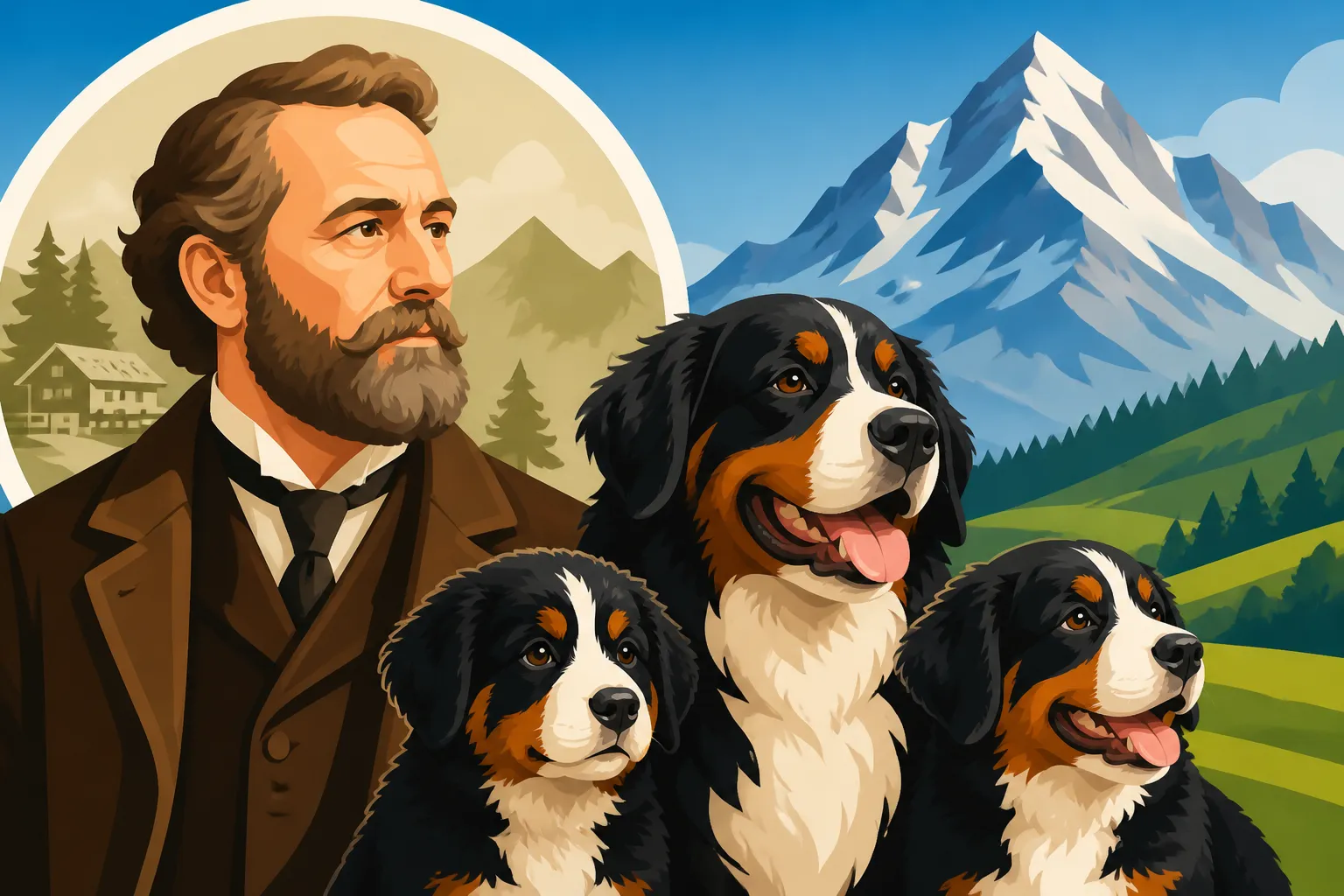
Franz Schertenleib wasn't a professional dog breeder or a renowned academic, but an innkeeper from the Dürrbach Valley. This meant he was deeply rooted in the very community where these dogs had always lived and worked. He understood their value, not just as working animals but as an integral part of his region's heritage. He had grown up seeing them, interacting with them, and appreciating their unique qualities – their strength, their intelligence, and their wonderfully good-natured temperament. He wasn't just observing; he was living alongside them.
His vision was remarkably clear: to preserve and re-establish the traditional Dürrbächler as a distinct and recognized breed. This wasn't a casual hobby; it was a deeply personal quest. He recognized that these dogs were more than just utility animals; they possessed a noble character and a distinctive appearance that deserved to be protected. His passion was infectious, and it's a testament to his dedication that he was able to inspire others to join him in this crucial endeavor. The story of The Innkeeper Who Saved the Bernese Mountain Dog truly highlights his profound impact.
Searching the Swiss Countryside
Schertenleib's commitment led him on an arduous, yet determined, search throughout the Swiss countryside. This wasn't a simple task, as the remaining Dürrbächler were scattered and often mixed with other breeds. He literally scoured the valleys and remote farmsteads, asking around, seeking out any dog that still embodied the characteristics of the old farm dogs. Imagine him traveling from village to village, speaking with farmers and local residents, all in pursuit of a fading legacy.
He wasn't looking for perfect show dogs, but for authentic examples of the Dürrbächler type – dogs with the correct tricolor markings, sturdy build, and the characteristic calm, self-confident demeanor. This grassroots effort was critical. He sought out dogs that, despite the changing times, still retained the genetic blueprint of the traditional working dogs. It was a painstaking process, requiring patience, persistence, and a deep understanding of what made a Dürrbächler truly authentic. His journeys across the mountainous regions were crucial in identifying the last remaining foundational stock that would be used to rebuild the breed. You can find out more about his discovery process in Where Schertenleib Found the Last Bernese Mountain Dogs.
Rediscovery and Revival: Bringing the Breed Back
The work of Franz Schertenleib was more than just finding dogs; it was about laying the foundation for an entire breed's future. His efforts ensured that the Dürrbächler, which would later become the Bernese Mountain Dog, would not just survive but thrive. It was a turning point, transforming a dwindling population of working dogs into a recognized and cherished breed.
The Dogs Schertenleib Found
The dogs Franz Schertenleib painstakingly tracked down across the Swiss cantons were true diamonds in the rough. These were not dogs from established kennels, but resilient, working animals living on farms, much like their ancestors. They typically possessed the robust, powerful build necessary for their demanding lives in the mountains, perfectly suited for pulling carts or herding livestock. Their coats were long and lustrous, a defining characteristic that set them apart from their shorter-coated Swiss cousins. And, of course, they displayed the striking tricolor pattern – deep black with rich rust-red and crisp white markings – that we instantly recognize today as the hallmark of a Bernese.
Beyond their physical traits, these dogs also exhibited the calm, confident, and inherently good-natured temperament that had always made the Dürrbächler so valuable to their human companions. They were alert but not overly reactive, steadfast, and willing to work, all traits essential for a multi-purpose farm dog. Schertenleib’s keen eye allowed him to identify these key characteristics, ensuring that the dogs he selected for his revival project genuinely represented the historical type. He brought together individuals that would become the genetic bedrock of the modern Bernese Mountain Dog.
Laying the Groundwork for a New Future
Once he had identified these crucial foundational dogs, Schertenleib didn't just stop there. His next step was to actively promote breeding and raise awareness. He began to organize what we might consider informal gatherings or exhibitions, showcasing these magnificent animals to local farmers and dog enthusiasts. He wanted to reignite interest and demonstrate the breed's distinct qualities and potential. He understood that simply finding the dogs wasn't enough; he needed to build a community around them.
He educated people on the importance of preserving these unique traits, encouraging responsible breeding practices to maintain the integrity of the Dürrbächler type. This proactive approach was critical. He was effectively creating the demand and the framework for a formal breed, slowly transitioning them from anonymous farmhands to a recognized category. His dedication created a ripple effect, encouraging others to value and protect these dogs. While modern dog owners might look to resources like Chewy for all their dog's needs today, Schertenleib had to start from scratch, inspiring a movement through personal conviction and hands-on effort.
Collaborating for a Defined Future: The Role of Others
Franz Schertenleib's passionate efforts were foundational, but the long-term success of the Bernese Mountain Dog as a recognized breed required more than just one man's dedication. It needed structure, academic backing, and organized community effort. This is where key collaborations and formal establishments became vital in solidifying the breed's future.
Working with Albert Heim
The most significant collaboration in the breed's early history was between Franz Schertenleib and Professor Albert Heim. Heim was a renowned Swiss geologist and, crucially for the Dürrbächler, a leading authority on cynology – the study of dogs. His involvement lent immense credibility and scientific rigor to the budding breed revival. Heim didn't just offer his name; he actively participated in evaluating the dogs Schertenleib had found, meticulously documenting their characteristics and developing a written breed standard.
This standard was revolutionary. It moved the Dürrbächler from being a loose "type" of farm dog to a defined breed with specific physical and temperamental benchmarks. Heim recognized the distinctness and value of these dogs, confirming their heritage and advocating for their preservation on a national level. His academic authority helped legitimize Schertenleib's grassroots efforts, drawing broader attention and support. It’s a bit like having an expert endorsement for a product you’ve passionately developed – it elevates it to a new level. The comprehensive contributions of this scholar are further detailed in What Albert Heim Did for the Bernese Mountain Dog.
The Birth of the Dürrbach Club
With the combined efforts of Schertenleib's practical work and Heim's scientific backing, the next logical step was formal organization. In 1907, the "Schweizerischer Dürrbach-Klub" (Swiss Dürrbach Club) was officially founded. This was a monumental moment for the breed. The club provided the essential framework for registering dogs, maintaining pedigrees, and guiding breeding programs with the newly established standard in mind. It was a central hub for all enthusiasts and breeders.
The club's formation immediately brought order and direction to the revival movement. It meant that efforts to breed and preserve the Dürrbächler were no longer solely reliant on individual endeavors, but were supported by a collective body with shared goals. Members could pool resources, share knowledge, and work together to prevent the breed from ever again facing the threat of extinction. Think of it as establishing a formal organization to protect a national treasure; the Dürrbach Club became that guardian for the burgeoning Bernese Mountain Dog. This pivotal moment is expanded upon in The First Bernese Mountain Dog Breed Club.
The Enduring Legacy of Schertenleib
The groundwork laid by Franz Schertenleib and his collaborators continues to impact the Bernese Mountain Dogs we know and love today. His vision transformed a local working dog into an internationally recognized breed, a testament to his profound influence. His legacy is etched not just in history books, but in the very presence of every Bernese Mountain Dog that graces our lives.
From Dürrbachler to Bernese Mountain Dog
While Franz Schertenleib was dedicated to the "Dürrbächler," the breed's name eventually changed to "Berner Sennenhund," which translates to "Bernese Alpine Herdsmann's Dog" or "Bernese Mountain Dog" in English. This renaming, occurring around 1910, reflected a broader recognition of the breed beyond its specific valley of origin, tying it more generally to the Canton of Bern, a central region in Switzerland. It was a strategic move to broaden its appeal and standardize its identity, pushing it into the national, and eventually international, spotlight.
The name change didn't diminish Schertenleib's original intent; rather, it helped to solidify the breed's place among the four Swiss Sennenhund breeds. This evolution from a local name to a more encompassing one was a critical step in establishing the breed's identity and helping it gain wider acceptance and popularity. It marked a true transition from an obscure regional type to a celebrated national treasure. The exact timing and reasons for this change are detailed in The Year the Bernese Mountain Dog Was Renamed.
Here's a quick look at the impact of these pivotal moments:
| Feature | Before Schertenleib's Efforts | After Schertenleib & Heim's Work |
|---|---|---|
| Breed Status | Unrecognized working type | Formally recognized breed |
| Name | Dürrbächler | Berner Sennenhund (Bernese Mountain Dog) |
| Population | Dwindling, scattered | Increasing, documented |
| Breeding | Indiscriminate | Guided by formal standards |
| Recognition | Local only | National and international |
| Future | Uncertain, near extinction | Secure, celebrated |
The Foundation for Today's Beloved Breed
Every Bernese Mountain Dog living today, whether romping in the snow or lounging by a fireplace, owes a debt of gratitude to Franz Schertenleib. His journey of rediscovery, coupled with the rigorous work of Albert Heim and the Dürrbach Club, provided the essential foundation for the breed's modern existence. The standard they established ensured that the core characteristics – both physical and temperamental – would be preserved for future generations.
Thanks to these pioneering efforts, the Bernese Mountain Dog gained international recognition and grew in popularity across the globe. From those few scattered farm dogs, a thriving and devoted community of breeders and owners emerged. When we look at our own Bernese Mountain Dogs, enjoying the comfort of a quality bed from Chewy or receiving regular vet check-ups, it's easy to forget that their very existence was once precarious. Schertenleib’s dedication ensures that we continue to enjoy these loyal, majestic companions, carrying forward a living piece of Swiss heritage into our homes and hearts. His legacy is truly the Bernese Mountain Dog itself.
Disclaimer
This article is for general informational purposes only and does not constitute professional advice. Laws, prices and regulations vary by location and change over time. Consult a qualified professional for guidance on your specific situation.