Whether a Bernedoodle Sheds Less Than a Bernese Mountain Dog
A Bernedoodle may leave less hair around the house than a Bernese Mountain Dog, but the cross does not guarantee a low-shedding coat. Some inherit a curlier coat that catches loose hair; others shed noticeably, sometimes in seasonal bursts. This guide explains what coat type can tell you, what it cannot, and how to compare the everyday grooming work realistically.
Why a Bernedoodle May Shed Less
The coat comes from both parent breeds
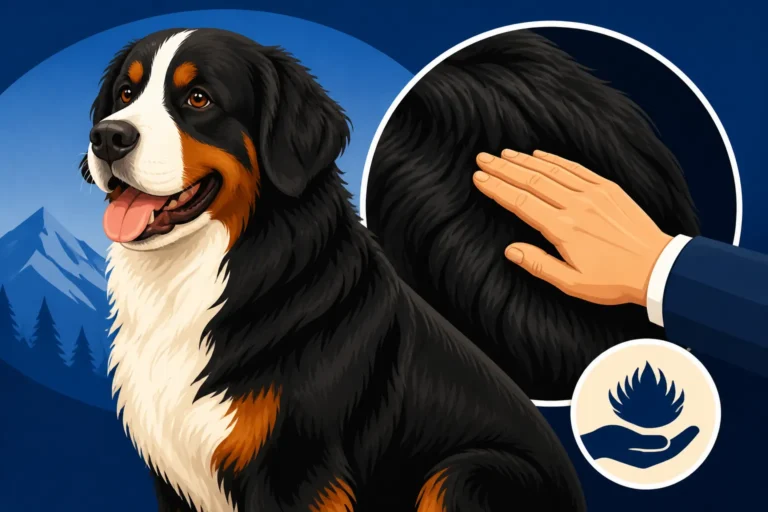
Bernese Mountain Dogs have a long double coat: a topcoat over a dense undercoat. Loose hair can collect in the coat and then come out during brushing or fall around the house, with heavier shedding often noticeable during seasonal coat changes. If you are picturing a home without dog hair, it helps to understand the usual Berner experience first. The Bernese Mountain Dog Shed and What It Fills
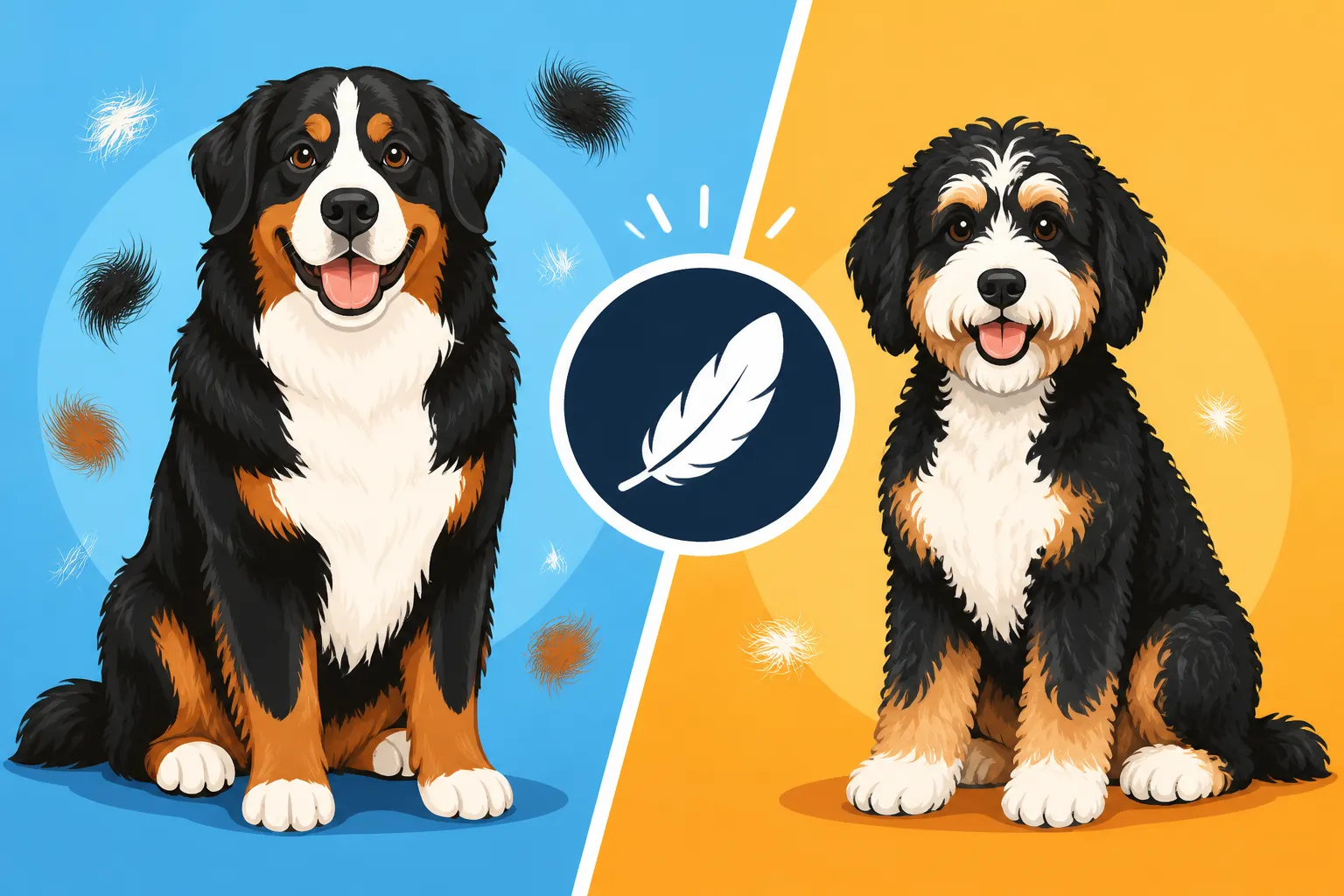
A Bernedoodle is a Bernese Mountain Dog crossed with a Poodle. Poodles have a different coat structure, and the Poodle influence may produce a curlier or wavier coat that holds loose hairs rather than dropping them as readily onto floors and furniture. That can make some Bernedoodles seem much lower-shedding in daily life.
But “Bernedoodle” describes a cross, not one predictable coat type. Two puppies from the same litter may grow into coats that differ in curl, density, texture, and shedding. Even a puppy with tight curls can still lose hair; it may simply remain caught in the coat until brushing removes it.
Generations offer clues, not a guarantee
You may see labels such as F1, F1b, or multigenerational used to describe a Bernedoodle’s breeding. An F1 is generally a first-generation cross between a Bernese Mountain Dog and a Poodle. An F1b is typically a Bernedoodle crossed back to a Poodle. Because that backcross increases the Poodle share of the ancestry, some people look to F1b dogs when seeking a curlier, potentially lower-shedding coat.
That label is a clue about ancestry, not a promise about the individual dog. Coat traits do not always combine in a simple, predictable way. A puppy may inherit a coat that sheds more than expected, or one that tangles easily and needs frequent care even if little hair falls on the floor.
If you are considering a puppy, ask the breeder about the coat types of both parents and adult dogs from previous litters. Photos of adult offspring can be more informative than a puppy’s soft, changing coat. Still, neither photos nor generation labels can guarantee how much a particular dog will shed as an adult.
How Bernedoodle and Bernese Mountain Dog Coats Compare
Hair around the home versus hair caught in the coat
A Berner’s shedding can be easy to see: loose hair may collect on clothing, rugs, car seats, and furniture. The amount varies by dog, coat condition, season, and brushing routine. For a closer look at what that can mean week to week, see How Much a Bernese Mountain Dog Sheds in a Week.
A curlier Bernedoodle may leave less visible hair around the home because loose strands can get trapped among the curls. That does not mean the hair has disappeared. It may build up into tangles or mats unless you brush thoroughly, right down to the skin. A quick pass over the surface can leave knots hidden underneath.
So the practical difference is often where the hair ends up and what work it creates. A Berner may need frequent brushing and more cleanup during shedding periods. A curlier Bernedoodle may need careful, regular brushing to prevent mats and professional grooming to keep the coat manageable. Less hair on the sofa does not automatically mean less maintenance overall.
A quick comparison of the usual trade-offs
| Coat or care factor | Bernese Mountain Dog | Bernedoodle |
|---|---|---|
| Coat structure | Long double coat with topcoat and undercoat | Varies from straighter or wavier to curlier |
| Visible shedding | Often noticeable, with seasonal increases possible | Can be lower in some dogs, but varies widely |
| Loose hair in the coat | Brushing removes dead undercoat and loose hair | Curlier coats may trap loose hair |
| Main grooming concern | Shedding, tangles, and undercoat buildup | Mats, tangles, and keeping the coat brushed through |
| Can the coat be predicted from breed or generation alone? | Coat is more consistent with the breed type, though individuals vary | No; ancestry may offer clues but does not guarantee shedding |
| Allergy-friendly guarantee | No | No |
This comparison describes broad tendencies, not a promise about an individual dog. A Berner with a well-maintained coat may shed less in the house than you expect, while a Bernedoodle with a straighter coat may leave plenty of hair behind. The dog’s actual coat and your grooming routine matter more than a label.
If you are trying to judge the workload, consider brushing the entire dog rather than just the back and sides. The areas behind the ears, under the legs, around the collar, and in the furnishings can be where tangles quietly start. Brushing Out a Bernese Mountain Dog's Undercoat offers a useful sense of the brushing involved with the Berner coat.
What to Ask Before Choosing a Bernedoodle
Look beyond the puppy’s curls
A young Bernedoodle’s coat can change as the dog matures. The fluffy coat you see during a visit may not show how dense, curly, or difficult to maintain the adult coat will become. Ask the breeder what coat changes owners of previous puppies have noticed, and whether they can connect you with people raising adult dogs from related litters.
Ask what the parents’ coats are like in everyday life, not only whether they look curly in photographs. Find out how often the adult dogs are brushed, whether they mat easily, and how much hair owners see around the house. If the breeder describes a dog as low-shedding, ask what that means in practical terms and whether it varies among puppies.
It is also reasonable to ask what grooming routine the breeder recommends and what the puppy is being introduced to before going home. Calm handling for brushing, bathing, and visits to a groomer can make a big difference later, especially for a large dog whose coat takes time to work through.
Think about allergies as well as visible shedding
Lower shedding does not make a dog reliably allergy-safe. People who react to dogs may respond to proteins found in dander, saliva, or urine, not simply to loose hair. A Bernedoodle that leaves fewer hairs on the floor can still trigger symptoms, and individual reactions differ. Living With a Bernese Mountain Dog and an Allergy explains why hair quantity alone is not a dependable way to judge allergy risk.
If allergies are part of your decision, spend time around adult dogs with the coat type you are considering, ideally more than once and in a setting where you can notice your own reaction. A brief outdoor meeting may not tell you how you will feel after sharing a home with a dog. A breeder’s assurance or a puppy’s coat texture cannot substitute for that experience.
It is also worth being honest about the care you can keep up with. If daily or near-daily brushing sounds unrealistic, a coat that traps loose hair may become frustrating even if it sheds less. If frequent vacuuming is your biggest concern, a curlier Bernedoodle may be appealing, but you will still need to plan for brushing and coat maintenance.
Managing Shedding and Grooming in Either Dog
Set up a routine that fits the coat
For a Bernese Mountain Dog, regular brushing helps remove loose hair and check for tangles, especially in the dense areas and feathering. A suitable brush or undercoat rake can make the work more effective, but technique matters: rough or hurried brushing can irritate the skin and still miss compacted hair near the roots. Which Brush a Bernese Mountain Dog's Coat Needs covers the tools that may be useful for the breed.
For a Bernedoodle, the right routine depends on whether the coat is straighter, wavier, or curlier. Work in small sections and check that you can reach through the coat to the skin. Pay close attention to places where friction and moisture encourage tangles, such as behind the ears, under a harness, and around the legs. If brushing turns into a battle or you keep finding mats, ask a groomer to demonstrate a manageable routine.
Keep grooming tools accessible instead of treating brushing as a major event you put off until the coat is badly tangled. Some owners keep a brush near the dog’s usual resting spot and do a few sections at a time. If you are shopping for a brush, comb, or coat-care supplies, Chewy is one place people may compare options; choose tools based on the individual coat and ask a groomer for guidance if you are unsure.
Plan for the work you will actually notice
If you choose a Berner, expect to manage loose hair as part of normal life. A washable throw on a favorite couch, a regular vacuuming routine, and a brush that suits a double coat can make cleanup less overwhelming. For a better picture of the full grooming routine, see Grooming a Bernese Mountain Dog's Long Tricolor Coat.
If you choose a Bernedoodle, do not assume that less hair on the floor means you can skip brushing. Loose hair trapped in curls can form mats that are uncomfortable and difficult to remove. Regular grooming appointments may be part of the plan, particularly if you prefer a shorter, easier-to-maintain coat. The specific routine depends on the dog’s coat and the style you keep.
Before bringing either dog home, think through the unglamorous details: who will brush the dog, where grooming will happen, how you will keep hair out of the car, and whether you can manage a large dog for a full grooming session. Chewy may be useful for comparing everyday items such as combs, brushes, and washable covers, but the right setup depends on your home and the dog’s needs. Chewy is also a practical place to look for replacement grooming supplies once you know which tools suit the coat.
The fairest answer is that some Bernedoodles shed less visibly than Bernese Mountain Dogs, especially when they inherit a curlier coat. Others shed enough to surprise their owners, and even lower-shedding coats can demand substantial grooming. Choose based on the adult coat you can realistically care for, not the assumption that a cross will leave little hair or be allergy-proof.
Disclaimer
This article is for general informational purposes only and does not constitute professional advice. Laws, prices and regulations vary by location and change over time. Consult a qualified professional for guidance on your specific situation.