Why Age Four Is Too Late to Insure a Berner
It’s a heartbreaking reality many Bernese Mountain Dog owners face: your beloved Berner reaches a certain age, perhaps around four years old, and suddenly you realize that securing comprehensive pet insurance coverage has become an uphill battle, if not impossible. This guide will delve into why insuring your Berner effectively often has a surprisingly narrow window and what those tough age cutoffs and pre-existing condition clauses truly mean for your cherished companion and your wallet.
The Stark Reality: Why Age Matters So Much for Bernese Mountain Dog Insurance
Bringing a Bernese Mountain Dog into your life is a commitment to a magnificent, loving companion, but it also comes with the understanding that this breed, as wonderful as it is, is unfortunately predisposed to a number of serious health conditions and has a tragically short lifespan compared to many other breeds. When it comes to pet insurance, this reality is often reflected in their policies, especially as your Berner ages. Insurers, like any business, assess risk, and for a breed known for its health challenges, that risk profile shifts dramatically with each passing year.
The Ticking Clock: Insurers' Age Policies
Many pet insurance providers have age limits for new enrollments, especially for comprehensive plans that cover accidents and illnesses. You might find that once your Berner hits around 5, 6, or even 7 years old, the options dwindle significantly. For a Bernese Mountain Dog, a breed whose average lifespan is often cited as only seven to eight years, hitting age four can feel like they're already middle-aged or even approaching their senior years in the eyes of an insurer.
Imagine you've had a perfectly healthy Berner, "Barnaby," for four glorious years. He's full of life, romping in the snow, and generally seems robust. You might think, "Now's a good time to get insurance, just in case." But when you start looking, you discover that the best policies are no longer available to him. The logic from the insurance side is that with a breed like the Bernese Mountain Dog, serious health issues, such as various forms of cancer or severe joint problems, tend to manifest as they mature. Insuring a younger, seemingly healthy puppy allows the insurer to collect premiums before these statistically probable, expensive conditions arise. If you wait until age four, Barnaby is closer to the age when these conditions are more likely to appear, making him a much higher risk for the insurer right from the start of the policy. This isn't just a Bernese thing; it's common across many large and giant breeds. For more on their health, you might want to read Why a Bernese Mountain Dog Lives Only Seven or Eight Years.
When "Too Late" Hits Hard: The Pre-Existing Condition Trap
Even more critical than the age cutoff for new policies is the pervasive issue of "pre-existing conditions." This is where the emotional toll and financial burden truly hit home for many Berner owners. A pre-existing condition is generally defined by insurance companies as any illness, injury, or symptom that was observed or diagnosed before your policy started or during a waiting period. The brutal truth? Insurance almost never covers these conditions.
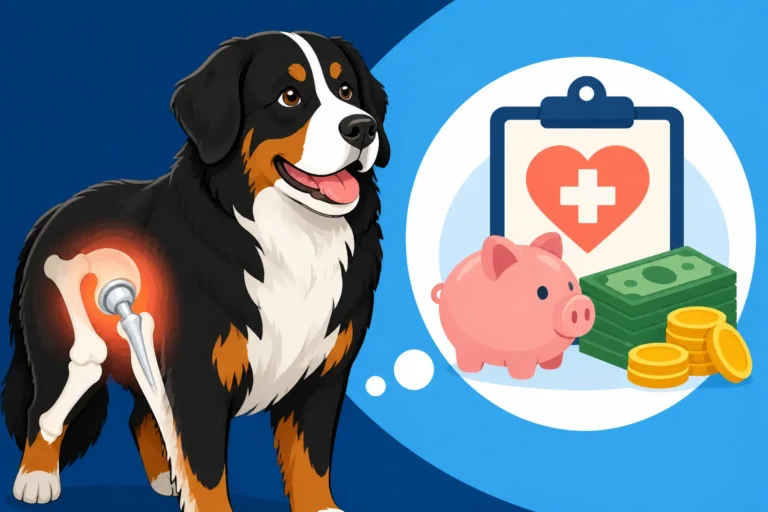
Let's say your four-year-old Berner, "Daisy," developed a subtle limp a few months ago. You took her to the vet, they did some X-rays, and while nothing definitive was found, they suspected early arthritis or a soft tissue injury. You decide to get insurance right after this. Fast forward six months, and Daisy's limp worsens, leading to a diagnosis of severe hip dysplasia that requires expensive surgery. Because those initial subtle symptoms, even if not fully diagnosed, occurred before your insurance policy was active, the hip dysplasia will almost certainly be considered a pre-existing condition and therefore excluded from coverage. This is incredibly frustrating, as often the early signs of serious conditions in Bernese Mountain Dogs, like The Bernese Mountain Dog Whose Back Legs Give Out or The Front-End Lameness a Bernese Mountain Dog Develops, can be subtle and hard to pin down initially. It highlights why getting coverage when your Berner is a healthy puppy, ideally before any vet visits for even minor concerns, is paramount. Many owners don't fully grasp the implications of these clauses until it's too late.
Understanding the Big Health Risks Facing Your Berner
The reason pet insurance companies are so particular about age and pre-existing conditions in Bernese Mountain Dogs isn't arbitrary; it's rooted in the breed's well-documented health profile. Berners are magnificent, but they are also predisposed to some serious and often very expensive health issues. Understanding these risks helps explain why early insurance is not just a recommendation, but almost a necessity.
The Shadow of Cancer: A Common Berner Concern
Cancer is, unfortunately, the leading cause of death in Bernese Mountain Dogs, with some studies suggesting it accounts for half or more of all Berner fatalities. This isn't just one type of cancer; it includes highly aggressive forms like Histiocytic Sarcoma, Lymphoma, and Mast Cell Tumors. These can strike at surprisingly young ages, sometimes even before age four, but certainly become more prevalent as the dog matures.
Imagine "Bear," your typically boisterous Berner, is just past his fourth birthday when you notice a small, firm lump on his rib cage. Or perhaps he seems a little more tired than usual, and his appetite isn't quite what it was. These are the kinds of vague early signs that can precede a devastating diagnosis of cancer. If you don't have insurance in place before these symptoms appear, the extensive diagnostics (biopsies, imaging like CT scans, bloodwork) and treatments (chemotherapy, radiation, surgery) will fall entirely on you. These bills can quickly reach tens of thousands of dollars, forcing agonizing decisions about your pet's care based on financial capability rather than what's best for them. The Cancer That Kills Half of All Bernese Mountain Dogs is a harsh but vital read for any Berner owner.
Joint Issues and Other Early-Onset Troubles
Beyond cancer, Bernese Mountain Dogs are also notorious for orthopedic issues, including hip and elbow dysplasia, osteochondritis dissecans (OCD), and cruciate ligament tears. Given their large, rapidly growing frames, these conditions can start presenting symptoms even in puppyhood or early adulthood. While ethical breeders do extensive health testing on parent dogs to reduce the risk, it's not a guarantee, and genetics are only one piece of the puzzle.
Consider "Moose," a lively Berner who, at two years old, starts showing a subtle stiffness after exercise or has trouble getting up from a lying position. You might initially write it off as growing pains or a minor strain. However, these could be the early warning signs of progressive joint disease. If you wait to insure Moose until he's four, and these "minor" issues have been noted in his vet records, any subsequent, more severe diagnosis requiring costly surgery or lifelong medication for arthritis would likely be deemed pre-existing. The preventative measures and early interventions discussed in articles like Starting a Bernese Mountain Dog on Joint Medication Young are important, but for financial coverage, early insurance enrollment is key. Other health concerns, such as bloat, a life-threatening gastric emergency, can also occur at any age, emphasizing the need for robust coverage from the start. Bloat in a Deep-Chested Bernese Mountain Dog highlights just how quickly this can become a dire situation requiring immediate, expensive intervention.
| Age of Bernese Mountain Dog | Likelihood of Pre-Existing Condition Exclusion | Availability of Comprehensive Plans | Typical Cost of Claims |
|---|---|---|---|
| Puppy (8 wks – 1 year) | Very Low | High | Lower, but growing |
| Young Adult (1 – 3 years) | Low | High | Moderate |
| Middle-Aged (4 – 6 years) | Moderate to High | Decreasing, higher premiums | High, due to common issues |
| Senior (7+ years) | Very High | Very Limited, high premiums | Very High |
Navigating Insurance Options: What Happens When You're Past the Prime Window
So, what if you've missed that ideal window? What if your Bernese Mountain Dog is already four or five, and you're just now realizing the importance of pet insurance after a scary vet visit or a conversation with another Berner owner? It's easy to feel disheartened, but it's important to understand your remaining options, even if they aren't as comprehensive as what was available earlier.
The Limited Lifelines: Accident-Only Coverage and Wellness Plans
When comprehensive accident and illness plans become elusive for an older Bernese Mountain Dog, you might find that insurers still offer more limited options. Accident-only plans, as the name suggests, cover injuries resulting from accidents—like if your Berner breaks a leg falling off a step or gets hit by a car. These plans typically have no age limits and do not consider pre-existing illnesses, because they aren't meant to cover illness at all. While this doesn't help with cancer or joint disease, it can provide a safety net for unexpected traumas, which can still be very costly.
Wellness plans, on the other hand, are not insurance at all but rather subscription services that help budget for routine care like vaccinations, annual check-ups, and parasite prevention. They don't cover unexpected illnesses or accidents. Some companies, such as Healthy Paws, tend to focus more on comprehensive accident and illness plans and may have stricter age limits for new enrollments, while others might offer a wider array of accident-only or customizable plans for older dogs. While better than nothing, these limited plans often fall short of covering the major, breed-specific illnesses that are so common in Berners. It's crucial to read the fine print and understand exactly what is and isn't covered, especially regarding age-related exclusions or conditions that may have already subtly appeared.
Self-Insuring: Building Your Own Berner Health Fund
For many owners of older Bernese Mountain Dogs who can't get comprehensive insurance, or for those who simply prefer to manage their own risk, "self-insuring" becomes the primary strategy. This means setting aside a dedicated emergency fund specifically for your dog's veterinary care.
The idea is that instead of paying monthly premiums to an insurance company, you put that same amount, or more, into a high-yield savings account that's exclusively for your Berner. If your dog needs expensive treatment, the money is there. If they don't, you keep the funds. The challenge, particularly with a breed like the Bernese Mountain Dog, is that their potential health costs can be enormous. Oncology bills, for example, can easily reach well into the five figures. You need a substantial fund, ideally tens of thousands of dollars, to truly cover the worst-case scenarios. This requires discipline and consistent saving. Think about starting this fund the moment you bring your Berner puppy home, even if you also have insurance. It can supplement coverage, or eventually become your primary safety net if insurance becomes unattainable or too expensive as your Berner ages.
When to Reconsider: Switching Insurers and the Age Factor
Even if you have insurance for your Bernese Mountain Dog, you might periodically consider switching providers, perhaps for better rates or different coverage options. However, for an older Berner, this decision comes with significant risks. Each time you switch to a new insurer, your dog's entire health history effectively restarts. Any conditions diagnosed or even noted by a vet under your old policy will become "pre-existing" under the new policy.
For example, if your Berner "Gus" had a bout of pancreatitis at age three, covered by his original insurer, and you switch providers when he's five, that pancreatitis will likely be excluded by the new company. This applies even if he hasn't had another episode. This rule can be incredibly frustrating for loyal policyholders. Therefore, once you have a good comprehensive policy for your Bernese Mountain Dog, especially one that has been continuously renewed since puppyhood, it's often wise to stick with it, even if the premiums rise. The benefit of existing coverage for any condition that developed during the policy's tenure usually outweighs the potential savings of switching to a new insurer who will then deem those conditions pre-existing. This is a critical point that often catches people off guard when they’re trying to navigate something like Whether a Bernese Mountain Dog Policy Is Worth Renewing at Six. Always weigh the potential loss of coverage for established conditions against any perceived benefits of a new policy.
The Path Forward: Protecting Your Berner's Future, No Matter Their Age
Whether you manage to secure insurance or you're navigating life with an older Bernese Mountain Dog whose health risks are self-funded, there are always proactive steps you can take to give your furry family member the best possible quality of life. Even if traditional insurance options have passed you by, your commitment to their well-being remains paramount.
Proactive Health Management and Regular Vet Visits
One of the most powerful tools you have as a Bernese Mountain Dog owner, regardless of their age or insurance status, is a strong relationship with a veterinarian who understands the breed. Regular check-ups, even when your Berner seems perfectly healthy, are crucial. For a breed with a shorter lifespan and a predisposition to serious illnesses, a veterinarian can often spot subtle changes or early warning signs that you might miss.
For instance, your vet might notice a slight change in your Berner's gait, a new murmur, or a barely palpable lump during a routine exam. Catching issues early can sometimes lead to more effective and less invasive treatments, or at least buy you valuable time. Discussing a The Bernese Mountain Dog Health Panel with your vet, which often includes baseline bloodwork and potentially screenings for conditions like Von Willebrand disease, can be incredibly insightful. Companies like Chewy and Ollie offer specialized food options, but diet alone cannot prevent genetic diseases. Working with your vet to maintain an ideal body weight is also vital, as extra pounds put immense strain on a Berner's already susceptible joints. If you find yourself in a situation where insurance isn't an option, your vet can also help you prioritize what preventative care and diagnostics are most critical given your Berner's age and health history, helping you allocate your self-insurance funds wisely.
Advocacy and Research for Breed-Specific Health
As a Bernese Mountain Dog owner, you are part of a wider community that is dedicated to improving the health and longevity of this beloved breed. Supporting organizations that fund research into Bernese Mountain Dog-specific diseases, such as the various forms of cancer they face, can indirectly benefit your own dog and future generations. The Berner-Garde database, for example, is an invaluable resource where breeders and owners can submit health information, helping researchers track disease prevalence and genetic links. Understanding What the Berner-Garde Database Records can illuminate the collective effort to combat these health challenges.
Staying informed about the latest treatments, palliative care options, and nutritional science relevant to aging or ill Berners can also empower you to make the best decisions. This might involve exploring alternative therapies for joint pain, learning about specialized diets for dogs undergoing chemotherapy, or simply finding supportive networks of other Berner owners who have faced similar challenges. Even if you're feeling the sting of realizing you might be too late for comprehensive insurance, remember that your dedication, informed decision-making, and proactive care for your Bernese Mountain Dog are the most valuable assets you can provide.
Disclaimer
This article is for general informational purposes only and does not constitute professional advice. Laws, prices and regulations vary by location and change over time. Consult a qualified professional for guidance on your specific situation.