Bernese Mountain Dogs Against the Other Giants
Bringing a giant dog into your life is a deeply rewarding experience, but it comes with a unique set of considerations that go far beyond just finding a bigger food bowl. Many people fall in love with the majestic Bernese Mountain Dog without truly understanding how their needs, health, and daily care differ from other large breeds, let alone smaller ones. This guide aims to help you navigate the world of giant dog breeds, specifically contrasting the beloved Bernese Mountain Dog with its colossal cousins, so you can make informed decisions and provide the best possible life for your grand companion.
Defining "Giant Breed": What Makes Them Different?
When we talk about "giant breeds," we're not just discussing dogs that are a bit bigger than your average Labrador. These are canines that often exceed 100 pounds, stand tall enough to counter-surf without even trying, and come with a completely different set of physical and health characteristics. Understanding these fundamental differences is crucial before you even start comparing specific breeds, as they lay the groundwork for everything from their lifespan to their dietary needs.
More Than Just Size: Beyond the Tape Measure
It's easy to get caught up in the sheer visual impact of a giant breed. We see their imposing stature, their powerful build, and perhaps their gentle eyes, and our hearts just melt. But their size isn't merely an aesthetic trait; it dictates their physiology, their skeletal development, and their metabolic rate in profound ways. For instance, a Bernese Mountain Dog puppy doesn't just grow larger; its bones and joints develop at a rapid, yet fragile, pace that requires specific nutritional management and limited physical exertion to prevent lifelong issues. This rapid growth spurt is common across many giant breeds, making their puppyhood a delicate dance between adequate nutrition and preventing injury. Unlike a smaller dog whose growth plates fuse relatively quickly, a giant breed's skeletal system takes much longer to mature, often not reaching full physical maturity until 18 months or even two years of age. This extended development period means their joints are vulnerable for a longer time, and activities that would be harmless for a mature dog can be detrimental to a growing giant.
The Lifespan Conundrum: A Shared Giant Struggle
One of the most heartbreaking realities of owning a giant breed is their typically shorter lifespan. While smaller dogs can often live into their teens, many giant breeds are considered "senior" by the age of six or seven. The Bernese Mountain Dog is unfortunately a prime example, with an average lifespan of only Why a Bernese Mountain Dog Lives Only Seven or Eight Years. This isn't a flaw in the breed, but rather a characteristic common to many very large dogs. The accelerated aging process in giant breeds is still a subject of scientific study, but theories point to faster cell turnover and higher metabolic rates potentially contributing to a quicker onset of age-related diseases. This means that from the moment you bring a giant puppy home, you're on a fast-forward timeline. Owners of giant breeds often find themselves saying goodbye far sooner than they ever anticipated, which can be a significant emotional challenge. Understanding this reality from the outset helps owners prioritize quality of life, preventative care, and savor every moment, knowing that their time together, though precious, may be shorter than with other breeds.
The Bernese Mountain Dog's Unique Charm: Beyond Their Size
While all giant breeds command attention, the Bernese Mountain Dog holds a special place in many hearts. Their stunning tricolor coats, gentle demeanor, and unwavering loyalty make them incredibly appealing. However, these very traits also contribute to their specific needs and considerations, setting them apart even within the giant breed category.
Temperament: The Gentle Giants of the Alps
The Bernese Mountain Dog's temperament is often described as sweet, docile, and affectionate, earning them the moniker "gentle giants." They are known for being incredibly devoted to their families, forming strong bonds and thriving on companionship. This isn't a dog that wants to be left alone in the backyard all day; they want to be right there with you, whether you're watching TV, working in the garden, or simply moving from room to room. Their inclination to lean against you, a characteristic behavior, is a physical manifestation of their desire for closeness and reassurance, something that many Berner owners cherish. This intense attachment, while lovely, can also mean they are prone to separation anxiety if not properly socialized and trained from a young age. Unlike some other large breeds bred for more independent roles, the Berner thrives on interaction and can become quite stressed or destructive if left isolated for long periods. The Bernese Mountain Dog That Cannot Bear Being Left delves deeper into this particular challenge. Their good nature generally extends to children and other pets, making them excellent family dogs, but their sheer size always necessitates supervision, especially with very young children who could easily be knocked over accidentally during enthusiastic play.
Coat and Grooming: A Beautiful Burden
That magnificent, flowing tricolor coat is undeniably one of the Bernese Mountain Dog's most striking features. It's thick, luxurious, and perfectly suited for the cold, mountainous regions of their Swiss ancestry. However, it's also a double coat that sheds, and boy, does it shed! Bernese Mountain Dogs are not a low-maintenance grooming breed. They require regular, thorough brushing, often several times a week, to prevent mats and to manage the substantial amount of hair they release, especially during seasonal blows. Grooming a Bernese Mountain Dog's Long Tricolor Coat can attest to the dedication needed. This isn't just about aesthetics; proper grooming helps keep their skin healthy, prevents uncomfortable tangles, and provides an opportunity for owners to check for lumps or skin issues that might be hidden beneath the dense fur. Comparing this to a short-coated giant like a Great Dane, the grooming commitment is significantly higher for a Berner. You'll invest in good quality brushes, rakes, and possibly even a high-velocity dryer, and you'll become very familiar with your vacuum cleaner. Even with diligent effort, you'll find Berner hair everywhere – a small price to pay for that gorgeous coat, say loyal owners.
Activity Levels: More Than Just a Couch Potato
Despite their size and somewhat placid nature indoors, Bernese Mountain Dogs are not purely sedentary animals. They were historically working dogs, bred to pull carts, drive cattle, and act as farm guardians in the Swiss Alps, as explored in What a Bernese Mountain Dog Did on a Swiss Farm. This means they possess a natural athleticism and a need for regular, moderate exercise to stay healthy and happy. A long daily walk, a romp in a securely fenced yard, or participation in dog sports like drafting or obedience can fulfill their physical and mental stimulation needs. However, their joint health, especially during growth, makes high-impact activities inappropriate for young Berners. They aren't typically "marathon runners" like some retrieving breeds, nor do they possess the boundless energy of a Border Collie. Their exercise needs are more about consistency and quality than extreme intensity. Compared to a more athletic giant breed like a Leonberger, a Bernese Mountain Dog might be content with slightly less rigorous activity, but they still require commitment to daily movement to prevent obesity and maintain muscle tone, both crucial for their long-term joint health.
Comparing Berners to Other Mountain Dogs: The Swiss Cousins
The Bernese Mountain Dog is part of a quartet of Swiss mountain breeds, all sharing a common heritage and general appearance, yet each with distinct characteristics. Understanding these differences helps appreciate the unique aspects of the Berner while also recognizing the shared traits that bind these magnificent dogs together.
Greater Swiss Mountain Dog: The Smoother, Stronger Kin
The Greater Swiss Mountain Dog is perhaps the most visually similar to the Bernese, often mistaken for a short-haired Berner. They share the same striking tricolor pattern and sturdy build. However, the key difference is their coat: the Greater Swiss has a short, dense double coat, which means significantly less shedding and grooming effort compared to the Bernese. This practical difference can be a major factor for potential owners concerned about hair in the home or the time commitment of daily brushing. In terms of temperament, Greater Swiss tend to be a bit more assertive and confident, sometimes described as having a stronger "guardian" instinct. They are still affectionate with their families but might be a little more reserved with strangers. Physically, they often appear slightly larger and more heavily muscled, bred for even more arduous working tasks in their homeland. Their drive can be higher, making them excellent candidates for various dog sports and working roles, often requiring a bit more mental and physical engagement than some Berners.
Appenzeller and Entlebucher: The Smaller, Spunkier Relatives
Moving down in size within the Swiss mountain dog family, we find the Appenzeller Sennenhund and the Entlebucher Sennenhund. Both are smaller than the Bernese and Greater Swiss, but still substantial dogs, and they share the tricolor coat pattern, though sometimes with more intricate markings. The Appenzeller is known for its high energy levels, lively personality, and often a distinctive "post horn" tail curl. They are incredibly agile and possess a strong herding drive, making them much more demanding in terms of exercise and mental stimulation than a Bernese. Similarly, the Entlebucher is the smallest of the Sennenhunds, a compact, powerful dog with incredible agility and boundless energy. They are intensely loyal and intelligent but require an experienced owner capable of channeling their working drive. Neither the Appenzeller nor the Entlebucher would typically be considered "gentle giants" in the same way as a Berner; their temperaments are far more spirited and independent, often exhibiting a keen alertness and vocal nature that reflects their working heritage. Choosing between a Berner and one of these smaller Swiss cousins often comes down to lifestyle, desired activity level, and the amount of "presence" you want in your home.
Bernese Mountain Dogs vs. Other Famous Giants: A Closer Look
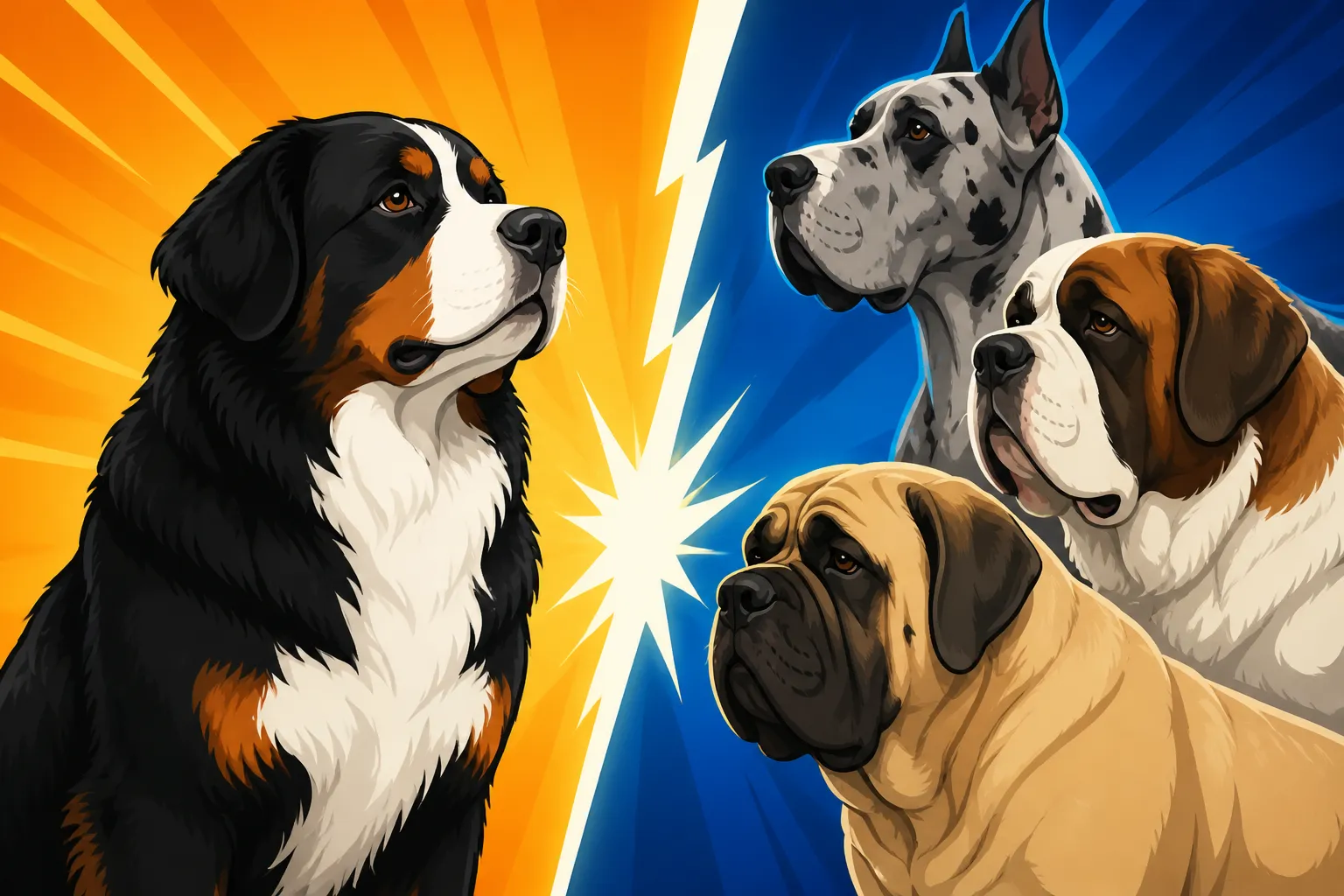
Beyond their Swiss relatives, the Bernese Mountain Dog often gets compared to other well-known giant breeds from around the world. While they share the commonality of immense size, their histories, temperaments, and physical attributes create distinct profiles.
The Newfoundland: The Water-Loving Gentle Giant
The Newfoundland is another prime example of a "gentle giant," renowned for its sweet nature and impressive size, often rivaling or exceeding the Bernese Mountain Dog in weight and stature. Hailing from Newfoundland, Canada, they were originally bred for water rescue and as working dogs for fishermen. This heritage gives them a strong affinity for water, a thick, oily double coat that is virtually waterproof, and webbed feet. While both breeds are known for being good with children and having a calm disposition, the Newfoundland's grooming needs, though also substantial due to its dense coat, might focus more on preventing matting and managing shedding (which is considerable) rather than the precise tidiness often associated with a Berner's feathering. They also tend to drool more than Berners, a point of consideration for many owners. Activity-wise, Newfoundlands enjoy swimming and can be quite active, but like Berners, they are prone to joint issues and heat intolerance. Their overall demeanor is often described as slightly more placid, almost "bear-like," compared to the Bernese's eager-to-please, affectionate lean.
The Saint Bernard: The Ultimate Alpine Rescuer
When most people think of a giant mountain dog, the Saint Bernard is often the first breed that comes to mind, thanks to its iconic image as an alpine rescuer. These massive dogs, hailing from the Swiss Alps just like the Bernese, are generally larger and heavier than Berners, with some males tipping the scales at over 180 pounds. They come in both long-haired and short-haired varieties, with the long-haired version requiring significant grooming similar to a Berner, though their coat texture can be quite different. Saint Bernards are famous for their benevolent, patient, and calm temperament, making them wonderful family dogs. However, their sheer bulk means everything is magnified – their food consumption, their slobber (which can be prodigious, especially in the looser-lipped varieties), and the space they occupy. While both Berners and Saint Bernards are powerful, the Saint Bernard's original purpose was different; they were search and rescue dogs, enduring harsh conditions and often working more independently. Their activity needs are moderate, similar to the Bernese, but their size can make extended walks or vigorous play more challenging on their joints. Their health concerns also overlap, with a strong predisposition to joint issues and certain cancers.
The Great Pyrenees: The Stoic Livestock Guardian
The Great Pyrenees stands apart from the Bernese Mountain Dog in both purpose and temperament. Originating from the Pyrenees mountains between France and Spain, these magnificent white dogs were bred for centuries as livestock guardians, meant to live with and protect flocks from predators. This history has instilled in them a unique blend of traits: they are incredibly calm, patient, and devoted to their "flock" (their human family), but also fiercely protective and independent thinkers. Unlike the Bernese, who thrives on human companionship and seeks constant interaction, the Great Pyrenees is content to patrol its territory and make its own decisions. They possess a deep bark, meant to deter predators, and are often nocturnal, a remnant of their guarding instincts. Their thick, weather-resistant white coat is prone to shedding and matting, requiring regular brushing, though the contrast of a white coat against dark furniture presents a different kind of grooming challenge than the Berner's tricolor fur. Their exercise needs are moderate, but they require a securely fenced yard, as their protective instincts can lead them to wander. When considering a Great Pyrenees versus a Bernese, a potential owner must weigh the Berner's affectionate, integrated family-dog nature against the Pyrenees' more independent, guardian-oriented personality.
The Leonberger: The Majestic "Gentle Lion"
The Leonberger is a stunning giant breed, often described as a "gentle lion" due to its majestic appearance and flowing mane-like coat. Developed in Leonberg, Germany, by crossing Saint Bernards, Newfoundlands, and Pyrenean Mountain Dogs, the Leonberger truly embodies a blend of these noble breeds. They are similar in size to a larger Bernese, or sometimes even a Saint Bernard, and share the long, double coat, which is typically shades of yellow, red, or reddish brown, often with a black mask. Their temperament is a wonderful mix: known for being extremely friendly, playful, and patient, particularly with children. They are often more energetic and agile than a Bernese or Saint Bernard, enjoying activities like swimming, hiking, and even carting. This higher energy level means they require more consistent and varied exercise to prevent boredom and maintain their physical condition. Like the Bernese, they thrive on being part of the family and can develop separation anxiety if left alone too much. Grooming needs are similar to the Bernese, requiring regular brushing to manage their dense coat and prevent mats. The Leonberger represents a giant breed that combines a strikingly regal appearance with a genuinely playful and affectionate nature, making them a fantastic choice for active families who appreciate a physically capable and mentally engaging giant companion.
| Breed | Average Height (Inches) | Average Weight (Pounds) | Coat Type | Grooming Needs | Temperament | Lifespan (Years) | Common Health Concerns |
|---|---|---|---|---|---|---|---|
| Bernese Mountain Dog | 23-27 | 70-115 | Long, double | High | Affectionate, gentle, loyal, sometimes reserved | 7-8 | Cancer, joint issues, bloat |
| Greater Swiss Mt. Dog | 25.5-28.5 | 85-140 | Short, double | Moderate | Confident, watchful, loyal, active | 8-11 | Joint issues, bloat |
| Newfoundland | 26-28 | 100-150 | Long, double | High | Sweet, patient, docile, water-loving, drools | 9-10 | Heart disease, joint issues, bloat |
| Saint Bernard | 26-30 | 120-180+ | Short or long | Moderate to High | Calm, benevolent, patient, very large, drools | 8-10 | Joint issues, bloat, heart disease |
| Great Pyrenees | 25-32 | 85-120+ | Thick, double | High | Calm, independent, protective, aloof with strangers | 10-12 | Joint issues, bloat, bone cancer |
| Leonberger | 25.5-31.5 | 90-170 | Long, double | High | Friendly, playful, calm, intelligent, active | 8-9 | Cancer, joint issues, heart disease, bloat |
Health Considerations Across Giant Breeds: A Sobering Reality
While specific health issues can vary from breed to breed, giant dogs as a whole unfortunately share a predisposition to certain conditions due to their rapid growth and immense size. This is a critical factor for any potential owner, as these issues can lead to significant veterinary expenses and heartbreaking decisions. For the Bernese Mountain Dog, understanding these commonalities, and their specific vulnerabilities, is paramount.
Joint Issues: A Common Achilles' Heel
Almost without exception, joint diseases are a major concern across all giant breeds, including the Bernese Mountain Dog. Conditions like hip and elbow dysplasia, osteochondritis dissecans (OCD), and arthritis are prevalent. Joint Disease in a Hundred Pound Bernese Mountain Dog is a reality many owners face. These conditions often stem from a combination of genetics, rapid growth, and environmental factors during puppyhood. A hundred pounds or more of weight puts immense strain on developing and aging joints. This means that a giant breed owner must be incredibly diligent about sourcing puppies from reputable breeders who perform all recommended health clearances, such as OFA (Orthopedic Foundation for Animals) certifications for hips and elbows on both parent dogs. Beyond genetics, careful management of a giant puppy's diet and exercise is vital. Over-feeding or over-exercising a growing giant can exacerbate genetic predispositions, leading to painful and debilitating joint problems later in life. Often, managing these conditions in older dogs involves lifelong pain medication, joint supplements, and sometimes expensive surgeries, underscoring the financial and emotional commitment required.
Cancer: A Shadow Over Many Large Breeds
Another devastating reality that casts a long shadow over many giant breeds, and particularly the Bernese Mountain Dog, is a higher incidence of various cancers. For Berners, Histiocytic Sarcoma in a Bernese Mountain Dog is a particularly aggressive and common form of cancer that sadly claims many lives prematurely. But it's not just Berners; other giant breeds like Great Danes, Saint Bernards, and Newfoundlands also face higher risks of osteosarcoma (bone cancer), lymphoma, and other aggressive tumors. The reasons behind this increased cancer risk in giant breeds are complex and still being researched, but genetic factors, large body size, and shorter lifespans are often implicated. This means that owners must be hyper-vigilant for any unusual lumps, limping, changes in appetite, or unexplained weight loss, as early detection can sometimes improve outcomes. Regular veterinary check-ups, even for seemingly healthy older giants, are crucial. The emotional toll of a cancer diagnosis in a young dog is immense, and the financial cost of treatment, ranging from surgery and chemotherapy to palliative care, can be staggering. This shared vulnerability to cancer is a stark reminder of the unique health challenges inherent in these magnificent breeds.
Bloat: The Silent Killer
Gastric Dilatation-Volvulus (GDV), commonly known as bloat, is a life-threatening condition that disproportionately affects deep-chested large and giant breeds, including Bernese Mountain Dogs, Great Danes, Saint Bernards, and Weimaraners. Bloat in a Deep-Chested Bernese Mountain Dog is a terrifying emergency that can turn fatal in a matter of hours. This condition involves the stomach filling with gas and then twisting, cutting off blood flow and trapping air. Symptoms often include a distended abdomen, unproductive retching, restlessness, and pain. Owners of giant breeds must be educated on the signs of bloat and understand that it requires immediate emergency veterinary intervention. Prophylactic gastropexy, a surgical procedure that tacks the stomach to the abdominal wall to prevent it from twisting, is often recommended, especially when a dog is already undergoing another abdominal surgery like spaying or neutering. While it doesn't prevent the stomach from dilating with gas, it dramatically reduces the risk of the deadly torsion. The risk of bloat influences how many giant breed owners feed their dogs – often multiple smaller meals a day instead of one large one, and avoiding strenuous exercise immediately before or after eating. It's a constant concern that weighs on the minds of those who live with these majestic dogs.
Living With a Giant: Practicalities and Preparation
Beyond their health and temperament, the sheer physical presence of a giant breed profoundly impacts daily life. Owning a Bernese Mountain Dog or any other giant companion means making practical adjustments to your home, routine, and even your budget. It's a commitment that requires foresight and planning.
Space and Environment: Making Room for a Big Dog
Let's be honest, a 100-pound dog takes up a lot of space! While Bernese Mountain Dogs are not typically hyperactive indoors, their large bodies need room to stretch, turn around, and flop down without constantly bumping into furniture or people. The Kind of Home a Bernese Mountain Dog Belongs In is not necessarily a sprawling mansion, but it does need to be able to comfortably accommodate their size. Tiny apartments, especially those with many stairs, might pose challenges, particularly for older dogs with joint issues. A securely fenced yard is often highly recommended, not just for exercise but also for providing a safe outdoor space. However, it's important to remember that a large yard doesn't replace the need for regular walks and mental stimulation; it simply provides an additional outlet. Consider the size of your car, too – can a giant breed comfortably fit for vet visits or trips to the park? Will they need a special ramp to get in and out as they age? These are not minor details; they are everyday realities that influence a giant dog's quality of life and an owner's convenience.
Feeding a Giant: More Than Just Quantity
Feeding a Bernese Mountain Dog, or any giant breed, isn't just about pouring more kibble into a larger bowl. Their specific nutritional needs, especially during their critical growth phases, are distinct. Giant breed puppies require specialized large-breed puppy formulas that are carefully formulated with controlled calcium and phosphorus levels to support slow, steady bone growth, helping to minimize the risk of developmental orthopedic diseases. Overfeeding a giant breed puppy, even with appropriate food, can lead to accelerated growth, which puts undue stress on their developing joints. As adults, Feeding a Hundred Pound Bernese Mountain Dog Monthly can be a significant budget item, but choosing a high-quality food designed for large breeds is still crucial. Brands like Chewy offer a wide selection of giant-breed specific foods that cater to these unique nutritional profiles. These foods typically have optimal protein-to-fat ratios and sometimes include joint-supporting ingredients. Many giant breed owners also choose to feed multiple smaller meals throughout the day rather than one large one to help reduce the risk of bloat. Fresh water must always be available, and ensuring they have appropriate, durable chew toys can help keep their large jaws occupied without risking stomach upset.
Training and Socialization: Managing a Massive Companion
Effective training and early socialization are absolutely non-negotiable for a giant breed. An untrained, ill-mannered 100-pound dog is not just inconvenient; it can be dangerous. Imagine a full-grown Bernese Mountain Dog pulling on a leash or jumping on a visitor – their size alone makes these behaviors problematic. Early puppy classes are essential for building a strong foundation, teaching basic commands, and exposing them to a variety of sights, sounds, and other friendly dogs. While Berners are generally eager to please, they can also have a stubborn streak, and their sensitivity means they respond best to positive reinforcement methods. Harsh corrections can easily "shut down" a Berner. Consistent, gentle training throughout their lives is key to managing their power and ensuring they are a joy to be around. Training a Bernese Mountain Dog Without Breaking It is a good way to approach this. Furthermore, ongoing socialization helps them remain calm and confident in new situations, preventing fear-based reactions that, in a dog of their size, could be overwhelming. From managing their excitement around other dogs to ensuring they are comfortable at the vet, continuous effort in training and socialization pays dividends in having a well-adjusted, manageable giant companion.
Disclaimer
This article is for general informational purposes only and does not constitute professional advice. Laws, prices and regulations vary by location and change over time. Consult a qualified professional for guidance on your specific situation.