The Hours a Bernese Mountain Dog Should Not Walk
It's a familiar scenario for any Bernese Mountain Dog parent: you want to get your big, beautiful companion out for their daily exercise, but the weather forecast has you staring at the thermometer with a growing sense of dread. Their thick, luscious coats and generally laid-back demeanor can make them incredibly vulnerable to overheating, and knowing exactly when it's safe to hit the pavement or the trail can feel like a guessing game with high stakes. This comprehensive guide is here to help you navigate those tricky times, ensuring your Berner stays happy, healthy, and cool, even when the mercury rises.
Understanding Your Bernese Mountain Dog's Unique Heat Sensitivities
Bernese Mountain Dogs are magnificent creatures, truly. But their very design, honed over centuries in the Swiss Alps, makes them uniquely susceptible to heat stress in warmer climates. It's not just about them having a "fur coat" – there's a lot more going on that makes them struggle when temperatures climb.
The Double Coat's Role in Insulation
That glorious, soft, thick double coat your Berner sports? It's a marvel of natural engineering, perfectly designed for insulating against the cold of mountain winters. The dense undercoat traps warm air close to their body, while the longer, coarser outer guard hairs provide an extra layer of protection from snow and ice. However, this same insulating quality works against them when it's hot. It traps heat in, preventing their body from naturally cooling down as effectively as thinner-coated breeds. Think of it like wearing a heavy wool sweater in July – it's just not going to end well. This is why you'll often hear us Berner folks emphasize "The Case Against Shaving a Bernese Mountain Dog in June" – that coat, while seeming hot, actually helps protect them from the sun's direct rays and aids in temperature regulation when managed correctly.
Their Brachycephalic Tendencies and Breathing
While not considered a true brachycephalic breed like a Bulldog or Pug, Bernese Mountain Dogs often have somewhat shorter snouts compared to, say, a Collie or a German Shepherd. This can subtly impact their ability to dissipate heat through panting. Dogs don't sweat all over their bodies like humans do; their primary way of cooling down is by panting, which allows moisture to evaporate from their respiratory tract. A slightly more restricted airway, even if minor, can make this process less efficient. Combine this with the heat trapped by their coat, and you have a recipe for overheating much faster than you might anticipate. They also can sometimes struggle with issues like laryngeal paralysis as they age, further complicating their breathing and heat regulation.
Metabolic Heat Generation and Body Size
Berners are big dogs, often weighing in at 80 to 120 pounds, sometimes even more. A larger body mass means more metabolic heat is generated just by existing, let alone moving around. Every muscle contraction, every beat of their heart, produces heat. When they're exercising, this internal heat production ramps up significantly. Smaller dogs have a larger surface area to volume ratio, meaning they can shed heat more easily. Our big, lovable giants, however, retain that heat, and it takes them longer to cool down once they've warmed up. This factor, combined with their dense coats and potential breathing challenges, directly contributes to "The Temperature a Bernese Mountain Dog Stops Coping" much earlier than many other breeds.
Identifying Risky Walking Hours and Conditions for Your Berner
You love your Berner, and you want them to enjoy their walks. But sometimes, love means making tough choices and skipping that midday stroll. It's not just about what the weather app says; it's about understanding the whole picture.
Checking the Temperature and Humidity
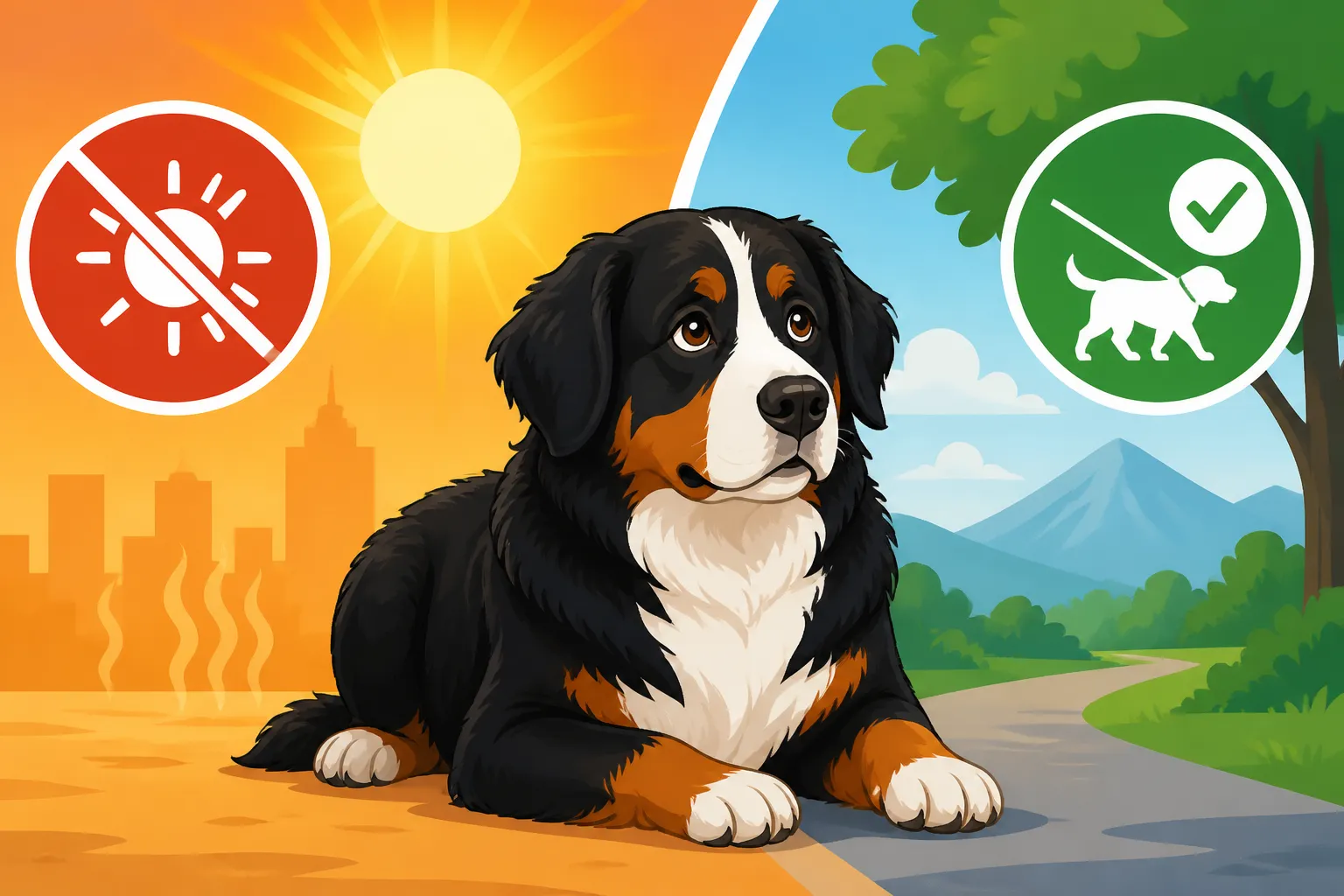
The cardinal rule for Bernese Mountain Dogs and walks: always check the temperature. But don't stop there! Humidity is often the silent killer. A 75°F day with low humidity might be manageable for a short, slow walk in the shade, but an 70°F day with high humidity can be far more dangerous. High humidity prevents efficient evaporative cooling through panting, making it much harder for your dog to shed heat. Generally, once the ambient temperature hits about 70-75°F (around 21-24°C), you need to exercise extreme caution, especially if humidity is also high. Anything above 80°F (27°C) is almost certainly too hot for a sustained walk for most Berners, regardless of humidity. Remember, the official temperature is often taken in the shade; the felt temperature in direct sun, especially with dark pavement, can be significantly higher. This is a critical factor in "Why a Black Coat Overheats a Bernese Mountain Dog."
The Danger of Hot Pavement and Surfaces
Another often-overlooked danger is the temperature of the ground. While the air temperature might seem okay, asphalt, concrete, and even sand can absorb and retain heat, becoming scalding hot. Imagine walking barefoot on asphalt in the summer – if it's too hot for your hand to hold comfortably for more than five seconds, it's too hot for your dog's paws. This can lead to painful burns, blistering, and could also contribute to overheating as the heat radiates back up into their body. Always test the pavement with the back of your hand. If you're out and about, look for grassy paths or shaded areas. This factor is so important that we often have detailed discussions about "Pavement Temperature and a Bernese Mountain Dog's Pads."
Signs the Weather is Too Much
Sometimes, you might start a walk thinking it's fine, only to realize conditions are worsening or your Berner isn't coping. It's crucial to be vigilant for signs of discomfort. These can include:
- Excessive panting: Panting is normal, but if it's rapid, deep, and continuous, it's a red flag.
- Slowing down or lagging: A Berner who usually loves to lead the way suddenly dragging their feet.
- Seeking shade: Actively trying to get out of the sun, even if it means pulling off the path.
- Bright red gums or tongue: This indicates increased blood flow as the body tries to cool.
- Thick, ropy saliva: Another sign of dehydration and heat stress.
- Unusual behaviors: Restlessness, anxiety, or confusion.
If you observe any of these, stop immediately, find shade, and begin cooling measures. It's important to understand "How a Bernese Mountain Dog Behaves Before Heat Stroke" so you can intervene early.
Safe Walking Alternatives and Practices
So, if the prime hours of the day are often off-limits, what's a dedicated Berner owner to do? Don't worry, there are plenty of ways to keep your companion exercised and engaged without putting them at risk.
Early Morning and Late Evening Walks
This is the golden rule for summer Berner walks. Aim for pre-dawn hours, ideally before 8 AM, or after sunset, usually after 8 PM (depending on your local climate and time of year). At these times, both the ambient air temperature and the pavement will have cooled down significantly. The sun's intensity is also much lower, reducing radiant heat. Even then, keep an eye on humidity and ensure your walk isn't too strenuous. A leisurely sniff-and-stroll is much better than a brisk jog. Carrying a portable water bowl and fresh water is always a good idea, even on cooler walks. This ensures your dog can stay hydrated, a key component in "Exercising a Bernese Mountain Dog in Summer" safely.
Indoor Activities and Mental Stimulation
When outdoor walks are simply out of the question, pivot to indoor fun! Berners might be big, but they are often quite happy to be couch potatoes if it means being with their people.
Here are some ideas:
- Puzzle toys: Fill a Kong with peanut butter (xylitol-free!), yogurt, or wet food and freeze it. This can keep them busy for ages.
- Training sessions: Short, fun indoor training sessions work wonders. Practice new tricks, brush up on old commands, or even try some indoor agility with cushions and low obstacles. "Training Sessions Short Enough for a Bernese Mountain Dog" are key to keeping them engaged without overheating indoors.
- Hide and seek: Hide treats or toys around the house and let your Berner use their nose to find them. This is excellent mental enrichment.
- "Find It" games: Toss kibble or small treats across a room and let them hunt.
- Flirt pole: A toy on a string attached to a pole can provide bursts of energy expenditure in a controlled, quick manner, even in a larger living space. Just be mindful of their joints and don't overdo it.
Hydration and Cooling Measures During Walks
Even during safe walking hours, preparation is vital. Always bring plenty of fresh water for yourself and your Berner. A collapsible travel bowl is a must-have. Offer water frequently, even if they don't seem thirsty. If you notice them getting warm, consider pausing near a water source like a public fountain (if safe for dogs) or carrying a spray bottle with cool water to mist their paws and belly. Cooling vests or bandanas can also provide temporary relief, as they work on the principle of evaporative cooling. While these aren't a substitute for avoiding dangerous temperatures, they can offer an extra layer of comfort. Remember, your Berner's health can be surprisingly delicate when it comes to heat, and even seemingly minor steps like constant hydration can make a big difference.
Here's a quick reference table to help guide your decision-making:
| Temperature Range (°F/°C) | Humidity | Pavement Temperature | Risk Level for Berners | Recommended Action |
|---|---|---|---|---|
| Below 60°F / 15°C | Any | Cool | Low | Normal walks are typically fine. |
| 60-70°F / 15-21°C | Low | Warm, but touchable | Low to Moderate | Monitor panting, stick to shade, bring water. |
| 60-70°F / 15-21°C | High | Warm | Moderate | Shorter walks, lots of water, early/late hours only. |
| 70-75°F / 21-24°C | Low | Hot | Moderate to High | Very short, slow walks in deep shade. Test pavement! Consider indoor alternatives. |
| 70-75°F / 21-24°C | High | Hot | High | Avoid walks. Stick to indoor activities. |
| Above 75°F / 24°C | Any | Scalding | Extremely High | Do not walk your Berner outdoors. Prioritize indoor enrichment. |
Always remember that these are general guidelines. Individual Berners may have different tolerances based on age, health, and fitness level. If in doubt, err on the side of caution.
Recognizing and Responding to Heat Stress in Your Bernese Mountain Dog
Even with the best precautions, accidents can happen. Knowing the signs of heat stress and what to do is paramount. Your swift action can truly be life-saving.
Subtle Early Warning Signs
Sometimes, the signs aren't as dramatic as collapse. They can be subtle, especially in our stoic Berners who might try to tough it out. Pay close attention if your Berner:
- Starts panting more heavily than usual for the activity level.
- Looks like they're trying to find any patch of shade, even pulling on the leash to get there.
- Is moving slower, lagging behind, or suddenly wants to stop and lie down.
- Has slightly reddened gums or a darker pink tongue.
- Seems a bit restless or agitated, unable to get comfortable.
- Is refusing water, or drinking excessively and then immediately trying to lie down.
These are your cues to intervene before it escalates. Get them out of the sun, offer water, and start gentle cooling. Don't wait for more severe symptoms.
Emergency Steps for Heat Stroke
If your Bernese Mountain Dog progresses beyond early signs and starts exhibiting severe symptoms like staggering, collapsing, vomiting, diarrhea, seizures, or loss of consciousness, you are dealing with a medical emergency: heat stroke. Time is of the essence.
- Get to a cooler environment immediately: Move your dog to shade, an air-conditioned car, or indoors.
- Begin active cooling: This is where you can make a huge difference.
- Apply cool (not ice-cold) water to their body, especially their belly, armpits, and groin. You can use a hose, wet towels, or even pour bottles of water over them.
- Use a fan to blow air over their wet coat, which increases evaporative cooling.
- Place cool, wet towels on their paw pads.
- Do NOT dunk them in ice water, as this can cause blood vessels to constrict, trapping heat and potentially inducing shock.
- Offer small amounts of water: If they are conscious and able to drink, offer a little water, but don't force it.
- Seek veterinary care immediately: Even if your dog seems to be recovering, internal damage (to kidneys, liver, or brain) may have occurred. Call your vet or the nearest emergency animal hospital while you are cooling your dog so they can prepare for your arrival. Every minute counts. Detailed advice on "Cooling a Collapsed Bernese Mountain Dog in the Field" can be incredibly valuable in these critical moments.
When to Seek Veterinary Help
You should always contact your veterinarian if you suspect your Bernese Mountain Dog is suffering from heat stress, even if you manage to cool them down and they seem to recover. The insidious nature of heat stroke means that organ damage might not be immediately apparent. A vet can assess their hydration levels, check for signs of organ damage, and provide supportive care. This could involve IV fluids, medications to reduce brain swelling, or monitoring for kidney failure. Having pet insurance, like a policy from Healthy Paws, can provide immense peace of mind in these emergency situations, helping you focus on your dog's recovery without the added stress of unexpected, potentially high, veterinary bills. These types of emergencies are unfortunately common for the breed, making discussions about "The Half-Hour That Decides a Bloated Bernese Mountain Dog" or "Emergency Surgery on a Bloated Bernese Mountain Dog" just as vital as understanding heat stroke.
It can be heartbreaking to watch your beloved Berner struggle in the heat, especially when all you want to do is give them a good life, which includes walks. But by understanding their unique physiology, recognizing the risks, and adapting your routines, you can ensure they stay safe and comfortable, even when the weather isn't cooperating. Remember, a happy Berner is a cool Berner, and sometimes that means a different kind of exercise or simply enjoying quiet time together indoors.
Disclaimer
The information provided in this guide is for general informational purposes only and does not constitute veterinary advice. Always consult with a qualified veterinarian for any health concerns or before making any decisions about your pet's care.