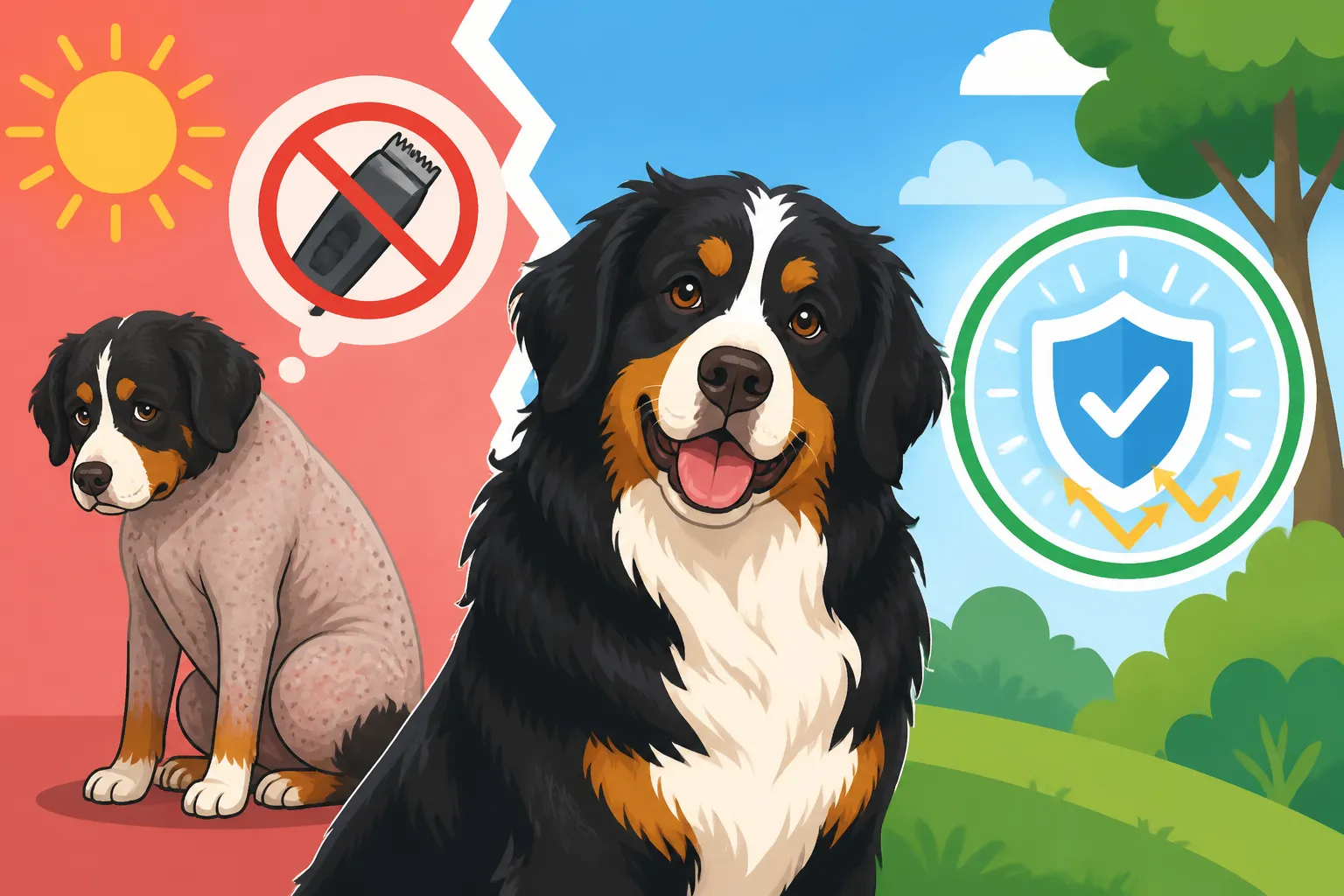
The Case Against Shaving a Bernese Mountain Dog in June
It’s a scorching hot day in July, and you’re looking at your beautiful Bernese Mountain Dog, panting heavily, with that thick, majestic coat looking like a giant fur blanket. The thought inevitably crosses your mind: wouldn’t it be kinder, more comfortable, to just shave it all off? It seems logical, right? Less hair, less heat. But as fellow Berner parents, we know that what seems logical for us humans often isn't the best approach for our beloved double-coated companions. This comprehensive guide will explain why shaving your Bernese Mountain Dog, especially in the thick of summer, can actually do more harm than good and what truly effective cooling strategies you should adopt instead.
Understanding the Bernese Mountain Dog's Double Coat
To truly grasp why shaving a Bernese Mountain Dog is ill-advised, we need to first appreciate the incredible design of their coat. Berners originate from the Swiss Alps, a region known for its harsh, cold winters and moderate summers. Their coat evolved to be a highly efficient natural climate control system, perfectly adapted to these conditions. It's not just a single layer of fur; it's a sophisticated double coat with distinct functions.
The Insulating Undercoat
Beneath those long, flowing outer hairs lies a dense, woolly undercoat. This layer is remarkably soft and thick, acting much like a down comforter for us. In winter, it traps warm air close to the body, providing essential insulation against the bitter cold and snow. But here’s the often-misunderstood part: in summer, this same undercoat, when properly maintained and free of excess loose hair, also acts as insulation against heat. It creates a barrier that prevents the sun's direct heat from reaching the skin, helping to keep the dog cooler by regulating body temperature. Think of it like a thermos; it keeps hot things hot and cold things cold. This undercoat is truly remarkable in its dual functionality.
The Protective Outer Coat Guard Hairs
The outer layer of a Bernese Mountain Dog's coat consists of longer, coarser guard hairs. These aren't just for show; they play a crucial role in protecting your Berner. They are naturally somewhat water-repellent, helping moisture, dirt, and debris roll right off the coat rather than soaking through to the skin. More importantly for summer, these guard hairs provide a vital shield against the sun's harmful ultraviolet (UV) rays. Much like sunscreen and a wide-brimmed hat protect our skin, the guard hairs protect your dog's sensitive skin from sunburn, which can be painful and lead to more serious skin issues or even skin cancer over time. Furthermore, this outer layer helps prevent insect bites and minor scrapes, acting as a physical barrier. Without these guard hairs, the delicate skin beneath is left exposed and vulnerable.
Why Shaving Your Berner is Counterproductive
Despite the best intentions, reaching for the clippers can lead to a host of problems for your Bernese Mountain Dog. It disrupts their natural cooling mechanisms and exposes them to risks they are otherwise well-equipped to handle. It's an action born of love, but one that unfortunately backfires for double-coated breeds.
Losing Natural Insulation
When you shave off a Bernese Mountain Dog’s double coat, you strip away both layers of their natural insulation. You remove the undercoat that traps air, which, as we discussed, helps keep them cool in summer. And you remove the protective guard hairs that shield them from direct sunlight. Instead of feeling cooler, your Berner's body is now directly exposed to the ambient heat and sun, making it harder for them to regulate their temperature. Their system is designed to work with that coat, not without it. It's like trying to cool a house by removing its insulation and roof entirely instead of turning on the air conditioning. The dog then has to work much harder to pant and dissipate heat, increasing their risk of overheating and potentially even heat stroke. It simply isn't an effective method for keeping them cool.
Increased Risk of Sunburn and Skin Damage
With the guard hairs gone, your Berner's skin is suddenly laid bare to the elements. Just like human skin, dog skin can get severely sunburned, especially breeds with lighter pigmentation or thinner skin in certain areas. Sunburns are not just uncomfortable; they can be incredibly painful, causing redness, blistering, and peeling. Long-term exposure without proper protection can also increase the risk of skin cancers. Beyond sunburn, the exposed skin is also more susceptible to cuts, scrapes, and insect bites. What was once a robust, self-sufficient protective layer is now a vulnerable surface, demanding extra vigilance on your part to prevent injury and discomfort. You might find yourself needing to keep a close eye on their skin for any unusual redness or irritation.
Potential for Coat Damage and Improper Regrowth
One of the most frustrating and often irreversible consequences of shaving a double-coated breed like a Bernese Mountain Dog is the damage it can do to their coat's natural growth cycle. Many owners report that after shaving, their Berner's coat grows back unevenly, with a coarser or patchier texture, or sometimes it simply doesn't grow back to its original glory at all. This phenomenon is often referred to as "clipper alopecia" or post-clipping alopecia.
What happens is that the undercoat, which grows faster than the guard hairs, can overwhelm the slower-growing outer coat. This can lead to a woolly, matted texture that is even more prone to trapping heat and tangling than before. The natural shedding cycle can become disrupted, and the coat loses its original protective and insulating properties. Imagine the thick, luxurious coat you fell in love with being replaced by a patchy, uneven mess that feels different and functions poorly. It can take many months, or even years, for the coat to potentially recover, and in some cases, it never fully does. This isn't just an aesthetic concern; it impacts the very health and comfort of your dog, making them less equipped to handle both hot and cold weather.
Safer and More Effective Cooling Strategies for Your Bernese Mountain Dog
Instead of reaching for the clippers, there are much more effective and safer ways to help your Bernese Mountain Dog stay comfortable during the warmer months. These strategies work with their natural physiology, rather than against it, ensuring their long-term health and well-being. Keeping a Bernese Mountain Dog cool during the summer is a top priority, especially considering their predisposition to heat. For more insights on how they handle heat, you might find "Heat and the Bernese Mountain Dog's Black Coat" a useful read.
Regular Grooming and Deshedding
This is perhaps the single most crucial piece of advice for any double-coated breed owner. The best way to help your Berner stay cool is by regularly and thoroughly brushing out their undercoat. This means going beyond a superficial brush; you need to get down to the skin to remove all the loose, dead undercoat that would otherwise be trapped and prevent proper airflow.
During spring and summer, Berners undergo their heaviest shedding, releasing vast amounts of their dense undercoat. If this dead hair isn't removed, it forms a thick, felted layer close to the skin, which absolutely traps heat and prevents air circulation. By removing this excess undercoat, you're allowing the functional guard hairs to do their job of shading the skin, and you're creating space for air to circulate freely.
Invest in good grooming tools like an undercoat rake and a high-velocity force dryer. A force dryer can blow out an incredible amount of loose undercoat after a bath, and it doesn't just dry them; it helps to exfoliate the skin and remove shed hair more effectively than brushing alone. Aim for brushing sessions several times a week, or even daily during peak shedding season. Getting to understand the nuances of this process can be found in articles like "Brushing Out a Bernese Mountain Dog's Undercoat" and "Whether a Force Dryer Is Worth It for a Bernese Mountain Dog." This simple act makes a profound difference in their comfort.
Strategic Timing for Walks and Outdoor Activities
Common sense, but often overlooked in the excitement of a new day! Adjusting your daily routine is paramount when living with a Bernese Mountain Dog in warmer climates. Avoid exercising or even long periods outside during the hottest parts of the day. This typically means early mornings before 9 AM and late evenings after 7 PM. Even if it feels pleasant to you, remember that your Berner is wearing a built-in fur coat and has a much higher core body temperature than you do.
Pay close attention to the temperature of the pavement. If it's too hot for your bare hand, it's too hot for their paws. Opt for grassy areas or shaded trails when possible. Consider shorter, more frequent potty breaks during the day instead of one long walk. The goal is to minimize their exposure to peak heat and direct sun, reducing the risk of overheating. For a deeper dive into managing outdoor activities, check out "The Hours a Bernese Mountain Dog Should Not Walk" and "Exercising a Bernese Mountain Dog in Summer."
Hydration and Cooling Aids
Hydration is critical. Always ensure your Bernese Mountain Dog has access to fresh, cool water, both indoors and outdoors. Consider adding ice cubes to their water bowl to keep it colder for longer.
Beyond water, there's a range of products designed to help keep large breeds cool:
- Cooling Mats: These pressure-activated gel mats absorb body heat and dissipate it, providing a cool spot for your Berner to lie on. They're a favorite in many Berner households. You can learn more about finding the right one in "Cooling Mats and Where a Bernese Mountain Dog Lies."
- Wading Pools: A shallow kiddie pool filled with cool water in a shaded spot can be a fantastic way for your Berner to cool off. Many Bernese Mountain Dogs love to splash and lay in water, even if they aren't strong swimmers.
- Cooling Vests/Bandanas: These vests can be soaked in cold water and then worn by your dog. As the water evaporates, it provides a cooling effect. Just ensure they fit properly and don't restrict movement.
- Frozen Treats: Ice cubes, frozen KONGs stuffed with peanut butter or yogurt, or even frozen fruit (ensure it's safe for dogs) can provide a cooling snack.
- Air Conditioning/Fans: Indoors, keep your home cool with air conditioning or strategically placed fans, especially in areas where your dog frequently rests. A dedicated cool room can make a world of difference, as discussed in "Keeping a Room Cool Enough for a Bernese Mountain Dog."
- Grooming for Hot Weather: While shaving is out, a professional groomer can sometimes offer "sanitary trims" around the private areas or paw pads to help with cleanliness and minor heat dissipation without compromising the main coat. However, always discuss this carefully to ensure they understand not to shave the main body.
- Check-ups: Regular vet check-ups are also crucial. If your Bernese Mountain Dog starts showing signs of discomfort in the heat, an underlying health issue could be at play. Pet insurance providers like Healthy Paws can be a valuable partner in covering unexpected veterinary visits, especially as Berners age and face potential health challenges that might be exacerbated by extreme temperatures.
These methods respect your Berner's natural coat while actively working to combat the heat, making for a much happier and healthier summer for everyone.
Debunking Common Shaving Myths
The urge to shave a Bernese Mountain Dog stems from a few deeply ingrained, yet often incorrect, assumptions. Let’s tackle these head-on with a dose of Berner reality.
"It will make them cooler"
This is the biggest and most pervasive myth. As we've extensively covered, a Bernese Mountain Dog's double coat is designed to regulate temperature, not just keep them warm. Shaving removes this natural thermal barrier. Imagine going outside in the desert with no clothing; while it might feel momentarily liberating, your skin is immediately exposed to the harsh sun and high ambient temperatures, making you prone to sunburn and heatstroke. Your Berner's coat works in a similar, albeit more complex, way.
When you shave them, you eliminate the airy layer of insulation that traps cool air against their skin (after the dead undercoat is shed). You also remove the sun-reflecting guard hairs. This leaves their skin vulnerable to direct solar radiation, which can actually cause them to absorb more heat and quickly overheat. Instead of cooling them down, you’ve essentially removed their built-in air conditioning and sunscreen. Their physiology isn't designed for direct skin exposure in hot weather; it's designed for a coat-covered existence. Therefore, it's a common misconception that less hair equals more comfort for them. If your Berner is struggling with the heat, it might be worth reviewing "The Temperature a Bernese Mountain Dog Stops Coping" for more insights.
"It will reduce shedding"
Oh, if only this were true! The amount of hair a Bernese Mountain Dog sheds is legendary, and anyone who owns one knows the struggle of finding Berner glitter in every nook and cranny. Many owners think that by shaving, they can drastically reduce the amount of hair in their home. The reality, however, is that shaving does not reduce shedding; it merely shortens the length of the shed hairs.
Your dog's hair follicles still go through their natural growth and shedding cycles, regardless of whether the hair is long or short. So, instead of long, fluffy clumps of hair, you'll simply have shorter, coarser hairs shedding out. These shorter hairs can actually be more difficult to clean up, as they can embed themselves more deeply into carpets, furniture, and clothing. They also don't "clump" as nicely as longer hair, making them harder to pick up with a lint roller or vacuum. The only effective way to manage shedding and improve your Berner's comfort is consistent, thorough brushing to remove the dead undercoat, not by removing the entire functional coat.
"It helps with allergies"
For households where a family member suffers from dog allergies, shaving might seem like a plausible solution. The logic is, less hair means fewer allergens, right? Unfortunately, this is another myth. Dog allergies are primarily caused by dander (microscopic flakes of skin), saliva, and urine, not the hair itself. While hair can collect these allergens and distribute them, removing the hair doesn't eliminate the source.
In fact, shaving a dog can sometimes make allergy symptoms worse. The irritated skin post-shave might produce more dander as it heals or becomes dry and flaky, thereby increasing the amount of allergen in the environment. Additionally, if the coat grows back improperly, it might trap more dander or become a haven for environmental allergens like dust and pollen. For allergy sufferers, the best approach is regular bathing with a good quality shampoo ("Shampoo for a Bernese Mountain Dog's Double Coat" can guide you), consistent brushing to remove dead dander-laden hair, frequent vacuuming, and air purifiers. Focusing on these strategies addresses the root cause of the allergy, rather than misguided attempts to alter the dog's coat.
Comparative Table: Shaving vs. Proper Grooming for Bernese Mountain Dogs
Here's a quick overview contrasting the effects of shaving versus maintaining your Bernese Mountain Dog's coat with proper grooming, especially regarding heat management and overall health.
| Feature / Action | Shaving the Coat | Proper Grooming (Brushing/Deshedding) |
|---|---|---|
| Temperature Regulation | Disrupts natural insulation; increases risk of overheating as skin is exposed to direct sun and ambient heat. | Maintains natural insulation; allows air circulation to cool the skin; outer coat reflects sun, reducing heat absorption. |
| Sun Protection | Removes protective barrier; significantly increases risk of sunburn and potential skin cancer. | Provides natural UV protection for the skin, minimizing sunburn risk. |
| Skin Health | Exposes skin to irritants, insect bites, and cuts; can lead to dry skin, rashes, or "clipper alopecia." | Protects skin from environmental hazards; promotes healthy skin and coat by removing dead hair and debris. |
| Coat Health/Regrowth | Can damage follicles; often results in patchy, woolly, or uneven regrowth that loses functional properties; long recovery time. | Maintains natural texture, strength, and function of both undercoat and guard hairs; promotes healthy, consistent growth. |
| Shedding Control | Changes shed hair length, but does not reduce the amount of shedding; shorter hairs can be harder to clean. | Effectively removes loose undercoat, significantly reducing the amount of shed hair in the home. |
| Allergen Impact | No reduction in dander (primary allergen); potentially increases dander from irritated skin. | Reduces loose hair and dander, which can help manage allergy symptoms by containing allergens. |
| Effort/Cost | Initial vet/groomer cost; potential ongoing vet bills for skin issues; long-term coat recovery may require patience. | Regular time investment in brushing; initial cost of quality grooming tools; preventative care. |
| Aesthetics | Alters natural look, often resulting in an undesirable, uneven appearance. | Maintains the breed's beautiful, natural appearance. |
Disclaimer
This article is for general informational purposes only and does not constitute professional advice. Laws, prices and regulations vary by location and change over time. Consult a qualified professional for guidance on your specific situation.