Cooling a Collapsed Bernese Mountain Dog in the Field
There's nothing quite as terrifying for a Bernese Mountain Dog owner as watching their magnificent, usually robust companion suddenly falter, stumble, and collapse in a heap. The panic is immediate and overwhelming, a visceral fear that clutches at your heart when you realize your dog isn't just tired, but truly in distress, especially when you're out in the field, far from immediate help. This guide is here to walk you through exactly what to do when your Bernese Mountain Dog collapses from heat stroke, offering crucial steps to take in those critical moments to give your beloved Berner the best chance of recovery.
Recognizing the Emergency When Your Berner Collapses
It can be deceptively easy to dismiss early signs of heat distress in a Bernese Mountain Dog. After all, they’re big, often dramatic dogs who love to sprawl out and nap. But a collapse due to heat stroke is far from a casual nap, and understanding the difference is paramount. The stakes are incredibly high, as heat stroke can progress from a serious condition to a life-threatening one in mere minutes, especially for a large, heavy-coated breed like the Berner.
Distinguishing from General Tiredness
Your Bernese Mountain Dog might be known for their "Berner lean" or their love for simply flopping down anywhere they please, but a heat-related collapse is entirely different. When a Berner is just tired, they might slow down, pant a bit, and then lie down with their tongue slightly out, but they’ll usually respond to your voice, still track you with their eyes, and often move to a shadier spot on their own if available. Their panting might be heavy but not frantic, and their gums will remain a healthy pink.
However, a Berner suffering from heat distress will exhibit more concerning behaviors. You might first notice that they seem unusually sluggish or disoriented. Perhaps they start stumbling, their legs just not quite working right, or they might lag significantly behind you on a walk when usually they keep pace. Their panting will become extremely heavy, almost frantic, and it won't seem to cool them down. You might observe excessive drooling, with thick, ropey saliva, and their mental state might appear dull or confused. They might ignore your calls or commands, not out of stubbornness, but out of genuine disorientation. It’s a subtle shift that quickly becomes alarming, and your gut feeling as their owner is often the first, best indicator that something is truly wrong beyond just being hot and tired.
Advanced Symptoms and Danger Signs
Once a Bernese Mountain Dog progresses past initial heat distress, the symptoms become stark and terrifying. This is the point where collapse often occurs, and immediate action is critical. Their gums, instead of being a healthy pink, might turn bright red, almost cherry-colored, indicating increased blood flow as their body tries desperately to cool itself. In more severe cases, they can become pale or even bluish if their oxygen levels are dropping. You might see pinpoint red spots on their gums or skin, which can indicate internal bleeding issues related to severe heat stroke.
Vomiting and diarrhea, often bloody, are common as the extreme heat starts to damage internal organs. Their body temperature can soar above 104°F (40°C), and their heart rate will be rapid and weak. Neurological signs are particularly frightening: muscle tremors, severe weakness leading to the inability to stand, staggering, loss of coordination, seizures, and eventually, unconsciousness. At this stage, every second counts. As discussed in detail in "How a Bernese Mountain Dog Behaves Before Heat Stroke", these signs are not just discomfort; they indicate systemic organ failure and are a dire emergency requiring immediate, aggressive intervention.
Immediate First Aid in the Field
When your Bernese Mountain Dog collapses from heat stroke in the field, you become their first, and most critical, line of defense. Panic is natural, but clear, decisive action is what they need. Your immediate goal is to safely lower their body temperature without causing further harm, and prepare for transport to veterinary care.
Finding Shade and Airflow
The very first thing you must do, no matter what, is get your Bernese Mountain Dog out of direct sunlight and into the coolest, shadiest spot you can find. This might mean gently but quickly dragging them under a tree, beneath an overhang, or even using your body to cast a shadow over them if no natural shade is available. Remember, their thick, dark coat, as highlighted in "Why a Black Coat Overheats a Bernese Mountain Dog", absorbs a tremendous amount of heat.
Once in the shade, try to maximize airflow around them. If there's a breeze, orient them to it. If you have a jacket or a piece of cardboard, you can gently fan them. If you’re near a car, carefully moving them into the air-conditioned vehicle (even before cooling them with water, if the car is close and cool) can be a crucial step. The immediate removal from the heat source and improved ventilation are often underestimated, but they are foundational to starting the cooling process effectively. Every degree of ambient temperature makes a difference when your dog is overheating.
Applying Water and Cooling Methods
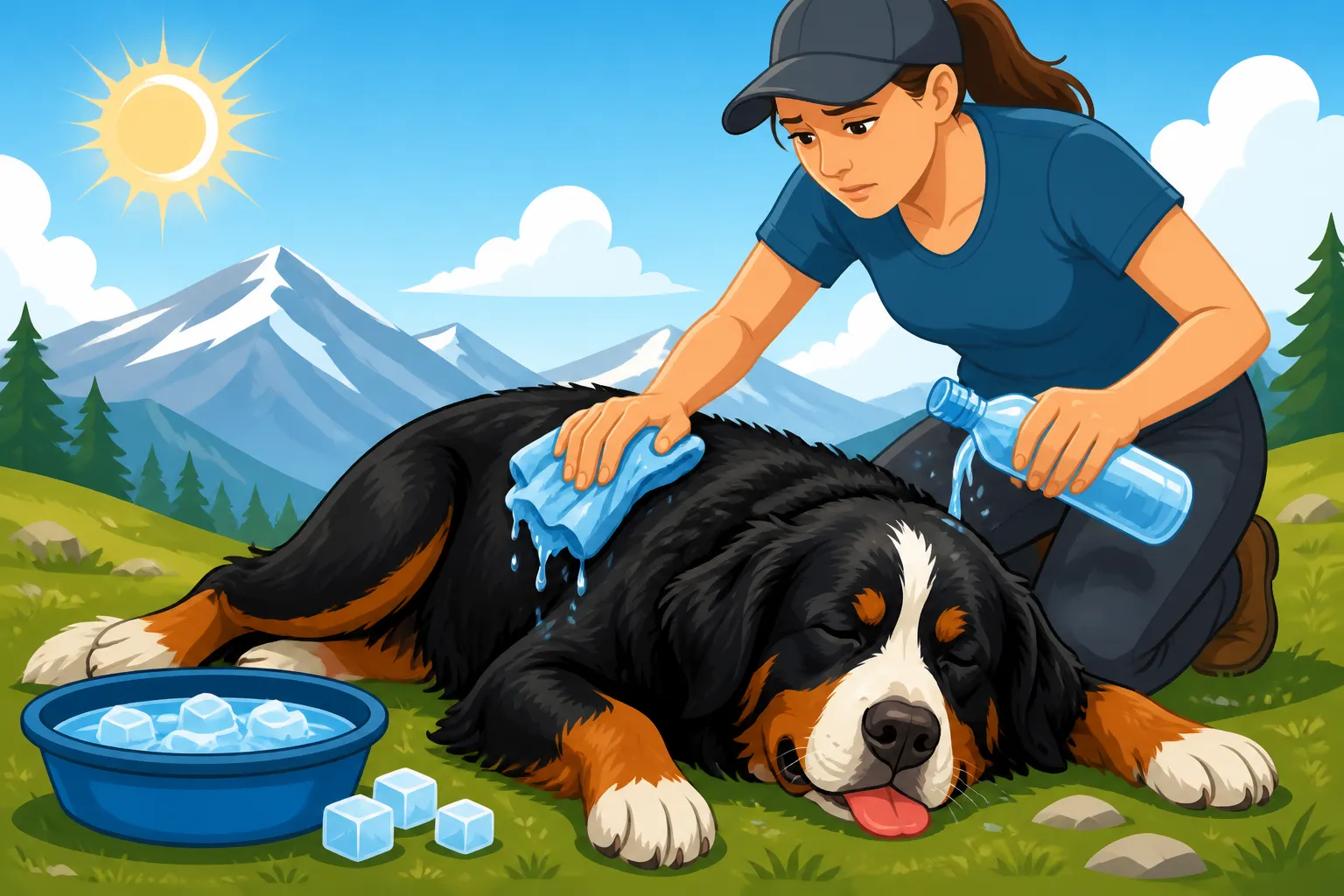
Now for the direct cooling. You need water, and you need it quickly. But here's a critical point: do not douse them in ice-cold water or use ice packs directly on their skin. While it sounds intuitive, rapidly cooling the surface of the skin can cause peripheral blood vessels to constrict, trapping heat inside the body and potentially inducing shock. Instead, use cool (not freezing) water liberally on their body. Focus on areas where blood vessels are close to the surface: their paws, the groin area, armpits, and neck. Wetting their ears can also help, but avoid getting water in their nose if they are struggling to breathe.
If you have towels, soak them in cool water and drape them over these key areas, changing or re-wetting them frequently as they warm up. If you have rubbing alcohol, a small amount applied to the paw pads can also aid in evaporative cooling, but be careful not to overdo it as it can dry out their skin. If you have a small spray bottle, misting their coat and then fanning them can create an effective evaporative cooling effect, mimicking how their panting would normally work. Continue this process until their breathing starts to calm, and they show some signs of improved awareness. The goal is a steady, gradual cooling, not a sudden shock.
Monitoring Vital Signs
While you are actively cooling your Bernese Mountain Dog, it's vital to monitor their condition as closely as possible. Keep an eye on their gum color. Are they starting to return from cherry-red to a healthy pink? Press a finger firmly against their gums and then release; the color should return within 1-2 seconds. If it takes longer, it indicates poor circulation.
Check their breathing rate. Is the frantic panting slowing down and becoming less labored? Place your hand on their chest to feel their heart rate. It should ideally be slowing down from a rapid, weak beat to a stronger, more regular rhythm. If they are conscious, try to get them to drink small amounts of cool water. Do not force them to drink if they are nauseous or unconscious, as it could lead to aspiration. It's during this phase that you're watching for any indication of improvement, but even if they seem to perk up, the emergency isn't over. Internal damage can still be occurring, and professional veterinary attention is paramount.
Transport and Next Steps to the Vet
Once you’ve initiated first aid and your Bernese Mountain Dog shows even the slightest improvement, your next, equally critical step is safe and swift transport to the nearest veterinary emergency clinic. This isn't just about getting them there; it's about minimizing further stress and maintaining the cooling efforts you've already started.
Safe Movement of a Large Dog
Moving a large, potentially unresponsive or disoriented Bernese Mountain Dog can be incredibly challenging. A healthy Berner can weigh upwards of 100 pounds, and a collapsed one feels even heavier. If you're alone, you'll need to improvise. A large blanket, sturdy tarp, or even a car mat can be fashioned into a makeshift stretcher. Gently roll your Berner onto it, then use the corners to lift and carry them, ideally with a second person. If you're by yourself, you might have to drag them, ensuring you support their head and neck as much as possible to prevent further injury.
If possible, have another person drive while you tend to your dog in the back seat or cargo area. Continue the cooling efforts during transport. If you have a cooler with some cool water and wet towels, keep them accessible. Turn the air conditioning in the car to its highest setting and direct vents towards your dog. Every minute of continued cooling, even en route, contributes to their survival and recovery.
Emergency Vet Protocol
As soon as you realize heat stroke is a possibility, call the nearest veterinary emergency clinic. Tell them you are bringing in a Bernese Mountain Dog with suspected heat stroke. This critical phone call allows them to prepare. They can have a team ready, IV fluids chilling, and a cooling station set up the moment you arrive. This saves precious minutes that can make all the difference for your dog.
Upon arrival, the veterinary team will immediately assess your Berner's core body temperature, typically rectally. They will likely start intravenous (IV) fluids to combat dehydration and help with internal cooling. Oxygen therapy might be administered if they are struggling to breathe. Blood tests will be run to check for organ damage, electrolyte imbalances, and clotting issues – all common complications of severe heat stroke. Your veterinarian will be looking for signs of kidney failure, liver damage, and disseminated intravascular coagulation (DIC), a severe bleeding disorder. Even if your Berner appears to have recovered somewhat, these internal dangers are why professional care is non-negotiable.
Financial Considerations
The reality of emergency veterinary care for a severe condition like heat stroke is that it can be incredibly expensive. Bills for overnight stays, intensive care, blood work, IV fluids, and potential treatments for organ damage can quickly climb into the thousands of dollars. This financial strain, on top of the emotional stress, can be overwhelming. This is where having pet insurance can be a literal lifesaver. Companies like Healthy Paws are known for their comprehensive coverage, which often includes emergency care for illnesses and accidents, making a critical difference in whether you can afford the best possible care without undue financial burden. It’s a harsh truth that sometimes the cost dictates the course of treatment, and that’s a decision no owner should have to make in an emergency. Preparing for such possibilities, perhaps by having a pet insurance plan from a provider like Healthy Paws, or a dedicated emergency fund, can provide immense peace of mind.
Prevention and Preparedness
The absolute best way to handle a collapsed Bernese Mountain Dog in the field is to prevent it from happening in the first place. Berners, with their incredible double coats and large body mass, are particularly susceptible to overheating. Understanding their unique needs and limitations, especially in warmer weather, is crucial for their safety and longevity.
Knowing Your Dog's Limits
Bernese Mountain Dogs are not built for endurance in the heat. Their ancestry in the Swiss Alps means they thrive in cooler climates, and their thick insulation, while perfect for snow, becomes a significant liability when temperatures rise. As discussed in "The Temperature a Bernese Mountain Dog Stops Coping", many Berners start to struggle once temperatures reach the mid-70s Fahrenheit (around 24-25°C), especially with humidity.
You must become acutely aware of your individual dog's tolerance. Some Berners are more sensitive than others. Avoid strenuous exercise during the hottest parts of the day. Early morning and late evening walks are best in summer, completely avoiding "The Hours a Bernese Mountain Dog Should Not Walk". Keep walks shorter than you might with other breeds, and always provide plenty of rest stops in the shade. Remember that even a seemingly mild day can quickly become dangerous if your Berner is exerting themselves. Never assume they'll tell you they're too hot; by the time they show obvious signs, they are likely already in distress.
Essential Gear for Hot Weather Outings
Being prepared can significantly reduce the risk of a heat-related emergency. When heading out with your Bernese Mountain Dog, especially during warmer months, always pack these essentials:
- Plenty of Water: Carry more than you think you'll need. Insulated bottles can keep water cool longer.
- Portable Water Bowl: A collapsible bowl is a must to offer water frequently.
- Cooling Towel or Vest: Products like the Ruffwear Swamp Cooler vest or cooling towels can provide evaporative cooling on the go. Wet them before you leave and re-wet them as needed.
- First Aid Kit: Include antiseptic wipes, gauze, and vet wrap for any scrapes, but also remember a small spray bottle for water and a small bottle of rubbing alcohol for paw pads in case of overheating.
- Emergency Contact Info: Have your vet's number, the nearest emergency vet's number, and a trusted friend or family member's number easily accessible.
- Paw Protection: Pavement and asphalt can get incredibly hot, causing burns and raising core body temperature. Consider paw booties if you must walk on hot surfaces, but ideally, avoid them altogether. Learn more about "Pavement Temperature and a Bernese Mountain Dog's Pads".
By making these items standard for your outdoor adventures, you'll be much better equipped to manage unexpected heat challenges.
Long-Term Heat Management Strategies
Beyond immediate outing preparation, consider a holistic approach to managing your Bernese Mountain Dog's comfort and safety in warmer weather. This includes making conscious choices about their daily environment and activity levels. For instance, some Bernese Mountain Dog owners find that their dogs simply don't do well in hot climates, as noted in "Whether a Bernese Mountain Dog Suits a Hot Climate".
At home, ensure they always have access to cool, shaded areas. This might mean keeping certain rooms cooler, providing cooling mats, or even a child's wading pool with shallow water for them to splash in. Consider dog-friendly indoor activities for those really hot days to avoid outdoor exertion altogether. When you are home, pay attention to their resting behavior. Are they panting excessively even indoors? Are they seeking out tile floors or lying still more than usual? These are subtle cues that they might be struggling to regulate their temperature. If your Bernese Mountain Dog lives in an area with prolonged hot summers, maintaining a cool indoor environment, as explored in "Keeping a Room Cool Enough for a Bernese Mountain Dog", is critical. Regular grooming, specifically brushing out dead undercoat, can also help improve air circulation through their fur, but avoid shaving, which can actually make them more susceptible to sunburn and impair their natural insulation.
Here's a quick comparison of effective cooling methods in an emergency:
| Method | Description | Effectiveness | Notes |
|---|---|---|---|
| Move to Shade | Immediately relocate dog out of direct sunlight. | High – Prevents further heat absorption. | Essential first step. Look for natural shade or create it. |
| Cool Water Application | Wet paws, belly, armpits, groin, and neck with cool (not ice-cold) water. | High – Promotes evaporative and conductive cooling. | Use towels, spray bottle, or pour water gently. Change/re-wet towels frequently. Avoid ice water directly on skin to prevent vasoconstriction. |
| Airflow/Fanning | Increase air movement around the dog. | Moderate – Aids evaporative cooling. | Use a fan (portable if available), a piece of cardboard, or your hands. Crucial when combined with wet fur. |
| Offer Small Drinks | Provide small amounts of cool water if conscious and willing. | Low to Moderate – Rehydrates, aids internal cooling. | Do not force water. Stop if dog is nauseous or unconscious due to aspiration risk. |
| Cold Water Enema (Vet Only) | Administered rectally by a vet to cool core temperature quickly. | High (but only in clinical setting). | Do NOT attempt in the field. This is a rapid core cooling method used by professionals. |
| Ice Baths/Packs | Immersing dog in ice water or placing ice packs directly on fur/skin. | Potentially Harmful – Can cause shock/vasoconstriction. | Avoid in the field. Can trap heat internally and cause rapid peripheral cooling leading to shock. Focus on cool, not freezing. |
Taking proactive steps and being prepared for the worst-case scenario with knowledge and the right tools can make all the difference in protecting your cherished Bernese Mountain Dog.
Disclaimer
The information provided in this guide is for educational and informational purposes only and does not constitute veterinary advice. In the event of a medical emergency, always consult with a qualified veterinarian or seek immediate veterinary care.