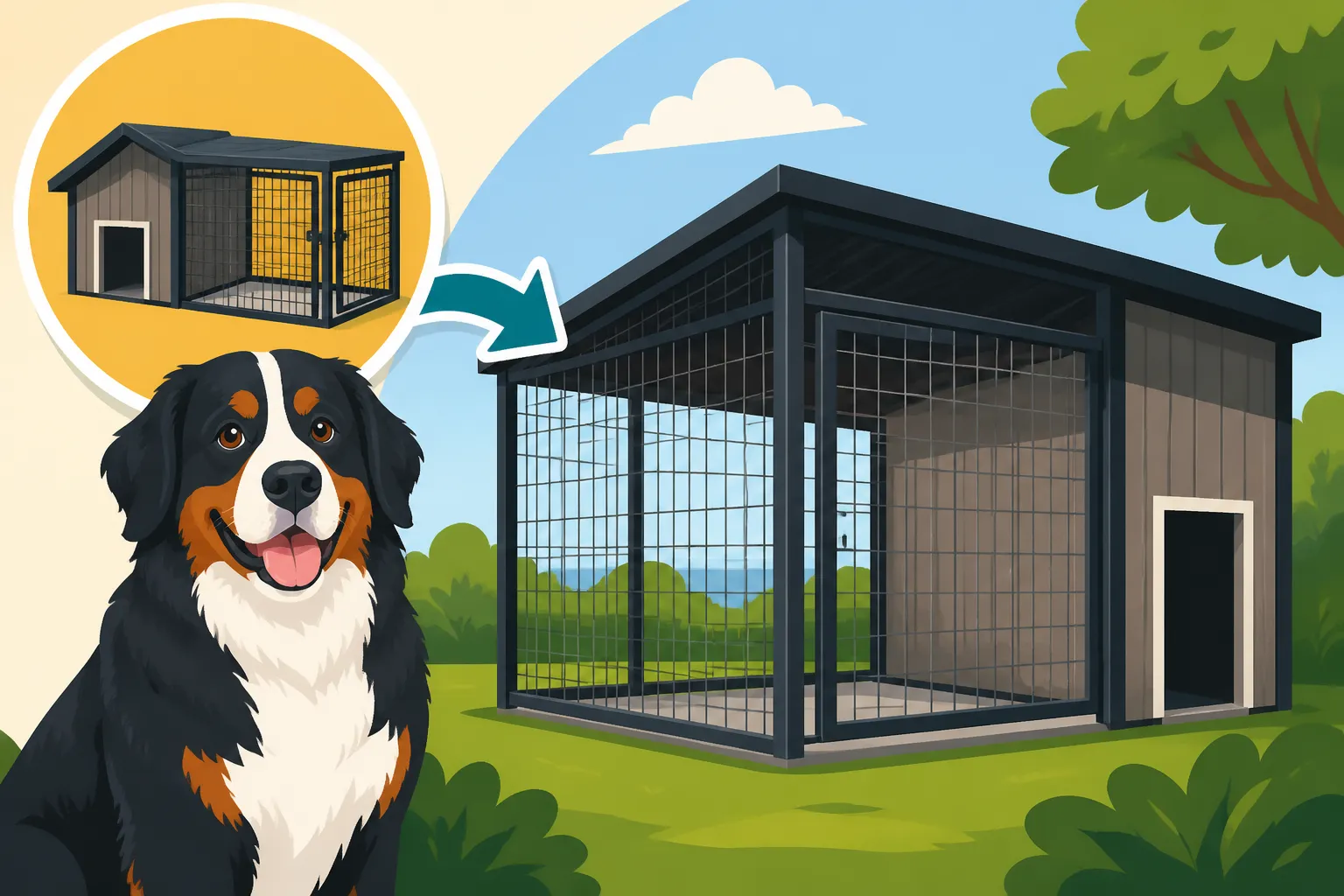
Finding a Kennel With a Run a Berner Fits
Finding a boarding facility that truly understands and caters to the unique needs of a big, beautiful Bernese Mountain Dog can feel like an impossible quest. You want to ensure your gentle giant is safe, comfortable, and well-cared for, not crammed into a space too small or left feeling stressed. This guide will walk you through everything you need to know to find a kennel with a run a Berner fits, along with other critical considerations for their well-being.
Understanding the Unique Needs of a Bernese Mountain Dog for Boarding
Leaving your Bernese Mountain Dog, a breed known for its loving nature and impressive size, in someone else's care can be daunting. Unlike smaller, more adaptable breeds, Berners have specific requirements that, if overlooked, can lead to discomfort, anxiety, or even health issues. It's not just about finding a space big enough; it's about finding an environment that truly understands the "Berner way."
The Importance of Size and Space
Let's face it: a Bernese Mountain Dog is not a small dog. We're talking about a magnificent animal that can easily weigh over a hundred pounds and stand well over two feet tall at the shoulder. When you envision a kennel run, you might picture something adequate for a beagle or a terrier. For a Berner, that simply won't do. A proper run needs to allow them to stand up, turn around comfortably, stretch out fully when lying down, and take a few steps without immediately hitting a wall or fence. Imagine trying to sleep in a twin bed when you're used to a king-size – that's often how a Bernese feels in an undersized run.
Beyond just the run itself, consider the common areas. Are there spacious play yards where they can stretch their legs and enjoy some supervised off-leash time, rather than just a quick potty break on a leash? Berners aren't typically high-energy dogs that need to run marathons, but they do appreciate room to roam and sniff. Confining them to a tiny space for extended periods can lead to stiffness, boredom, and stress, which none of us want for our beloved companions.
Temperamental Considerations for a Sensitive Breed
Bernese Mountain Dogs are famously good-natured, but they are also quite sensitive souls. They bond deeply with their families and can be prone to separation anxiety, sometimes manifesting as quiet withdrawal or, in some cases, destructive behaviors if not handled with care. A bustling, chaotic kennel environment with loud noises and constant activity might overwhelm a sensitive Berner, even if other dogs thrive in it. They often prefer a calmer, more predictable routine and can be cautious around strangers, initially.
It's crucial to find a kennel where the staff understands this temperament. Are they patient and gentle? Do they use positive reinforcement? Do they take the time to build trust, rather than forcing interaction? A Berner who feels respected and safe is much more likely to settle in and have a positive boarding experience. This breed often thrives on routine, and a kennel that can maintain a semblance of their home schedule can greatly reduce stress. For more insights into how these dogs cope alone, you might want to read about The Bernese Mountain Dog That Cannot Bear Being Left.
Health Factors: Joints, Coat, and Bloat Risk
Bernese Mountain Dogs are unfortunately predisposed to certain health issues that can be exacerbated by an inappropriate boarding environment. Joint problems, such as hip and elbow dysplasia, are common, meaning they need comfortable, orthopedic bedding and careful handling. Hard, cold concrete floors for extended periods are a recipe for discomfort and stiffness. Ask about the bedding provided and if you can bring your own supportive bed.
Their thick, tricolor double coat also requires careful management. In warmer climates or during summer, they are prone to overheating. A kennel must have excellent climate control, ideally air-conditioned indoor spaces, and plenty of shade in outdoor runs. Grooming, even just daily brushing, is essential to prevent matting and keep them comfortable. Finally, as a deep-chested breed, Berners are at a higher risk for bloat, a life-threatening condition. A responsible kennel will be aware of this risk and have protocols in place, such as not allowing vigorous exercise immediately after eating and monitoring for signs. Understanding Bloat in a Deep-Chested Bernese Mountain Dog is vital for any Berner owner.
What to Look for in a Kennel's Physical Facilities
When you’re looking for a boarding facility for your Bernese Mountain Dog, the physical setup is often the first thing you’ll notice. It’s not just about aesthetics; it’s about safety, comfort, and providing an environment that caters to a large, double-coated breed. Don't be shy about asking for a detailed tour.
Run Dimensions and Construction
This is perhaps the most critical factor for a Berner. A standard kennel run, often designed for medium-sized dogs, simply will not cut it. For a Bernese Mountain Dog, you're looking for an indoor run that is ideally at least 4 feet wide by 8 feet long, but honestly, bigger is always better. This allows them to fully stand, turn, and stretch out without feeling cramped. If there's an attached outdoor run, that's a huge bonus, offering them access to fresh air and a change of scenery throughout the day. The fencing should be sturdy and high enough that a strong, tall dog can't easily jump or climb over it, and securely anchored to prevent escape.
Consider the flooring as well. While concrete is easy to clean, it can be hard on a Berner’s joints, especially if they have any predisposition to arthritis or dysplasia. Look for kennels that offer raised beds, thick orthopedic mats, or even runs with softer flooring options. If outdoor runs are natural ground, ensure they are well-maintained and free of hazards. Always inquire about the size of their "large dog" runs specifically and ask to see one that would be assigned to your Berner.
Climate Control and Air Quality
Bernese Mountain Dogs, with their thick double coats, are built for colder climates. They absolutely do not tolerate heat well. Proper climate control is non-negotiable. Look for kennels that have well-maintained air conditioning for the warmer months and adequate heating for the colder ones. The indoor areas should feel comfortable to you, not stuffy or overly chilled. Good ventilation is also critical to prevent the spread of airborne illnesses like kennel cough, and to keep the air fresh, reducing odors.
Beyond just temperature, consider humidity. High humidity can make it even harder for a Berner to cool down. A well-designed facility will have systems in place to manage both temperature and humidity effectively. If your Berner is boarding during peak summer, ask specifically how they ensure the comfort of their brachycephalic and heavy-coated guests, perhaps detailing shaded outdoor areas and access to cooling fans or misters. For more on keeping your Berner cool, check out Heat and the Bernese Mountain Dog's Black Coat.
Cleanliness and Hygiene Protocols
A clean facility isn't just about aesthetics; it's vital for your dog's health. Observe the general cleanliness during your tour. Do the runs smell fresh, or is there a strong odor of urine or disinfectants masking something worse? Ask about their cleaning schedule and products. A good kennel will have rigorous protocols in place, using dog-safe disinfectants and cleaning runs thoroughly at least once, if not twice, daily. This includes sanitizing food and water bowls.
Furthermore, inquire about their pest control measures to prevent fleas, ticks, and other parasites. A reputable kennel will also have a clear policy on requiring up-to-date vaccinations for all boarding dogs, including bordetella, distemper, and rabies, to protect against infectious diseases. This diligence in hygiene speaks volumes about their commitment to animal welfare and can significantly reduce the risk of your Berner coming home with an unwanted illness or skin irritation.
Beyond the Run: Staff, Safety, and Services
While the physical run is important, it's merely a box without the dedicated care that goes on within and around it. The staff, their expertise, and the array of services offered are paramount to a positive boarding experience for your Bernese Mountain Dog.
Staff Training and Experience with Large Breeds
The people looking after your Berner are arguably more important than the facility itself. You need staff who aren't just dog lovers, but who genuinely understand large breeds, especially sensitive ones like Bernese Mountain Dogs. Ask about their staff-to-dog ratio – a lower ratio usually means more individualized attention. What kind of training do their staff members undergo? Do they have specific protocols for handling powerful, heavy dogs? A Bernese might lean on a handler or pull on a leash, and staff should be adept at managing this without resorting to harsh methods that could stress a sensitive Berner.
It's a huge plus if staff members are trained in pet first aid and CPR. This demonstrates a proactive approach to safety. Ideally, they should be able to recognize subtle signs of stress, illness, or discomfort in a large dog, which can sometimes be harder to spot than in smaller breeds. Their patience, calm demeanor, and ability to build rapport with your dog will make all the difference, particularly for a dog prone to separation anxiety. Don't hesitate to ask if they have specific experience with Bernese Mountain Dogs or similar giant breeds.
Emergency Protocols and Veterinary Partnerships
Even with the best care, emergencies can happen. A responsible kennel will have clear and detailed emergency protocols. Ask what their procedure is if a dog becomes ill or injured. Do they have a designated emergency veterinarian? What is the nearest emergency veterinary hospital, and how quickly can they get there? It’s important to know if they require you to provide your own vet’s contact information and if they will attempt to contact you immediately.
Clarify how medical decisions are made in your absence and what arrangements are in place for payment in an emergency. It’s always a good idea to have your pet insurance information handy, with providers like Healthy Paws offering comprehensive plans that can cover unexpected illness or injury, even while your dog is away from home. Being prepared for these scenarios, however unlikely, can give you immense peace of mind. Discussing your Berner's specific health history, like their predisposition to conditions such as Joint Disease in a Hundred Pound Bernese Mountain Dog, can help the kennel be more vigilant.
Exercise, Enrichment, and Feeding Routines
A Bernese Mountain Dog needs more than just a place to sleep. They need mental stimulation and physical activity tailored to their needs. Inquire about the kennel's exercise program. Is it group play or individual walks? For a Berner, supervised, small-group play with compatible dogs or individual walks with a handler are often best. Ask about the size of the play yards and the duration of exercise sessions. Remember, intense, high-impact exercise isn't ideal for their joints, especially in warm weather.
Enrichment activities, such as puzzle toys, kongs, or scent games, can help keep their minds engaged. A kennel that understands the importance of enrichment recognizes that a bored dog can become a destructive or anxious one. Finally, discuss feeding routines. Does the kennel stick to your dog’s regular feeding schedule? Can they accommodate special diets, allergies, or medications? If your Berner is on a specific fresh food diet, like those offered by Ollie, you'll need to confirm the kennel's ability to store and prepare it properly. Many kennels are happy to work with owners who order their dog's specific food, perhaps from a reliable online retailer like Chewy, to be delivered directly to the facility. This ensures continuity and minimizes digestive upset.
The Booking Process and Essential Questions to Ask
Once you’ve identified a few potential kennels, the real work begins: asking the right questions and making sure your Bernese Mountain Dog will be truly comfortable and safe. Don’t be afraid to be thorough; a good kennel will appreciate your diligence.
Conducting a Thorough Facility Tour
Never book a kennel without a physical tour, ideally unannounced or at least not at a time specifically set up for show. This gives you a more realistic view of daily operations. During your tour, pay attention to the sights, sounds, and smells. Is it overly noisy, which could be stressful for a sensitive Berner? Does it smell clean, or are odors masked? Observe the other dogs: do they appear relaxed and content, or stressed and anxious? Watch how staff interact with the animals. Do they seem genuinely caring and gentle, or rushed and impersonal?
Look closely at the runs. Are they truly large enough for a Bernese Mountain Dog to stretch out? Are there comfortable beds, or just bare floors? Are water bowls clean and full? Check the security of the fencing and gates. Ask to see the outdoor play areas, and assess their safety and cleanliness. This walkthrough is your chance to gather invaluable first-hand information that brochures and websites simply can't convey.
Key Questions to Ask the Kennel Staff
Coming prepared with a list of questions will ensure you cover all your bases. Here's a table of essential questions tailored for Bernese Mountain Dog owners:
| Category | Essential Questions | Why It Matters for a Berner |
|---|---|---|
| Space & Comfort | What are the exact dimensions of the runs designated for large breeds? | Ensures your large Berner can stand, turn, and lie down comfortably. |
| What type of bedding is provided, and can I bring my own orthopedic bed? | Important for joint health, especially for a heavy breed prone to conditions like Hips That Fail Under a Bernese Mountain Dog's Weight. | |
| Care & Supervision | What is your staff-to-dog ratio? | A lower ratio means more individual attention, crucial for sensitive Berners prone to separation anxiety. |
| Do your staff have experience with giant breeds, specifically Bernese Mountain Dogs? | Ensures proper handling, understanding of their temperament, and recognition of breed-specific health concerns. | |
| What is the daily exercise routine for large dogs? Is it group play or individual walks? | Helps determine if exercise is appropriate (not too strenuous for joints) and if it matches your Berner's social preferences. | |
| Health & Safety | What are your climate control measures, especially during extreme weather? | Critical for a double-coated breed prone to overheating in summer and needing warmth in winter. |
| What are your emergency veterinary protocols, and which vet do you use? | Ensures your Berner receives prompt medical attention if needed, especially important given their shorter lifespan and propensity for various health issues, detailed in articles like Why a Bernese Mountain Dog Lives Only Seven or Eight Years. | |
| How do you administer medications or accommodate special diets (e.g., fresh food like Ollie)? | Essential for maintaining health continuity and avoiding digestive upset or missed doses. | |
| Behavior & Training | How do you manage barking or anxiety in sensitive dogs? | Gentle, positive methods are preferred for Berners, who can be easily overwhelmed or shut down by harsh corrections, as discussed in The Bernese Mountain Dog That Quits After One Correction. |
| Can you provide a trial stay or a day visit for my dog before a longer boarding period? | Allows your Berner to get comfortable with the environment and staff gradually, easing anxiety. |
Understanding Policies, Pricing, and Booking Logistics
Before committing, ensure you fully understand the kennel’s policies. What are their vaccination requirements? What is their cancellation policy? How do they handle pick-up and drop-off times? Transparency in these areas is a sign of a professional establishment.
When discussing pricing, be clear about what is included. Are walks, playtimes, and medication administration separate charges, or are they part of a flat daily rate? Some kennels offer different tiers of service, so make sure the tier you choose adequately meets your Berner’s needs without surprising you with hidden fees. Also, inquire about peak season rates or holiday surcharges. If you have pet insurance, you might ask if the kennel has any direct billing options for vet care that might arise, though this is rare. Keep in mind that understanding What a Kennel of Two Bernese Mountain Dogs Costs can give you perspective if you have multiple pets.
Preparing Your Bernese Mountain Dog for a Kennel Stay
Even after you've found the perfect kennel, preparing your Bernese Mountain Dog for their stay is crucial. Their comfort and your peace of mind depend on a smooth transition and ensuring all their needs are met.
The Importance of a Trial Stay
For a sensitive breed like the Bernese Mountain Dog, a "trial run" is highly recommended, if not essential, before a longer stay. This could be a half-day visit or an overnight stay. It allows your Berner to acclimate to the new environment, meet the staff, and become familiar with the sights, sounds, and smells of the kennel without the stress of you being gone for an extended period. For you, it's an opportunity to observe how your dog reacts upon pick-up and to get feedback from the staff on how they handled the experience.
A successful trial stay significantly reduces the anxiety for both you and your dog when the actual boarding time arrives. It helps the kennel staff understand your dog's personality and needs better, enabling them to provide more personalized care. This proactive approach can make a world of difference in preventing issues like extreme stress, refusal to eat, or separation-related behaviors during their main stay.
Packing Essentials: Food, Medications, and Comfort Items
Packing wisely is key to maintaining your Bernese Mountain Dog’s routine and comfort. Always provide your dog's regular food, preferably pre-portioned and clearly labeled. Sudden diet changes can cause digestive upset, which is the last thing you want while they're away from home. Many kennels are happy to work with owners who order their dog's specific food, perhaps from a reliable online retailer like Chewy, to be delivered directly to the facility before arrival. This ensures freshness and avoids you having to transport bulky bags. If your Berner is on a fresh food diet like Ollie, make sure the kennel has adequate refrigeration and understands proper handling.
Include any necessary medications, with clear instructions for dosage and administration times. A good kennel will have a log to track these. Bring a comfort item from home, such as a favorite blanket or a worn t-shirt that smells like you. This familiar scent can provide immense reassurance to a Bernese prone to separation anxiety. Avoid bringing toys that could be easily destroyed or swallowed, or that might cause conflict with other dogs. Finally, ensure all belongings are clearly marked with your dog's name.
Managing Separation Anxiety and Stress
Separation anxiety is a real concern for many Bernese Mountain Dog owners. Beyond a trial stay and comfort items, there are other strategies to help manage this. Practice short separations at home leading up to the boarding dates. Leave your dog alone for increasing durations to help them build resilience. When you drop off your Berner, keep your goodbyes brief and calm. A prolonged, emotional farewell can heighten your dog's anxiety.
Consider consulting your veterinarian about calming aids or supplements if your Berner has severe anxiety. Sometimes, a natural calming chew or a prescription medication can make the experience less stressful for your dog. Inform the kennel staff about any known anxieties, so they can be prepared to offer extra reassurance and employ strategies like distraction or extra cuddle time. Understanding The Bernese Mountain Dog That Cannot Bear Being Left can help you prepare. Your goal is to make the transition as seamless and stress-free as possible, ensuring your Berner feels secure even when you're not there.
Alternative Boarding Solutions for Your Big Berner
While kennels can be an excellent option for some Bernese Mountain Dogs, they aren't the only solution, nor are they always the best fit for every Berner. For a breed with such specific needs and sensitive temperaments, exploring alternatives can often provide a more personalized and less stressful experience.
In-Home Pet Sitters
One of the most comforting alternatives for a Bernese Mountain Dog is an in-home pet sitter. This option allows your Berner to stay in their familiar environment, maintaining their routine, scents, and comfort items. A pet sitter can come to your home multiple times a day for visits, or even stay overnight, providing round-the-clock companionship that is invaluable for a dog prone to separation anxiety. This continuity of care can significantly reduce stress and the risk of behavioral issues that might arise from being in an unfamiliar place.
When choosing an in-home sitter, look for someone experienced with large breeds and with good references. A meet-and-greet beforehand is essential to ensure your Berner is comfortable with them. Discuss their approach to exercise, feeding, and any medication needs. The biggest advantage here is the one-on-one attention your Berner receives, which is hard to replicate in a busy kennel setting, and the fact that they are not exposed to illnesses from other dogs.
Professional Dog Boarding in a Home Environment
Another excellent option is professional dog boarding in a sitter's home. These services, often found through platforms that connect pet owners with vetted sitters, offer a more home-like setting compared to a traditional kennel. Your Bernese Mountain Dog would stay with a sitter in their house, typically with a limited number of other dogs, or sometimes even as the only guest. This provides a calmer, more personal atmosphere, often with backyard access and more freedom than a kennel run.
This option works well for Berners who are sociable with other dogs but still prefer a quieter, domestic environment. Again, ensure the sitter has experience with large breeds and understand their needs, particularly regarding space and exercise appropriate for their size and joint health. Always schedule a "playdate" beforehand at the sitter's home to see how your Berner interacts with the sitter and any other resident pets, and to ensure the home environment is safe and spacious enough. This can often be a great middle-ground for dogs who do well with company but get overwhelmed by large kennel facilities.
Dog Hotels and Boutique Boarding Facilities
In some areas, you might find "dog hotels" or "boutique boarding facilities" that cater specifically to higher-end services or unique breed needs. These facilities often boast larger, more luxurious "suites" instead of runs, which can be fantastic for a Bernese Mountain Dog, offering private rooms, orthopedic bedding, and sometimes even webcams for owners to check in. They often provide extensive enrichment programs, individual playtimes, and even spa services.
While these options can be more expensive, the peace of mind they offer can be priceless. They typically have a lower dog-to-staff ratio and a more personalized approach to care. When exploring these, still ask all the pertinent questions about staff experience, emergency protocols, and how they handle specific breed needs like climate control for a double-coated Berner. Some may even specialize in senior dogs or those with specific health concerns, offering specialized care that a general kennel might not. These facilities are often designed to minimize stress and maximize comfort, making them a strong contender for the discerning Bernese Mountain Dog owner.
Disclaimer
This article is for general informational purposes only and does not constitute professional advice. Laws, prices and regulations vary by location and change over time. Consult a qualified professional for guidance on your specific situation.