A Bernese Mountain Dog That Ignores a Cue It Knows
It’s a scenario many of us Bernese Mountain Dog owners know all too well: you’ve spent weeks, maybe months, patiently teaching your sweet giant a cue like "come" or "stay." They’ve mastered it in the quiet of your living room, performing flawlessly. Then, you step outside, or a squirrel darts by, or a friendly neighbor approaches, and suddenly, your perfectly trained Berner develops a severe case of selective hearing, completely ignoring the cue they knew just moments before. This guide dives deep into why your Bernese might be tuning you out and, more importantly, how you can re-establish that reliable connection and responsiveness.
Understanding the "Selective Hearing" Phenomenon in Bernese Mountain Dogs
It feels like they’re just being stubborn, doesn't it? One minute, your Bernese is a brilliant student, the next, they’re acting like they’ve never heard the word "sit" in their life. But with Berners, it's rarely pure stubbornness in the malicious sense. Instead, it’s often a complex interplay of their inherent traits, their environment, and how we, as their human companions, are communicating with them. They're intelligent, yes, but also sensitive and, let's be honest, easily distracted by the rich tapestry of the world around them.
Is It Stubbornness or Something Else?
The reputation of the Bernese Mountain Dog often includes a trait sometimes labeled "stubborn" or "willful." While they can certainly have their own ideas about how things should go, this isn't always the root cause of them ignoring a known cue. Often, what appears to be stubbornness is actually a combination of several factors. Perhaps they're simply not motivated enough by what you're offering, or the distraction in the environment is far more compelling than anything you have to say. It could also be a misunderstanding of the cue itself in a new context, or even a subtle physical discomfort. Blaming it solely on stubbornness can lead to frustration and a breakdown in communication, so it's important to dig deeper.
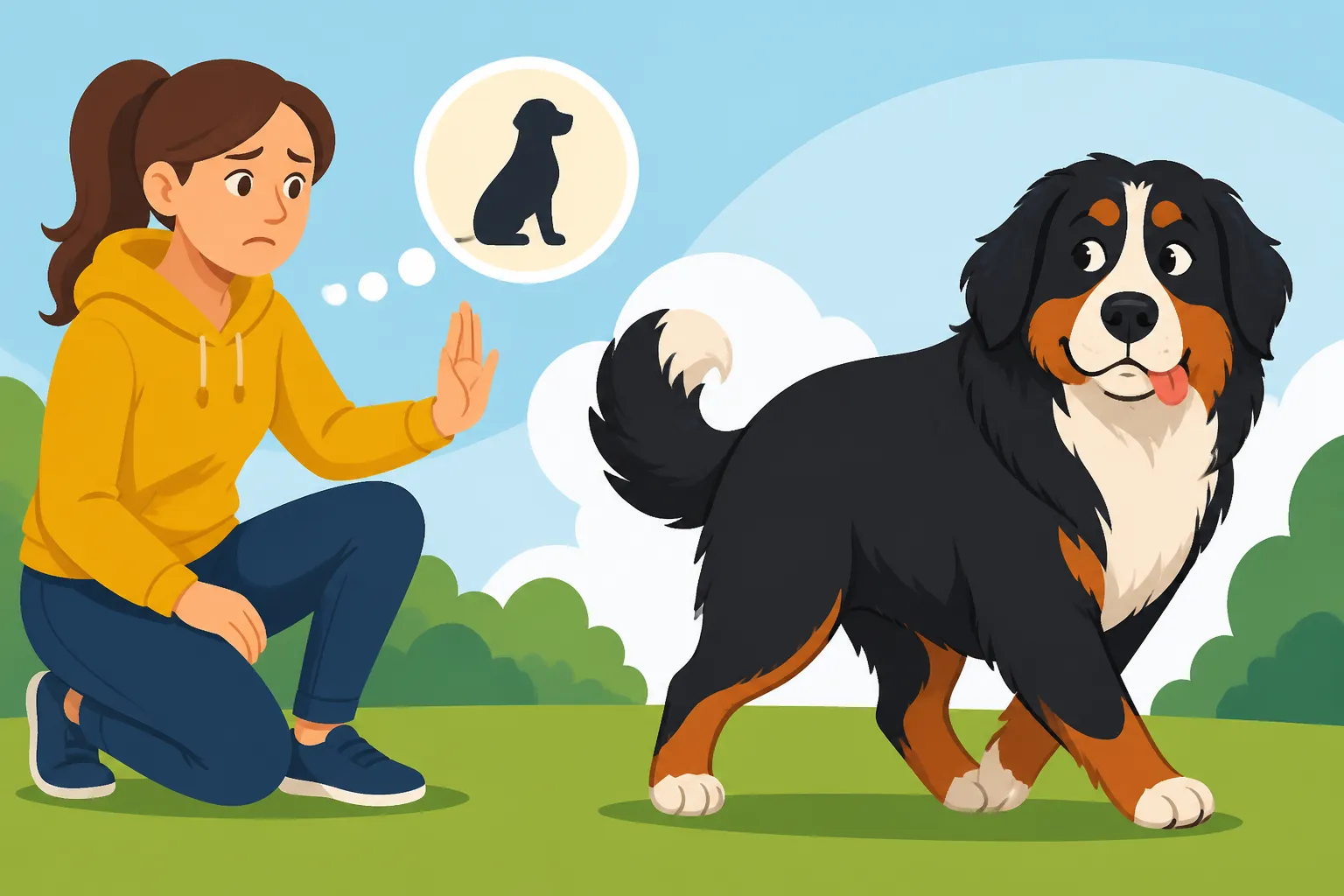
For instance, imagine your Berner, Gus, perfectly executing a "down" stay in the living room, even when you walk away. The next day, you're at the park, practicing the same cue, and a group of kids starts playing tag nearby. Gus pops up, tail wagging, completely ignoring your repeated "down" commands. Is he being stubborn? Or is the excitement of the children, combined with the novelty of the park, simply too much to process while also maintaining a complex behavior? Understanding this distinction is key to a more effective training approach with these gentle giants.
The Berner's Unique Learning Style
Bernese Mountain Dogs are not typically the type of dog that thrives on harsh corrections or endless repetitions. They are intelligent and generally eager to please, but they are also known for being quite sensitive. A single sharp correction can cause a Berner to "shut down" or "quit," making them less likely to engage in future training sessions. The Bernese Mountain Dog That Quits After One Correction is a real phenomenon that many owners experience. Their learning is often best achieved through positive reinforcement, patience, and making training feel like a fun, collaborative game rather than a chore.
They respond incredibly well to consistency and clear communication. If a cue is only reinforced sometimes, or if different family members use different words or hand signals for the same behavior, it creates confusion. Your Berner wants to understand what you're asking, but if the rules are always changing, it’s easier for them to simply disengage. Think of it like a child learning a new language – if the teacher constantly switches between synonyms for the same word, the child will struggle to grasp the core meaning. For a Bernese, understanding the expectation is paramount to performing the behavior reliably, especially under duress.
The Culprit: Environmental Distractions
This is probably the biggest offender when it comes to your Berner suddenly forgetting everything they know. Our homes are usually controlled environments. The world outside, however, is a sensory explosion, and your Bernese is built to take it all in. From the smallest scent on the breeze to the distant sound of a garbage truck, everything competes for their attention.
The Overwhelming World Outside
Stepping out of your quiet home into the hustle and bustle of a park or a busy street is like switching from a calm library to a rock concert for your Bernese. Suddenly, there are new smells, sights, and sounds that are infinitely more interesting than your voice. A leaf blowing past, another dog barking half a block away, or even just the novel texture of the pavement under their paws can be a massive distraction. For a Bernese, whose ancestors were often working dogs navigating varied terrains and stimuli, their senses are finely tuned to their surroundings.
It's not that they don't hear you; it's that their brain is so overwhelmed by the sheer volume of other, more stimulating information that your voice becomes background noise. Imagine trying to concentrate on a difficult task while someone is shouting trivia questions at you and a band is playing loudly next door. That’s a bit like what your Berner might be experiencing. When you’re trying to get your Berner to "stay" while a flock of pigeons takes flight, you're competing against millennia of instinct and an incredibly rich sensory input. This is where gradual exposure and systematic desensitization come into play, helping them learn to filter out irrelevant information.
Internal Distractions: Sniffs, Sounds, and Sensations
Beyond the obvious external factors, Berners can also be derailed by internal distractions. That irresistible patch of grass where another dog might have peed yesterday? That’s a novel scent that demands investigation. The faint rustle in the bushes that could be a tiny critter? That’s a sound that triggers their prey drive. These internal curiosities and instincts can be just as powerful as external visual stimuli, making it incredibly hard for them to focus on your cue.
Their sense of smell, in particular, is far more acute than ours, and it provides a constant stream of information. A Bernese can be "reading" the entire history of a lamppost just by sniffing it, and that deep engagement can make them oblivious to your attempts to get their attention. Furthermore, these can be magnified if your Berner is feeling anxious, overly excited, or even slightly unwell. A subtle ache, an upset stomach, or simply being over-tired can make a dog more susceptible to internal distractions, as their overall threshold for external input drops.
Building Focus in a Distracted World
The key to overcoming environmental distractions is to build focus gradually. Start by practicing known cues in low-distraction environments and slowly introduce more complex settings. A great way to do this is to use a long leash in a fenced area where you can control the environment somewhat. Practice "look at me" or "watch me" exercises, rewarding heavily when your Berner gives you their attention. Training Sessions Short Enough for a Bernese Mountain Dog are crucial here; keep them brief and positive to maintain engagement.
Incorporating structured games into your routine can also help. Hide-and-seek, where your Berner has to find you and get a treat, or recall games where they run to you for a highly valued reward, can build their responsiveness and make you the most exciting thing in the environment. Companies like BAXTER & Bella offer online puppy training programs that emphasize building focus and engagement in various environments, which can be a huge help for Bernese owners navigating these challenges. Remember, the goal isn't to eliminate all distractions, but to teach your Berner that listening to you is always the most rewarding choice, no matter what else is going on.
Motivation Matters: Why Your Berner Might Not Care
Let’s be honest: sometimes, what we think is a fantastic reward just doesn't cut it for our discerning Berners. When a known cue is ignored, it's often a sign that the current motivation simply isn't strong enough to compete with whatever else is capturing their attention.
Is Your Reinforcement Strong Enough?
In a quiet living room, a piece of kibble might be enough to get your Bernese to "sit" perfectly. But take that same dog to a bustling park, where there are exciting smells, other dogs, and new people, and suddenly that kibble looks a lot less appealing. The value of the reward needs to match the level of distraction and the difficulty of the task. If your Berner is ignoring a cue, it’s probably not because they don’t understand it, but because the perceived reward for performing it isn't worth the effort compared to the alternative.
Think about it from their perspective. Sniffing that fascinating patch of grass might offer a rich sensory experience, while performing a "sit" for a dry piece of kibble offers… well, a dry piece of kibble. You need to up your game! For higher-stakes situations, you need higher-value rewards. This could mean small pieces of cooked chicken, cheese, hot dogs, or a favorite squeaky toy that only comes out during training. What a Bernese Mountain Dog Will Actually Work For is often a question of finding their ultimate motivators.
The "What's In It For Me?" Factor
Dogs, much like people, operate on a "what's in it for me?" principle, especially when it comes to performing behaviors on demand. If consistently, the reward for doing what you ask is less satisfying than pursuing their own interests, they will naturally choose their own interests. This isn't being malicious; it's simply a reflection of basic learning principles. If there's no clear, immediate, and high-value benefit to responding to your cue, why should they bother?
This factor becomes especially important for cues like "come," which asks your Berner to abandon something interesting and return to you. If "come" always means the end of playtime or being leashed up, it quickly loses its appeal. Instead, make coming to you the best thing ever! When your Berner comes, shower them with praise, a jackpot of treats, and maybe even a quick game of tug. Randomly call them for "check-ins" even during free play, reward them, and then immediately release them back to play. This teaches them that coming to you doesn't always mean the fun ends, but rather that you are the source of all good things.
Varying Rewards to Keep Things Interesting
Imagine eating the same meal every single day. Eventually, no matter how much you loved it initially, you'd get bored. The same applies to your Bernese Mountain Dog's rewards. If every "sit" earns a single piece of the same boring kibble, it's going to lose its potency over time. To keep your Berner engaged and motivated, you need to vary your rewards.
This doesn't just mean switching between chicken and cheese, though that's a good start. It also means varying the type of reward. Sometimes it's a treat, sometimes it's a quick game of tug, sometimes it's enthusiastic verbal praise and a belly rub. You can even use access to things they want as a reward. For example, asking for a "sit" before opening the door to the yard or before putting down their food bowl. Keep them guessing and excited about what wonderful thing might come next when they respond to your cue. You might find a whole range of high-value treats on Amazon that your Berner goes crazy for, perfect for those high-distraction training moments.
Inconsistency and Lapses in Training
We're all human, and life gets busy. It’s easy to let consistency slide, but for a Bernese Mountain Dog, even small inconsistencies can have a big impact on their reliability when it comes to responding to known cues.
The Perils of "Sometimes"
"Sometimes" is the enemy of reliable training. If you only enforce a cue sometimes, or if you only reward it sometimes, you're teaching your Bernese that the cue is optional. For example, if you ask your Berner to "stay" but sometimes let them break it early, they learn that "stay" doesn't always mean stay. If you call them with "come" but don't always follow through with ensuring they return, they learn that your call isn't an absolute command.
This is especially true with a big, strong dog like a Bernese Mountain Dog. If they learn they can get away with ignoring you, they will. Every time they successfully ignore a cue and get to do what they want instead, that behavior is reinforced. It's vital to decide what your expectations are for each cue and then consistently enforce those expectations, rewarding heavily when they meet them and gently guiding them back on track when they don't. For example, if you say "off" when they jump, every single time, they will learn "off." If you sometimes laugh and pet them while they're jumping, you're sending mixed signals that are incredibly confusing.
Generalizing Cues in Different Contexts
One of the biggest mistakes owners make is assuming that because a dog knows a cue in one environment, they know it in all environments. This simply isn't true, especially for a large, sensory-driven breed like the Bernese Mountain Dog. Your Berner might be a "sit" superstar in the kitchen, but the concrete sidewalk outside your home, with its new smells and sounds, is an entirely different training ground. They need to learn to generalize the cue – meaning they understand that "sit" means "sit" regardless of where they are or what's happening around them.
To achieve this, you need to practice cues in a wide variety of locations and situations. Start with your quiet living room, then move to the backyard, then a quiet street, then a slightly busier park, and so on. Each new environment should be treated almost like starting the cue from scratch, initially using high-value rewards and gradually increasing distractions. This systematic approach, sometimes called "proofing," ensures that the behavior becomes truly reliable, no matter the context. Programs like those offered by BAXTER & Bella often include modules specifically designed to help owners generalize behaviors effectively.
Owner Frustration Leading to Training Breakdowns
Let's face it, it's incredibly frustrating when your dog ignores you, especially when you know they know better. This frustration can unfortunately lead to training breakdowns. When we get frustrated, our tone of voice might change, we might repeat cues incessantly, or we might even give up altogether. Bernese Mountain Dogs are sensitive to our emotions, and if they sense our frustration or anger, they might become anxious, less willing to engage, or even learn to avoid us during training sessions.
If you find yourself getting frustrated, take a break. Walk away, cool down, and come back with a fresh perspective. Repeating a cue multiple times when your dog isn't listening only teaches them that they don't have to respond to the first (or second, or third) command. Instead, use a single, clear cue. If they don't respond, gently guide them into position, reward them, and then release them. This reinforces the correct behavior without relying on endless repetition or emotional outbursts. Remember, consistency combined with a calm, positive attitude is far more effective than frustration.
Physical or Mental Hurdles
Sometimes, a sudden change in responsiveness isn't about training at all; it can be a subtle sign of an underlying physical or mental issue. Bernese Mountain Dogs are known for their stoicism, and they can often hide discomfort until it becomes significant.
Subtle Health Issues and Discomfort
If your typically responsive Bernese suddenly starts ignoring cues, especially those involving movement like "sit" or "down," it's worth considering if they might be in pain or discomfort. Berners are prone to Joint Disease in a Hundred Pound Bernese Mountain Dog, including hip and elbow dysplasia, which can make certain positions or movements uncomfortable. A subtle lameness or stiffness might not be obvious to you but could be enough to make them hesitant to comply.
Similarly, an ear infection, tooth pain, or even an upset stomach could be causing enough discomfort to make them less focused and responsive. Since Berners can be masters at hiding discomfort, a visit to your veterinarian for a thorough check-up is always a good idea if there's a sudden, unexplained change in behavior. This is especially true for an older Bernese Mountain Dog, who might be experiencing the first signs of age-related arthritis or other ailments. Whether a Bernese Mountain Dog Hides Discomfort is a vital question for any Berner owner, and vigilance is key.
Age-Related Cognitive Changes
As our beloved Berners age, they can, like humans, experience cognitive decline. While many Berners are still sharp well into their senior years, some may start to show signs of Canine Cognitive Dysfunction (CCD). This can manifest as confusion, disorientation, changes in sleep patterns, and, yes, a decreased ability to remember and respond to known cues. They might genuinely forget what "sit" means or why they should do it.
If you have an older Bernese and notice a general decline in their responsiveness alongside other changes in behavior, speak to your vet. There are sometimes medications, dietary supplements, and environmental enrichments that can help manage the symptoms of CCD and improve their quality of life. Adjusting your expectations and being even more patient and clear with your cues can also make a big difference for an aging Berner.
Stress, Anxiety, or Fear Responses
A Bernese Mountain Dog who is feeling stressed, anxious, or fearful is unlikely to respond reliably to cues, no matter how well they know them. When a dog is in a heightened emotional state, their brain is focused on survival or managing discomfort, not on performing tricks. A loud noise, a strange person, another dog behaving aggressively, or even a new object in their environment can trigger a stress response. While Berners are generally good-natured, some can be more reserved or shy, and new situations can be overwhelming.
Observing your Berner’s body language is crucial here. Are their ears pinned back? Is their tail tucked? Are they panting excessively, yawning, or licking their lips? These are all signs of stress. If you suspect stress or anxiety is the reason for their unresponsiveness, the goal isn't to force compliance but to help them feel safe and comfortable first. Remove them from the stressful situation, reassure them, and perhaps practice some calming exercises before attempting any cues. Sometimes, seeking professional guidance from a certified professional dog trainer or veterinary behaviorist can be invaluable if stress or fear is a consistent issue.
| Reason for Ignoring Cue | Common Scenarios | Initial Approach |
|---|---|---|
| Environmental Distraction | Park with squirrels, busy street, new people | Start with low distraction, gradually increase. Use high-value rewards. |
| Lack of Motivation | Boring treats, no exciting reward | Use high-value treats (chicken, cheese), varied rewards (toys, praise). |
| Inconsistent Training | Cue only enforced sometimes, different commands | Be absolutely consistent with cue and consequence (reward/re-do). |
| Physical Discomfort | Limping, stiffness, unusual lethargy | Vet check-up immediately to rule out pain/illness. |
| Age-Related Changes | Older dog, generalized confusion, slower responses | Vet consultation, adapt expectations, use clearer/slower cues. |
| Stress/Anxiety/Fear | Loud noises, new situations, scary stimuli | Remove from stressor, reassure, build positive associations. |
Practical Strategies for Re-Engaging Your Bernese
Once you've pinpointed why your Bernese might be ignoring you, it's time to put some practical strategies into action. The good news is that with patience, consistency, and a deep understanding of your Berner, you can rebuild that reliable responsiveness.
Back to Basics: Reinforcing Foundation Cues
When your Bernese starts ignoring a known cue, the best course of action is often to go back to basics. Don't assume they've forgotten; rather, assume they need the cue strengthened under varying conditions. Start by revisiting the cue in the easiest possible environment – your quiet home, with minimal distractions. Use super high-value rewards and make it incredibly clear what you're asking for.
Practice short, frequent sessions (think 5-10 minutes a few times a day) focusing on one or two cues. The Bernese Mountain Dog That Quits After One Correction can also be the one that thrives on short, positive, successful interactions. Make it so easy for them to succeed that they can't fail, and reward them enthusiastically every single time they get it right. Once they are consistently responsive in this easy environment, slowly introduce minor distractions, gradually increasing the difficulty. This systematic approach helps them "relearn" the cue in a more generalized way and builds their confidence, helping them remember that responding to you is always a rewarding experience.
The Power of Positive Reinforcement and High-Value Rewards
For a Bernese Mountain Dog, positive reinforcement is not just a training method; it's the language of connection and trust. They respond best to praise, affection, and tangible rewards that make complying with your request a truly wonderful experience. Forget harsh corrections or forcing them into position; these methods can quickly damage your relationship and make your sensitive Berner shut down.
As mentioned, high-value rewards are crucial, especially when working in distracting environments. Think about what your Berner absolutely goes wild for – is it a specific treat? A favorite toy? A game of chase? Use these "jackpot" rewards for truly excellent responses, especially when they overcome a significant distraction to listen to you. Remember, the reward needs to be from their perspective, not yours. You might think that dry biscuit is great, but your Berner might have other ideas! Look for unique training treats or toys on Amazon that can serve as these high-value motivators.
Professional Guidance: When to Seek Help
While many issues can be resolved with consistent, positive training at home, there are times when seeking professional help is the best course of action. If you've tried the above strategies and your Bernese is still consistently ignoring cues, or if you suspect an underlying behavioral issue like severe anxiety or reactivity, don't hesitate to reach out to a qualified professional.
A certified professional dog trainer (CPDT-KA) or a veterinary behaviorist can provide personalized guidance, observe your Berner's behavior in context, and help you develop a tailored training plan. They can also help rule out any medical causes if your veterinarian hasn't already. Sometimes, an objective eye can spot subtle cues or inconsistencies that we, as owners, might miss. They can also teach you advanced techniques for proofing behaviors and managing high-distraction environments. The investment in professional help can be invaluable for strengthening your bond and ensuring your Bernese becomes the well-behaved, responsive companion you both deserve. Whether a Balanced Trainer Suits a Bernese Mountain Dog is a good question to explore when considering professional help; always look for trainers who prioritize positive reinforcement and force-free methods, as these are generally best suited for the sensitive Berner temperament.
Disclaimer
This article is for general informational purposes only and does not constitute professional advice. Laws, prices and regulations vary by location and change over time. Consult a qualified professional for guidance on your specific situation.