Whether a Bernese Mountain Dog Suits a Dog Park
It's a natural desire for any dog owner: you want your beloved Bernese Mountain Dog to run, play, and make friends. The dog park seems like the perfect solution, a sprawling space where they can truly be themselves. But if you own a magnificent Berner, you know they come with their own unique set of quirks and considerations, making the decision to visit a dog park far more complex than it appears on the surface. This guide will delve deep into whether a Bernese Mountain Dog truly suits a dog park, examining their unique temperament, physical needs, and the importance of careful preparation to ensure their safety and enjoyment.
The Bernese Mountain Dog Temperament: A Unique Fit for Public Play?
Bernese Mountain Dogs are renowned for their gentle, affectionate nature, but this doesn't automatically translate to thriving in the boisterous, often unpredictable environment of a dog park. Understanding their inherent personality traits is crucial before deciding if these communal spaces are right for your furry companion.
The Berner's Gentle, Sometimes Reserved Nature
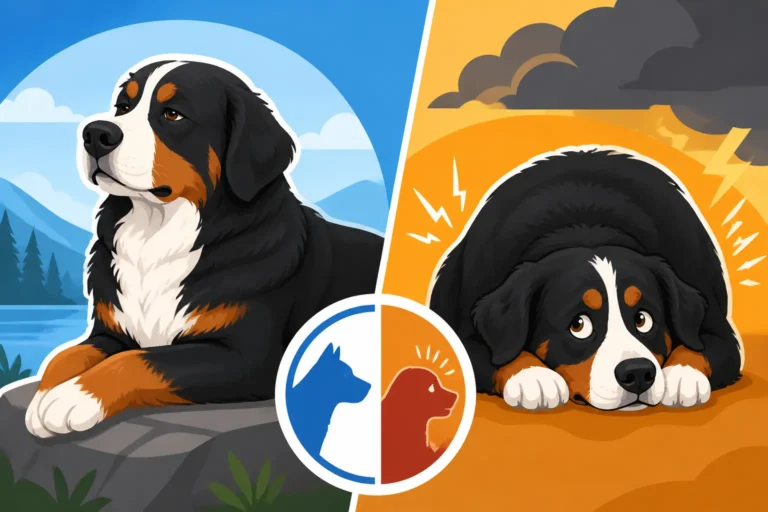
Bernese Mountain Dogs are, by and large, incredibly kind, loyal, and good-natured souls. They tend to be stable and calm, often taking things in stride with a regal presence. However, their gentleness doesn't mean they are always eager for a free-for-all with every dog they meet. Many Berners, especially as they mature, can be quite discerning about their playmates. They often prefer familiar dogs and people, and can be reserved or even a little aloof with strangers. They might observe the chaos from a distance, happy to sniff around the perimeter or politely greet one or two dogs, rather than diving headfirst into a wrestling match.
Imagine taking your Berner to a park where a pack of high-energy terriers or working breeds are zooming around, engaging in loud, chase-oriented play. While some Berners might tolerate this, many will find it overwhelming or simply not enjoyable. They aren't typically the "let's run full speed for an hour" kind of dog; instead, they often prefer a leisurely sniffari or a gentle game of tug with a known friend. If your Berner spends most of their time sticking close to you, looking anxious, or actively avoiding other dogs, it’s a clear sign that the dog park environment isn't enriching for them, even if you desperately wish it were.
Sensitivity and Overwhelm in High-Stimulation Environments
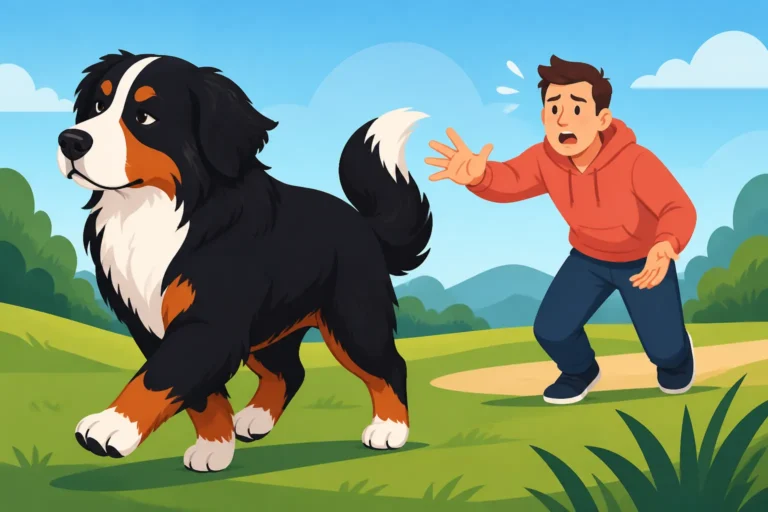
Despite their impressive size, Bernese Mountain Dogs can be quite sensitive creatures. Loud noises, sudden movements, and chaotic situations can easily overwhelm them. A dog park is, by its very nature, a high-stimulation environment. There are dogs barking, owners shouting, balls flying, and a constant shifting dynamic of interactions. For a sensitive Berner, this can quickly become too much to process. They might shut down, appear unresponsive, or start showing subtle signs of stress like lip-licking, yawning, turning their head away, or even trying to physically remove themselves from the situation by hiding behind your legs.
This isn't about fear, necessarily, but about comfort and their capacity to cope with such intense input. They thrive in calm, predictable settings where they feel secure. Being pushed into situations where they feel anxious or intimidated, even if unintentional, can erode their confidence and even lead to negative associations with other dogs or public spaces. It's a common misconception that all dogs need to "socialize" constantly, but for a Berner, quality, controlled interactions often far outweigh the quantity of random encounters. Remember, if your Berner is showing discomfort, their welfare is far more important than getting in some off-leash time.
The "Lean" and Seeking Reassurance
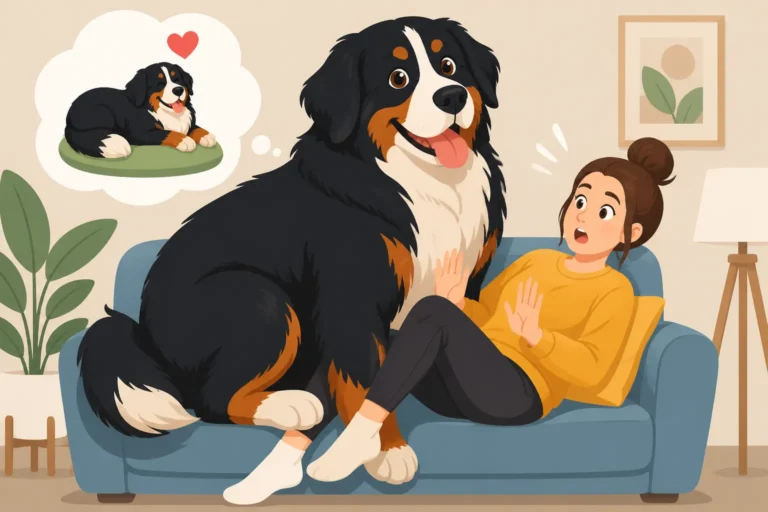
Ah, the famous Berner lean! It's one of their most endearing traits, a heavy push against your legs that can feel like a comforting hug. While it's certainly a sign of affection, it's also often a bid for security and reassurance. They literally lean on you, putting their considerable weight into the contact. In a dog park setting, this instinct might come out more strongly if they're feeling unsure or overwhelmed. You might find your Bernese Mountain Dog trying to physically wedge themselves between you and other dogs, or pressing against your leg with unusual intensity.
This leaning is their way of saying, "I'm not quite comfortable here, can you help me?" If they're constantly seeking your physical presence for comfort rather than engaging positively with the environment or other dogs, it's a huge indicator that the dog park isn't a good fit for them. They're looking to you to be their safe harbor, and if the environment makes them feel like they need constant reassurance, it’s counterproductive to the supposed fun of the park. Instead of fostering independence and joy, it can reinforce anxiety.
Physical Considerations: More Than Just Room to Run
Beyond temperament, the sheer physicality of a Bernese Mountain Dog presents unique challenges and risks in a typical dog park setting. Their size, coat, and predisposition to certain health issues demand a more cautious approach than you might take with a smaller, more robust breed.
Protecting Developing Joints and Senior Comfort
Bernese Mountain Dogs are magnificent giants, and as such, their joints are particularly vulnerable, especially during their crucial growth phases and in their later years. Conditions like hip and elbow dysplasia are unfortunately prevalent within the breed. High-impact activities, sudden stops and starts, and rough-and-tumble play with other dogs – all common occurrences at a dog park – can put immense strain on their developing or aging joints. A misstep, a collision, or even an awkward jump could lead to a serious injury that could impact their mobility for life.
Imagine your young Berner puppy, all gangly legs and clumsy enthusiasm, attempting to keep up with a much faster, more agile dog that suddenly changes direction. The torque on their still-forming joints can be immense. For an older Bernese Mountain Dog, who might already be experiencing the early signs of arthritis, the unpredictable movements and energetic collisions could exacerbate their discomfort or even cause an acute injury. We spend so much time and effort seeking The Age a Bernese Mountain Dog Should Be X-Rayed and ensuring good breeding to avoid these issues; it would be heartbreaking for a dog park incident to compromise their health. It's essential to remember that even if your Berner seems to be having fun, their long-term joint health might be silently taking a hit.
Overheating Risk in a Thick-Coated Giant
With their stunning black, rust, and white tri-color coats and dense double layers, Bernese Mountain Dogs are built for cold mountain climates. This makes them incredibly susceptible to overheating, even on days that might feel perfectly pleasant to us. Add vigorous exercise in a dog park, and the risk escalates dramatically. Running, wrestling, and playing fetch without sufficient breaks or access to shade and cool water can quickly push a Berner into dangerous territory, leading to heat exhaustion or even life-threatening heatstroke.
Many dog parks, while offering open space, lack ample natural shade or readily available water sources, especially during peak hours. Even if they do, it's easy to get caught up in watching your dog play and miss the subtle signs that they're getting too hot. A panting Berner might just seem like a dog having fun, but rapid, shallow breathing, excessive drooling, lethargy, or stumbling are all serious warning signs. It's a constant battle to manage Heat and the Bernese Mountain Dog's Black Coat and understand The Temperature a Bernese Mountain Dog Stops Coping. The unpredictable nature of dog park play makes temperature regulation an ongoing concern, turning what should be a fun outing into a high-stakes gamble with their health.
The Shadow of Bloat
One of the most terrifying risks for any deep-chested breed like the Bernese Mountain Dog is Gastric Dilatation-Volvulus (GDV), commonly known as bloat. This life-threatening condition occurs when the stomach fills with gas, food, or fluid and then twists, cutting off blood supply and leading to rapid organ damage. While the exact causes are not fully understood, vigorous exercise, especially before or after eating, and high stress levels are believed to be contributing factors.
The excitement, stress, and unbridled play at a dog park could potentially increase a Bernese Mountain Dog's risk of bloat. If they've eaten even a few hours before, or if they consume a lot of water rapidly during play, the danger becomes real. The symptoms of bloat can progress with terrifying speed, and The Half-Hour That Decides a Bloated Bernese Mountain Dog isn't an exaggeration—it's a critical emergency. The thought of your beautiful Berner developing bloat during or after a dog park visit is enough to make many owners seriously reconsider these outings. Preventing Bloat in a Deep-Chested Bernese Mountain Dog often means carefully managing their activity levels around meal times and avoiding situations of high stress or over-exertion.
Preparation and Training: Setting Your Berner Up for Success (or Alternative Fun)
If you're still considering a dog park for your Bernese Mountain Dog, or if you simply want them to be a well-adjusted member of society, proper preparation and training are non-negotiable. These aren't just good ideas; they're vital for their safety and happiness, regardless of where they exercise.
Crucial Early Socialization, Not Just Exposure
There's a big difference between "socialization" and "exposure." Simply letting your puppy interact with every dog they meet, especially in an uncontrolled environment like a dog park, is not true socialization and can actually be detrimental. True socialization for a Bernese Mountain Dog puppy involves carefully curated, positive experiences with a variety of sights, sounds, people, and well-mannered, vaccinated dogs. These interactions should be brief, positive, and always under your control, ensuring your puppy feels safe and secure.
Dog parks, with their unpredictable mix of dogs and owners, are generally not suitable for initial socialization. A fearful or overwhelming experience with a rude dog can create lasting anxiety or reactivity in your sensitive Berner. Instead, focus on puppy classes, controlled playdates with known, calm dogs, and positive reinforcement training. Tools and programs, like those offered by BAXTER & Bella, can provide structured guidance for proper socialization and obedience training from the comfort of your home, ensuring that your Berner builds confidence and good manners in a supportive way. For more insights, look into Socializing a Reserved Bernese Mountain Dog Puppy and What a Bernese Mountain Dog Puppy Should Meet Early.
Mastering Recall and Leash Manners
Even in an off-leash park, having impeccable recall and good leash manners is paramount for a large dog like a Bernese Mountain Dog. Imagine your hundred-pound Berner suddenly decides to chase a squirrel out of the park, or barrels towards a small, fearful dog. Without a rock-solid "come" command, you could be facing a dangerous situation. Your voice needs to be more interesting than any distraction, no matter how enticing. This takes consistent, positive training in various environments.
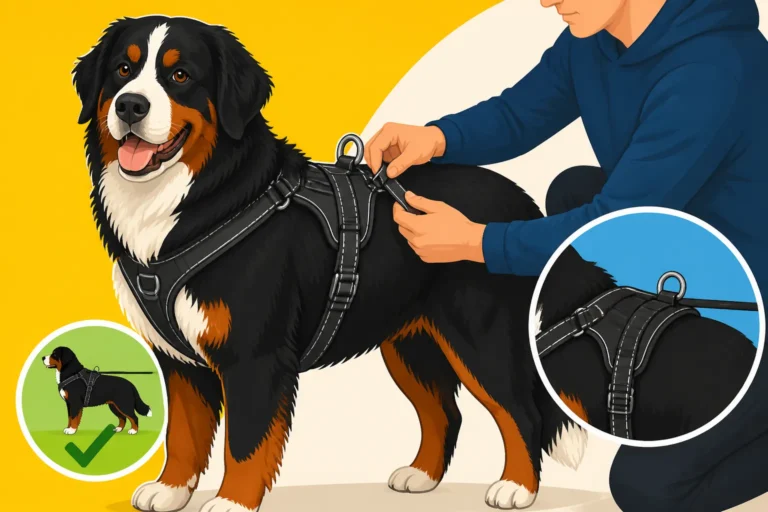
Similarly, navigating the entry and exit points of a busy dog park requires excellent leash manners. A giant breed pulling on the leash can injure you or themselves, and can also intimidate other dogs and owners. Teaching your Berner to walk politely on a loose leash, to sit and wait patiently at gates, and to ignore distractions while on lead are foundational skills. If your Berner struggles with Leash Manners on a Hundred Pound Bernese Mountain Dog or tends to be A Bernese Mountain Dog That Will Not Come When Called, a dog park is simply too risky an environment until these behaviors are perfected. Your ability to control your dog, even off-leash, is the ultimate responsibility of dog ownership.
Health Clearances and Up-to-Date Vaccinations
Before ever stepping paw into a dog park, your Bernese Mountain Dog must be fully vaccinated, dewormed, and on appropriate flea and tick prevention. Dog parks are hotbeds for communicable diseases like kennel cough, canine influenza, and parasites. While vaccinations offer protection, they don't guarantee immunity, and an immune-compromised or unvaccinated dog puts themselves and others at risk.
Beyond basic health, it's wise to ensure your Berner has had appropriate health clearances for their breed, particularly for orthopedic issues. Knowing their baseline health can help you make informed decisions about their activity levels. A veterinarian can offer specific advice based on your dog's individual health history. Discussions around The Bernese Mountain Dog Health Panel and proper Dosing Vaccines and Wormers for a Growing Berner are essential parts of responsible Berner ownership, and these considerations are magnified when contemplating dog park visits. It’s about protecting your dog, and being a responsible member of the broader dog community.
Deciding What's Best: Tailoring the Experience to Your Bernese Mountain Dog
Ultimately, the decision of whether a dog park suits your Bernese Mountain Dog is a highly individual one. There's no blanket "yes" or "no" answer, as every dog, even within the same breed, has a unique personality and set of needs.
Evaluating the Dog Park Environment
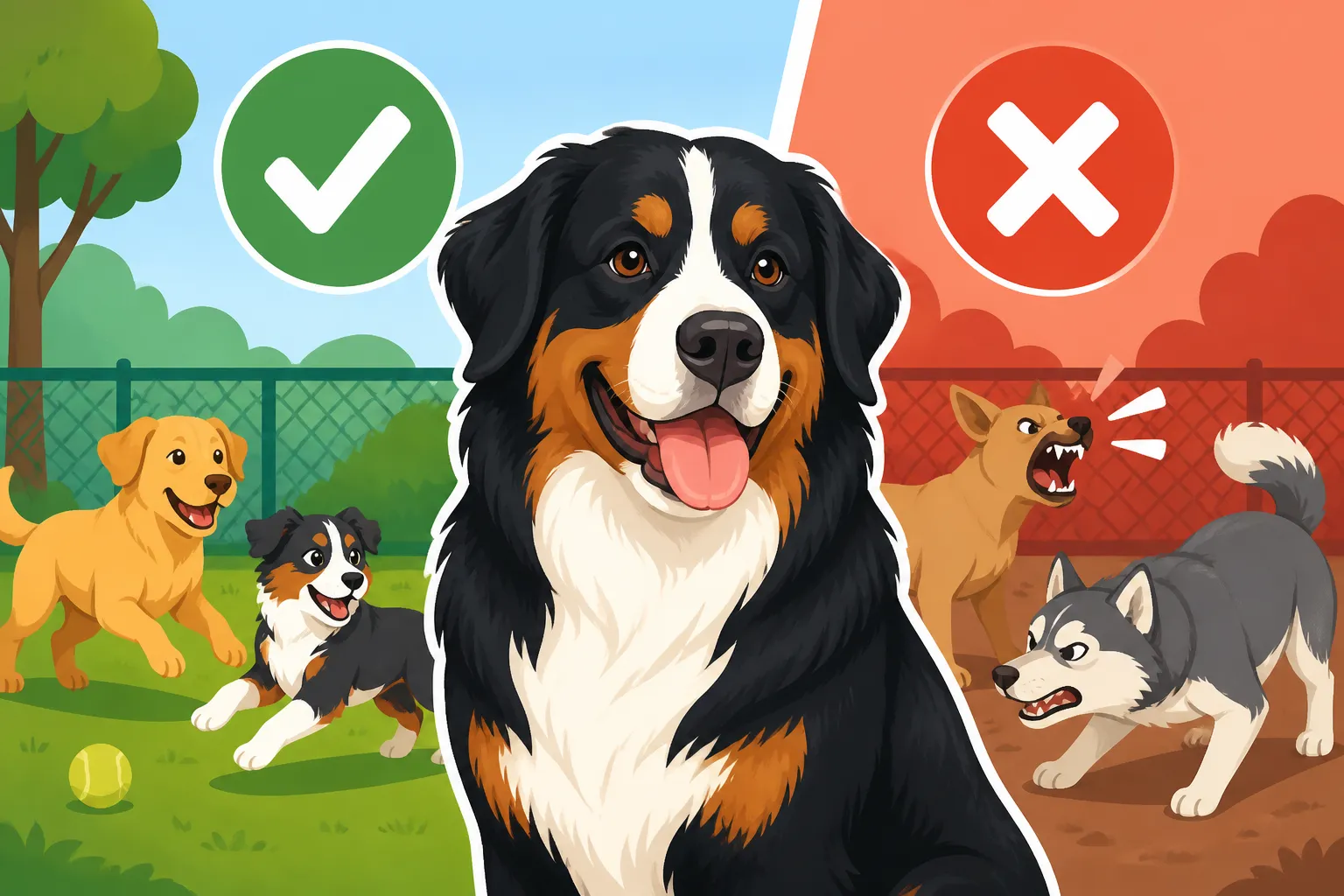
If you decide to give a dog park a try, or if you're looking for the right kind of dog park, your homework isn't just about your dog—it's about the park itself. Before taking your Bernese Mountain Dog, visit the park alone (or with a human friend, leaving your dog at home). Observe the general atmosphere. Are the owners attentive? Do they intervene if play gets too rough? Are there separate areas for large and small dogs, and are these rules enforced? Look at the dogs themselves: do they seem happy, relaxed, and well-socialized, or are there a lot of tense, overly boisterous, or aggressive individuals?
Pay attention to practicalities: Is there ample shade? Easy access to fresh water? Is the fencing secure? Are there any obvious hazards like broken equipment or excessive litter? A well-maintained park with responsible owners and calm, appropriate play is a much safer bet than a chaotic, unsupervised free-for-all. Sometimes, the issue isn't your Berner, but the environment itself. Don't be afraid to trust your gut feeling – if something feels off, it probably is.
Recognizing Your Berner's Signals
Your Bernese Mountain Dog will tell you, often very clearly, if they're enjoying themselves or if they're stressed. Learn to read their body language. A happy Berner might have a loose, wagging tail (not stiff and high), soft eyes, and a relaxed posture. They might engage in short bursts of play, sniff around, and then return to you for a check-in.
Signs of stress or discomfort include:
- Lip licking or excessive yawning when not tired.
- Turning their head away or showing "whale eye" (the whites of their eyes showing).
- Tucking their tail or holding it low and stiff.
- Panting heavily (especially if not overly hot or exerting themselves).
- Hiding behind you or trying to get away from other dogs. This is a clear indicator that Whether a Bernese Mountain Dog Hides Discomfort is present and they need your help.
- Freezing or moving very slowly, appearing hesitant.
- Mounting other dogs (often a sign of over-arousal or stress, not just dominance).
If you see these signals, it’s time to leave. Immediately. Don't push your dog "just for a few more minutes." Their comfort and confidence are paramount. A positive experience is far more valuable than a prolonged, stressful one.
Alternative Exercise and Socialization Options
If, after careful consideration, you decide that dog parks aren't the best fit for your Bernese Mountain Dog – and for many, they truly aren't – don't despair! There are countless ways to provide enriching exercise and socialization without the risks.
Consider structured playdates with one or two known, compatible dogs. These controlled interactions allow for safe, positive play without the overwhelm. Many communities also offer private dog park rentals, where you can book a fenced area for just your dog or a small group of friends. This provides all the benefits of off-leash running without the unpredictability. Long, leisurely sniff walks in quiet nature areas are often far more mentally stimulating for a Berner than a chaotic run-around. Engaging in activities like Backpacking With a Bernese Mountain Dog or Tracking With a Bernese Mountain Dog can tap into their natural instincts and provide wonderful mental and physical challenges.
For physical exercise, focus on controlled walks, gentle swimming, or even indoor games during hotter months. There are many interactive toys and puzzles available on platforms like Amazon that can provide mental stimulation at home. Remember, for a Berner, quality over quantity is key. A few short, positive interactions and a good long walk at the right temperature (check out Exercising a Bernese Mountain Dog in Summer for tips!) are often far more beneficial than a stressful hour at a crowded dog park.
| Feature | Potential Pros for a Bernese Mountain Dog | Potential Cons for a Bernese Mountain Dog |
|---|---|---|
| Exercise | Large space for running and expending energy | Risk of over-exertion, joint strain, overheating; unstructured play isn't always good for giant breeds. |
| Socialization | Exposure to various dogs and people | Overwhelm, negative interactions, potential for fear-based reactions; not suitable for initial socialization. |
| Mental Stimulation | New smells and sights | High stress, unpredictable environment can be mentally draining, not stimulating in a positive way. |
| Owner Convenience | Easy way to provide off-leash time | Requires constant vigilance; high risk of injury or illness. |
| Health Risks | None inherent | Increased risk of bloat, heatstroke, communicable diseases, injuries from rough play. |
Disclaimer
This article is for general informational purposes only and does not constitute professional advice. Laws, prices and regulations vary by location and change over time. Consult a qualified professional for guidance on your specific situation.