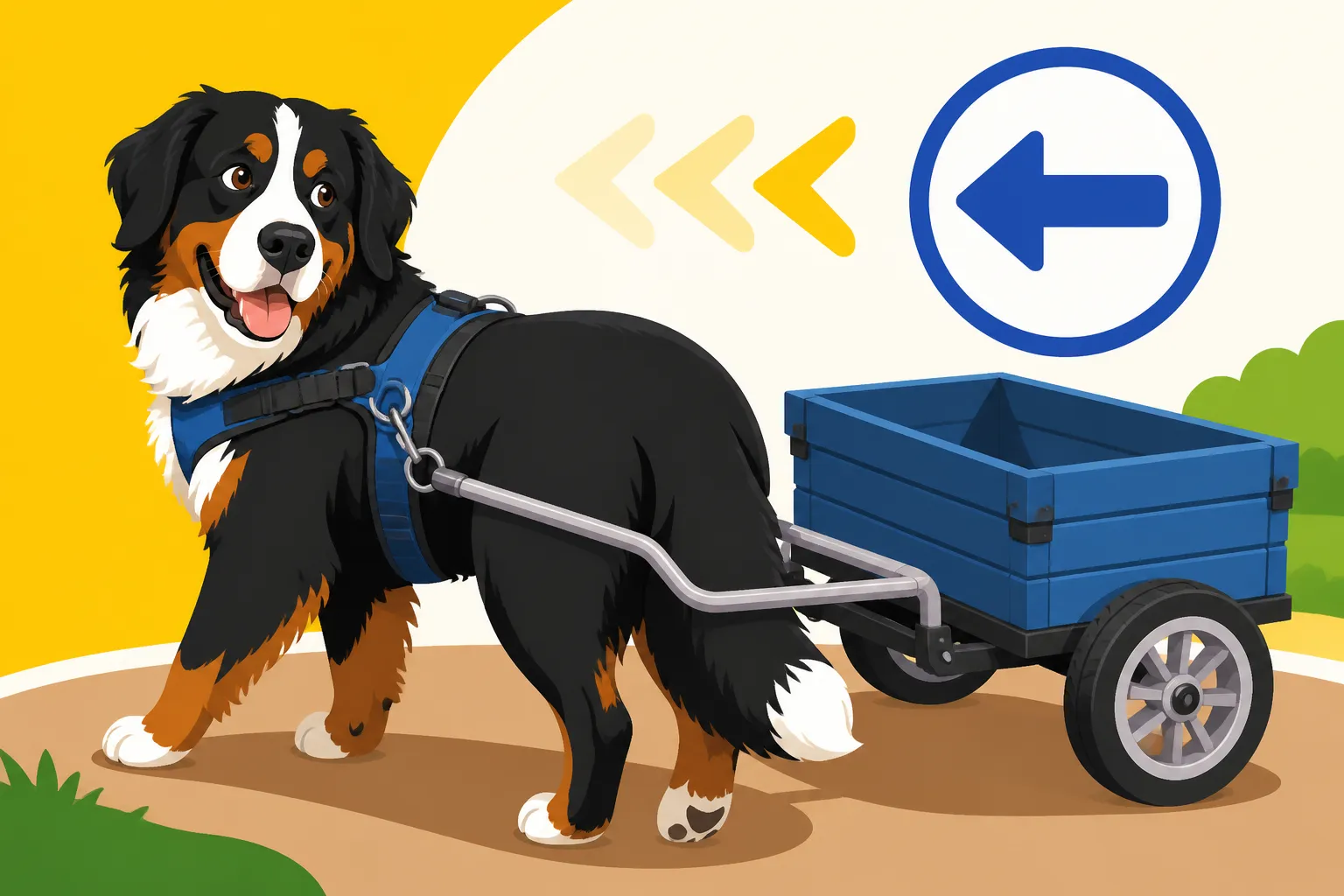
Teaching a Bernese Mountain Dog to Back a Cart Up
Maneuvering a hundred-pound Bernese Mountain Dog attached to a solid wooden cart becomes immensely challenging when you hit a dead end on a narrow trail or need to negotiate a tight turn at a draft test. Teaching your dog to reverse cleanly in harness is an essential safety skill, preventing equipment jackknifing and panic. This guide delivers a clear, step-by-step strategy to teach your Berner how to back a cart up smoothly and safely.
Understanding the Mechanics of Reverse Draft Work
Before asking your dog to move a cart backward, you must understand how a dog perceives reverse movement. Naturally, dogs are forward-focused animals. They rarely move backward for more than a couple of steps in daily life unless they are backing out of a tight space or yield ground during play. Adding a draft rig changes the physical mechanics completely.
Spatial Awareness in Heavy Working Dogs
Bernese Mountain Dogs are notoriously unaware of where their back legs are in space. They often navigate the world like massive front-wheel-drive vehicles, pulling themselves forward with their powerful shoulders while their hindquarters simply follow along. When asked to step backward, a Berner will frequently attempt to turn their head and shoulders around to see where they are going, which instantly pivots their hips and swings the rear of the cart out of alignment.
Developing rear-end awareness, often called canine proprioception, is the absolute foundation of successful reversing. Your dog needs to learn how to consciously lift, place, and push with their hind legs while keeping their spine perfectly straight. Without this body awareness, any attempt to reverse a cart will result in crooked movement, twisted shafts, and potential equipment damage.
The Mechanical Challenges of the Cart and Shafts
When a dog moves forward in draft, the harness pulls on the traces, which transfer force directly to the cart’s axle or doubletree. However, when the dog moves backward, the mechanics invert entirely.
The force is no longer transferred through the main pulling traces. Instead, the rear of the harness—specifically the breeching strap that runs behind the dog’s thighs—engages. As the dog steps back, their thighs push against the breeching strap, which pushes the shafts backward, ultimately moving the cart wheels in reverse.
Proper equipment fit is crucial here. If you haven’t reviewed Fitting a Draft Harness to a Bernese Mountain Dog, the shaft hold-ups or breeching strap may sit at an improper height, causing the shafts to dig into the dog’s sides or slip down their legs when pressure is applied. Furthermore, Choosing a Cart That Fits a Bernese Mountain Dog ensures that the shaft length provides adequate clearance for your dog’s stride without forcing their tail into the front crossbar during a reverse push.
Preparing Your Berner With Off-Wheel Foundation Cues
Attempting to teach a brand-new behavior while your dog is hitched to a heavy piece of wooden or steel machinery is a recipe for frustration and fear. The noise of wheels rolling backward and the sudden physical sensation of harness pressure against the thighs can startle even the calmest working dog. You must establish the verbal cue and physical movement pattern on foot first.
Building Rear Leg Target Awareness
To teach reverse movement, you need a controlled setup where your dog cannot simply turn around. A narrow hallway or a space between a couch and a coffee table works brilliantly as a physical chute.
- Position your Berner standing in front of you inside the narrow channel, facing toward you.
- Step slowly toward your dog’s chest. Most dogs will naturally take a small, hesitant step backward to preserve their personal space.
- The instant one hind foot steps backward, mark the exact moment with a clicker or a verbal “Yes!” and reward with a high-value treat delivered low, right between their front paws.
- Repeat this process, gradually holding out for two steps, then three steps, before marking and rewarding.
- Add your verbal cue, such as “Back,” right as you step forward toward their chest.
Once your dog clearly understands that stepping backward yields a reward, move out of the narrow channel and practice in open space. Ensure they maintain a straight line rather than curving their hindquarters outward. If you want to streamline this step-by-step foundation work from the comfort of home, online platforms like BAXTER & Bella provide excellent step-by-step video modules on body-awareness training and footwork conditioning tailored for large working breeds.
Integrating the Harness Before Hitching
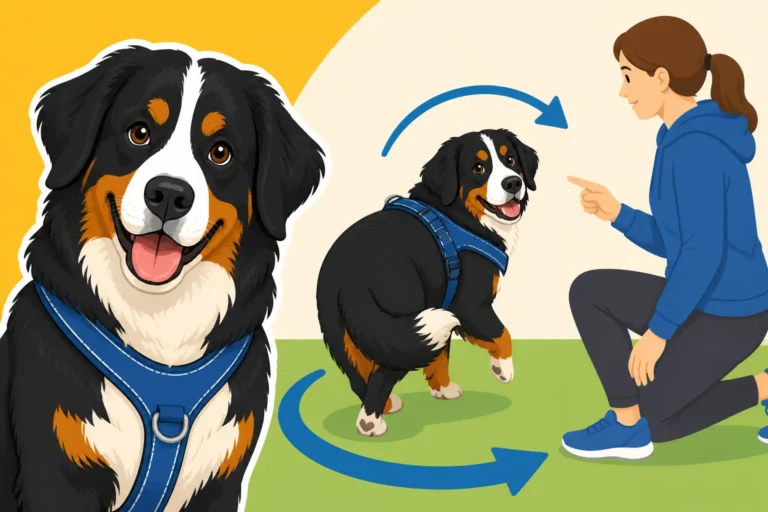
After your dog masters stepping backward on a verbal cue in flat collar or standard walking gear, put them in their full draft harness—without the cart attached. Have an assistant gently hold the traces and breeching strap from behind while you walk in front of your dog.
As you give the “Back” cue, your assistant should apply light, steady pressure on the breeching strap against the back of your dog’s thighs. This mimics the sensation of the cart pushing backward against them. The moment the dog yields to that thigh pressure and steps back, your assistant releases the tension immediately, and you reward the dog handsomely.
This stage teaches your Berner that feeling pressure behind their thighs is not something to fight or panic over; it is simply a signal to step backward until the pressure eases. For dogs that are already proficient with Teaching a Bernese Mountain Dog to Pull a Cart, this stage helps bridge the mental gap between forward draft and reverse pressure.
Step-by-Step Process for Backing the Cart
Once your dog reliably backs up on flat ground in harness and calmly accepts thigh pressure from behind, you are ready to introduce the cart. Make sure you are working on a flat, level, non-slippery surface such as short grass, packed dirt, or rubber matting. Avoid gravel or steep inclines for initial sessions.
Introducing the Harness and Shaft Signals
Hitching up for reverse work requires calm precision. Take your time completing your safety checks, ensuring your dog is comfortable with Introducing a Bernese Mountain Dog to Shafts and Noise before attempting backward motion on wheels.
- Hitch your dog to the cart on a completely level surface. Ensure all hold-ups, tugs, and breeching straps are correctly adjusted and lying flat.
- Position yourself directly in front of your dog, facing them, holding your lead with zero tension.
- Give your clear, enthusiastic verbal cue (“Back”) while taking a single, slow step toward your dog’s chest. Keep your body language non-confrontational—do not loom aggressively over their head, as this can cause a sensitive Berner to sit down.
- Allow your dog a moment to process the request. They must shift their body weight rearward, push their thighs back into the breeching strap, and cause the cart wheels to roll backward an inch or two.
- The very instant the cart rolls backward even a fraction of an inch, mark the action with your marker word, step back to release any spatial pressure, and feed a treat high above their chin to keep their head up and spine aligned.
- Reset and repeat, aiming for single, clean individual steps backward before asking for continuous motion.
Managing Pressure and Handling Sensitivities
Bernese Mountain Dogs are famously sensitive, empathetic, and occasionally prone to sulking if they feel overwhelmed or unjustly scolded. It is vital to recognize The Bernese Mountain Dog That Quits After One Correction when working on complex physical maneuvers. If a Berner feels forced, yanked, or intimidated while in harness, they will often plant all four feet, lower their head, and refuse to budge—a behavior known as “parking.”
If your dog plants their feet and refuses to back up, never pull backward on the lead or physically force the cart into them. This increases their anxiety and triggers an opposition reflex, causing them to push forward against the collar. Instead, take a step back, break physical tension, reset their posture by walking them forward three steps, and make your next criteria much easier.
If you hit a training wall or struggle with timing your rewards during heavy draft exercises, consulting structured dog training resources like BAXTER & Bella can help you troubleshoot communication lapses, refine your timing, and build enthusiasm without over-stressing your dog.
Navigating Narrow Pathways and Course Obstacles
Once your dog can execute three to five straight reverse steps on flat ground, you can begin introducing directional steering in reverse. Reversing around a corner or backing into a marked draft box requires refined handle control.
To turn the rear of the cart to the left while backing, gently guide your dog’s head slightly to the right. Because a dog’s spine acts as a lever, tipping their nose to the right causes their shoulders to shift right and their hips—along with the rear of the cart—to swing to the left. Conversely, gently guiding their nose to the left pushes their hips and the cart rear to the right.
Keep your hand touches light on the lead or side reins. Practice navigating wide reverse curves before attempting tight, ninety-degree turns. Mastering this visual spatial awareness prepares your team for advanced trail handling and Teaching a Bernese Mountain Dog to Turn in Harness under varied field conditions.
Safety Essentials, Equipment Checks, and Troubleshooting
Working with heavy draft equipment carries inherent physical risks. Reversing adds extra stress to cart components, meaning your gear must be inspected thoroughly prior to every practice session.
Gear Alignment and Brakes
Check that all buckles, straps, and shaft connectors are in prime condition. On Amazon, you can readily source dedicated leather care products, brass hardware replacements, and heavy-duty replacement hold-up straps to keep your working harness in top-tier safety condition.
Pay special attention to the mechanical integrity of your cart’s braking system if one is installed. Never attempt to back a cart up with a mechanical brake engaged, as this locks the wheels and subjects your dog’s legs and back to immense, unsafe strain. Always check that the breeching strap sits across the dense muscle of the dog’s rear thighs, well below the point of the hip and safely above the hock joint.
Key Mechanical Responses During Backing Exercises
Understanding how verbal cues translate to physical mechanics helps you diagnose errors instantly during training.
| Handler Action / Verbal Cue | Desired Dog Mechanics | Cart & Equipment Response | Potential Handling Error to Avoid |
|---|---|---|---|
| Clear “Back” cue + step toward dog | Shifts weight to rear limbs, lowers hips slightly | Shafts held level; breeching strap engages rear axle | Looming over the dog’s head, causing them to sit |
| Gentle nose tip to the right | Shoulders pivot right; rear hips swing left | Front shafts guide cart rear to swing smoothly left | Pulling head sharply, causing shafts to pinch neck |
| Gentle nose tip to the left | Shoulders pivot left; rear hips swing right | Front shafts guide cart rear to swing smoothly right | Over-steering, causing cart wheels to jackknife |
| Marker word (“Yes!”) + forward reward | Halts reverse push; shifts weight back to front legs | Cart momentum stops; shafts settle back into neutral | Delaying treat delivery, rewarding a crooked sit |
Weight Limits and Strain Prevention
Reversing requires significantly more muscular effort than pulling forward. While momentum assists forward rolling, starting a cart backward from a complete standstill relies entirely on pure hindquarter strength.
Pay close attention to How Much Weight a Bernese Mountain Dog Should Pull during training sessions. When practicing backing maneuvers, reduce the weight in the cart cargo bed dramatically. For basic practice, an empty cart is ideal. Never overload a cart during technical handling maneuvers, as a heavy load pushing against a dog’s thighs on an incline can cause panic, slipping, or joint strain.
By keeping training sessions brief—no more than five to ten minutes of actual cart work at a time—you preserve your Berner’s enthusiasm and protect their working joints. Whether your ultimate goal is recreational carting with family or earning titles described in What a Draft Test Asks of a Bernese Mountain Dog, patience, positive reinforcement, and clear mechanics will make backing up a stress-free, impressive part of your working partnership.
Disclaimer
This article is for general informational purposes only and does not constitute professional advice. Laws, prices and regulations vary by location and change over time. Consult a qualified professional for guidance on your specific situation.