Whether Neutering Age Affects Bernese Mountain Dog Cancer
Bernese Mountain Dog cancer risks and neutering age connections are explored to help owners navigate sterilization decisions.

Bernese Mountain Dog cancer risks and neutering age connections are explored to help owners navigate sterilization decisions.

Bernese Mountain Dog lumps require professional veterinary evaluation to determine if removal is necessary and to check for histiocytic sarcoma.

Bone cancer and histiocytic sarcoma in Bernese Mountain Dogs, explaining differences, warning signs, and the diagnostic journey.
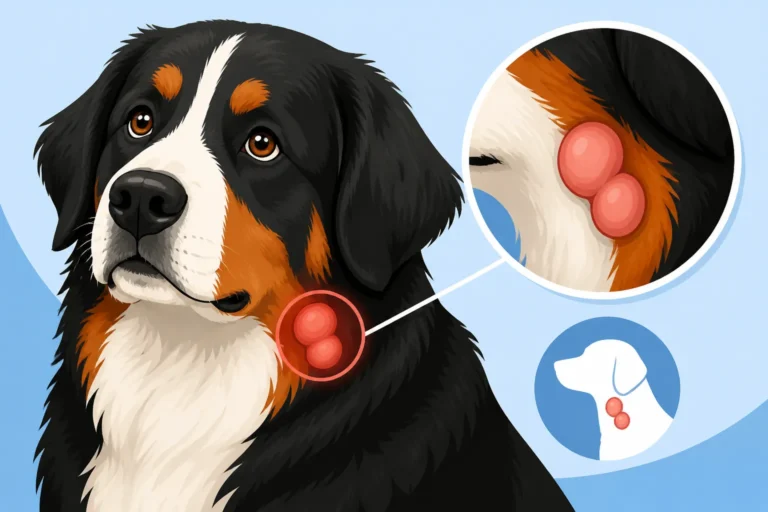
Swollen lymph nodes in a Bernese Mountain Dog reveal the immune system is fighting local infections or serious diseases.

Dangerous lumps on Bernese Mountain Dogs require immediate veterinary evaluation rather than a risky wait and see approach.

Flat-Coated Retriever cancer risks compared to Bernese Mountain Dogs, detailing histiocytic sarcoma, lymphoma, and mast cell tumors.

Cancer statistics and genetic risks for Bernese Mountain Dogs show over half die from tumors such as histiocytic sarcoma.

Cancer screening for Bernese Mountain Dogs relies on pedigree databases and the Berner-Garde Foundation because single gene tests do not exist.

Bernese Mountain Dog cancer genetics, common cancer types, and heritability risks explain why over half succumb to this disease.

Evaluating quality of life for a Bernese Mountain Dog helps owners decide when stopping medical treatments prevents suffering.