Cruciate Repair Prices for a Bernese Mountain Dog
Few things can strike fear into a Bernese Mountain Dog owner's heart like seeing their beloved giant suddenly favor a leg or refuse to put weight down. A torn cruciate ligament is a painful and unfortunately common injury for our big, beautiful Berners, and the thought of surgery, let alone the cost, can be overwhelming. This guide is here to walk you through the various surgical options, what influences the price tag, and how you can prepare for the financial journey of getting your Bernese Mountain Dog back on all four paws.
Understanding Cruciate Ligament Tears in Bernese Mountain Dogs
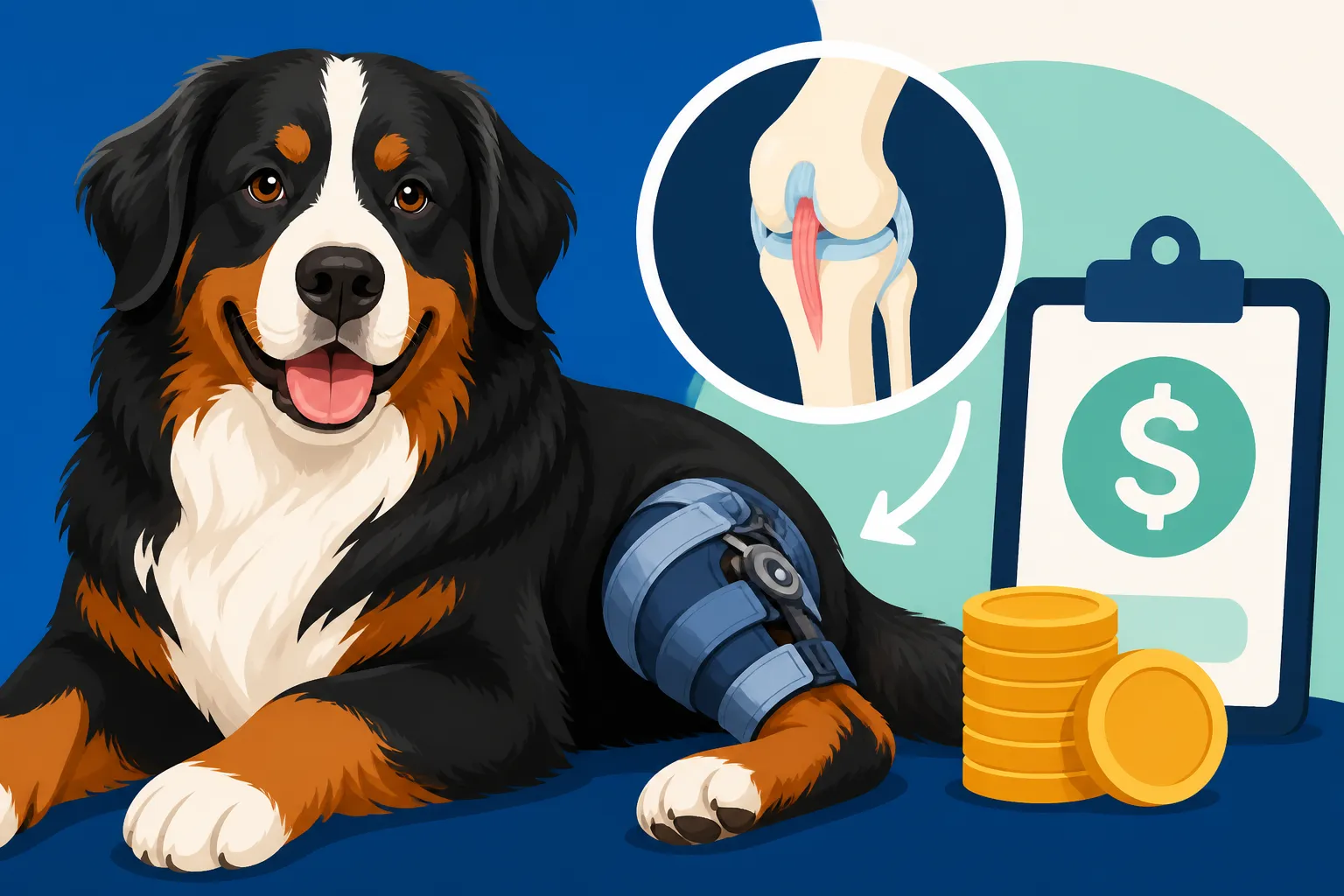
When your Bernese Mountain Dog suddenly becomes lame or struggles to put weight on a hind leg, a torn cranial cruciate ligament (CCL) is often high on the list of concerns for veterinarians. This ligament, analogous to the anterior cruciate ligament (ACL) in humans, is vital for stabilizing the knee joint. Given the substantial size and enthusiastic nature of Berners, these injuries are unfortunately quite prevalent, and understanding why and how they occur is the first step toward effective management.
Why Berners Are Prone to Cruciate Issues
Bernese Mountain Dogs are magnificent, powerful animals, often weighing well over a hundred pounds. While this strength is part of their charm, it also places immense stress on their joints, particularly their knees. Unlike smaller breeds where a cruciate tear might often be an acute injury from a sudden twist or jump, in Berners, it's frequently a degenerative process. Over time, the ligament weakens and slowly tears, making it susceptible to a complete rupture even during what seems like a normal activity. Factors contributing to this include their rapid growth rate as puppies, genetics, body weight, and sometimes even their broad chest and active, robust play style. The sheer force exerted on their knee joints when they run, play, or even simply stand up can be a recipe for trouble, which is why we often see issues like The Knee a Bernese Mountain Dog Tears at Four or more generalized Joint Disease in a Hundred Pound Bernese Mountain Dog in the breed. It’s a sad reality that their large stature, which we adore, also comes with a predisposition to certain orthopedic challenges.
Recognizing the Signs of a Cruciate Injury
The signs of a cruciate ligament tear can vary depending on whether it’s a partial or complete rupture, but for a Bernese Mountain Dog, they're usually quite noticeable. Initially, you might observe a sudden, severe lameness – your dog might hold the leg up, refuse to put weight on it, or barely touch the paw to the ground. This often happens after what seems like a minor misstep or an enthusiastic leap. If it’s a partial tear, the lameness might be intermittent, seeming to improve slightly with rest only to return worse after activity. Many owners report a characteristic "bunny hopping" gait where the dog uses both hind legs together to propel itself forward, trying to avoid putting full weight on the injured knee. You might also notice stiffness, difficulty getting up from a lying position, or a reluctance to jump into the car or onto furniture. In some cases, the thigh muscles on the affected leg might start to atrophy as the dog uses it less, and the knee joint itself might feel swollen or warm to the touch. Pay close attention to any changes in your Berner's mobility; their stoic nature can sometimes mask discomfort until it becomes severe.
Diagnosing the Problem
When you bring your Bernese Mountain Dog to the vet with a suspected cruciate injury, the diagnostic process usually begins with a thorough physical examination. Your veterinarian will carefully palpate the knee joint, looking for swelling, pain, and instability. The hallmark diagnostic test for a torn cruciate ligament is the "cranial drawer test." During this test, the vet attempts to move the tibia (shin bone) forward in relation to the femur (thigh bone), much like opening a drawer. If the ligament is torn, there will be abnormal movement, indicating instability. In some cases, especially with larger, more muscular dogs like Berners who might tense up, sedation might be necessary to get an accurate cranial drawer test. X-rays are also commonly taken, not directly to visualize the ligament itself (as ligaments don't show well on standard X-rays), but to assess for secondary signs of arthritis, joint effusion (fluid build-up in the joint), or to rule out other orthopedic issues like fractures or bone tumors. Sometimes, these X-rays are crucial for surgical planning, especially if advanced procedures are being considered. A clear and definitive diagnosis is paramount before discussing surgical options and the associated costs.
The Various Cruciate Repair Surgical Options and Their Costs
Once a cruciate ligament tear is confirmed in your Bernese Mountain Dog, your veterinarian will likely discuss surgical intervention. For large, active breeds like Berners, surgery is almost always recommended to restore stability to the knee, alleviate pain, and prevent further damage and progression of arthritis. There are several surgical techniques, each with its own approach, effectiveness, and, of course, price point.
Extracapsular Repair (Lateral Suture)
Extracapsular repair, often referred to as a lateral suture or "fishing line" technique, is one of the more traditional methods for repairing a torn CCL. This procedure aims to stabilize the knee by placing a strong suture material (historically like a heavy fishing line, but now more advanced materials) outside the joint, mimicking the function of the torn ligament. The suture is anchored around the fabella (a small bone behind the knee) or through a bone tunnel in the femur and then passed through a hole drilled in the front of the tibia. The goal is to tighten the joint and prevent the "drawer" motion.
For smaller dogs, this technique can be quite effective, relying on the suture to provide stability until scar tissue can form around the joint, reinforcing it naturally. However, for a majestic Bernese Mountain Dog carrying significant weight, the success rate and longevity of this type of repair can be a bit more variable. The suture material is under immense strain from the dog's weight and activity, and it can sometimes stretch or break before sufficient scar tissue has formed. While generally less invasive and with a quicker surgery time, the initial cost is typically lower than more advanced procedures. You might expect this procedure to be on the lower end of the surgical spectrum, but it's crucial to discuss with your vet if it's truly the best long-term solution for your specific Bernese Mountain Dog, considering their size and activity level.
Tibial Plateau Leveling Osteotomy (TPLO)
The Tibial Plateau Leveling Osteotomy, or TPLO, is widely considered the gold standard for cruciate repair in large and giant breed dogs, including our Berners. This highly effective procedure approaches the problem differently than the extracapsular method. Instead of replacing the ligament, TPLO surgically alters the biomechanics of the knee joint. The surgeon makes a curved cut in the top of the tibia (tibial plateau), rotates it to a new angle, and then fixes it in place with a bone plate and screws. This rotation essentially levels the tibial plateau, eliminating the forward thrust of the femur on the tibia that occurs during weight-bearing, even without a functional CCL.
Because it addresses the underlying mechanics rather than relying on a synthetic ligament, TPLO often provides excellent long-term stability and function, leading to a much better outcome for large, active dogs. It allows them to bear weight more comfortably and quickly post-surgery, with many owners reporting a return to near-normal activity. The trade-off, however, is that it's a more complex and specialized orthopedic surgery, requiring specialized equipment and training. Therefore, the costs associated with TPLO are significantly higher than an extracapsular repair. It's an investment, but for many Bernese Mountain Dog owners, the improved quality of life and reduced risk of re-injury in the future make it a worthwhile one.
Tibial Tuberosity Advancement (TTA)
Another popular and highly effective advanced surgical option for cruciate ligament repair in Bernese Mountain Dogs is the Tibial Tuberosity Advancement (TTA). Like TPLO, TTA is a "bone-cutting" procedure that aims to neutralize the forces within the knee joint rather than directly replacing the torn ligament. In a TTA, the surgeon makes a cut in the front part of the tibia, known as the tibial tuberosity, and then advances it forward. A titanium cage and plate are then used to hold the bone in its new, advanced position. This changes the angle of the patellar ligament (the ligament connecting the kneecap to the tibia), which in turn alters the forces acting on the knee, making the joint stable without the need for an intact cranial cruciate ligament.
TTA is often favored in certain cases or by specific orthopedic specialists, and it offers similar excellent outcomes to TPLO for large breeds. It's considered less invasive by some compared to TPLO, with potentially less disruption to the joint capsule. Both TPLO and TTA are highly specialized procedures, and as such, their costs are generally comparable and on the higher end of the spectrum for veterinary surgeries. Your orthopedic surgeon will evaluate your Bernese Mountain Dog's specific knee anatomy, lameness, and overall health to determine whether TPLO, TTA, or another technique might be the most suitable choice. The decision often comes down to the surgeon's preference and expertise with a particular technique, as well as the unique presentation of your dog's injury.
Other Less Common or Specialized Procedures
While TPLO and TTA are the most prevalent advanced techniques for Bernese Mountain Dogs, there are other, less commonly performed or more specialized procedures that an orthopedic specialist might discuss. These can include variations like the Modified Maquet Procedure (MMP) or the Cranial Closing Wedge Osteotomy (CCWO), which also involve bone modification. Sometimes, a surgeon might recommend diagnostic arthroscopy, which uses a tiny camera inserted into the joint to assess the extent of the damage, particularly to the menisci (cartilage pads within the knee). While primarily diagnostic, it can sometimes be combined with minor meniscal trimming if indicated.
These procedures might have different cost implications, depending on their complexity and the specialized equipment required. They are typically reserved for specific situations or cases where the standard TPLO/TTA might not be ideal. The key takeaway is that for a large breed like a Berner, successful cruciate repair usually involves a significant surgical undertaking that carries a commensurate price. It's important to have a frank discussion with your veterinary orthopedic surgeon about all available options, their respective pros and cons for your individual dog, expected recovery, and the full breakdown of anticipated costs.
Factors Influencing the Total Cost of Cruciate Repair
The sticker shock from an initial quote for Bernese Mountain Dog cruciate repair can be substantial. It's rarely just one lump sum for "the surgery" itself; rather, it’s an amalgamation of many different services, medications, and follow-up care. Understanding these contributing factors can help you prepare for the overall financial commitment.
Geographic Location and Veterinary Practice Type
Just like human medical procedures, the cost of veterinary surgery can vary significantly based on where you live. Veterinary practices in major metropolitan areas or regions with a higher cost of living generally have higher overheads, which translates to higher prices for their services. A clinic in, say, suburban Pennsylvania might charge differently than a specialty hospital in a bustling city like Los Angeles. Furthermore, the type of veterinary practice makes a huge difference. A general practice veterinarian who performs occasional extracapsular repairs might have a lower fee structure than a board-certified veterinary orthopedic surgeon working in a large specialty referral center. These specialist hospitals are equipped with state-of-the-art diagnostic tools, surgical suites, and round-the-clock critical care staff, which naturally comes at a premium. They also offer the expertise that often leads to better outcomes for complex procedures like TPLO or TTA. So, when you're seeking quotes, remember to ask if you're speaking with a general practitioner or a specialist, and clarify the location where the procedure would be performed.
Pre-Operative Diagnostics and Medications
Before your Bernese Mountain Dog even steps into the operating room, there are essential pre-operative steps that contribute to the overall bill. This typically begins with a thorough consultation with the orthopedic specialist, where they’ll review your dog's history and perform a physical exam. Then come the diagnostic tests. X-rays are almost always necessary for surgical planning and to rule out other issues, and the cost of these can vary based on the number of views and whether sedation is required. Bloodwork is crucial to ensure your Berner is healthy enough for anesthesia and to detect any underlying conditions that could complicate surgery. This usually includes a complete blood count (CBC) and a chemistry panel. You might also be sent home with some pre-operative medications, such as anti-inflammatory drugs or antibiotics, to start before the surgery date. Each of these steps, while vital for a safe and successful outcome, adds to the cumulative cost before the main event.
Anesthesia and Post-Operative Care
The surgery itself is only part of the journey. The administration of anesthesia and the subsequent recovery and post-operative care are significant components of the total cost. For a large breed like a Bernese Mountain Dog, careful anesthesia monitoring is crucial, and this involves trained veterinary technicians, specialized equipment, and sometimes even a board-certified veterinary anesthesiologist. The longer and more complex the surgery, the longer the anesthesia time and thus the higher this portion of the bill.
Post-operatively, your Berner will require diligent pain management, which can involve a combination of injectable medications during their hospital stay and oral medications to go home with. Hospitalization for one or more nights is common, especially after TPLO or TTA, to monitor for complications and ensure adequate pain control. After discharge, there will be multiple follow-up appointments, often including staple or suture removal, wound checks, and re-check X-rays to ensure proper bone healing. Rehabilitation, such as Swim Therapy Rates for a Bernese Mountain Dog or controlled exercise, is also incredibly important for regaining full function and can be a substantial ongoing cost for weeks or even months. The commitment to meticulous post-operative care is not just about the money; it's about giving your Berner the best chance at a full recovery and minimizing the risk of secondary issues like Arthritis in a Bernese Mountain Dog by Six.
Potential Complications and Revision Surgeries
While modern veterinary surgery has high success rates, it's essential to be realistic about potential complications, especially with a large breed and complex orthopedic procedures. Complications, though rare, can significantly increase the overall expense. These might include infection at the surgical site, implant failure (e.g., a plate or screws breaking), delayed bone healing, or meniscal tears (if not addressed during the initial surgery or if a new one occurs). If a complication arises, it might necessitate additional veterinary visits, diagnostic tests, extended medication courses, or even another surgery. For example, if an infection takes hold, it could mean weeks of antibiotics or even a wash-out procedure. Should the bone plate fail or the repair doesn't hold, a revision surgery, often as extensive as the first, might be required. These unforeseen circumstances can quickly double or even triple the initial estimated costs, adding a layer of financial stress on top of the emotional toll. It's prudent to discuss the potential for complications with your surgeon and understand their protocols for managing such events.
Managing the Financial Burden: Insurance and Payment Strategies
The financial weight of a major surgery like cruciate repair for a Bernese Mountain Dog can feel crushing. It’s not just a few hundred dollars; it’s a significant investment in your dog’s health and comfort. Thankfully, there are several strategies and resources available to help make these essential treatments more manageable.
Pet Insurance and Cruciate Ligament Coverage
One of the most effective ways to mitigate the financial shock of a cruciate tear is to have pet insurance in place before the injury occurs. Many pet insurance providers, such as Healthy Paws, offer comprehensive plans that cover accidents and illnesses, including cruciate ligament repair. However, there are crucial details to understand. Almost all pet insurance policies have waiting periods – a specific amount of time after you enroll before coverage for certain conditions, like orthopedic issues, kicks in. If your Berner tears a cruciate ligament during this waiting period, it won't be covered. Furthermore, pet insurance never covers pre-existing conditions. If your Bernese Mountain Dog has shown any signs of lameness, been diagnosed with arthritis in that joint, or has had a previous cruciate issue on the other knee before you enroll or during the waiting period, that specific condition (or sometimes even bilateral conditions) will likely be considered pre-existing and excluded from coverage. This is why it's so important to Insure a Bernese Mountain Dog Before Its First Lump or before any sign of lameness. When comparing policies, pay close attention to deductibles, reimbursement percentages, and annual limits, as these will directly impact your out-of-pocket costs. Always read the fine print and speak directly with the insurance provider about their specific coverage for orthopedic conditions in large breeds.
Payment Plans and Financial Aid Options
Even with pet insurance, or if you don't have it, the upfront cost can be daunting. Many veterinary specialty hospitals understand this and offer various payment solutions. Some clinics have in-house payment plans, allowing you to spread the cost over several months. You might also look into third-party financing options like CareCredit, which works like a credit card specifically for healthcare expenses, often offering deferred interest periods if paid off within a certain timeframe. It’s always worth asking your vet’s office manager about these possibilities.
Beyond payment plans, there are non-profit organizations and charities that offer financial assistance for veterinary care, especially for emergency or life-saving procedures. While they often have strict eligibility requirements and limited funds, it's worth researching groups like The Pet Fund, RedRover, or breed-specific rescues who might offer aid or grants. These resources can be a lifeline for owners facing unexpected and substantial veterinary bills. Don't hesitate to ask your vet for a list of local and national organizations that might be able to help.
Saving for Emergencies
While pet insurance is fantastic, and financial aid can be a godsend, the most proactive approach to managing unexpected veterinary costs for your Bernese Mountain Dog is to have an emergency fund. Picture this: your Berner is suddenly limping badly, and the vet says it's a cruciate tear. Having a dedicated savings account for veterinary emergencies, even if it's just a few thousand dollars, can alleviate an enormous amount of stress in that moment. This fund can cover your deductible, the percentage of the bill not covered by insurance, or the entire cost if you don't have a policy.
Even if you have insurance, an emergency fund is still invaluable for things like Pain Medication Costs for an Arthritic Bernese Mountain Dog or specialized rehabilitation that might not be fully covered. Consider setting aside a little money each month specifically for your dog's future health needs. Our Berners have shorter lifespans than many breeds, often encountering significant health issues in their middle to later years, making a robust emergency fund even more critical. Brands like Chewy and Ollie don't directly help with vet bills, but by ordering food and supplies in bulk or on subscription, you might free up a few extra dollars each month to put towards that emergency fund, or simply reduce regular monthly outflows so more cash is available when those big vet bills inevitably arrive. It’s about building a financial cushion that reflects the reality of owning a large, purebred dog.
Conclusion
A cruciate ligament tear is a serious and painful injury for any Bernese Mountain Dog, but with appropriate surgical intervention, most can go on to live comfortable, active lives. The costs associated with cruciate repair are substantial, reflecting the complexity of the surgery and the specialized care required for our beloved giants. By understanding the different surgical options, the factors that influence pricing, and proactively planning your finances through pet insurance or an emergency fund, you can face this challenge with confidence. Always work closely with your veterinarian and a board-certified orthopedic surgeon to determine the best course of action for your Bernese Mountain Dog, ensuring they get the care they need to thrive.
Disclaimer
This article is for general informational purposes only and does not constitute professional advice. Laws, prices and regulations vary by location and change over time. Consult a qualified professional for guidance on your specific situation.