The Knee a Bernese Mountain Dog Tears at Four
There are few things more heartbreaking than seeing your strong, vibrant Bernese Mountain Dog suddenly favoring a leg, or worse, refusing to put weight on it at all. The initial panic, the frantic call to the vet, and the gnawing fear that something is terribly wrong – it’s a scenario far too many Berner owners know intimately. Often, the culprit behind this sudden lameness, especially in a dog as young as four years old, is a torn cranial cruciate ligament (CCL) in the knee. This guide is here to walk you through understanding this common and often debilitating injury, from recognizing the subtle signs to navigating treatment, recovery, and even prevention for your beloved companion.
Understanding the Canine Cruciate Ligament and Why Berners Are Prone
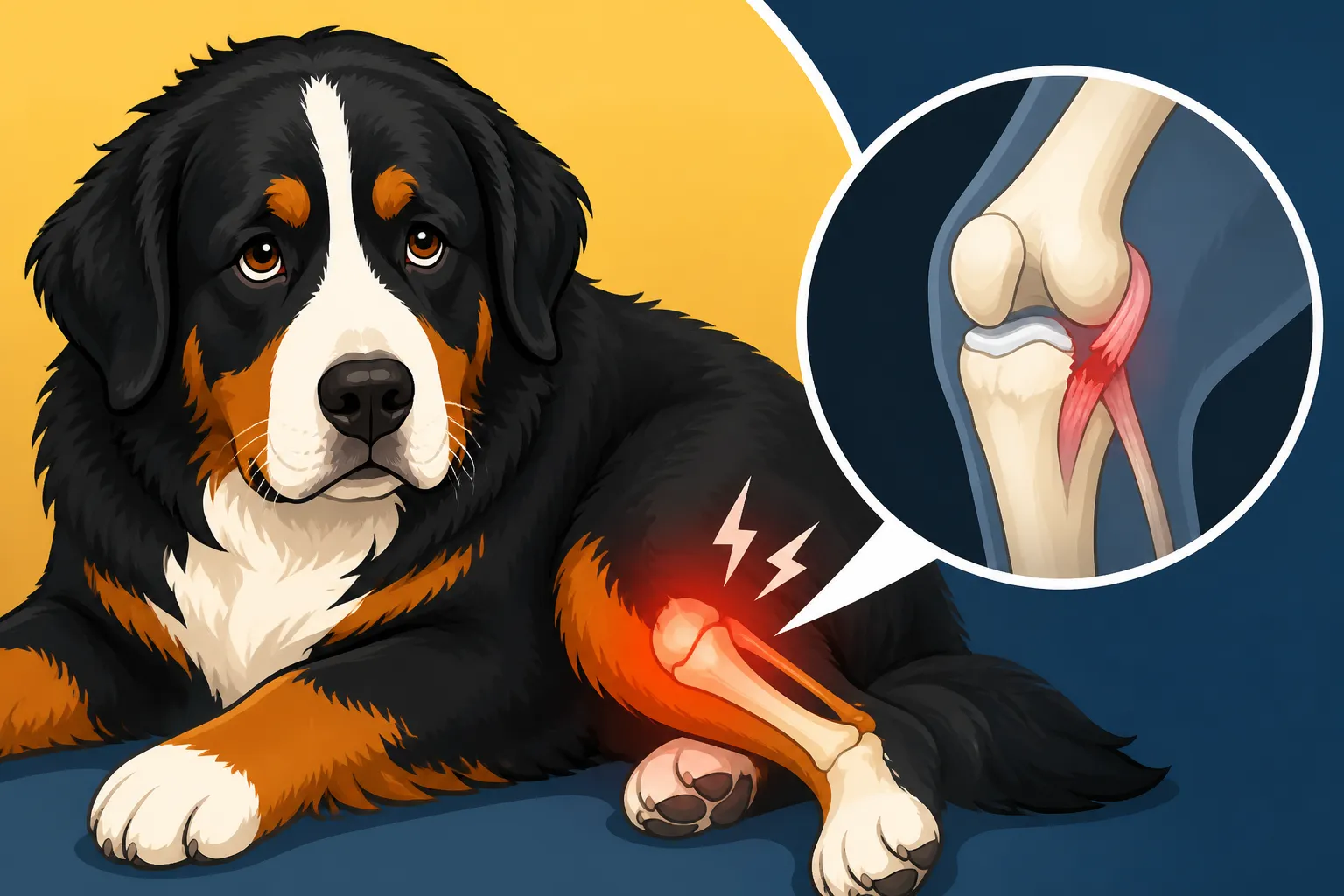
The canine stifle (what we call the knee in humans) is a complex joint, and its stability largely depends on a pair of ligaments called the cruciate ligaments. These ligaments cross inside the joint, preventing the tibia (shin bone) from sliding forward relative to the femur (thigh bone), and also limiting rotation. When one of these ligaments, particularly the cranial (anterior in humans) cruciate ligament, tears, the knee becomes unstable, leading to pain and lameness.
For us humans, it's often a sudden, traumatic injury that tears an ACL on the sports field. For our Bernese Mountain Dogs, however, it's often a much more insidious, degenerative process that culminates in a tear. While an acute injury can certainly happen, many Berners experience a gradual weakening of the ligament over time, often due to a combination of genetic predisposition, conformation, and lifestyle factors. This makes their knees vulnerable, and even a seemingly minor misstep can lead to a full rupture.
Anatomy of the Cruciate Ligament: More Than Just an ACL
Think of your Berner’s knee as a well-oiled hinge, but with crucial internal ropes keeping everything aligned. The cranial cruciate ligament (CCL) and caudal cruciate ligament are these ropes. The CCL is particularly important because it prevents the shin bone from sliding forward relative to the thigh bone when your dog bears weight, a movement known as "cranial tibial thrust." It also helps to prevent excessive internal rotation of the joint.
When this ligament is compromised, even partially, the joint loses its inherent stability. Each step a dog takes, especially a large, heavy breed like a Bernese Mountain Dog, puts immense pressure on this already weakened structure. Over time, the instability leads to inflammation, pain, and damage to the cartilage within the joint, eventually contributing to arthritis. This degenerative cascade is why early intervention is so crucial.
Why Bernese Mountain Dogs are Predisposed: Breed Specific Factors
It's a harsh reality that Bernese Mountain Dogs, like many other large and giant breeds, are disproportionately affected by CCL injuries. Their sheer size and weight put significant stress on their joints, and their breed-specific conformation can also play a role. Berners are known for their sturdy build, but sometimes this comes with certain angles in their leg structure that can pre-dispose them to joint issues.
Beyond the physical mechanics, there's a strong genetic component to CCL disease. While not fully understood, research suggests that certain breeds inherit a predisposition to ligament weakening. This isn't just about their large frames; it's about the inherent quality and strength of the ligament tissue itself. This predisposition means that even well-exercised, healthy-weight Berners can suffer from a torn knee, often at a relatively young age like four years old, which feels far too soon for such a serious problem. It’s a bitter pill to swallow for loving owners doing everything right.
Recognizing the Signs: When Your Berner's Knee is in Trouble
Spotting a CCL injury can sometimes be tricky because the symptoms aren't always dramatic. While a sudden, complete tear can result in your Berner holding their leg up completely, a partial tear might manifest as intermittent limping or stiffness that seems to come and go. Knowing what to look for can help you get your dog the care they need much faster, potentially preventing further damage.
The biggest red flag is any persistent lameness in a hind leg. Don't dismiss a "slight limp" that's still there after a day or two, especially if your Berner is typically active. Their stoic nature often means they'll try to push through discomfort, making it harder for us to tell when something is truly wrong. Keep a close eye on their gait and willingness to engage in activities they usually love.
Sudden Lameness vs. Gradual Onset: What to Look For
A sudden, acute lameness often signals a complete rupture of the CCL. Your Berner might be running in the yard, take an awkward step, let out a yelp, and then immediately stop bearing weight on the affected leg. They might hold the leg up, or just lightly touch their toes to the ground. This is usually accompanied by obvious pain and distress. If you see this, it’s an emergency vet visit, no question.
More commonly, especially in Bernese Mountain Dogs with their predisposition to degenerative tears, the onset is more gradual. You might notice a subtle stiffness first thing in the morning or after they've been lying down for a while. Perhaps they're reluctant to jump into the car, or they're not quite as eager to chase a ball. Over a few weeks or months, the limp may become more pronounced, becoming consistently worse after exercise. This "soreness" often escalates to a full tear eventually, making it critical to address even mild, intermittent lameness quickly. It's easy to assume it's just general stiffness or Arthritis in a Bernese Mountain Dog by Six, but it could be the start of something more serious.
Secondary Signs: Muscle Atrophy and Stiffness
Beyond the obvious limping, there are other tell-tale signs that can indicate a chronic or worsening CCL issue. Over time, as your Berner avoids putting full weight on the painful leg, the muscles in that limb will start to waste away. You might notice that the affected thigh looks thinner or less muscular compared to the healthy leg. This muscle atrophy is a clear indicator of long-standing disuse and pain.
Another common sign is joint stiffness and swelling. If you gently feel your Berner’s knee, you might notice it feels warmer or looks slightly swollen compared to the other knee. Dogs with chronic CCL disease often develop a "medial buttress," which is a thickening on the inside of the knee joint as the body tries to stabilize the joint with scar tissue. They may also sit or stand in an unusual way, sometimes doing a "toe-touch" where they just rest the tips of their toes on the ground, or sit with the affected leg extended out to the side rather than tucked under them. These are all clues that your vet will be looking for.
Diagnosis and Treatment Options for a Torn CCL
Once you've noticed the signs, the next step is a trip to your trusted veterinarian. Diagnosing a torn CCL isn't always straightforward, especially with partial tears, but an experienced vet will have a good idea of what's going on from a physical examination. From there, they'll likely recommend further diagnostics and discuss the best course of action for your large breed dog.
It's important to remember that treating a torn CCL in a Bernese Mountain Dog is rarely simple or inexpensive. Given their size and the chronic nature of the disease in many Berners, surgical intervention is often the most recommended and effective path to restoring stability and preventing severe arthritis.
Veterinary Examination and Imaging: What to Expect
During the veterinary examination, your vet will perform specific tests to assess the stability of your Berner's knee. The most common diagnostic test is the "cranial drawer test" and the "tibial compression test." These tests involve manipulating the knee joint to see if the tibia slides forward abnormally relative to the femur, indicating a torn CCL. However, for large, strong dogs like Berners, muscle tension or partial tears can sometimes make these tests difficult to perform definitively, especially if the dog is tense or in pain. Sedation may be necessary to get an accurate assessment.
X-rays are also a crucial part of the diagnostic process. While X-rays don't directly show the ligament itself, they can reveal secondary signs of CCL disease, such as joint effusion (fluid in the joint), early signs of arthritis (bone spurs, joint space narrowing), and changes in the position of the bones. X-rays also help rule out other conditions that can cause lameness, such as bone cancer or Joint Disease in a Hundred Pound Bernese Mountain Dog. Your vet might also want to check the other knee, as it's not uncommon for dogs to tear the contralateral CCL within a year or two of the first injury, given the increased strain on the "good" leg.
Surgical Interventions: TPLO, TTA, and Lateral Suture
For a large, active breed like a Bernese Mountain Dog, surgical repair is almost always the recommended treatment for a torn CCL. Without surgery, the knee remains unstable, leading to progressive arthritis, chronic pain, and a high likelihood of tearing the ligament in the other knee due to compensatory overloading. There are several surgical techniques, each with its own benefits and considerations.
- Tibial Plateau Leveling Osteotomy (TPLO): This is one of the most common and successful surgeries for large breed dogs. Instead of repairing the ligament directly (which is often not possible due to its degenerative nature), TPLO changes the angle of the top of the tibia (the tibial plateau) so that the cranial tibial thrust is neutralized during weight-bearing. This effectively stabilizes the joint without relying on the ligament. It involves cutting the bone, rotating it, and securing it with a bone plate and screws.
- Tibial Tuberosity Advancement (TTA): Similar to TPLO, TTA also aims to neutralize cranial tibial thrust by altering the biomechanics of the knee. In this procedure, the front part of the tibia (tibial tuberosity) is cut, advanced forward, and stabilized with a cage and plate. This changes the angle of the patellar ligament, reducing the forces that cause instability.
- Lateral Suture (Extracapsular Repair): This is an older, less invasive technique often used for smaller dogs or those with less severe instability. It involves placing a strong suture material outside the joint, mimicking the function of the torn CCL. While it can provide stability, it's generally less durable for large, heavy, active dogs like Berners and may have a higher rate of complications or re-injury compared to TPLO or TTA.
Your veterinary surgeon, likely a board-certified orthopedic specialist, will discuss which procedure is best suited for your individual Berner based on their size, age, activity level, and the specific characteristics of their injury.
Non-Surgical Management: When is it an Option?
While surgery is highly recommended for most Bernese Mountain Dogs with torn CCLs, non-surgical management might be considered in very specific circumstances. These include dogs with other severe medical conditions that make anesthesia or extensive surgery too risky, or in cases of very mild, partial tears that are caught extremely early and managed aggressively.
Non-surgical approaches typically involve strict rest, anti-inflammatory medications, pain relief, and intensive physical therapy. Braces are sometimes used to provide external support. However, for a 100-pound Berner with an unstable knee, conservative management often leads to ongoing pain, worsening arthritis, and a high likelihood of progression to a complete tear or injury to the other knee. It's a path that usually offers a poorer long-term outcome for quality of life compared to surgical intervention, making it a difficult choice for owners hoping to avoid surgery.
The Recovery Journey: Post-Surgery Care and Rehabilitation
Undergoing major orthopedic surgery like a TPLO or TTA is a big deal, and the surgery itself is only the first step. The recovery journey for a Bernese Mountain Dog with a torn CCL is extensive and requires immense dedication, patience, and careful management from their human family. It's a marathon, not a sprint, but the rewards of a stable, pain-free knee are well worth the effort.
It's common for owners to feel overwhelmed by the strict limitations and the long timeline. Remember, consistency is key, and every step, no matter how small, contributes to your Berner's successful healing. This is where pet insurance, like Healthy Paws, can really make a difference, helping to cover the substantial costs of both the surgery and the often lengthy rehabilitation.
Immediate Post-Operative Care: Pain Management and Restriction
Immediately after surgery, your Berner will be closely monitored for pain. They will likely go home with a combination of pain medications (NSAIDs, gabapentin, tramadol, etc.) to manage discomfort, as well as antibiotics to prevent infection. You'll need to administer these medications diligently according to your vet's instructions.
The most critical aspect of early recovery is strict activity restriction. This means no running, jumping, stairs, or off-leash activity for several weeks, often 8-12 weeks or even longer depending on the surgery type and individual healing. Your Berner will need to be leash-walked for potty breaks only, and ideally, confined to a small, safe space (like a crate or a small room) to prevent sudden movements that could compromise the surgical repair. This is incredibly challenging with a high-energy Berner, but absolutely essential. Remember, their bones need time to heal, and excessive activity too soon can lead to serious setbacks.
Rehabilitation and Physical Therapy: Getting Back on All Fours
Physical rehabilitation is paramount for optimal recovery after CCL surgery. Just like human athletes, dogs benefit immensely from structured exercises to regain strength, flexibility, and proper gait. Your vet will likely recommend a certified canine rehabilitation therapist (CCRT) or a similar specialist.
Rehab might include:
- Controlled therapeutic exercises: Gentle range-of-motion exercises, passive stretches, and controlled weight-bearing activities.
- Hydrotherapy: Underwater treadmill sessions are fantastic for Berners because the buoyancy reduces weight on the healing joint while allowing them to build muscle and improve range of motion. This is particularly helpful for dogs that are reluctant to bear weight on land.
- Laser therapy: Can help reduce pain and inflammation and promote tissue healing.
- Massage and manual therapy: To address muscle tension and improve circulation.
The rehab process usually starts a week or two after surgery and continues for several months. Gradually, the intensity and duration of exercises will increase, helping your Berner build confidence and strength in the affected leg. This guided, progressive return to activity is vital to prevent muscle atrophy, scar tissue formation, and future re-injury. You can learn more about specific techniques in articles such as Hydrotherapy for an Arthritic Bernese Mountain Dog.
Potential Complications and Long-Term Outlook
While CCL surgery has a high success rate, complications can occur. These might include infection at the surgical site, issues with the implants (plate or screws), delayed bone healing, or meniscal tears (cartilage damage within the knee), which can sometimes develop even after the initial surgery. Close monitoring by your vet and adherence to post-operative instructions are crucial for minimizing these risks.
Even with successful surgery, it's important to understand that some degree of arthritis will eventually develop in the affected knee. The original injury, even before the surgery, causes changes in the joint that lead to degenerative joint disease. However, surgery significantly slows this progression, reduces pain, and improves the overall function and quality of life for your Berner. Long-term management might include joint supplements, anti-inflammatory medications, and continued weight management to keep the arthritis at bay. Many Berners go on to live full, active lives after successful CCL surgery, but vigilance and ongoing care are key.
Prevention and Long-Term Management for Knee Health
Given that Bernese Mountain Dogs are predisposed to CCL injuries, taking proactive steps to protect their knee health is incredibly important. While you can't eliminate all risk, you can certainly minimize it and support their joints throughout their lives. This includes everything from how you feed them as puppies to how you manage their exercise and weight as adults.
Prevention isn't just about avoiding a tear; it's about fostering overall musculoskeletal health, which can also help with other common Berner issues like The Bernese Mountain Dog Whose Back Legs Give Out or general joint discomfort. It's a commitment that pays dividends in your dog's comfort and mobility.
Maintaining a Healthy Weight: Every Pound Matters
This cannot be stressed enough: maintaining a lean body condition is one of the single most impactful things you can do for your Bernese Mountain Dog's joint health, especially their knees. Every extra pound your Berner carries adds exponential stress to their joints, accelerating wear and tear on ligaments and cartilage. This is particularly true for giant breeds who are already susceptible to orthopedic issues.
Work with your vet to determine your Berner's ideal weight and body condition score. You should be able to easily feel their ribs without seeing them protruding, and they should have a discernible waist when viewed from above. If your Berner is overweight, even by a few pounds, create a plan for gradual, safe weight loss. This might involve adjusting their food intake, switching to a lower-calorie food, or increasing controlled, low-impact exercise. You can find more targeted advice in guides like Taking Ten Pounds Off a Bernese Mountain Dog or What a Bernese Mountain Dog Weighs at Each Month. Making sure your Berner isn't carrying excess weight is arguably the most powerful preventative measure against knee issues.
Safe Exercise and Activity Modifications
While Berners are generally hearty dogs, their growth plates and joints are vulnerable, particularly during their rapid growth phase as puppies and young adults. Over-exercising a young Berner, especially with high-impact activities like aggressive jumping, repetitive ball chasing, or sudden stops and starts, can put undue strain on developing ligaments and joints, setting them up for problems later on.
Focus on controlled, low-impact exercise, especially until they are at least two years old and their growth plates have closed. Think leash walks, swimming, or gentle trotting. As adults, continue to be mindful of activities that put excessive rotational or shearing forces on their knees. Avoid slippery surfaces indoors that can cause them to splay out. Gradual warm-ups before strenuous activity and cool-downs afterward are also beneficial. If your Berner shows any signs of lameness or discomfort, err on the side of caution and rest them, consulting your vet if it persists.
Supplements and Proactive Joint Care
Many Bernese Mountain Dog owners choose to incorporate joint supplements into their dog's diet as a proactive measure, especially given the breed's propensity for joint issues. Common ingredients in these supplements include glucosamine, chondroitin, MSM, and omega-3 fatty acids. These compounds are believed to support cartilage health, reduce inflammation, and improve joint lubrication.
While the scientific evidence for their effectiveness in preventing CCL tears is not definitive, many vets and owners feel they contribute to overall joint health and may help slow the progression of arthritis. Always discuss any supplements with your veterinarian to ensure they are appropriate for your individual dog and won't interact negatively with other medications. Think of supplements as part of a holistic approach, complementing healthy weight management and appropriate exercise, not replacing them. If you're considering Starting a Bernese Mountain Dog on Joint Medication Young, discuss the pros and cons with your vet.
Financial Realities: The Cost of a CCL Injury in a Bernese Mountain Dog
Let's be blunt: a torn CCL in a Bernese Mountain Dog is an expensive proposition. It's not just the surgery itself; it's the diagnostics, the medications, the follow-up appointments, and the often lengthy and crucial rehabilitation. These costs can quickly add up, easily reaching into the thousands of dollars. It's a significant financial burden that many owners are unprepared for, especially when their otherwise young and healthy four-year-old Berner is suddenly facing such a major medical crisis.
Being realistic about these costs is essential for any Bernese Mountain Dog owner. This is where a robust pet insurance plan can truly be a lifesaver, allowing you to make medical decisions based on what's best for your dog, rather than solely on your wallet.
The Initial Diagnosis and Surgical Bill
The journey usually begins with diagnostic fees: the vet visit, possibly sedation for a thorough orthopedic exam, and X-rays. These initial costs can range from a few hundred to over a thousand dollars, depending on your location and the extent of the diagnostics.
Then comes the main event: the surgery. For large breed dogs requiring advanced procedures like TPLO or TTA, the cost can range significantly, typically from $3,000 to $7,000 per knee, or even more in some metropolitan areas. This usually includes the surgeon's fee, anesthesia, surgical supplies, hospitalization, and initial post-operative medications. If your Berner needs a meniscal repair at the same time, that can add to the bill. And remember, there's a significant chance the other knee may tear in the future, doubling your potential surgical expenses. These are the kinds of bills that make owners wish they'd considered something like Insuring a Bernese Mountain Dog Against Cancer (or orthopedic issues!).
Ongoing Rehabilitation and Medication Costs
The post-surgical costs don't end once your Berner is home. The prescribed pain medications and anti-inflammatories can cost hundreds of dollars over several weeks or months. Then there's the rehabilitation. Physical therapy sessions, especially if they involve specialized equipment like an underwater treadmill, can cost $50 to $150 per session, and your dog might need weekly or bi-weekly sessions for 2-4 months, or even longer. A full course of rehabilitation can easily add another $1,000 to $3,000 or more to your total expenditure.
Ongoing joint supplements, therapeutic diets, and regular vet check-ups to monitor joint health will also become a part of your routine and budget. When you consider the full picture, from diagnosis to recovery and long-term management, the total cost for a single CCL injury can easily exceed $8,000-$10,000. It quickly becomes clear that these are not minor expenses and certainly contribute to The Running Costs of a Hundred Pound Bernese Mountain Dog.
The Role of Pet Insurance like Healthy Paws
This is precisely why pet insurance, and particularly comprehensive plans like those offered by Healthy Paws, are so valuable for Bernese Mountain Dog owners. A good insurance policy, ideally obtained before any signs of lameness appear (as pre-existing conditions are typically not covered), can significantly alleviate the financial strain of a CCL injury.
With Healthy Paws, once your deductible is met, they typically reimburse a large percentage (e.g., 80% or 90%) of eligible veterinary expenses, including diagnostics, surgery, and approved rehabilitation therapies. This means that instead of facing a $5,000 surgical bill, you might only be responsible for your deductible and a smaller copay. Knowing you have that safety net can make a world of difference when your Berner needs extensive and costly care, allowing you to focus on their recovery without the added stress of crushing vet bills. Healthy Paws and similar providers understand the reality of owning a large breed dog with orthopedic predispositions, and their coverage options reflect that.
Disclaimer
This article is intended for informational purposes only and does not constitute veterinary advice. Always consult with a qualified veterinarian for any health concerns or before making any decisions about your Bernese Mountain Dog's medical care. Individual outcomes and costs may vary.