Finding the Quick in a Bernese Mountain Dog’s Black Nail
One of the trickiest parts of owning a magnificent Bernese Mountain Dog, especially when they’re still growing or aren't keen on having their paws handled, is tackling those notoriously dark nails. The fear of cutting too short, causing pain, and making nail trims a dreaded battle is a very real frustration for many Berner parents. This comprehensive guide will walk you through proven techniques and equip you with the knowledge to confidently trim your Bernese Mountain Dog's black nails, keeping both of you happy and stress-free.
The Challenge of Black Nails and the Elusive Quick
Let's be honest, black nails are intimidating. While dogs with clear or white nails offer a visible roadmap to the quick, those dark, dense nails on our Berners hide everything, leaving us guessing and often feeling anxious. It's a common struggle, and you're definitely not alone if you've ever felt a pang of dread when it's nail trimming day.
Why Black Nails Are So Much Harder
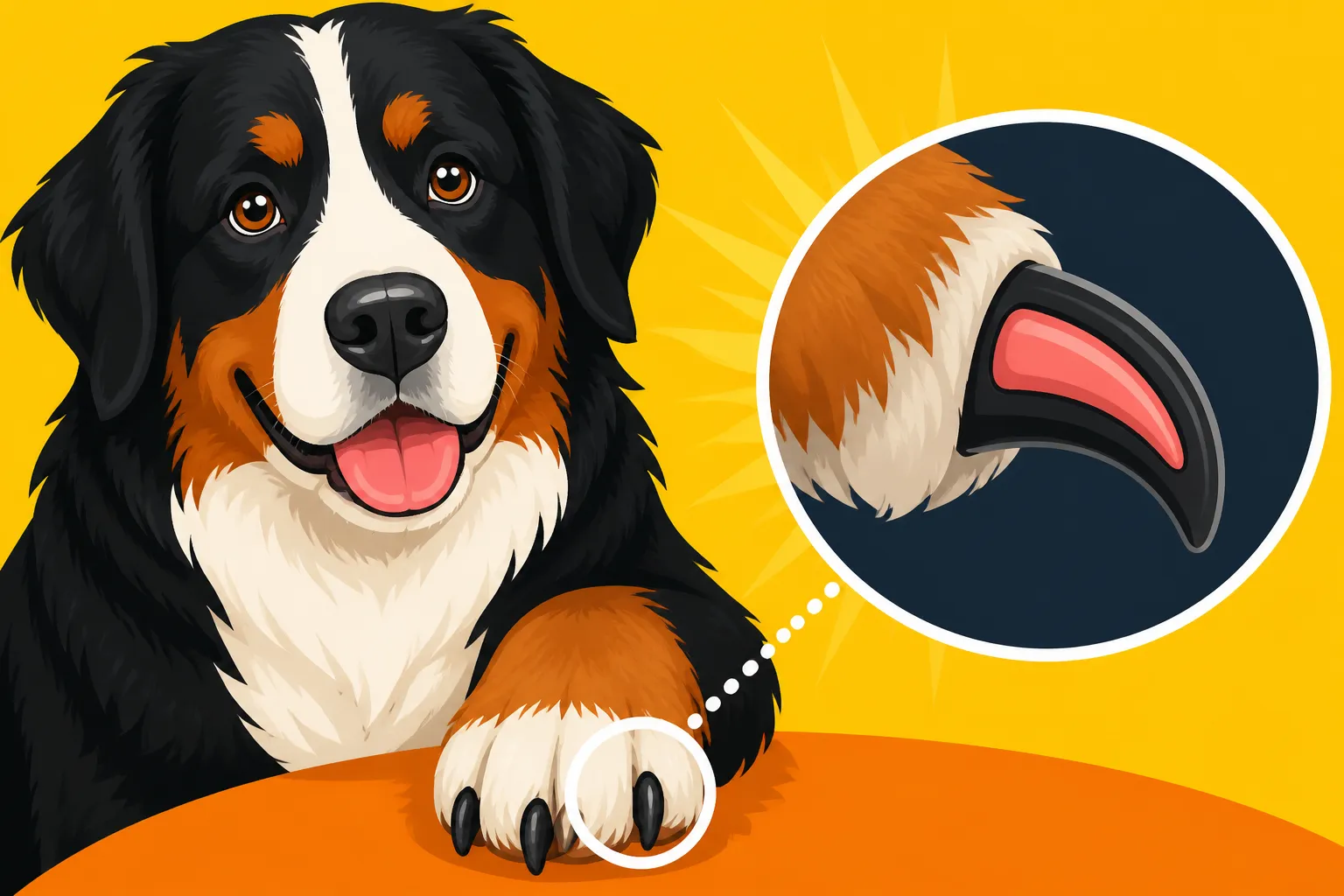
The main reason black nails are a nightmare compared to their lighter counterparts lies in their opacity. A dog's nail, regardless of color, consists of an outer horn-like casing and an inner core called the quick. This quick is living tissue, packed with blood vessels and nerves. On a white nail, you can often see a pinkish hue indicating the quick, allowing you to easily avoid it. With black nails, however, this visual cue is completely absent. You're essentially working blind, relying on subtle changes in texture and color that are only visible after you've made a cut.
For a Bernese Mountain Dog, whose nails are often thick and robust, this difficulty is amplified. Their size also means a negative experience can be much harder to manage. A quick nip on a small dog might result in a yelp, but a similar mistake on a hundred-pound Berner could lead to a dramatic struggle, making future trims even more challenging for both of you. The sheer strength and weight of a Bernese Mountain Dog mean that a bad experience can quickly escalate into a battle, solidifying their aversion to nail care. This is why a gentle, patient approach, combined with the right knowledge, is absolutely crucial.
Understanding the Quick's Purpose and Location
The quick isn't just there to make our lives difficult; it's a vital part of your dog's nail health. It provides nourishment to the growing nail and contains sensitive nerve endings that make cutting into it painful. Think of it like our own nail beds, but extended further into the nail. The quick grows along with the nail, extending further if the nails are allowed to grow long and not trimmed regularly. This is why consistently long nails often mean an extended quick, making it even harder to trim them back without causing discomfort.
Conversely, with consistent, careful trimming, the quick will gradually recede further back into the nail bed. This is a game-changer for black-nailed dogs because it means over time, you can achieve shorter, healthier nails without the constant fear of hitting that sensitive area. It's a marathon, not a sprint, and patience is your best friend here. Understanding that the quick is dynamic and can change its position with regular maintenance is key to developing a long-term strategy for your Bernese Mountain Dog's paw health.
Essential Tools and Preparation for Safe Trimming
Before you even think about picking up a clipper, ensuring you have the right tools and a calm environment is paramount. This isn't just about having the sharpest clippers; it's about being prepared for every eventuality and making the experience as positive as possible for your majestic Berner.
Choosing the Right Clippers or Grinder for a Bernese Mountain Dog
When it comes to a Bernese Mountain Dog's sturdy nails, standard small-dog clippers just won't cut it (pun intended!). You need heavy-duty tools designed for large breeds. There are two main types of manual clippers: guillotine-style and scissor-style. Scissor-style clippers, often resembling pliers, are generally preferred for large, thick nails as they offer more leverage and control. Many owners find brands available on Chewy or Amazon that are specifically designed for large breeds to be robust enough for their Berners.
Alternatively, a Dremel-style rotary grinder can be a fantastic option, especially for black nails. Grinders allow you to remove tiny layers of the nail at a time, giving you much more control and a lower risk of hitting the quick. They also smooth the nail edges, preventing snags. While some dogs are initially wary of the sound and vibration, with patience and positive reinforcement, many Berners adapt well to a grinder. It's a tool that allows you to "polish" the nail down gradually, making the quick's approach more visible through subtle changes in the nail's cross-section.
Here’s a quick comparison to help you decide:
| Feature | Clippers (Scissor-style) | Grinder (Dremel-style) |
|---|---|---|
| Pros | Quick, efficient if dog is cooperative; no noise/vibration | Precise control; less risk of quicking; smooth finish; quick recedes over time |
| Cons | Higher risk of quicking on black nails; can split nails | Noise/vibration can be scary; takes longer; learning curve |
| Best For | Experienced trimmers; dogs accustomed to trimming | Black nails; anxious dogs (with desensitization); maintaining quick length |
Gathering Your Supplies and Setting the Stage
Preparation is key to a stress-free nail trimming session. The most important item to have on hand, even if you’re a seasoned pro, is styptic powder. Accidents happen, and if you do nick the quick, this powder will quickly stop the bleeding and alleviate your dog’s discomfort. Brands like Kwik Stop are readily available and an absolute necessity for any dog owner. Don't even think about trimming without it within arm's reach.
Next, you'll need a generous supply of high-value treats. Think small, delicious pieces of cooked chicken, cheese, or even premium soft treats like those from Ollie. These aren't just for after the fact; they're an integral part of making the experience positive during the trim. Good lighting is also crucial – a bright room or even a headlamp can help you better see the subtle cues in the black nail. Choose a comfortable, non-slip surface where your Bernese Mountain Dog feels secure, perhaps a rug or a mat on the floor. A non-slip surface is especially important for a large breed like the Bernese, as it helps them maintain their balance and feel more secure during handling.
Finally, ensure the environment is calm and free of distractions. This isn't the time for loud music or children running around. The goal is to make nail trimming a routine, predictable, and even enjoyable part of your Berner's care. If you haven't already, working on The Weekly Handling a Bernese Mountain Dog Should Accept will make these sessions much smoother. The more comfortable your Berner is with you touching and manipulating their paws, the easier nail care will become.
Step-by-Step Guide to Trimming Black Nails Safely
Now that you're prepared, let's get down to the actual trimming. The key to success with black nails is patience, small increments, and knowing what subtle signs to look for. Remember, you're not aiming for perfection in one go; you're aiming for progress and a positive experience.
The "Tip" Approach: Small Increments and Visual Cues
With black nails, the strategy is always "less is more" in a single cut. Instead of trying to take off a large chunk, focus on removing tiny slivers at a time. After each small snip, take a moment to look at the cross-section of the nail. Initially, you’ll see a dusty white or gray center. As you get closer to the quick, this dusty center will gradually change. You might start to see a darker gray or even a small black dot appear in the middle of the white circle. This "bullseye" effect is your warning sign – it means the quick is very close!
At this point, stop. You've gone far enough for that trim. The goal is to stop just before you reach that sensitive quick. By consistently taking off these tiny tips, you encourage the quick to recede over time, making subsequent trims easier and allowing you to achieve shorter nails safely. It's a testament to consistency and patience, slowly encouraging your Bernese Mountain Dog's nails to be at a healthy length. If you're dealing with Trimming Nails on a Struggling Bernese Mountain Dog, this incremental approach is even more crucial as it minimizes discomfort and builds trust.
The Grinder Advantage: Polishing Your Way to a Shorter Nail
Using a Dremel-style grinder offers a unique advantage for black nails because it allows for even finer control and a different set of visual cues. Instead of clipping, you're essentially sanding the nail down. The technique is to touch the grinder to the nail for just a second or two, then pull away. This prevents the nail from overheating and gives you time to observe.
As you grind down the black nail, keep an eye on the center. Similar to clipping, you'll initially see a dusty, sometimes powdery white or gray center. As you get closer to the quick, this center will become noticeably darker, often appearing as a small, dense black or sometimes even a slightly pinkish spot. This change in color and texture is your signal to stop. Regular grinding doesn't just shorten the nail; it also vibrates the quick, encouraging it to recede further back over time. This means that with consistent use, you can achieve shorter nails on your Bernese Mountain Dog without ever having to guess where the quick begins. Remember to pair this with plenty of praise and high-value treats; Berners are usually quite motivated by What a Bernese Mountain Dog Will Actually Work For. For more detailed information, consider researching Whether a Grinder Works on a Bernese Mountain Dog.
What to Do If You Nick the Quick (It Happens!)
No matter how careful you are, hitting the quick is an unfortunate reality that can happen to anyone. The most important thing if you nick the quick is to stay calm. Your Bernese Mountain Dog will pick up on your anxiety, and that will only make the situation worse. Gently but firmly apply your styptic powder directly to the bleeding nail. You might need to hold pressure for a moment or two. The bleeding should stop fairly quickly.
Once the bleeding has stopped, reassure your dog with a calm voice and, if they're still willing, offer a high-value treat. Don't make a huge fuss or act overly apologetic, as this can inadvertently teach your dog that nail trims are something to be feared. Simply clean up, move on, and try to end the session on a positive note, even if it means just touching a paw and giving a treat. A single accidental quicking shouldn't derail all your hard work in making nail trims a positive experience. If you remain calm and confident, your Berner will learn that even if a mistake happens, it's quickly resolved and not a reason for panic.
Long-Term Nail Care and Preventing Overgrowth
Nail care is an ongoing commitment, not a one-time event. For a large, active breed like the Bernese Mountain Dog, maintaining proper nail length is crucial for their comfort, mobility, and overall health. Consistent attention will save you (and your Berner) a lot of trouble down the line.
The Importance of Regularity and Consistency
The biggest secret to managing black nails effectively is consistent, frequent trimming. Aim for weekly or at least bi-weekly trims. While this might sound like a lot, remember that with black nails, you're taking off tiny amounts at each session. These frequent, small trims are far less stressful than infrequent, longer sessions where you're trying to take off a lot of nail at once. More importantly, this regularity encourages the quick to recede, gradually making the nails shorter and healthier over time.
Think of it as a maintenance routine, just like regular brushing. If you let it go, it becomes a much bigger, more difficult job. Building nail trims into your regular How Often a Bernese Mountain Dog Should Be Brushed routine can help make it a normal, expected part of their care, rather than a dreaded chore. Even if you only do one or two nails per session initially, the consistency will pay off.
Recognizing When Nails Are Too Long and How It Impacts Your Berner
It’s easy to tell when a dog’s nails are too long because you’ll hear them clicking on hard floors as they walk. Beyond the annoying sound, overgrown nails have several detrimental effects on your Bernese Mountain Dog's health and comfort. Long nails force the toes to splay and push the paw pads up, altering the dog's natural gait and putting undue stress on their joints, tendons, and ligaments. Imagine trying to walk comfortably in shoes that are too small and push your toes backward – it's similar discomfort for your dog.
Over time, chronically long nails can contribute to significant orthopedic issues, exacerbating conditions like Joint Disease in a Hundred Pound Bernese Mountain Dog. They can also make it difficult for your Berner to gain proper traction on slippery surfaces, leading to slips and falls. In extreme cases, nails can grow so long they curl and grow into the paw pad, causing painful infections. Regularly checking your Berner's nails and ensuring they don't touch the ground when they stand is a simple yet effective way to safeguard their long-term health and mobility.
Incorporating Nail Care into Your Berner's Routine
Making nail care a positive, low-stress part of your Bernese Mountain Dog's life starts early and requires ongoing effort. From puppyhood, regularly handle your Berner's paws, touch their nails, and associate it with treats and praise. This builds a foundation of trust and comfort that will make trimming much easier as they grow. Teaching a Bernese Mountain Dog to Stand for Grooming can also significantly help with nail trimming as it encourages cooperation during handling.
If you find yourself consistently struggling or feel overwhelmed, don't hesitate to seek professional help. A qualified groomer or veterinary technician can often perform nail trims quickly and efficiently, and they can also demonstrate proper techniques for you to practice at home. Sometimes, getting a few initial professional trims can help "reset" the quick, making it easier for you to maintain them afterward. You can find many of the recommended tools, from heavy-duty clippers to effective grinders, on platforms like Chewy or Amazon, ensuring you always have the right gear to keep your beloved Bernese Mountain Dog's paws healthy and comfortable.
Disclaimer
This article is for general informational purposes only and does not constitute professional advice. Laws, prices and regulations vary by location and change over time. Consult a qualified professional for guidance on your specific situation.