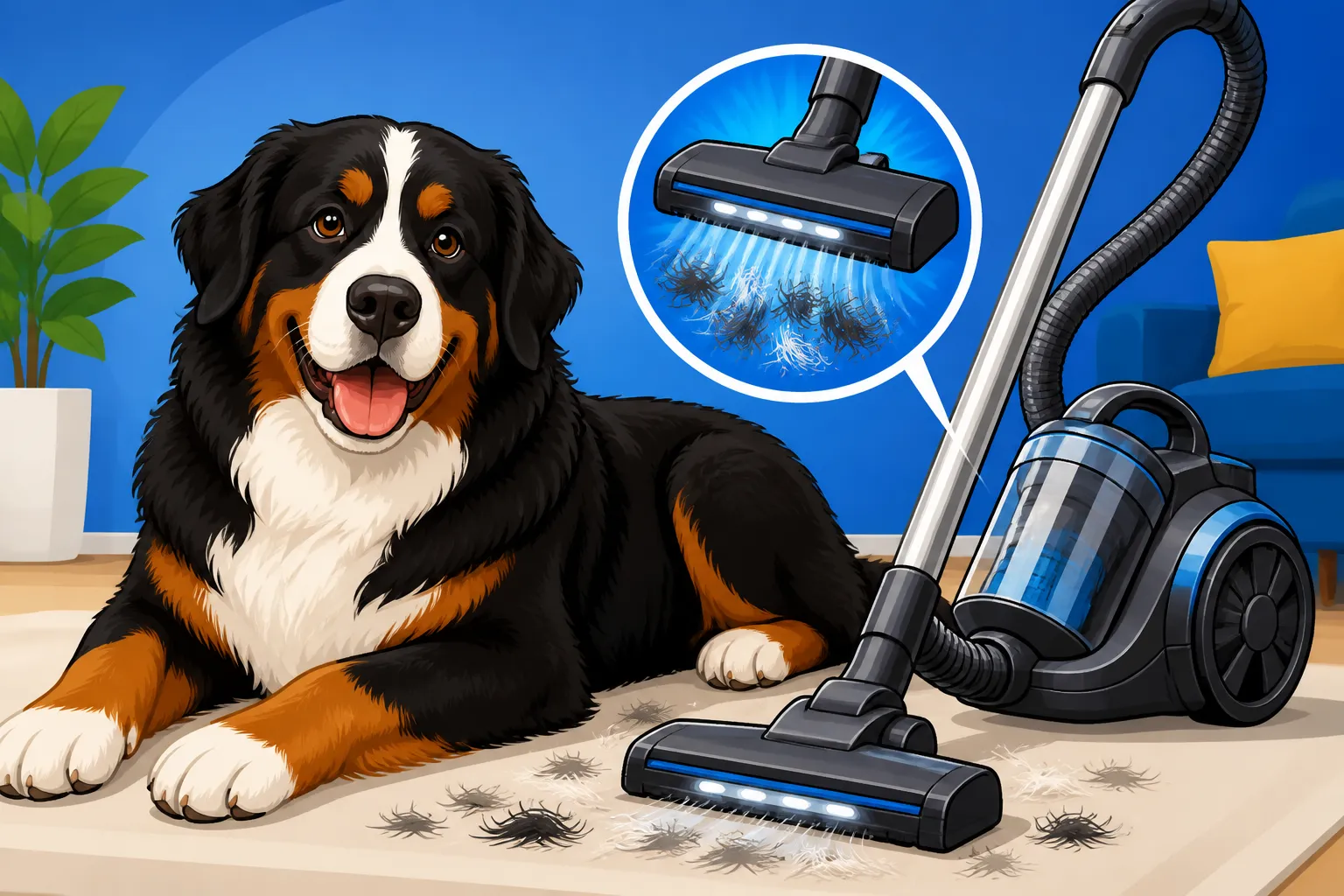
Vacuums That Cope With a Bernese Mountain Dog
Living with a magnificent Bernese Mountain Dog means embracing a life filled with joy, companionship, and, let's be honest, a colossal amount of hair. If you've ever felt like you're fighting a losing battle against the fur tumbleweeds rolling across your floor, you are absolutely not alone. This guide is here to commiserate with your struggles and equip you with the knowledge to choose a vacuum cleaner that can actually stand up to the challenge of a Berner's glorious, shedding coat.
The Epic Challenge of Bernese Mountain Dog Shedding
Before we dive into the nitty-gritty of vacuum cleaners, let's take a moment to truly appreciate (and perhaps despair over) the unique shedding characteristics of our beloved Bernese Mountain Dogs. It's not just "some" hair; it's a lifestyle.
Understanding the Berner Coat and Its Shedding Cycles
A Bernese Mountain Dog's coat is a thing of beauty, comprising a dense, insulating undercoat and a longer, somewhat coarser outer coat. This double-layered protection kept their ancestors warm in the chilly Swiss Alps, but in our homes, it translates to a never-ending supply of fur.
Berners are known for their seasonal "coat blows," typically happening twice a year, in spring and fall. During these periods, they shed their entire undercoat, preparing for either warmer or colder weather. If you've experienced this, you know it's not just shedding; it's an explosion of fur that seems to defy the laws of physics. You might brush for an hour and still collect enough hair to stuff a small pillow! Even outside these intense periods, Berners shed consistently. That fine, soft undercoat, combined with the slightly more robust guard hairs, creates a unique mixture that can embed itself deep into carpets and fabric, while also floating around like ethereal dust bunnies. The frustration is real: it truly feels like they shed their entire body weight in hair every single day, leaving you to wonder if there's any dog left under all that fluff. It’s no wonder many owners ask, How Much a Bernese Mountain Dog Sheds in a Week!
Why Regular Vacuums Just Don't Cut It for a Berner Home
Many well-meaning vacuum cleaners, designed for average household dust and light pet hair, simply aren't equipped for the sheer volume and type of fur a Bernese Mountain Dog produces. You buy a new vacuum, full of hope, only to find yourself disappointed in a matter of weeks.
The primary issue is clogging. Berner hair, especially the fine undercoat, loves to wrap itself tightly around brush rolls, forming dense mats that reduce their effectiveness to zero. It then gets sucked into the internal workings, quickly clogging filters and hoses. This leads to a rapid loss of suction power, turning your powerful cleaning machine into an expensive noise-maker that mostly just pushes hair around. Another significant problem is dustbin capacity. A standard vacuum's dustbin can fill up within minutes of tackling a Berner-laden floor, forcing you into constant, tedious emptying cycles. And let's not forget the filters. Fine dander and hair quickly overwhelm typical filters, not only reducing the vacuum's efficiency but also potentially blowing microscopic allergens back into your breathing air. What's the point of vacuuming if you're just recirculating the problem?
Essential Features for a Bernese Mountain Dog-Proof Vacuum
To truly win the battle against Berner fur, you need a vacuum that's not just "pet-friendly" but "Bernese Mountain Dog-friendly." This means prioritizing specific features designed to handle extreme shedding.
Suction Power and Motor Strength: The Non-Negotiables
When it comes to Berner hair, sheer, unadulterated suction power is paramount. You need a vacuum with a robust motor that can generate consistent, strong airflow. This isn't just about picking up loose surface hair; it's about digging deep into carpet fibers to extract embedded fur and pulling it efficiently from hard flooring and grout lines.
Many vacuums start strong but quickly lose suction as their dustbin fills or filters get clogged. For a Berner home, you need a machine that can maintain its power throughout your cleaning session. Look for models explicitly advertised with "fade-free suction" or "consistent suction technology." This ensures that even as you work through multiple rooms full of fur, your vacuum continues to perform without weakening. You need something that doesn't just skim the surface but digs deep, making sure those stubborn hair tufts don't escape. Investing in a powerful machine now will save you countless hours of frustration later.
Brush Rolls and Filtration Systems Built for Pet Hair
Beyond raw power, the design of the brush roll and the quality of the filtration system are critical for handling Berner hair. These are the components that directly interact with the fur and determine how effectively it's captured and retained.
Traditional brush rolls with stiff bristles are notorious for becoming hopelessly tangled with long pet hair. For a Bernese, this means stopping every few minutes to cut away wrapped fur, which is a tedious and frankly disgusting chore. Look for vacuums that feature tangle-free brush rolls or self-cleaning brush roll technologies. Some newer models have brush heads specifically designed with wider gaps or anti-tangle surfaces that minimize hair wrap, allowing the vacuum to continuously pick up hair without constant intervention. When you're dealing with The Bernese Mountain Dog Shed and What It Fills, this feature is a lifesaver.
Equally important is a high-quality filtration system. Berners, like all dogs, produce dander (microscopic skin flakes) along with their hair. This dander can trigger allergies in sensitive individuals. A vacuum with a HEPA (High-Efficiency Particulate Air) filter is essential. HEPA filters are designed to capture 99.97% of airborne particles as small as 0.3 microns, including pet dander, pollen, and dust mites, preventing them from being recirculated back into your home's air. Beyond HEPA, look for multi-layer filtration systems that offer additional stages of filtration to ensure maximum dust and hair retention, protecting the motor and ensuring cleaner exhaust air.
Dustbin Capacity and Ease of Emptying
You might not think much about a vacuum's dustbin until you're faced with emptying it three times in one living room sweep. With a Bernese Mountain Dog, a generous dustbin capacity is not a luxury; it's a necessity.
A large capacity dustbin means fewer interruptions during your cleaning routine. Instead of stopping every five minutes to empty a small canister overflowing with Berner fluff, you can tackle larger areas more efficiently. This saves time and reduces the sheer annoyance of constantly having to pause. Just imagine, you've got your groove going, only to realize your vacuum is protesting with a strangled whine because its bin is full again. A larger bin allows you to keep going, making the chore feel less fragmented and more productive.
Furthermore, the ease of emptying is paramount. Nothing's worse than wrestling with a full, dusty bin and having half the hair fly back out, undoing some of your hard work. Look for vacuums with hygienic, one-touch release systems that allow you to quickly and cleanly empty the contents directly into the trash without having to reach in or shake out stubborn clumps of hair. Some designs have specific mechanisms to push out compressed hair and debris, preventing it from getting stuck. This makes the post-vacuuming cleanup much more pleasant and reduces your exposure to airborne dust and allergens. You can often find a good selection of models with these features when browsing sites like Amazon.
Navigating the World of Pet-Specific Vacuum Types
The market is flooded with different types of vacuums, each with its own strengths and weaknesses. For a Bernese Mountain Dog household, certain types will serve you better than others.
Upright and Canister Vacuums: The Heavy Hitters
When it comes to raw power and thorough cleaning, upright and canister vacuums often lead the pack. These are typically the workhorses of any serious cleaning arsenal.
Upright Vacuums
- Pros: Uprights are generally known for their powerful suction, especially on carpets. Many models feature wide cleaning paths, allowing you to cover larger areas quickly. They often come with robust brush rolls that agitate carpet fibers to lift embedded dirt and hair. For homes with extensive carpeting or large, open floor plans, an upright can be incredibly effective. They're usually ready to go with minimal setup.
- Cons: The main downsides are their weight and maneuverability. Uprights can be heavy and cumbersome, making them challenging to push and pull, especially in homes with many stairs or tight corners. Their bulk also makes them less ideal for cleaning under low furniture. For a household with Bernese Mountain Dog Hair Woven Into Upholstery, reaching those spots can be tricky with a bulky upright.
Canister Vacuums
- Pros: Canister vacuums offer superior versatility. With a separate canister unit on wheels and a long, flexible hose with various attachments, they excel at cleaning a wider range of surfaces beyond just floors. They're fantastic for stairs, upholstery, curtains, ceiling corners, and getting under furniture. Their lighter wand makes them easier to maneuver for detailed cleaning.
- Cons: While versatile, canister vacuums can be a bit more cumbersome to pull around behind you, sometimes bumping into furniture or getting stuck. They might also take up more storage space due to their two-part design. However, for a home that needs more than just floor cleaning – think dog beds, couches, and car interiors – a good pet-specific canister can be invaluable. Many reliable uprights and canisters are available on Amazon with specific pet hair features.
Stick and Robot Vacuums: Everyday Warriors and Maintenance Heroes
While uprights and canisters handle the deep cleaning, stick and robot vacuums play a crucial role in maintaining cleanliness between those heavier sessions.
Stick Vacuums
- Pros: Stick vacuums are lightweight, slender, and often cordless, making them perfect for quick, daily clean-ups. They're incredibly convenient for grabbing stray hair tumbleweeds, vacuuming up crumbs, or doing a swift pass through high-traffic areas. They're easy to store and grab, encouraging more frequent cleaning, which is vital in a Berner home. They can be a great way to manage The Bernese Mountain Dog Shed and What It Fills before it becomes overwhelming.
- Cons: The trade-off for their convenience is usually less suction power, smaller dustbins, and shorter battery life compared to their larger counterparts. They aren't designed for deep cleaning thick carpets or handling huge quantities of hair in one go. Think of them as your daily hair patrol, not your heavy artillery.
Robot Vacuums
- Pros: The ultimate in convenience, robot vacuums automate daily cleaning. You can set them to run on a schedule, sweeping hard floors and low-pile carpets while you're out of the house. Having a robot vacuum do a daily sweep can really cut down on the accumulation, especially in conjunction with your regular grooming efforts, making your home feel much cleaner. This is particularly helpful for managing the continuous low-level shedding of a Bernese Mountain Dog.
- Cons: For a Berner home, robot vacuums have some significant limitations. Their small dustbins fill up incredibly quickly, often needing emptying multiple times per cleaning cycle. They can also struggle with very thick carpets, easily getting stuck or failing to pick up deeply embedded hair. Hair can also tangle their brushes, requiring regular manual cleaning. They are excellent for maintenance, but should not be your sole vacuuming solution.
The Importance of Attachments and Accessories
A vacuum is only as good as its attachments, especially when dealing with a Bernese Mountain Dog. These specialized tools extend your vacuum's capabilities, allowing you to tackle hair wherever it lands.
- Pet Turbo Brush/Mini Motorized Tool: This is arguably the most essential attachment for a Berner owner. It's a smaller, motorized brush head designed to powerfully agitate and lift pet hair from upholstery, pet beds, stairs, and car interiors. The motorized action is far more effective than static brushes.
- Crevice Tool: Indispensable for reaching into tight corners, along baseboards, and deep into sofa cushions where hair loves to accumulate.
- Upholstery Tool: A wider, often non-motorized tool with felt strips, great for quickly cleaning larger fabric surfaces like couches and dog beds without pulling at the fabric.
- Flexible Hose/Extension Wand: For canister vacuums, a long, flexible hose increases reach. For uprights, an extendable wand allows you to access higher areas or those tricky spots under furniture.
- Hard Floor Tool: If you have hard floors, a dedicated hard floor attachment (often with soft bristles) will protect your floors while effectively gathering hair and debris without scratching.
When considering a vacuum, pay close attention to the included accessories. Often, "pet pro" or "animal" versions of popular vacuums will come standard with these critical attachments.
| Vacuum Type | Best For | Pros | Cons | Berner Hair Suitability |
|---|---|---|---|---|
| Upright | Large carpeted areas, deep cleaning | Powerful suction, wide cleaning path, good brush agitation | Heavy, less maneuverable, difficult for stairs/upholstery | Good for floors, especially carpet. Need good brush roll design. |
| Canister | Versatility, stairs, upholstery, hard floors | Excellent reach, multiple attachments, lightweight wand | Can be cumbersome to pull, takes up more storage | Excellent for overall home cleaning, including furniture and hard-to-reach spots. |
| Stick | Quick clean-ups, daily maintenance | Lightweight, cordless, easy to grab and store | Less powerful, small dustbin, short battery life | Complementary for daily tidying, not a primary cleaner. |
| Robot | Automated daily sweeping, hard floors | Hands-free operation, consistent daily cleanup | Small dustbin, can get tangled, struggles with thick carpet | Maintenance support for hard floors, reduces overall build-up. |
Beyond the Vacuum: Holistic Hair Management in a Berner Home
While a powerful vacuum is your best friend, it's part of a larger strategy. Tackling Berner hair effectively requires a multi-pronged approach that extends beyond just sucking it up off the floor.
Consistent Grooming: Your First Line of Defense
The single most impactful thing you can do to reduce the amount of hair floating around your home is consistent grooming. This is your first line of defense.
During seasonal shedding periods, daily brushing is non-negotiable. Even outside of these times, brushing several times a week will make a noticeable difference. The goal is to capture as much loose hair as possible before it has a chance to settle on your floors and furniture. Investing in high-quality deshedding tools, like an undercoat rake, is crucial. These tools are specifically designed to penetrate the thick outer coat and remove the dense, shedding undercoat without damaging the healthy guard hairs. It's a messy job, but incredibly rewarding when you see the piles of hair you've saved from becoming household tumbleweeds. For many, a professional grooming session during a major coat blow can also be a game-changer. They often have high-velocity dryers, like those discussed in Whether a Force Dryer Is Worth It for a Bernese Mountain Dog, which can blast out an incredible amount of loose undercoat, dramatically reducing shedding for weeks. Remember, a well-groomed Berner means less hair for your vacuum to contend with, and a healthier coat for your dog! Don't underestimate the power of regular grooming as detailed in Grooming a Bernese Mountain Dog's Long Tricolor Coat and Brushing Out a Bernese Mountain Dog's Undercoat.
Home Furnishings and Layout: Making Cleaning Easier
Think strategically about your home environment. Certain choices in furnishings and layout can significantly simplify your hair management efforts.
Where possible, hard flooring (hardwood, tile, laminate) is generally easier to clean than carpet, as hair sits on the surface and is simpler for a vacuum or even a broom to collect. If you love carpets, opt for low-pile or tightly woven varieties that don't trap hair as readily as plush or shag carpets. For furniture, choose fabrics that are less prone to attracting and embedding hair. Smooth leather or tightly woven, durable fabrics are often easier to wipe down or vacuum than highly textured or loosely woven materials. Using washable throws or slipcovers on your dog's favorite lounging spots can also be a lifesaver. These can be easily removed, shaken outside, and tossed into the washing machine. You might also consider strategically placed rugs in high-traffic areas, which can define "pet zones" and make targeted cleaning easier. Regularly washing pet beds and any blankets your Berner uses is also a must. The goal is to make surfaces easy to clean and minimize the places where hair can stubbornly cling. For more insights into living with a Berner, check out Keeping a House Livable With a Bernese Mountain Dog.
Routine Maintenance for Your Vacuum
Even the best vacuum cleaner will underperform if it's not properly maintained. Think of your vacuum as another appliance that needs regular TLC.
The most basic, yet often overlooked, step is to empty the dustbin regularly. Don't wait until it's completely full. A full dustbin reduces suction and strains the motor. Aim to empty it after every significant use, especially in a Berner home. Equally important is cleaning or replacing your filters according to the manufacturer's recommendations. Clogged filters are a primary culprit behind lost suction and can lead to your vacuum recirculating dust and allergens. Many vacuums have washable filters, which can save you money, but they need to be thoroughly dried before being put back in. Regularly inspect and clear your brush roll. Even with anti-tangle technology, some hair might still wrap around, so check it often and carefully cut away any tangled fur to prevent motor strain and maintain optimal performance. Finally, periodically check the vacuum's hoses and attachments for clogs. A blockage can severely impact suction. By giving your vacuum a little attention after each use, you'll ensure it continues to fight the good fight against Bernese Mountain Dog hair for years to come.
Disclaimer
This article is for general informational purposes only and does not constitute professional advice. Laws, prices and regulations vary by location and change over time. Consult a qualified professional for guidance on your specific situation.