What a Fit Bernese Mountain Dog Should Weigh
It can be incredibly challenging to know if your big, fluffy Bernese Mountain Dog is at a healthy weight. Their magnificent double coat can hide a lot, and with so much breed-specific information out there, it's easy to feel lost trying to figure out if your beloved Berner is carrying too much, or even too little, weight. This guide will walk you through how to assess your Bernese Mountain Dog's body condition, understand the risks of an unhealthy weight, and provide actionable tips to keep them in peak form.
Understanding the Bernese Mountain Dog's Ideal Body Condition
When we talk about a healthy weight for a Bernese Mountain Dog, it’s not just about a number on the scale. These dogs vary quite a bit in their bone structure and overall build, even within the breed standard. What's perfect for one Berner might be underweight or overweight for another. Instead, we focus on something called "body condition scoring" (BCS), which is a much more accurate way to assess their physique.
Why "Weight" Alone Isn't the Whole Story
Imagine two Bernese Mountain Dogs, both weighing 95 pounds. One might be a tall, lean male with a finer bone structure, making 95 pounds his absolutely perfect, athletic weight. The other could be a slightly shorter, more compact female with a heavier bone structure, for whom 95 pounds might mean she's carrying a few extra pounds that she really doesn't need. The number on the scale, by itself, doesn't tell us enough about muscle mass, fat distribution, or bone density. It's why relying solely on weight charts can be misleading and cause unnecessary worry, or worse, a false sense of security.
Breed standards often give a weight range, but even these are broad guidelines. A healthy weight for a male Bernese Mountain Dog might be anywhere from 80 to 115 pounds, and females typically fall between 70 to 95 pounds. That's a huge span! This variability means you need a more personalized approach. Your vet is a great resource, of course, but you can also learn to do a quick check at home to stay on top of things.
The Hands-On Rib Test: Your Best Indicator
This is truly the golden standard for figuring out if your Bernese Mountain Dog is at an ideal weight. Don't let their thick coat fool you; you need to get your hands on them! The goal is to feel their ribs, spine, and hip bones.
To perform the rib test, stand over your dog and place both hands flat on their chest, with your thumbs meeting over their spine. Gently run your fingers along their sides, feeling for their ribs. You should be able to feel their ribs quite easily, almost like the knuckles on your hand if you hold your palm flat. They shouldn't be sticking out like you can see them clearly, but you shouldn't have to press hard to feel them either. If you have to press firmly to feel the ribs, or if you can't feel them at all, your Berner is likely carrying too much weight. Conversely, if the ribs are extremely prominent and visible without much effort, your dog might be too thin. Remember, it's about touch, not just sight, especially with that gorgeous, dense fur.
This hands-on approach is far more reliable than just looking at them, which can be deceiving. Regularly performing this simple check, perhaps once a week during your grooming routine, can help you catch any subtle changes in their body condition before they become a bigger issue.
Visual Cues: What to Look For
While the rib test is paramount, there are still visual cues you can look for, even with a Bernese Mountain Dog's substantial coat. It just requires a keener eye and a bit more understanding of their natural build.
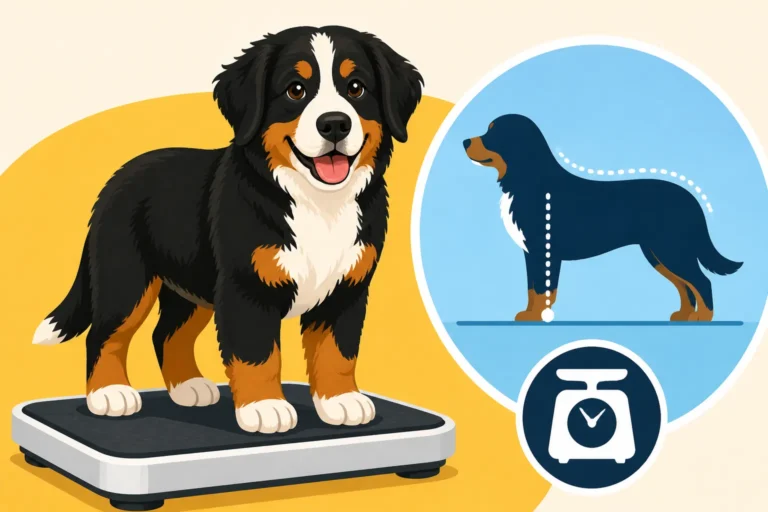
From above, when you look down at your Berner, you should see a slight "waist" tuck in before their hips. It won't be as dramatic as on a short-haired breed like a Greyhound, but there should be a discernible indentation. If they look like a straight line or even wider at the hips than the waist, they might be overweight. From the side, check for an abdominal tuck – meaning their belly should tuck up slightly from their chest to their hind legs, not hang low or be parallel to the ground. Their topline, the line of their back from shoulders to tail, should be relatively level. You should also observe their muscle mass, especially over their hindquarters. Good muscle definition suggests regular exercise and a healthy physique. Finding a Bernese Mountain Dog's Ribs Under the Coat goes into more detail about how to interpret these signs under all that fur.
Of course, their flowing coat can make all of this a bit of a guessing game until you get used to it. Don't hesitate to ask your vet or an experienced Bernese Mountain Dog owner to demonstrate how they assess body condition. A quick visual check combined with the hands-on rib test will give you a comprehensive picture of your Berner's health.
Health Implications of an Unhealthy Weight
Maintaining an appropriate weight for your Bernese Mountain Dog isn't just about aesthetics; it's profoundly linked to their overall health and longevity. These gentle giants are already prone to certain health challenges, and being over or underweight can significantly exacerbate these issues or create new ones.
The Dangers of Being Overweight
Carrying extra pounds is incredibly detrimental for a Bernese Mountain Dog. Their large frame is already under considerable strain, and added weight multiplies that pressure on their joints. This can accelerate or worsen conditions like hip and elbow dysplasia, which are already common in the breed. Imagine Joint Disease in a Hundred Pound Bernese Mountain Dog being made even worse by an extra ten or twenty pounds – it's a recipe for early onset arthritis and chronic pain.
Beyond joint issues, obesity in Berners can lead to a host of other serious problems. It can increase their risk for certain cancers, which sadly, they are already predisposed to. An overweight dog might also struggle more with Heat and the Bernese Mountain Dog's Black Coat, as the excess fat acts as insulation, making them overheat faster. Their heart and respiratory systems have to work harder, potentially leading to cardiovascular problems. Overweight dogs often have a reduced quality of life, less energy for walks and play, and may even have a shorter lifespan. This is why paying close attention to Whether a Bernese Mountain Dog's Weight Shortens Its Life is so critical.
The Risks of Being Underweight
While less common for Bernese Mountain Dogs, being underweight also carries significant health risks. A Berner that is too thin may not be receiving adequate nutrition, which can lead to a weakened immune system, making them more susceptible to illnesses. They might lack the necessary energy for their daily activities and may show signs of lethargy.
Being underweight can also be a symptom of an underlying health problem, such as malabsorption issues, parasites, or more serious conditions like chronic kidney disease or certain cancers. If your Bernese Mountain Dog is losing weight unexpectedly or consistently looks too thin despite eating well, it's crucial to consult your veterinarian immediately. Muscle wasting, particularly over the hips and spine, is another concern for underweight dogs, further impacting their mobility and overall strength. It's a sign that their body might be breaking down its own muscle for energy.
Achieving and Maintaining an Optimal Weight
Getting and keeping your Bernese Mountain Dog at a healthy weight is a holistic effort that involves careful consideration of their diet, regular appropriate exercise, and consistent veterinary oversight. It’s a commitment, but one that pays dividends in their health and happiness.
Tailoring Diet to Your Bernese Mountain Dog's Needs
Diet is perhaps the most crucial component in weight management. Not all dog foods are created equal, and for a large breed like the Bernese Mountain Dog, quality ingredients are paramount. Look for foods that list a high-quality animal protein as the first ingredient and avoid excessive fillers. Brands like Chewy and Ollie offer a wide range of options, including fresh and high-quality kibble, that can be a great starting point for finding suitable nutrition for your Berner.
Portion control is absolutely key. Even the best food can cause weight gain if fed in excess. Consult your veterinarian for specific calorie recommendations, as these can vary based on age, activity level, and individual metabolism. Instead of free-feeding, which can easily lead to overeating, feed measured meals twice a day. Consider using slow feeders or puzzle bowls, which you can find readily on platforms like Amazon, especially if your Berner tends to gobble their food down quickly. This not only aids in digestion but can also help them feel fuller. Remember, treats add up quickly! Choose healthy, low-calorie options and factor them into their daily caloric intake. The Daily Ration a Hundred Pound Berner Gets provides helpful insights into managing their meal sizes.
Exercise for a Hundred-Pound Berner
While diet is critical, exercise plays an indispensable role in maintaining a healthy weight and strong musculature. Bernese Mountain Dogs are not typically high-energy dogs, but they do require regular, moderate exercise to stay fit. This isn't about running marathons, especially for a dog prone to joint issues, but rather consistent, appropriate activity.
Daily walks are essential – aim for at least 30-60 minutes, split into a couple of sessions if possible. Leash training for a Leash Manners on a Hundred Pound Bernese Mountain Dog is important from puppyhood to ensure enjoyable walks. Swimming can be an excellent low-impact exercise, gentle on their joints while still providing a great workout. Short play sessions in a securely fenced yard are also beneficial. Be mindful of the weather; Berners can overheat easily, so avoid strenuous exercise during the hottest parts of the day or in very humid conditions. Exercising a Bernese Mountain Dog in Summer offers practical tips for keeping them cool. For puppies, remember the "five-minute rule": five minutes of exercise per month of age, twice a day, to protect their developing joints. Consistency is more important than intensity when it comes to keeping your Berner fit.
Regular Vet Check-ups and Monitoring
Your veterinarian is your most valuable partner in managing your Bernese Mountain Dog's weight and overall health. Regular check-ups, ideally twice a year, allow your vet to perform a professional body condition assessment, track their weight, and discuss any concerns you might have.
During these visits, your vet can help you create a personalized diet and exercise plan tailored to your Berner's age, activity level, and any pre-existing health conditions. They can also screen for underlying issues that might be affecting weight, such as thyroid problems or other metabolic disorders. The Bernese Mountain Dog Health Panel is an important part of ensuring overall wellness. Don't hesitate to bring up any changes you've noticed, whether it's a sudden weight gain, loss, or a decrease in appetite. Your vet can provide guidance on appropriate food choices, portion sizes, and even suggest specific joint supplements that might benefit your heavy-boned companion. These regular visits are also an excellent opportunity to discuss Screening an Older Bernese Mountain Dog for age-related conditions.
Special Considerations for Bernese Mountain Dogs
Bernese Mountain Dogs have specific needs at different life stages, and understanding these can help you manage their weight effectively throughout their lives. Their growth period and later years require particular attention.
Growth Stages and Weight Management for Puppies
Bernese Mountain Dog puppies grow at an astonishing rate, transforming from small bundles of fluff into large, imposing dogs in a relatively short time. Managing their growth is critical to prevent developmental orthopedic diseases. The key is controlled growth, not rapid growth. This means feeding a high-quality, large-breed puppy food specifically formulated with controlled calcium and phosphorus levels. Why a Bernese Mountain Dog Puppy Needs Controlled Calcium explains the science behind this important dietary requirement.
Overfeeding a puppy or giving them supplements not recommended by your vet can cause them to grow too quickly, putting undue stress on their developing bones and joints, which can predispose them to conditions like hip and elbow dysplasia later in life. Keep them lean during puppyhood; you should easily be able to feel their ribs. Avoid excessive, high-impact exercise, and limit jumping and prolonged stair climbing. Even if they look a little gangly, a lean puppy is a healthier puppy in the long run. Regularly checking their body condition, rather than just their weight, will ensure they are on the right track.
Managing Weight in an Older or Arthritic Berner
As Bernese Mountain Dogs age, typically starting around five or six years old, their activity levels naturally tend to decrease. This often means their caloric needs go down, even if their appetite doesn't. An older Berner with Arthritis in a Bernese Mountain Dog by Six might be less willing or able to engage in vigorous play, making weight management even more challenging.
It's crucial to adjust their diet to match their reduced activity. Transitioning to a senior dog food that is lower in calories but still nutrient-dense can be beneficial. Many senior formulas also include joint-supporting ingredients like glucosamine and chondroitin. Regular, gentle exercise remains important for maintaining muscle mass and joint flexibility; shorter, more frequent walks or even swimming can be ideal. Physical therapy or hydrotherapy can also be invaluable for keeping an arthritic Berner mobile and at a healthy weight. Taking Ten Pounds Off a Bernese Mountain Dog highlights how even small changes can make a big difference. Maintaining a lean body condition is even more critical for older Berners, as every extra pound places additional strain on already compromised joints, which can significantly impact their comfort and mobility as they face issues like The Bernese Mountain Dog Whose Back Legs Give Out.
| Body Condition Score | Appearance (Visual) | Feel (Hands-On) | Recommendation |
|---|---|---|---|
| 1: Emaciated | Ribs, spine, hip bones, and all bony prominences visible from a distance. No discernible body fat. Obvious loss of muscle mass. | Ribs, spine, hip bones feel very sharp and prominent with no fat covering. | Immediate vet consultation. |
| 2: Very Thin | Ribs, spine, and hip bones easily visible. No palpable fat. Minimal loss of muscle mass. | Ribs, spine, and hip bones easily palpable and prominent. Some muscle definition present. | Vet consultation to assess health and diet. |
| 3: Thin | Ribs easily palpable, may be faintly visible. Waist easily noted. Abdominal tuck apparent. | Ribs easily felt with minimal fat cover. Waist and tuck evident. | Monitor closely, ensure adequate feeding. |
| 4: Ideal | Ribs easily palpable without excess fat cover. Waist observed behind ribs. Abdominal tuck present. | Ribs felt with slight pressure. Smooth contour over spine. Tucked abdomen. | Maintain current diet and exercise. |
| 5: Overweight | Ribs palpable with difficulty due to moderate fat cover. Waist discernible but not prominent. Abdominal tuck minimal. | Ribs require significant pressure to feel. Waist barely visible, less tuck. | Reduce calories, increase exercise. |
| 6: Obese | Ribs not palpable under heavy fat cover. No waist or abdominal tuck. Obvious fat deposits over lumbar area and tail base. | Ribs not palpable or only with extreme pressure. No waist, abdomen rounded. | Vet-supervised weight loss plan is essential. |
Disclaimer
This article is for general informational purposes only and does not constitute professional advice. Laws, prices and regulations vary by location and change over time. Consult a qualified professional for guidance on your specific situation.