Reading Longevity Into a Bernese Mountain Dog Pedigree
A Bernese Mountain Dog pedigree can show long-lived relatives, early deaths, and family patterns—but it cannot predict exactly how long your dog will live. The hard part is knowing which ages matter and how to read incomplete family histories without being reassured by a few old ancestors. This guide explains what to ask, what records to check, and how to interpret longevity information realistically.
What a pedigree can and cannot tell you
Read the family tree as a record, not a promise
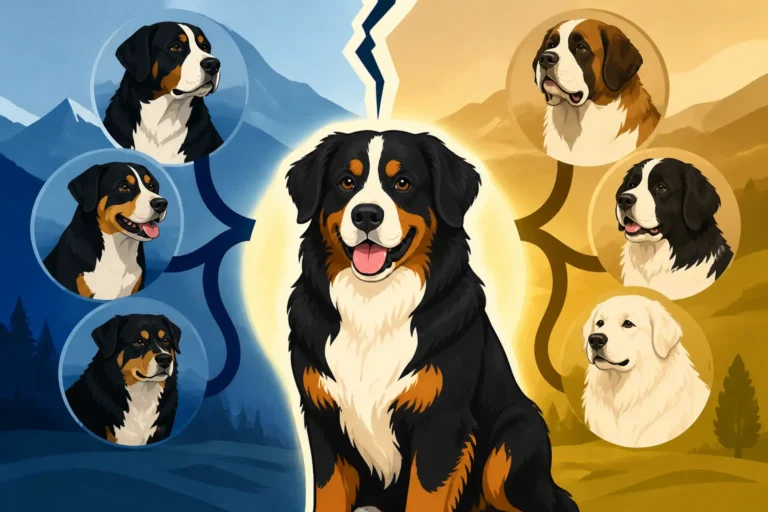
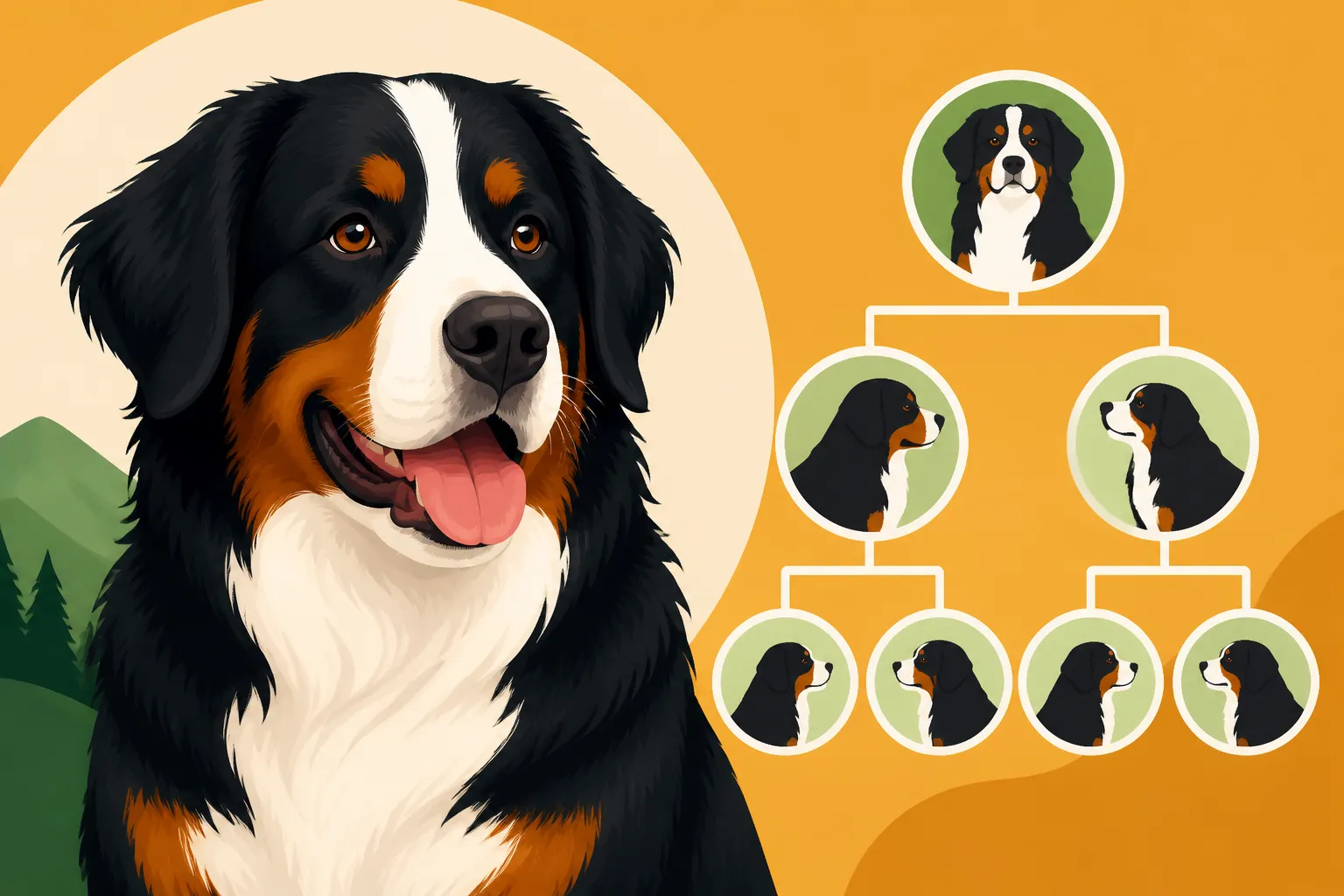
A pedigree maps a dog’s ancestry, usually across several generations. It can help you identify the parents, grandparents, and more distant relatives behind a puppy. But the names and registration details on the page do not automatically tell you how long those dogs lived, what they died from, or whether their histories are complete.
Longevity information matters most when it connects a dog to reliable records. A pedigree may point you toward relatives to ask about, but it is not, by itself, evidence that a line is long-lived. Two puppies from the same litter can also have very different lives because of health, chance, environment, and care—not just inherited factors.
Think of the pedigree as the starting point for questions. If you notice an older dog repeated on both sides of a family tree, ask the breeder whether that dog’s age and health history are known. If the answer is only “she lived a long time,” follow up: how old was she, and is that age based on a record or family recollection?
It also helps to separate two ideas: longevity in a family and a guarantee for one puppy. A pattern of relatives reaching older ages may be encouraging, but it cannot promise that a puppy will do the same. For broader context on the breed’s typical lifespan, see The Average Age a Bernese Mountain Dog Reaches.
Look beyond the most impressive ancestor
A story about a grandparent who lived to an unusually old age can feel reassuring, especially when you are trying to make a thoughtful choice. Still, one long-lived dog is only one data point. A more useful picture includes many relatives and acknowledges both the dogs that lived a long time and those that died young.
Ask about close relatives on both sides of the pedigree: parents, grandparents, siblings of the parents, and the puppy’s littermates. If possible, ask for ages at death as well as the ages of living relatives. A living dog’s final lifespan is not yet known, so counting that dog as a proven long-lived relative can make a family line appear healthier than the available evidence supports.
This distinction is sometimes called incomplete or censored information in health research: a dog may be alive when the records are reviewed, so the eventual age at death is unknown. It is not a flaw in the dog’s history. It simply means the lifespan figure is unfinished. For more on the challenges of interpreting breed-wide patterns, read Whether Longevity Is Improving in Bernese Mountain Dogs.
Understand why a pedigree cannot isolate genetics
A dog’s lifespan reflects more than ancestry. Inherited risk can influence susceptibility to some diseases, but a dog’s health is also shaped by many other factors, including chance, body condition, access to veterinary care, and the conditions in which the dog lives. A pedigree cannot separate those influences neatly.
Nor does a healthy-looking family tree rule out disease. Some conditions appear later in life, and some may not affect every dog that carries a risk. Cancer is an especially important concern for many Bernese Mountain Dog families, but it is not a single inherited trait that a pedigree can simply label as “clear” or “affected.” For more on what breeders can and cannot learn from screening, see Whether Breeders Can Screen Bernese Mountain Dogs for Cancer.
How to evaluate longevity information in a Bernese Mountain Dog line
Ask for ages and causes of death
When a breeder discusses longevity, ask for specific details rather than a general impression. Useful questions include: How old were the dog’s parents when they died? What were the causes of death for grandparents and aunts or uncles? How many siblings of each parent are still alive, and how old are they? Are any close relatives affected by serious or recurring health problems?
The cause of death matters because “died at nine” does not tell the whole story. A dog may have died from an accident or an unrelated acute illness, while another may have died after a long disease process. You are not trying to judge a family from a single event; you are trying to understand whether there is a repeated pattern that deserves a frank conversation with the breeder and your veterinarian.
Be alert to vague answers that sound certain but cannot be supported. “The line is very healthy” is less useful than a family history that names individual dogs, gives approximate ages, and explains what is known or unknown. A responsible breeder may not have every answer, particularly for distant relatives, but should be willing to distinguish documented facts from estimates.
Compare the whole family, not just one branch
A puppy inherits from both parents, so looking at the sire’s family alone—or focusing on a famous dog on one side—leaves out much of the picture. Ask whether the breeder can discuss health and lifespan in both branches. It is also helpful to hear about half-siblings and full siblings of the parents, because those relatives can give you more context than a single ancestor several generations back.
Look for patterns, not isolated anecdotes. A cluster of early deaths or similar diagnoses among close relatives is worth discussing, even though it does not determine what will happen to your puppy. Conversely, several relatives living to older ages can be encouraging, but it is still important to know how many relatives are represented and whether the information includes dogs that died earlier.
The What the Berner-Garde Database Records page can help explain the kinds of information a breed database may contain. Database entries and pedigree records are only as complete as the information submitted, though. A missing health outcome should be treated as unknown—not as proof that the dog was healthy or lived a long life.
Put health testing beside longevity history
Longevity and screening answer different questions. A family history can help you understand what happened to relatives over time. Health tests assess particular risks or conditions, depending on the test and the dog. Neither replaces the other, and no set of screening results guarantees a long lifespan.
Ask which health evaluations apply to the breeding dogs and request the actual results where available. Then check that you understand what each result means, what it does not mean, and whether the dog’s identity matches the record. A clear result for one condition does not rule out every other health problem.
If you are reviewing orthopedic records, for example, make sure you understand the evaluation and the dog it belongs to. Reading a Bernese Mountain Dog's Hip Certificate offers context for interpreting a hip result. For a broader checklist of breeder health documentation, see Which Tests a Bernese Mountain Dog Breeder Should Show.
What to ask a breeder before choosing a puppy
Request a written family-history conversation
It can be awkward to ask questions that touch on illness and death, particularly when you have already fallen for a puppy. But a good breeder should understand that longevity matters to families considering this breed. You can keep the conversation respectful and direct: “Could you walk me through the ages and known causes of death for close relatives on both sides?”
Ask the breeder to separate confirmed information from estimates. A written summary can make it easier to review details after a phone call and compare what you learn with the pedigree. It need not be a formal medical report. Even a clear list of relatives, ages, known diagnoses, and unknowns is more useful than broad reassurance.
You can also ask how the breeder tracks updates from puppy buyers. Breeders may not learn about every health problem or death, especially when families lose touch. That limitation should be acknowledged rather than hidden. A thoughtful answer might explain how information is collected and where gaps remain. For more on documentation to discuss, read What a Bernese Mountain Dog Breeder Puts in Writing.
Ask about siblings and dogs that died young
The littermates of the puppy’s parents can add useful context, as can the puppy’s own siblings over time. Ask whether the breeder has heard from owners of dogs from earlier litters and whether any recurring problems have been reported. If a breeder knows about an early death or serious diagnosis, ask what was learned and whether it changed future breeding decisions.
This is not a demand for a perfect family. No breeder can control every outcome, and no line is free of all risk. What matters is whether the breeder is open about what is known and willing to think carefully about patterns rather than dismissing them. A response that treats every concern as irrelevant is different from one that explains the context and admits uncertainty.
If you are checking information in a breed database, confirm names carefully. Dogs can have similar names, and records may use registered names that differ from the names owners use at home. Ask the breeder to help match dogs in the pedigree to the correct health or lifespan records.
Keep the conversation balanced and practical
An older relative should not be treated as proof that a puppy will live longer, and an early death should not automatically be treated as proof that a whole line is unhealthy. Ask for enough detail to understand the context, then consider the evidence as a whole: close and distant relatives, both sides of the pedigree, screening results, and what remains unknown.
It is also reasonable to ask the breeder whether they have submitted information about their dogs to breed health records and whether they encourage puppy buyers to share health updates. Shared records can help breeders and future owners understand patterns that are impossible to see from one family’s experience alone.
Once your puppy comes home, keep your own health timeline. Record diagnoses, test results, medications, and significant changes in appetite, movement, or energy. If you buy food through Chewy, save the order details or product labels when you change diets; that can help you reconstruct what your dog was eating if a veterinarian later asks. Chewy purchase records can document purchases, but they are not medical records and cannot replace notes from your clinic.
How to make sense of the evidence without overreading it
Use a simple comparison framework
When you review a pedigree and family history, it helps to sort what you learn into clear categories. That prevents a memorable anecdote—good or bad—from outweighing the rest of the information.
| Information | What it can tell you | What it cannot tell you |
|---|---|---|
| Pedigree names and generations | Which dogs are related and where they appear in the family tree | The relatives’ lifespan or health unless those details are recorded separately |
| Ages at death | How long known relatives lived | How long your individual puppy will live |
| Causes of death | Whether there may be a repeated or notable health pattern | Whether a condition was inherited or will affect another dog |
| Ages of living relatives | How old those dogs have reached so far | Their final lifespan |
| Health screening results | Results for the specific conditions assessed | A guarantee against all disease or an exact lifespan |
| Breed database entries | Information submitted about dogs and families | A complete history when records are missing |
You do not need to calculate a sophisticated average to have a useful conversation. In fact, a single average can hide important details. Imagine one family where most close relatives reached older ages but one died young from an accident, and another family where a similar average results from a mix of early disease deaths and very old dogs. The number alone would not show the difference.
A better approach is to write down each close relative’s age, whether the dog is living or deceased, and any known cause of death or diagnosis. Mark unknown details plainly. This makes it easier to notice repeated patterns without pretending that incomplete information is definitive.
Keep records for your own dog over time
A breeder’s family history is only one part of the picture. Once you bring a puppy home, keep a record of veterinary visits, test results, major illnesses, and changes that could matter later. Bring the record to appointments, particularly when you change clinics or consult a specialist. A simple timeline can help a veterinarian see how a problem developed rather than relying on memory during a stressful visit.
Keep the records practical. Save test reports, note the date and reason for each medication, and record changes in weight, mobility, appetite, or energy that your veterinarian asks you to monitor. If you use Chewy to order food or medication, receipts and order histories may help you recall when a product changed or when a refill was purchased. Keep them alongside—not instead of—your veterinary records.
If your dog develops a serious illness, share relevant information with the breeder when you feel ready, especially if the breeder asks puppy families for updates. That information may help them understand the health of related dogs and make better-informed decisions. You can also ask whether submitting the dog’s information to a breed database would be useful; Submitting a Bernese Mountain Dog's Records to Berner-Garde explains that topic.
Treat longevity as one part of a responsible choice
A long-lived family history can be a positive sign, but it is not a guarantee and should not be the only reason to choose a puppy. Consider the breeder’s openness, the records available, the health evaluations performed, and the way the breeder responds to questions. A willingness to discuss uncertainty is often more meaningful than a confident claim that a line has no problems.
The most useful pedigree reading is careful rather than dramatic. It asks who the relatives were, how old they lived, what is actually known about their health, and where information is missing. It recognizes that inherited risk matters while leaving room for the many other factors that shape an individual dog’s life.
If you use Chewy for ongoing supplies, you can keep its order records as one small piece of your household’s timeline, but do not mistake purchase history for proof of health or longevity. Your veterinarian’s records, honest breeder communication, and accurate family information are the pieces that make the picture more meaningful.
Disclaimer
This article is for general informational purposes only and does not constitute professional advice. Laws, prices and regulations vary by location and change over time. Consult a qualified professional for guidance on your specific situation.