Whether a Bernese Mountain Dog Survives Bloat Surgery
The sudden, agonizing pain of bloat, or Gastric Dilatation-Volvulus (GDV), is every Bernese Mountain Dog owner's worst nightmare, a terrifying race against time where every second truly counts. When your beloved Berner faces emergency surgery for this life-threatening condition, a whirlwind of fear and questions undoubtedly hits you, with "Will they survive this?" being the most agonizing of them all. This guide aims to shed light on the chances of a Bernese Mountain Dog surviving bloat surgery, what critical factors influence those odds, and what you can realistically expect during this incredibly stressful period for both you and your gentle giant.
Understanding Bloat and Its Devastating Impact on Bernese Mountain Dogs
Bloat is not just an upset stomach; it's a rapidly progressing, life-threatening condition where the stomach fills with gas and then often twists upon itself (volvulus), trapping the gas and cutting off blood flow to the stomach and sometimes other vital organs. For Bernese Mountain Dog owners, this isn't just a concern, it's a persistent dread, as our deep-chested, large breed dogs are particularly predisposed.
What Happens During Gastric Dilatation-Volvulus (GDV)
Imagine your dog's stomach, usually a flexible, sac-like organ. In bloat, it first distends with gas, fluid, or food – a state called gastric dilatation. This alone is painful and dangerous, putting pressure on the diaphragm and making it hard for your dog to breathe. But the real catastrophe occurs when the distended stomach then twists, or "volvulus," sometimes 180 to 360 degrees. This twisting pinches off the esophagus, so gas can't escape, and blood vessels are compressed. The spleen, which is often attached to the stomach, can also get pulled into the twist, suffering damage. Within hours, parts of the stomach tissue begin to die, toxins flood the bloodstream, and the dog can go into shock. This is why knowing what bloat looks like in a Bernese Mountain Dog is so incredibly vital.
Why Berners Are Particularly Susceptible
It's a heartbreaking fact that Bernese Mountain Dogs, along with other large, deep-chested breeds like Great Danes, Standard Poodles, and German Shepherds, are highly overrepresented in bloat statistics. While the exact cause isn't fully understood, several factors contribute to this increased risk. Their large chest cavity allows more room for the stomach to shift and twist when distended. Genetics also play a role; if a Berner's close relatives have experienced bloat, their risk goes up significantly. Fast eating, stress, and even certain types of food have been hypothesized as contributing factors, though concrete evidence is still being gathered. For instance, some research suggests that whether a fast-eating Bernese Mountain Dog bloats more might be linked to air swallowing.
Recognizing the Early Signs of Bloat
Time is the ultimate enemy when it comes to bloat. Recognizing the signs quickly can literally mean the difference between life and death. Owners often report a sudden onset of symptoms. Your Berner might appear restless, pacing, and unable to get comfortable. They might try to vomit but bring nothing up, or just foam/drool excessively. A classic, though not always present, sign is a visibly distended abdomen that feels hard and drum-like to the touch, especially on the left side. Labored breathing, weakness, and pale gums are also late-stage indicators of severe shock. If you see any of these signs, particularly the unproductive retching, do not hesitate. Head to an emergency vet immediately. Every minute counts when considering how fast bloat kills a Bernese Mountain Dog.
The Urgency of Bloat Surgery and Prognosis
Once bloat is suspected, particularly if torsion is present, emergency surgery is the only viable treatment. There is simply no other way to untwist the stomach and restore blood flow. The prognosis hinges critically on how quickly this intervention can happen.
The Golden Hour: Time is Critical
Veterinarians often talk about a "golden hour" for bloat, though truthfully, any delay can rapidly worsen the outcome. The longer the stomach remains twisted and distended, the more damage occurs to the stomach wall, and the higher the risk of serious complications, including cardiac arrhythmias, perforations, and widespread infection. This is the half-hour that decides a bloated Bernese Mountain Dog's fate. Delaying even a trip to the emergency room to "wait and see" can dramatically reduce their chances of survival. You must prioritize getting your Berner to a veterinary hospital equipped for emergency surgery as fast as humanly possible.
Surgical Procedure: What to Expect
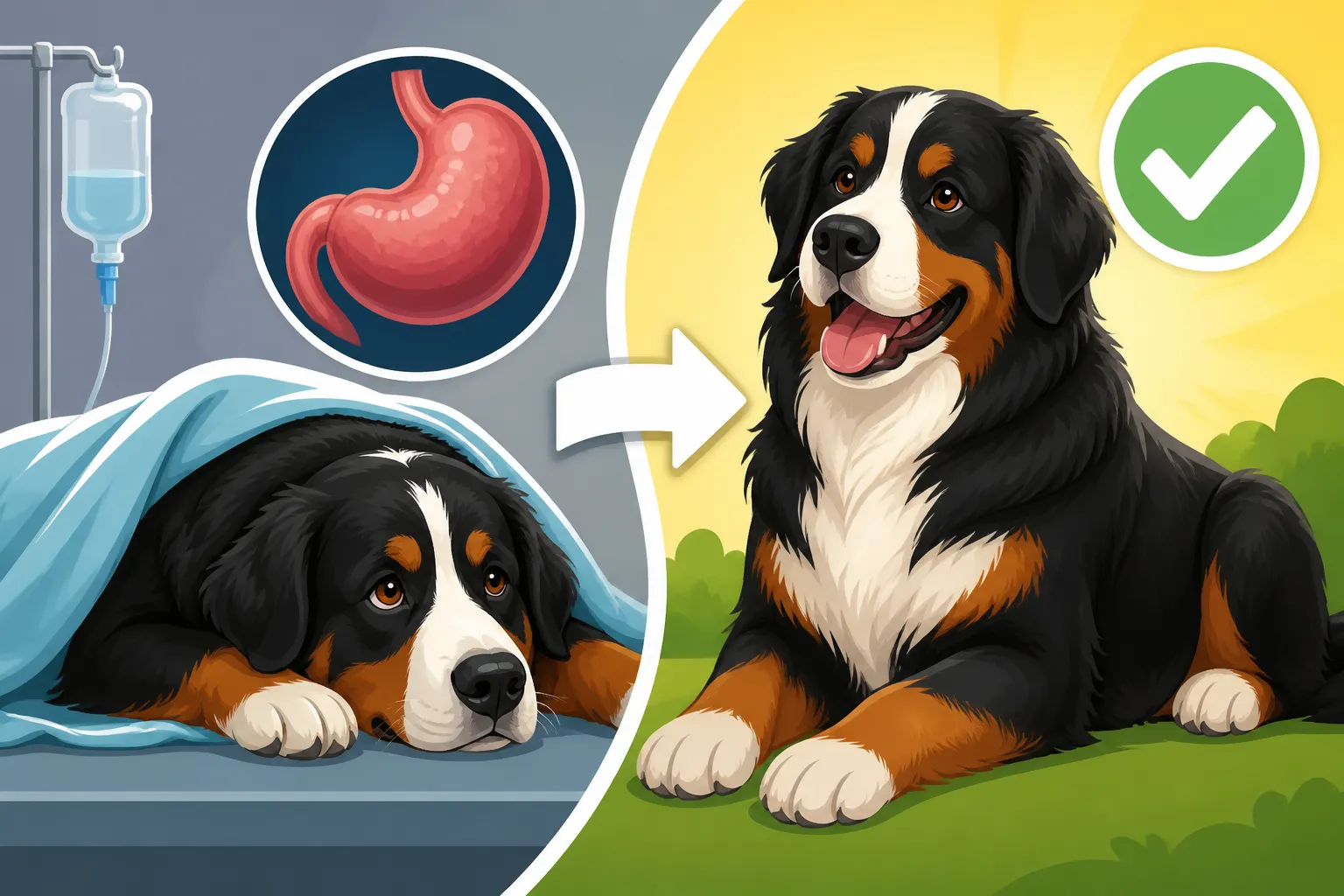
Once at the veterinary emergency clinic, your Bernese Mountain Dog will undergo a rapid assessment. This typically includes a physical exam, sometimes X-rays to confirm GDV, and immediate intravenous fluid therapy to combat shock. Blood tests might also be run to assess organ function and electrolyte balance. The surgical team will then prepare your dog for an emergency laparotomy. During the surgery, the veterinarian will first decompress the stomach by inserting a tube or needle to release the trapped gas. Then, they will carefully untwist the stomach and assess the damage to the stomach wall and spleen. Any necrotic (dead) tissue may need to be removed. Finally, a procedure called a gastropexy is usually performed. This involves permanently tacking the stomach to the abdominal wall, significantly reducing the chance of recurrence. This is very similar to tacking a Bernese Mountain Dog's stomach.
Initial Recovery and Immediate Risks
The immediate post-operative period is incredibly delicate and fraught with potential complications. Your Bernese Mountain Dog will be monitored intensely in an intensive care unit. The first 24-72 hours are the most critical. Potential risks include cardiac arrhythmias (irregular heartbeats), which are common following bloat surgery due to the release of toxins and reperfusion injury when blood flow is restored. There's also a risk of internal bleeding, peritonitis (infection of the abdominal cavity if the stomach wall was severely compromised), and issues with blood pressure and kidney function. Despite successful surgery, some dogs may not survive these immediate post-operative challenges.
Factors Influencing Survival Rates
While bloat surgery is the only path to survival for a twisted stomach, the success rates can vary significantly. Understanding these influencing factors can help manage expectations and emphasize the importance of swift, high-quality care.
Pre-Operative Condition and Age
A Bernese Mountain Dog's overall health before the bloat episode plays a significant role. Younger, healthier dogs generally have a better chance of recovery than older dogs or those with pre-existing conditions (like heart disease or kidney issues). The duration of the bloat before surgery is paramount; dogs whose stomachs have been twisted for many hours and are already in severe shock, with signs of organ damage, face a much graver prognosis. The extent of shock, measured by parameters like heart rate, blood pressure, and gum color, directly correlates with survival.
Severity of Torsion and Organ Damage
Not all GDV cases are identical. The degree of stomach twisting (e.g., 180 vs. 360 degrees) and the amount of damage to the stomach tissue are major determinants of outcome. If a large portion of the stomach wall has become necrotic, it significantly increases the risk of complications such as stomach rupture, leakage, and severe infection. In some extreme cases, removal of part of the stomach or even the spleen (splenectomy) may be necessary, which further complicates recovery and reduces survival odds. This is where emergency surgery on a bloated Bernese Mountain Dog becomes truly complex.
Veterinary Expertise and Facilities
The experience of the veterinary surgeon and the capabilities of the veterinary facility are critical. Emergency veterinary hospitals with 24/7 monitoring, advanced diagnostic tools (like ultrasound), and specialized intensive care units can provide the highest level of care during and after surgery. An experienced surgeon is better equipped to quickly and effectively perform the complex procedure and handle any unexpected intra-operative findings. Access to internal medicine specialists for post-operative management of complications like arrhythmias can also improve survival chances.
Financial Considerations and Insurance
Let's be realistic: bloat surgery is a major, emergency procedure, and it comes with a significant cost. The night bill when a Bernese Mountain Dog bloats can quickly climb into the thousands, especially considering emergency fees, surgery, anesthesia, intensive care, medications, and potential specialist consultations. This financial burden can unfortunately influence critical decisions for owners. This is where having robust pet insurance becomes invaluable. Companies like Healthy Paws often cover a substantial portion of emergency veterinary care, including complex surgeries like GDV correction. Knowing you have that financial buffer, with a company like Healthy Paws, can allow you to make decisions based solely on your dog's best interests, without the added stress of overwhelming bills. Many owners find that the investment in pet insurance, from providers such as Healthy Paws, is well worth it for these unpredictable, life-threatening events.
Post-Operative Care and Long-Term Outlook
Surviving the surgery is a huge hurdle, but the journey doesn't end there. The period immediately following the operation, and the long-term management, are crucial for a full recovery and preventing future episodes.
Critical Care Unit: The First 24-72 Hours
As mentioned, the first few days post-surgery are the most precarious. Your Bernese Mountain Dog will require constant monitoring for signs of complications, particularly cardiac arrhythmias. These heart rhythm disturbances can be life-threatening and require immediate treatment with anti-arrhythmic medications. Pain management is also a priority to ensure your dog's comfort and promote healing. They will likely be on intravenous fluids to maintain hydration and may receive antibiotics to prevent infection. The veterinary team will carefully manage their diet, starting with small, frequent meals once they are stable enough to eat.
Managing Complications: Arrhythmias, Peritonitis, and More
Beyond arrhythmias, other potential complications include continued bleeding, infection (peritonitis), kidney failure, or even a breakdown of the gastropexy site. The veterinary team will be vigilant, performing regular physical exams, bloodwork, and possibly imaging to detect these issues early. If peritonitis occurs, it often requires aggressive treatment, including further surgery, drainage, and potent antibiotics. While rare, a second bloat can occur if the gastropexy fails, emphasizing the importance of a successful initial procedure.
| Factor Affecting Survival | Description | Impact on Survival Rate |
|---|---|---|
| Time to Surgery | Less than 6 hours from onset to surgery. | Significantly Higher (85-90%) |
| No Gastric Necrosis | No dead stomach tissue found during surgery. | Higher (90-95%) |
| Gastric Necrosis Present | Dead stomach tissue requiring removal. | Lower (50-70%) |
| Splenic Removal | Spleen had to be removed due to damage. | Slightly Lower (60-80%) |
| Pre-existing Arrhythmias | Presence of heart rhythm abnormalities before surgery. | Lower (50-60%) |
| Overall Health/Age | Younger, healthier dogs vs. older dogs with co-morbidities. | Varies Widely |
Long-Term Recovery and Prevention
Once your Bernese Mountain Dog is home, a period of careful convalescence is necessary. This typically involves restricted activity for several weeks to allow the surgical incision and internal tissues to heal. A special diet, often small, frequent meals of easily digestible food, will be recommended. You'll also need to monitor their eating habits, ensuring they don't eat too quickly, even if you previously thought whether a fast-eating Bernese Mountain Dog bloats more was an unsubstantiated concern.
Perhaps the most crucial aspect of long-term care is prevention. The gastropexy performed during surgery is highly effective at preventing the stomach from twisting again, drastically reducing the risk of recurrence to less than 5%. However, it does not prevent the stomach from dilating (filling with gas), so vigilance for bloating signs (without twisting) is still important. For Berners who haven't had bloat but are high-risk, a prophylactic gastropexy can be done, often at the time of spaying or neutering. This is why adding a gastropexy to a Bernese Mountain Dog's spay is strongly recommended by many vets. Understanding what a gastropexy costs for a Bernese Mountain Dog might seem like a lot up front, but it is a small price to pay for the peace of mind and protection it offers. It's often debated whether a preventive gastropexy saves a Bernese Mountain Dog money in the long run, considering the cost and outcome of emergency surgery. Ultimately, this procedure transforms a potentially deadly situation into a manageable one, giving your beloved Berner the best chance at a full, happy life post-surgery.
Disclaimer
The information provided in this article is for educational purposes only and should not be considered a substitute for professional veterinary advice. Always consult with a qualified veterinarian for any health concerns or before making any decisions related to your pet's care.