Which Bernese Mountain Dogs Are Most at Risk of Bloat
Few things strike as much terror into the heart of a Bernese Mountain Dog owner as the sudden, silent threat of bloat. One moment, your big, happy companion is fine, and the next, they could be fighting for their life. It's a terrifying reality for us Berner parents, and understanding which of our beloved dogs are most vulnerable to this insidious condition is crucial for prevention and quick action. This guide will delve deep into the risk factors associated with bloat in Bernese Mountain Dogs, helping you identify if your furry family member falls into a higher risk category and what you can do about it.
Understanding Gastric Dilatation-Volvulus (Bloat) in Berners
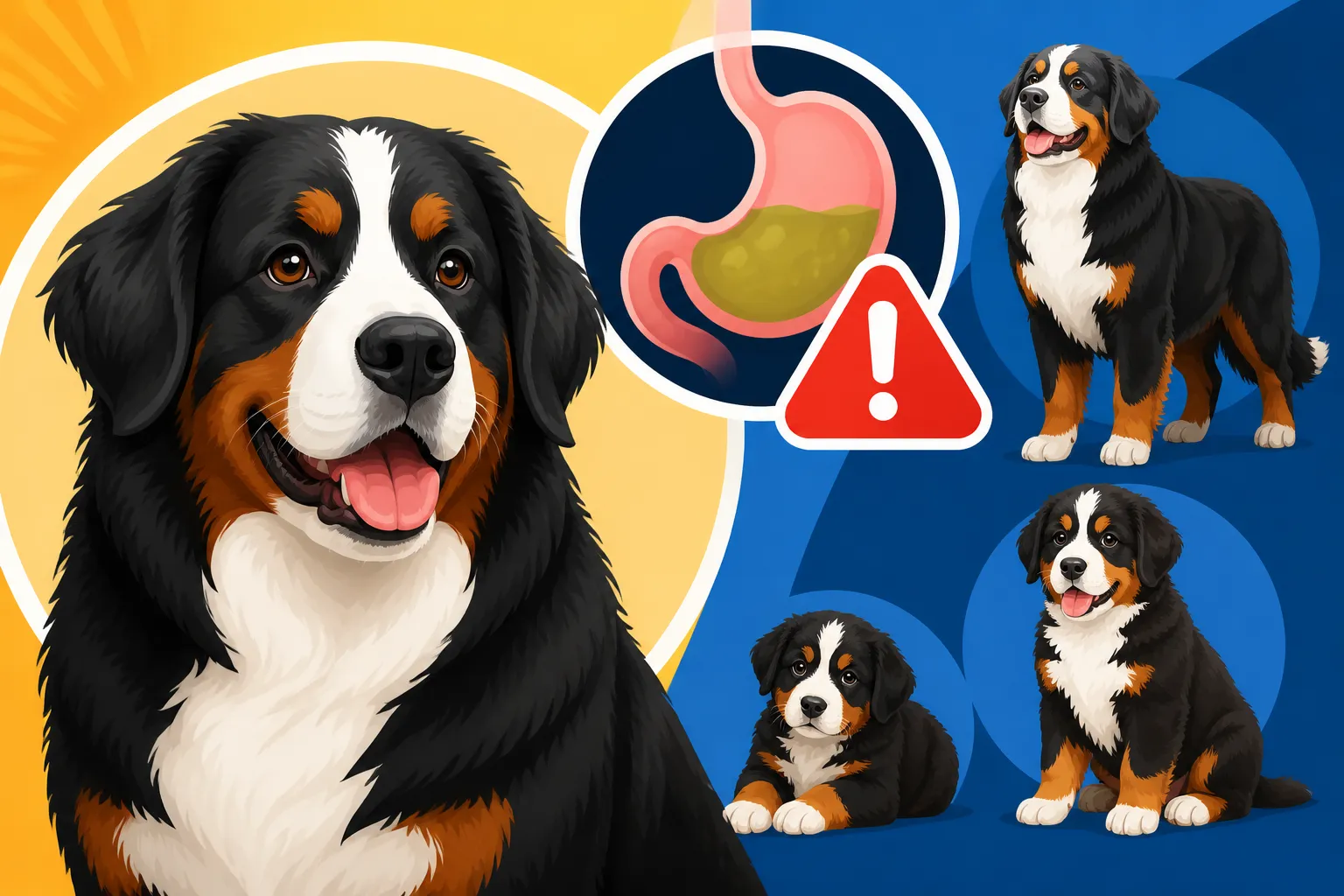
Bloat, medically known as Gastric Dilatation-Volvulus (GDV), isn't just a stomachache; it's a life-threatening emergency where your dog's stomach fills with gas and fluid (dilatation) and then twists on its axis (volvulus). This twisting cuts off blood supply to the stomach and other vital organs, leading to rapid tissue death and systemic shock. It's an agonizing condition that demands immediate veterinary intervention.
What Happens Inside Their Body
Imagine a balloon filling rapidly with air, and then someone twisting its neck tight. That’s a simplified, albeit terrifying, image of what happens inside your Bernese Mountain Dog when bloat strikes. First, the stomach distends, usually from a build-up of gas, but sometimes food and fluid. This pressure can compress major blood vessels, hindering blood flow back to the heart and impacting other organs like the spleen. Then, the stomach can rotate or twist, effectively kinking off both the entrance (esophagus) and exit (duodenum), trapping everything inside. This twisting also cuts off the stomach's own blood supply, leading to rapid cell death. The deep chest cavity common in Bernese Mountain Dogs provides ample space for the stomach to distend and twist, making them particularly susceptible. It's a cruel anatomical lottery.
Why Bloat is a True Emergency
The speed at which GDV progresses from discomfort to a critical, life-threatening state is what makes it so terrifying. Within an hour or even less, a dog can go from seemingly fine to severe shock and collapse. When the stomach twists, the blood supply to the stomach wall is compromised, leading to necrosis (tissue death). Toxins can build up from dying tissue and leak into the bloodstream, overwhelming the body's systems. The restricted blood flow to other organs can also cause irreversible damage. The survival rate, even with immediate surgery, can be as low as 50-60% in severe cases, highlighting just how precious every minute is. As we often stress, that crucial window, or "The Half-Hour That Decides a Bloated Bernese Mountain Dog", is literally life or death. If you suspect bloat, you absolutely cannot wait to see if it improves.
Identifying Bernese Mountain Dog Bloat Risk Factors
While any dog can technically bloat, certain characteristics and circumstances significantly elevate the risk for Bernese Mountain Dogs. Knowing these factors is your first line of defense.
Breed-Specific Predispositions
The most undeniable risk factor for bloat in Berners is their very structure. Bernese Mountain Dogs are considered a "deep-chested" breed. This means their chest cavity is relatively long and narrow from side to side, but deep from sternum to spine. This anatomical characteristic, also seen in breeds like Great Danes, Weimaraners, and Standard Poodles, provides a large space for the stomach to swing and twist when it becomes distended. It’s not about their size alone, but the specific proportions of their chest and abdomen. It's a frustrating reality that the very build that makes them so majestic also puts them at such grave risk.
Genetics and Family History
While the exact genetic markers for bloat aren't as clearly defined as some other conditions in Berners, there's a strong belief among veterinarians and experienced breeders that a family history of GDV increases a dog's risk. If a Berner's parents, grandparents, or siblings have experienced bloat, especially if it was spontaneous and severe, that dog may have a higher genetic predisposition. This is why when you're looking at a puppy, asking about the health history of the lineage, not just for things like cancer or joint issues, but specifically for bloat incidences, is incredibly important. You might be checking "The Bernese Mountain Dog Health Panel" for other inherited diseases, but don't forget to inquire about bloat history too. Some dedicated breeders will actively track bloat in their lines and aim to breed away from it, although it can be difficult given the complex nature of the condition.
Eating Habits and Activity Levels
How your Bernese Mountain Dog eats and what they do around mealtimes plays a significant role in their bloat risk.
Fast Eating and Large Meals
Dogs who gobble down their food in a flash tend to swallow a lot of air along with it, which can contribute to stomach distension. Similarly, feeding one very large meal a day, especially if it's high in fat or rich in quickly fermentable carbohydrates, can overload the stomach and increase gas production. This rapid consumption can create the perfect storm of gas buildup and stomach movement that precedes a twist. It’s a common frustration for owners of enthusiastic eaters, trying to slow them down when all they want is to inhale their dinner! This is where you might ask, "Whether a Fast-Eating Bernese Mountain Dog Bloats More", and the answer is a resounding yes.
Exercise Before or After Eating
High-intensity exercise or even vigorous play too close to meal times is another known risk factor. Allowing your Berner to run, jump, or roll immediately before or after eating can cause the food-filled stomach to jostle and swing, potentially leading to a twist. This is particularly relevant for active Berners who love to play fetch or romp in the yard. It's vital to allow a significant "cool down" period before meals and a resting period after to allow for proper digestion.
Stress and Anxiety
While less talked about than dietary habits, stress can also be a contributing factor. Anxious dogs might eat faster, swallow more air, or experience changes in their digestive motility that could increase bloat risk. If your Bernese Mountain Dog is prone to anxiety during thunderstorms, car rides, or when left alone, it's something to consider in their overall health picture. Even though a Bernese Mountain Dog typically tries to "Whether a Bernese Mountain Dog Hides Discomfort", severe stress can manifest physically.
Age and Sex
Age is another factor that comes into play. While bloat can technically occur at any age, it is more commonly seen in middle-aged to older dogs, typically between 4 and 7 years of age, though cases in younger and older dogs are certainly not unheard of. There's also some anecdotal evidence suggesting that male Bernese Mountain Dogs might be slightly more prone to bloat than females, though the difference isn't as pronounced as the breed or chest conformation factors.
Recognizing the Alarming Signs of Bloat and Immediate Steps
Knowing the risk factors is only half the battle. The other, equally critical half, is recognizing the signs of bloat and understanding that immediate action is not just important, it's absolutely non-negotiable.
The Telltale Symptoms
Bloat symptoms can escalate rapidly, so learning to identify them is paramount. The initial signs might be subtle, but they quickly become severe.
Restlessness and Discomfort
Your Berner might seem agitated, pacing, unable to settle, or frequently looking at their abdomen. They might whine or groan. This early restlessness often progresses to obvious signs of pain.
Retching and Non-Productive Vomiting
This is one of the most classic signs. The dog will repeatedly try to vomit, often dry-heaving, but nothing or very little (perhaps foamy saliva) comes up. This is because the twisted stomach prevents anything from passing through. "What Bloat Looks Like in a Bernese Mountain Dog" often includes this terrifying symptom.
Distended Abdomen
As gas and fluid build up, the abdomen, especially on the left side behind the last rib, will become visibly swollen and taut, like a drum. If you gently tap it, it might sound hollow. This swelling can be rapid and alarming.
Other Critical Signs
As bloat progresses, your Bernese Mountain Dog may exhibit pale gums, increased heart rate, rapid shallow breathing, weakness, and eventually, collapse. They might refuse to lie down, preferring to stand or sit awkwardly. Shock will set in, and without intervention, death is inevitable. It truly is "How Fast Bloat Kills a Bernese Mountain Dog".
What to Do in Those Critical Moments
If you ever suspect bloat, even if you’re only 50% sure, it’s imperative to act immediately. Do not wait to see if symptoms resolve. Do not try home remedies.
Immediate Vet Visit
Call your emergency veterinary clinic while you are on your way. This allows them to prepare for your arrival, gather staff, and get necessary equipment ready. Every second counts. If you have pet insurance like Healthy Paws, knowing their emergency procedures and contacting them quickly can ease financial worries later, allowing you to focus on your dog's care.
Transport Safely and Quickly
Carefully help your Berner into the car. If they are in severe pain, they might be difficult to move, but speed is of the essence. Drive directly to the nearest emergency veterinary facility.
Communicating with Your Emergency Vet
When you arrive, clearly state that you suspect GDV/bloat. Provide a concise history of when symptoms started, what you observed, and if you know of any risk factors for your dog. This information helps the veterinary team prioritize and act swiftly. They will likely confirm the diagnosis with an X-ray. Be prepared for immediate medical stabilization and then, almost certainly, emergency surgery. Facing "Emergency Surgery on a Bloated Bernese Mountain Dog" is daunting, but it's often the only option.
Proactive Strategies to Minimize Bloat Risk
While we can't eliminate all risk, especially with a breed predisposed to bloat, there are concrete steps you can take to significantly reduce the chances of your Bernese Mountain Dog experiencing this terrifying condition.
Dietary Management and Feeding Practices
Controlling how and when your Berner eats is one of the most effective preventative measures.
Smaller, More Frequent Meals
Instead of one or two large meals a day, break your Bernese Mountain Dog's daily food ration into two or three smaller meals. This reduces the amount of food and gas in the stomach at any one time. Think of it like managing a large workload by breaking it into smaller, manageable tasks.
Slow Feeder Bowls
For those enthusiastic eaters, a slow feeder bowl can be a game-changer. These bowls have ridges or obstacles that force your dog to eat around them, significantly extending mealtime and reducing the amount of air swallowed. Puzzle feeders can also work for this purpose.
Hydration and Meal Timing
Always ensure fresh water is available, but avoid letting your Berner gulp down large amounts of water immediately before or after meals, as this can also contribute to stomach distension. Similarly, establish a strict "no vigorous exercise" rule for at least an hour before and two hours after meals. This allows their food to settle and digest without excessive jostling.
The Role of Gastropexy
For many high-risk breeds, including Bernese Mountain Dogs, a surgical procedure called a gastropexy is often recommended as a preventative measure.
What a Gastropexy Does
A gastropexy (often called a "tack") permanently attaches a part of the stomach to the inside of the abdominal wall. This prevents the stomach from twisting, even if it distends with gas. While it doesn't prevent the initial gas buildup (dilatation), it eliminates the life-threatening "volvulus" or twisting component of GDV. It essentially makes it impossible for the stomach to flip over.
When and Why It's Recommended
Gastropexy is a relatively straightforward procedure and is often performed at the same time as a spay or neuter, especially for puppies or young adults of at-risk breeds. This combines two surgical events into one recovery period. Even if your Berner is older, a prophylactic gastropexy might be recommended, particularly if they have a family history of bloat or exhibit other high-risk factors. Discussing "Adding a Gastropexy to a Bernese Mountain Dog's Spay" with your vet is a conversation every Berner owner should have. It's a significant preventative step that can offer immense peace of mind. While it's an upfront cost, knowing "What a Gastropexy Costs for a Bernese Mountain Dog" can help you plan, and reputable pet insurance providers like Healthy Paws often cover prophylactic gastropexies if they are deemed medically necessary for at-risk breeds, making the decision easier for many owners.
Stress Reduction and General Well-being
A happy, calm Berner is generally a healthier Berner. While not a direct cause, chronic stress can impact digestion and overall health, potentially contributing to bloat risk.
Consistent Routines
Dogs thrive on routine. Consistent feeding times, exercise schedules, and daily interactions can help reduce anxiety. A predictable environment can go a long way in keeping your Berner settled.
Safe and Comfortable Environment
Ensure your Bernese Mountain Dog has a quiet, comfortable place to rest and digest after meals. Avoid startling them during or immediately after eating. Provide mental enrichment to keep them engaged and reduce boredom, which can sometimes lead to stress. Regular veterinary check-ups are also crucial to monitor overall health and catch any underlying issues that could indirectly increase risk. Ensuring your Bernese Mountain Dog has comprehensive pet insurance, such as a plan from Healthy Paws, can alleviate significant financial stress if an emergency like bloat or other health issues arise, allowing you to prioritize their care without hesitation. Even if your Berner does need to undergo "Whether a Bernese Mountain Dog Survives Bloat Surgery", having support for the bills can make a huge difference.
Comparative Risk Factors for Bloat in Bernese Mountain Dogs
To summarize and give you a quick reference, here's a table outlining common factors that increase or decrease a Bernese Mountain Dog's risk of developing bloat.
| Risk Factor Category | Higher Risk | Lower Risk (or Protective) |
|---|---|---|
| Breed Anatomy | Deep-chested conformation, large breed | Other breeds (not deep-chested) |
| Genetics | Family history of GDV | No known family history of GDV |
| Eating Habits | Eating one large meal daily, fast eating, elevated food bowls (controversial, but often advised against) | 2-3 smaller meals daily, slow feeder bowls, floor-level feeding |
| Activity | Vigorous exercise 1 hr before/2 hrs after meals | Resting 1 hr before/2 hrs after meals |
| Age | Middle-aged to older (4-7+ years) | Very young puppies |
| Sex | Males (slightly higher risk) | Females |
| Disposition | Anxious, easily stressed dogs | Calm, well-adjusted dogs |
| Surgery | No previous gastropexy | Prophylactic gastropexy performed |
By understanding these risk factors and taking proactive steps, you are empowering yourself to protect your cherished Bernese Mountain Dog from one of the most frightening and fast-acting canine emergencies.
Disclaimer
The information provided in this article is for educational and informational purposes only and does not constitute veterinary advice. Always consult with a qualified veterinarian for any health concerns or before making any decisions about your pet's medical care.