Whether a Bernese Mountain Dog Loses Its Sight
It’s a heartbreaking thought for any Bernese Mountain Dog owner: watching your beloved companion, full of life and joy, slowly lose their precious eyesight. The worry of them bumping into furniture, navigating familiar spaces with hesitation, or simply not seeing your loving face can be overwhelming. This comprehensive guide will walk you through the various eye conditions that can affect Bernese Mountain Dogs, help you understand the signs of vision loss, and provide practical advice for managing and supporting a Berner whose world is becoming a little dimmer.
Common Eye Conditions Affecting Bernese Mountain Dogs
Bernese Mountain Dogs, like many purebred dogs, can be predisposed to certain genetic and age-related eye conditions. Understanding these conditions is the first step in being a proactive and informed owner. It’s not about fear, but about knowledge and preparation.
Progressive Retinal Atrophy PRA
Progressive Retinal Atrophy (PRA) is one of the most disheartening eye conditions because it leads to irreversible blindness. For a Berner, whose zest for life often includes romping in fields or navigating varied terrain, losing sight gradually can be particularly challenging. PRA is an inherited degenerative disease that affects the photoreceptor cells in the retina. Think of the retina as the film in a camera; these cells are responsible for capturing light and sending signals to the brain. In PRA, these cells slowly deteriorate over time.
Initially, dogs with PRA often develop "night blindness." This means you might notice your Berner struggling to see in low-light conditions or becoming more hesitant to go outside after dusk. Perhaps they’ll bump into familiar objects in a dimly lit hallway, or become more reliant on you to guide them in the evening. As the disease progresses, their daytime vision will also begin to decline, eventually leading to complete blindness. There's no cure for PRA, and unfortunately, it's a condition that can manifest in various forms and at different ages, though many Bernese Mountain Dogs show signs in their middle to later years. Reputable breeders screen their breeding stock for PRA using genetic tests, which is why asking about The Bernese Mountain Dog Health Panel and looking up parentage on databases like Berner-Garde is so crucial when choosing a puppy.
Cataracts Clouding the View
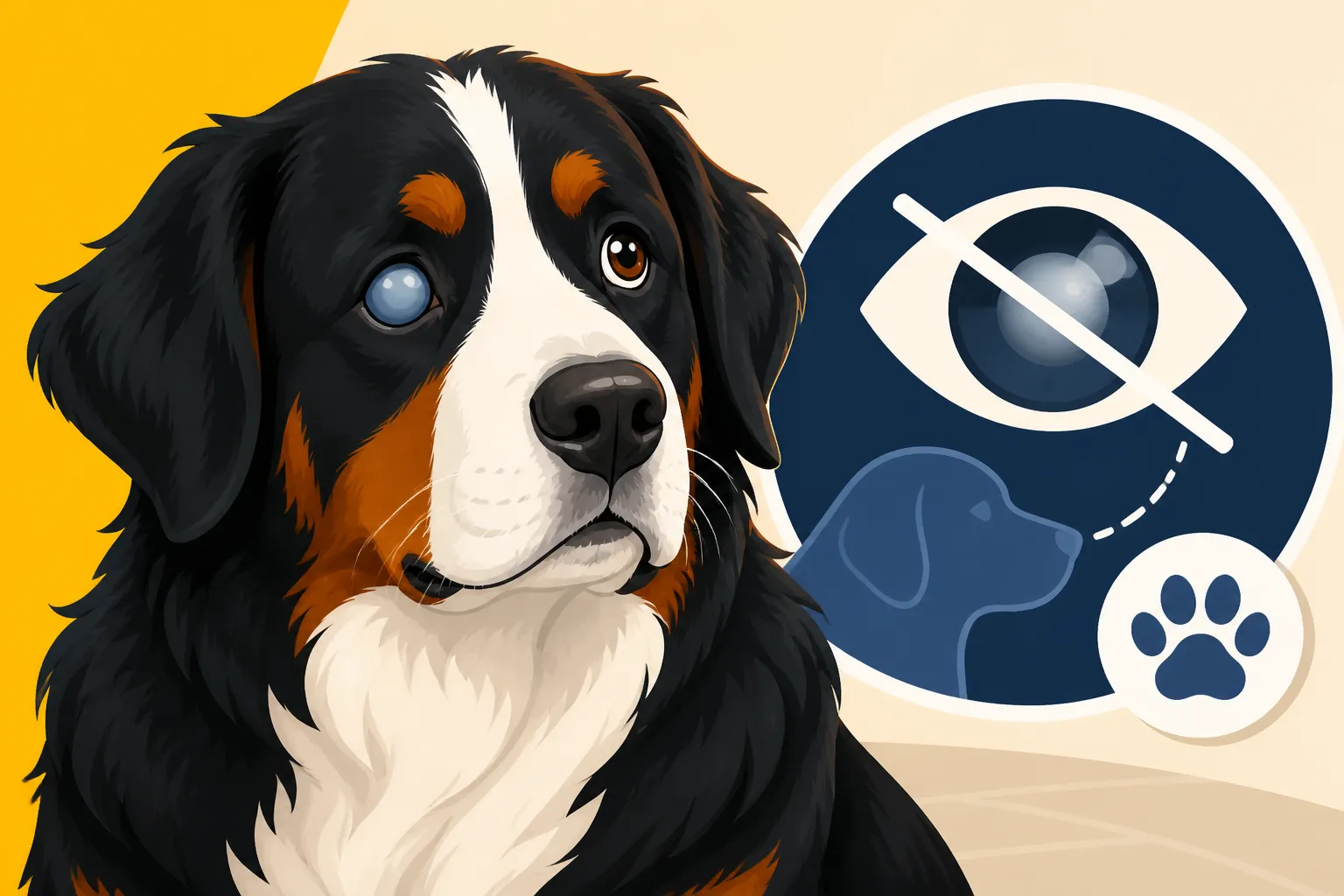
Cataracts are another common culprit behind vision loss, not just in Bernese Mountain Dogs but in many breeds. Imagine looking through a cloudy, frosted window – that's essentially what a cataract does to your dog's lens. The lens, normally clear, becomes opaque, preventing light from reaching the retina effectively.
Cataracts can develop for several reasons. Some Bernese Mountain Dogs are unfortunately born with congenital cataracts, though these are less common. More often, cataracts are age-related, appearing as dogs get older, much like in humans. They can also be secondary to other health issues, such as diabetes, or even trauma to the eye. You might first notice a slight bluish-grey haze in your Berner's pupil, which gradually becomes denser and whiter over time. Their vision loss will depend on the size and density of the cataract. A small, peripheral cataract might not bother them much, but a large, dense one can severely impair their ability to see. If your Berner is diagnosed with cataracts and it's significantly impacting their quality of life, surgical removal, performed by a veterinary ophthalmologist, is often an option. This procedure can restore much of their vision, but it's a significant undertaking and investment.
Entropion and Ectropion Eyelid Issues
While not directly causing blindness, entropion and ectropion are eyelid conditions that can lead to chronic discomfort, inflammation, and potential secondary eye problems that severely impact your Berner's vision and overall eye health.
Entropion: This is where a portion of the eyelid, usually the lower one, rolls inward towards the eye. When this happens, the eyelashes and fur on the eyelid rub against the cornea (the clear front surface of the eye). Ouch! Think of having an eyelash constantly poking your eye – it's irritating and painful. For a Bernese, this constant rubbing can lead to corneal ulcers, scarring, and chronic conjunctivitis (pink eye). You might notice your Berner squinting, tearing excessively, or trying to rub their eyes. The eye itself might appear red and inflamed. If left untreated, severe corneal damage can lead to permanent vision impairment or even blindness.
Ectropion: This is the opposite problem, where the eyelid rolls outward, exposing the delicate inner lining of the lid. While not as immediately painful as entropion, ectropion leaves the eye more vulnerable to environmental irritants like dust, dirt, and wind. The exposed conjunctiva can become dry, irritated, and prone to infections. You might notice a "droopy" look to your Berner's lower eyelids, with the red inner membrane visible. They might experience chronic conjunctivitis and excessive tearing as the eye tries to keep itself moist. Both entropion and ectropion are typically corrected surgically, improving comfort and preventing long-term damage.
Glaucoma Pressure Problems
Glaucoma is an emergency situation and one of the most painful eye conditions a dog can experience. It's essentially a buildup of fluid pressure inside the eye, which can rapidly damage the optic nerve and lead to irreversible blindness if not treated quickly. The normal flow of fluid within the eye helps maintain its shape and nourishes its structures. With glaucoma, this drainage system becomes blocked, causing pressure to rise.
Bernese Mountain Dogs can be affected by primary glaucoma, which is inherited, or secondary glaucoma, which results from another eye disease like advanced cataracts, inflammation, or trauma. The onset can be very sudden. You might notice your Berner’s eye becoming visibly red, cloudy, and sometimes enlarged. They will likely be in considerable pain, perhaps pawing at their eye, squinting, or becoming lethargic. Their pupil might be dilated and unresponsive to light. Time is of the essence with glaucoma; every hour counts. If you suspect glaucoma, an immediate visit to an emergency vet is crucial to try and save your Berner's sight and alleviate their pain. Treatment typically involves medications to reduce pressure and, in some cases, surgery. Unfortunately, even with aggressive treatment, many dogs eventually lose vision in the affected eye, and often the other eye follows.
Other Less Common but Serious Conditions
While PRA, cataracts, and glaucoma are some of the most prominent concerns, Bernese Mountain Dogs can also be susceptible to other eye issues that may impact their vision.
Cherry Eye: This condition occurs when the gland of the third eyelid prolapses, appearing as a red, swollen mass in the corner of the eye. While not usually painful or a direct cause of blindness, it can obstruct vision, lead to dry eye, and become irritating if left untreated. Surgical repositioning of the gland is the usual treatment.
Keratoconjunctivitis Sicca (KCS) or Dry Eye: This is a condition where the eye doesn't produce enough tears, leading to chronic dryness, inflammation, and discomfort. The eyes may appear red, dull, and have a thick, mucous discharge. Over time, chronic KCS can lead to corneal scarring and pigmentation, significantly impairing vision. It's often managed with lifelong eye drops to stimulate tear production or provide lubrication.
Distichiasis and Ectopic Cilia: These are conditions where extra eyelashes grow in abnormal locations, often rubbing against the cornea, similar to entropion. They cause irritation, pain, and can lead to corneal ulcers. Surgical removal of these errant eyelashes is typically needed.
Retinal Dysplasia: This is an abnormal development of the retina. Depending on the severity, it can range from small, non-vision-impairing folds in the retina to widespread retinal detachment and blindness. It's often a congenital condition. While Berners aren't as commonly affected as some other breeds, it's still a condition that can be detected through thorough eye examinations.
Keeping up with your Bernese Mountain Dog's regular veterinary check-ups is vital. During these appointments, your vet can often spot early signs of trouble, which might prevent more serious issues down the road. Remember, early detection is always best when it comes to eye health, and it's a good idea to consider Eye Conditions in a Bernese Mountain Dog in detail.
Recognizing the Signs of Vision Impairment
It can be incredibly distressing to realize your Berner might not be seeing as well as they used to. Dogs are remarkably adaptable, and they often hide discomfort or limitations, especially when their vision starts to decline gradually. You might not notice dramatic changes overnight, but rather subtle shifts in their behavior. Understanding what to look for can help you identify a problem early and seek veterinary care.
Behavioral Changes to Watch For
When a Bernese Mountain Dog begins to lose its sight, their other senses, particularly smell and hearing, become heightened. They might rely more on these senses to navigate their world, which can mask vision problems for a while. However, certain behavioral cues can be red flags:
- Hesitation and Uncertainty: Your Berner might become more hesitant to go down stairs, jump into the car, or navigate new environments. They might pause at doorways or before stepping off a curb. This is especially noticeable if they were once confident and bold.
- Bumping into Objects: This is an obvious sign, but it might start subtly. They might lightly brush against furniture they used to effortlessly avoid, or misjudge distances when trying to catch a toy. In familiar surroundings, they might still do quite well, but in unfamiliar places or at night, collisions become more frequent.
- Increased Clinginess or Anxiety: A visually impaired dog might become more reliant on its human family members, sticking closer to you than usual. They might seem more anxious in unfamiliar situations or when left alone, as they feel less secure without their sight. This can sometimes manifest as separation anxiety, even in a dog that previously handled being left alone well.
- Changes in Play: They might have difficulty finding toys, especially if they roll away, or miss catching treats thrown to them. They might prefer stationary toys or rely on sounds to locate them.
- Difficulty Locating Food and Water Bowls: While their nose will often guide them, they might initially struggle to find their bowls if they are moved, or if they approach them from an unusual angle.
- Altered Sleep Patterns: Some dogs might become more restless at night if their night blindness worsens, as they feel disoriented in the dark.
- Startling Easily: Because they can't see approaching people or objects, they might startle more easily if touched or approached unexpectedly. Always speak to them as you approach to avoid startling them. This is often where a Bernese Mountain Dog might hide discomfort, trying to cope on their own.
Physical Indicators in Their Eyes
Beyond behavioral changes, there are physical signs in your Berner's eyes themselves that can indicate a problem. It’s a good practice to periodically check your dog's eyes in good lighting.
- Cloudiness or Color Change: A bluish, whitish, or greyish haze over the lens (the pupil area) can indicate cataracts. The cornea (the clear outer layer) might also appear cloudy or bluish, which could be a sign of glaucoma or corneal edema.
- Redness or Inflammation: Persistent redness of the whites of the eyes or the conjunctiva (the pink tissue inside the eyelids) can be a sign of irritation, infection, or more serious conditions like glaucoma.
- Excessive Tearing or Discharge: While some tearing is normal, excessive watery eyes, or thick, mucous, or pus-like discharge, are not. This can indicate irritation, infection, or dry eye.
- Dilated Pupils: If one or both of your Berner’s pupils appear persistently dilated and do not constrict in bright light, it could be a sign of retinal degeneration or other severe eye problems.
- Changes in Eye Size or Shape: One eye appearing larger or bulging compared to the other can be a critical sign of glaucoma. A "cherry eye" will be very obvious as a red mass in the corner of the eye.
- Squinting or Pawing at the Eyes: These are clear signs of pain or irritation. Your Bernese might be trying to relieve discomfort.
If you observe any of these signs, it's crucial to schedule a veterinary appointment promptly. Early diagnosis can make a significant difference in managing the condition and, in some cases, saving or preserving vision. Your regular vet can perform an initial assessment, and they may recommend a referral to a veterinary ophthalmologist for specialized diagnostics and treatment. Remember, seeing the vet twice a year with a Berner is a good habit for overall health, and especially important for monitoring subtle changes like those impacting vision.
Living with a Visually Impaired Bernese Mountain Dog
Discovering your Bernese Mountain Dog is losing its sight is tough, no doubt about it. It pulls at your heartstrings. But here's the good news: dogs are incredibly resilient, and with your love, patience, and some thoughtful adaptations, a visually impaired Berner can still live a full, happy, and dignified life. It’s all about creating a safe, predictable environment and leaning into their other powerful senses.
Adapting Your Home for Safety and Comfort
Your home, which was once their playground, now needs to become their sanctuary. Small changes can make a world of difference.
- Maintain Consistency: This is probably the most important tip. Once your Berner starts losing vision, avoid moving furniture, food and water bowls, or their bed. Keep pathways clear and consistent. If you must rearrange, do it slowly and guide your dog around the new layout many times. Imagine walking through a familiar house in the dark; you know where everything is. That’s what you want for your Berner.
- Block Off Hazards: Stairs can become very dangerous. Consider using baby gates or pet gates to block off staircases, swimming pools, or areas with sharp corners. If stairs are unavoidable, you can add carpet runners or non-slip strips to provide better grip and tactile cues. For a giant breed like a Berner, preventing falls and injuries that could exacerbate The Bernese Mountain Dog Whose Back Legs Give Out is paramount.
- Padded Protection: Pad sharp corners on furniture, especially coffee tables or end tables, with foam protectors. This can prevent painful bumps and bruises as they navigate.
- Sensory Markers: Use different textures on the floor to signal changes in environment. A small mat in front of their water bowl or a carpet runner leading to their favorite napping spot can provide tactile clues. You can even use distinct scents, like a drop of essential oil (safe for dogs, like lavender diluted heavily) on a mat by their bed.
- Lighting: While a blind dog can't see light, a dog with partial vision might benefit from consistent, soft lighting. Avoid bright, sudden lights or dark shadows that can be disorienting. For dogs with night blindness from PRA, adding nightlights can make a huge difference in their confidence after dark.
- Outdoor Safety: Secure your yard with sturdy fencing. Always supervise your Berner when they are outside, even in a familiar yard. They might still find ways to get into trouble, like bumping into bushes or stepping into flower beds. A long lead can be a good safety measure if your yard isn't fully secured, or if you're exploring new outdoor spaces.
Enhancing Other Senses and Communication
Your Berner's ears and nose will become their superstars. You can help them maximize these senses.
- Verbal Cues: Start using more verbal cues and commands. Instead of just pointing, say "step up" for a curb, "left" or "right" for turns, or "stop" before an obstacle. Use encouraging tones to reassure them.
- Scent Work: Engage their powerful sense of smell! Hide treats around the house (in easy-to-find spots at first) and encourage them to sniff them out. Scent toys or puzzle feeders can keep their minds active and prevent boredom. This kind of mental stimulation is vital for keeping them happy and engaged.
- Sound Cues: Attach a small bell to your shoes so your Berner knows where you are in the house. You can also use squeaky toys or crinkly balls that make noise when moved, helping them locate playthings. A sound-emitting ball can be a great way to still play fetch.
- Consistent Routine: Dogs thrive on routine, but it's even more critical for a visually impaired one. Consistent feeding times, walk times, and potty breaks help them feel secure and understand what to expect.
- Touch and Grooming: Regular grooming sessions become more than just about their beautiful coat; they become an important bonding experience and a way to physically check your dog. Brushing, petting, and gentle massages can be very comforting. Grooming a Bernese Mountain Dog's Long Tricolor Coat is an undertaking, but it’s a wonderful opportunity for connection.
- Walking Aids: Consider a halo vest or a bumper collar. These devices attach to a harness and provide a physical barrier around your dog's head, bumping into obstacles before your dog does. This can give them more confidence to explore.
Emotional Support and Patience
This transition can be stressful for both of you. Patience and empathy are key.
- Be Their Eyes: You are now your Berner's primary guide. Be present and attentive when you're with them. Use gentle touches and verbal encouragement to navigate them.
- Introduce New Things Carefully: If you bring a new object into the house, guide your Berner to it, let them sniff it thoroughly, and give them time to adjust.
- Socialization: Continue to socialize your Berner, but in controlled environments. Let other people know your dog is visually impaired so they can approach slowly and speak before petting. Introduce them to other calm, gentle dogs.
- Positive Reinforcement: Celebrate every small victory! Praise them for navigating a room successfully or finding a hidden treat. Keep interactions positive and reassuring.
- Consider Professional Help: If you’re struggling, a certified professional dog trainer specializing in visually impaired dogs can offer tailored strategies and support. They can teach you techniques for verbal cueing and environmental management.
Living with a blind Bernese Mountain Dog is a journey, and there will be good days and challenging ones. But with your unwavering love and commitment, your Berner can continue to be the wonderful, loving companion you cherish.
Preventative Care and Early Detection
The idea of prevention and early detection for eye conditions in Bernese Mountain Dogs isn't about eliminating all risk—some things are simply out of our control. Instead, it's about stacking the odds in your Berner's favor, minimizing preventable issues, and catching any problems as soon as possible so you can intervene effectively. Think of it as being a vigilant guardian for their precious peepers.
Choosing a Reputable Breeder
This is perhaps the single most impactful step you can take for preventing inherited eye conditions. A responsible Bernese Mountain Dog breeder will:
- Perform Health Clearances: They will conduct comprehensive health screenings on their breeding dogs, including specific eye examinations by a board-certified veterinary ophthalmologist. These clearances typically come from organizations like the Orthopedic Foundation for Animals (OFA) and the Canine Eye Registry Foundation (CERF), now known as the Orthopedic Foundation for Animals Eye Certification Registry (OFA-EYE). Ask to see the actual certificates, not just a breeder's word. For genetic conditions like PRA, specific DNA tests are available, and a reputable breeder will use them. You should be able to verify these records for yourself.
- Be Transparent About Lineage: A good breeder will be open about the health history of their dog's parents, grandparents, and even great-grandparents, including any instances of eye conditions. They should be submitting their dog's records to the What the Berner-Garde Database Records, which is a fantastic resource for researching lineage and health.
- Prioritize Health Over Aesthetics: They won't breed dogs simply for "looks" or titles if there are known health issues in their lines. Their primary goal is to produce healthy, well-tempered puppies.
- Offer a Health Guarantee: While a guarantee can't prevent every issue, it shows a breeder's commitment to the health of their puppies.
By doing your due diligence and choosing a breeder who rigorously screens for inherited conditions, you significantly reduce the risk of your Bernese Mountain Dog developing certain genetic eye diseases.
Regular Veterinary Check-ups and Specialized Eye Exams
Once you bring your Bernese home, your ongoing partnership with your veterinarian becomes crucial.
- Routine Wellness Exams: Your vet will perform a basic eye exam during every wellness visit. They'll check for redness, discharge, cloudiness, and pupil response. Don't underestimate the power of these routine checks; sometimes the earliest signs are subtle and easily missed by an untrained eye. For an older dog, Screening an Older Bernese Mountain Dog should always include a thorough eye examination.
- Annual Eye Exams by a Specialist: For breeds predisposed to eye conditions like the Bernese Mountain Dog, it's highly recommended to have an annual eye examination performed by a board-certified veterinary ophthalmologist. These specialists have advanced equipment and expertise to detect even the earliest signs of diseases like PRA, cataracts, and glaucoma, sometimes long before they become apparent to a general practitioner or to you. They can also provide a baseline for your dog's eye health, making it easier to spot changes over time.
- Immediate Attention to Concerns: If you ever notice any of the behavioral or physical signs of vision impairment discussed earlier, don't wait for your next scheduled appointment. Call your vet immediately. Conditions like glaucoma require emergency intervention to have any hope of saving vision.
Diet, Exercise, and General Well-being
While not directly preventative for genetic eye diseases, a holistic approach to your Berner's health can contribute to overall vitality, which includes healthy eyes.
- Balanced Nutrition: A high-quality, balanced diet specifically formulated for large breeds (especially during puppyhood to support healthy growth) provides essential vitamins and antioxidants that support eye health. Some research suggests certain antioxidants, like those found in leafy greens and berries, may help protect against oxidative stress that contributes to cataract formation, though more studies are needed in dogs.
- Weight Management: Keeping your Bernese Mountain Dog at a healthy weight prevents obesity, which can contribute to various health problems, including diabetes, a known risk factor for cataracts. Whether a Lean Bernese Mountain Dog Lives Longer often comes down to protecting their joints and vital organs from excess strain.
- Protection from Injury: While you can't bubble-wrap your Berner, being mindful of their environment can prevent eye injuries. Avoid letting them stick their head too far out of car windows (dust and debris can cause corneal abrasions), and be careful with sharp objects or branches when hiking.
- Supplementation: Discuss with your vet whether any eye-specific supplements might be beneficial for your Bernese Mountain Dog, particularly as they age. Some supplements contain ingredients like lutein, zeaxanthin, and omega-3 fatty acids, which are believed to support eye health. However, always consult your vet before starting any new supplements.
Financial Planning and Pet Insurance
Let's be realistic: specialized veterinary care, especially for conditions requiring surgery or ongoing medication, can be expensive. Preparing for these potential costs is part of being a responsible Berner owner.
- Emergency Fund: Having a dedicated savings account for veterinary emergencies can be a lifesaver. Eye surgeries or emergency glaucoma treatments can quickly run into thousands of dollars.
- Pet Insurance: This is where pet insurance can truly shine. Policies from reputable providers like Healthy Paws can help cover a significant portion of the costs for diagnostic tests, specialist consultations, medications, and surgeries related to unexpected illnesses or injuries, including many eye conditions. While pre-existing conditions are typically excluded, getting a policy when your Berner is young and healthy, before any eye issues develop, ensures the broadest coverage. Consider Insuring a Bernese Mountain Dog Before Its First Lump to ensure you're covered for potential issues. The cost of care can be astronomical, and Oncology Bills a Bernese Mountain Dog Owner Faces are just one example; eye specialists can be equally pricey.
By combining careful breeder selection, diligent veterinary care, a healthy lifestyle, and smart financial planning, you can give your Bernese Mountain Dog the best possible chance for clear vision throughout their life.
Navigating Treatment Options and Prognosis
When your Bernese Mountain Dog is diagnosed with an eye condition, it’s a lot to take in. You're suddenly faced with a whole new vocabulary of medical terms, potential treatments, and decisions about their future. It's important to understand that the treatment options and prognosis for vision loss vary widely depending on the specific condition. This isn’t a one-size-fits-all situation, and your veterinary ophthalmologist will be your best guide.
Diagnostic Tools and Specialist Consultations
The first step in any treatment plan is an accurate diagnosis. Your general veterinarian can perform an initial assessment, but for complex or progressive eye conditions, a referral to a board-certified veterinary ophthalmologist is almost always recommended. These specialists have specific training and equipment that general practitioners typically don't.
- Comprehensive Eye Exam: This involves a thorough examination of all parts of the eye, often including pupillary light reflexes, ocular pressure measurement (tonometry to check for glaucoma), and ophthalmoscopy to view the retina and optic nerve.
- Slit Lamp Biomicroscopy: This tool allows the ophthalmologist to examine the front of the eye (cornea, lens, iris) in great detail, helping to identify cataracts, corneal ulcers, or inflammation.
- Electroretinography (ERG): For conditions like Progressive Retinal Atrophy (PRA), an ERG measures the electrical activity of the retinal cells in response to light. This can diagnose PRA even before clinical signs of vision loss are obvious, and it's a vital tool for breeders as part of The Bernese Mountain Dog Health Panel.
- Ocular Ultrasound: If the internal structures of the eye are obscured (e.g., by a dense cataract), an ultrasound can visualize the retina and other posterior structures to check for detachment or tumors.
- Genetic Testing: For inherited conditions like PRA, a simple cheek swab or blood test can confirm if your Berner carries the genes for the disease.
The diagnostic process can feel daunting, and the associated costs can be significant. This is where Which Insurers Cover Bernese Mountain Dog Cancer also often extends to other serious conditions, including comprehensive eye care. Pet insurance plans, such as those from Healthy Paws, can be instrumental in making these advanced diagnostics more accessible, ensuring you don't have to compromise on getting the best possible care for your Berner.
Treatment Modalities for Specific Conditions
Once a diagnosis is made, your ophthalmologist will discuss the best course of action.
- Medical Management: For some conditions, medications are the primary treatment.
- Glaucoma: This is often managed with immediate medications (drops and oral) to reduce intraocular pressure. These are often lifelong and may include prostaglandin analogues, carbonic anhydrase inhibitors, or beta-blockers. The goal is to preserve vision for as long as possible and manage pain, but often, the prognosis for long-term vision in the affected eye is guarded.
- Dry Eye (KCS): Lifelong daily eye drops, such as cyclosporine or tacrolimus, are used to stimulate tear production, along with lubricating drops to keep the eye moist.
- Inflammation/Infection: Antibiotic eye drops/ointments are used for bacterial infections, and anti-inflammatory drops (steroids or NSAIDs) for conditions like uveitis (inflammation inside the eye).
- Surgical Interventions: Surgery can be curative for some conditions and sight-saving for others.
- Cataract Surgery: This is performed by a veterinary ophthalmologist to remove the cloudy lens and, in most cases, implant an artificial one. It's a specialized, delicate procedure that can restore excellent vision, but it's expensive and requires dedicated post-operative care. Success rates are high, but not 100%, and some dogs may develop secondary complications. What Oncology Bills Reach for a Bernese Mountain Dog gives you an idea of the upper range of vet bills, and eye surgery can certainly compete with that.
- Entropion/Ectropion Repair: These are surgical procedures to correct the eyelid's position, preventing irritation and improving comfort. They are usually very successful.
- Glaucoma Surgery: In some advanced cases, surgery can be performed to create new drainage pathways or to destroy part of the fluid-producing tissue. If the eye is painful and vision is lost, removal of the eye (enucleation) or implantation of a prosthetic eye may be recommended to alleviate chronic pain.
- Cherry Eye Repair: Surgical repositioning of the gland of the third eyelid is the standard treatment.
- No Treatment Options: For conditions like Progressive Retinal Atrophy (PRA), unfortunately, there is currently no effective treatment to halt or reverse the progression of the disease. The focus then shifts entirely to supportive care and adapting your Berner's environment to help them cope with impending or complete blindness. This often means embracing the strategies outlined in our section on living with a visually impaired Bernese Mountain Dog.
Prognosis and Quality of Life
The prognosis for your Bernese Mountain Dog's vision depends entirely on the specific condition, its severity, and how early it was detected and treated.
- Excellent Prognosis: Conditions like entropion or cherry eye, if treated surgically, usually have an excellent prognosis for full recovery and no lasting impact on vision.
- Guarded to Good Prognosis: Cataract surgery has a generally good success rate for restoring vision, though it requires careful patient selection and intensive post-operative care. KCS can be managed medically, but it often requires lifelong commitment to drops.
- Poor Prognosis: For conditions like advanced glaucoma or Progressive Retinal Atrophy, the prognosis for retaining or restoring vision is often poor. In these cases, the focus shifts to ensuring your Berner's comfort, managing any pain (especially with glaucoma), and helping them adapt to their new way of seeing the world.
Even if your Bernese Mountain Dog loses its sight completely, it's vital to remember that blindness is not a death sentence. Many blind dogs live incredibly happy, fulfilling lives. They compensate remarkably well with their other senses, and with your help, they can continue to enjoy walks, play, cuddles, and all the joys of being a beloved family member. Your love and commitment are the most important treatments you can provide.
Table of Common Bernese Mountain Dog Eye Conditions
To help summarize some of the key information, here's a table outlining some common eye conditions, their typical age of onset, and their general prognosis regarding vision.
| Condition | Typical Age of Onset | Key Symptoms | Prognosis for Vision | Treatment Options |
|---|---|---|---|---|
| Progressive Retinal Atrophy (PRA) | Mid-to-late life (3-8 years, varies) | Night blindness (early), bumping into objects, dilated pupils, complete blindness | Poor (irreversible vision loss) | None to cure, supportive care for adaptation |
| Cataracts | Variable (congenital, 5+ years for age-related) | Cloudy/hazy lens, reduced vision, bumping into objects, complete blindness | Good (with surgery), poor (without surgery) | Surgical removal with artificial lens implant (by specialist) |
| Entropion | Puppyhood to young adult | Squinting, excessive tearing, redness, corneal ulcers | Excellent (with surgery) | Surgical correction of eyelid |
| Ectropion | Puppyhood to young adult | Droopy eyelids, visible inner conjunctiva, chronic conjunctivitis | Excellent (with surgery) | Surgical correction of eyelid |
| Glaucoma | Any age, often middle-aged | Red, painful, cloudy, enlarged eye, dilated pupil, sudden blindness | Poor (if severe/untreated), guarded (with treatment) | Emergency medications, surgery (drainage, or removal of eye for pain) |
| Keratoconjunctivitis Sicca (KCS) / Dry Eye | Any age | Redness, thick discharge, dull eyes, corneal scarring | Good (with lifelong medical management) | Lifelong tear-stimulating and lubricating eye drops |
| Cherry Eye | Puppyhood to young adult | Red mass in corner of eye, irritation | Excellent (with surgery) | Surgical repositioning of gland |
Remember, this table provides general information. Every Bernese Mountain Dog is an individual, and their specific condition and response to treatment will vary. Always consult with your veterinarian and a veterinary ophthalmologist for a personalized diagnosis and treatment plan for your beloved Berner.
Disclaimer
This article is intended for informational purposes only and should not be taken as professional veterinary advice. Always consult with a qualified veterinarian or a board-certified veterinary ophthalmologist for any health concerns or before making any decisions about your Bernese Mountain Dog's care.