A Bernese Mountain Dog That Knocks a Child Over
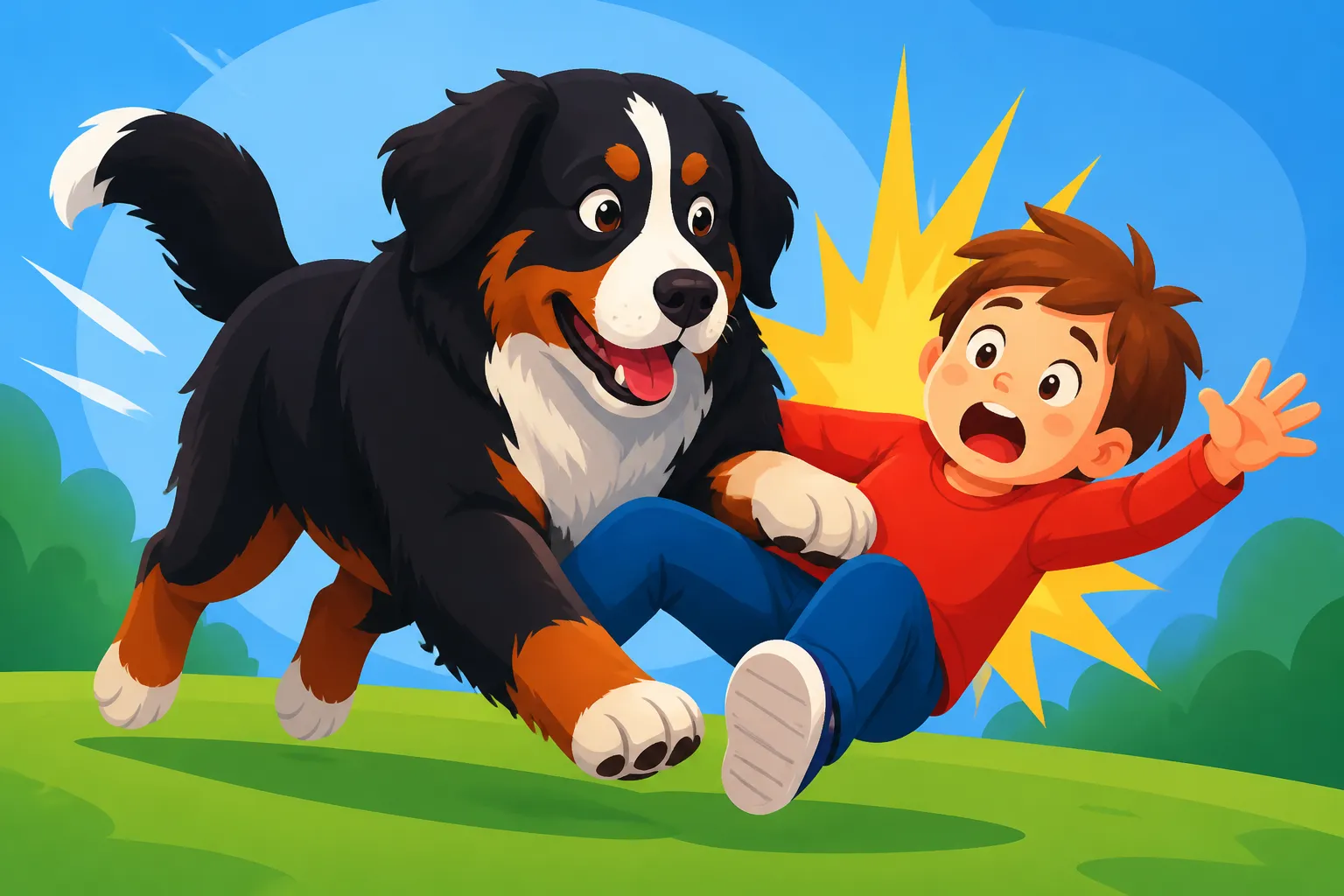
It’s a scenario many Bernese Mountain Dog owners, especially those with young families, dread: a moment of pure, innocent exuberance from your giant, fluffy companion results in a child being accidentally bowled over. That sudden burst of energy, a playful leap, or even just a clumsy lean from a dog that weighs as much as an adult can send a smaller human tumbling, leading to tears, bumps, and understandable worry. It’s not malicious, never, but it is a real problem that can make parents hesitant and children fearful. This guide is all about understanding why your beloved Berner might be prone to such accidental knock-overs and, more importantly, how you can proactively manage their interactions with children to keep everyone safe and happy.
Understanding Why Your Bernese Mountain Dog Might Knock Over a Child
Bernese Mountain Dogs are known for their gentle giants persona, but that doesn't mean they're always aware of their considerable size and strength, especially when excited. Combine their substantial weight with their often playful and sometimes clumsy nature, and you've got a recipe for accidental tumbles, particularly with small children.
The "Forever Puppy" Mentality and Size Disconnect
One of the most endearing, yet sometimes challenging, aspects of a Bernese Mountain Dog is their slow maturation. While they reach their full physical size surprisingly quickly, often by 18-24 months, their mental and emotional development lags behind. It's not uncommon for them to act like big, goofy puppies until they're two or even three years old. This means you have a hundred-pound-plus dog with the energy and sometimes the lack of impulse control of a much smaller, younger dog. They still have that puppy-like urge to jump, pounce, and play with gusto, completely forgetting that they are now the size of a small bear. This disconnect between their physical size and their mental maturity is a huge factor in why they might accidentally knock someone over. They simply don't always understand the impact their mass can have. Think about Why a Bernese Mountain Dog Stays a Puppy Until Three – it’s a long adolescence!
Breed Tendencies: Leaning, Herding, and Enthusiasm
Bernese Mountain Dogs were bred for farm work in the Swiss Alps, which involved tasks like droving cattle and pulling carts. While they weren't strictly herding dogs in the traditional sense like a Border Collie, some of those instincts for moving and positioning livestock can manifest in their interactions with people, especially children who move quickly or erratically. They might try to "gather" or block a child, not out of aggression, but from a misplaced instinct to manage movement.
Then there's the famous "Berner lean." These dogs love to be close to their people, and they often express affection by leaning their entire body weight against you. It's usually a charming trait, but when that lean is applied to a tiny human, it can easily send them off balance. Couple this with their generally enthusiastic and happy-go-lucky nature – they are often thrilled to see you, thrilled to see the kids, thrilled to be part of the action – and that enthusiasm can translate into bounding, jumping, and yes, leaning with too much force. The Bernese Mountain Dog That Leans on Everyone perfectly captures this affectionate, yet sometimes overwhelming, behavior.
Lack of Body Awareness
It’s easy to assume dogs know how big they are, but often, they don't have the same level of body awareness that we do. A large Bernese Mountain Dog might try to squeeze into a space meant for a much smaller dog, or they might pivot quickly without realizing their broad chest or heavy tail is about to connect with something (or someone) in their path. This isn't negligence on their part; it's simply a lack of understanding their own physical footprint in the world. They navigate through life based on their experience, and if they've always been able to charge around without consequence in open spaces, they won't automatically adjust that behavior for a crowded living room or a small child. They aren't intentionally being destructive or dangerous, but their sheer mass makes their unintentional actions impactful.
Preventing Accidental Knock-Overs: Proactive Management and Supervision
The key to preventing these accidental incidents lies in a combination of smart environmental management, educating children, and unwavering supervision. You can't just hope your Berner will "grow out of it" or magically become gentle. It requires deliberate effort from you.
Creating a Safe Environment
Managing the environment is your first line of defense. This means setting up physical barriers and designated spaces to control interactions, especially when you can't offer 100% focused supervision.
- Baby Gates and Playpens: These are invaluable. Use sturdy baby gates to create separate zones for your Bernese Mountain Dog and your children, especially during playtime, meal times, or when children have toys that might excite the dog. If your Berner is still very much in that "forever puppy" stage, a large, sturdy indoor playpen can offer a safe space for either the dog or the child, preventing spontaneous, uncontrolled interactions. You can find excellent, durable options for Crates and Gates for a Bernese Mountain Dog on platforms like Amazon.
- Tethering: Sometimes, you just need your dog to be near you but not on you or the kids. A strong tether can be a lifesaver. Attach it to a sturdy anchor point, like a piece of heavy furniture or a wall anchor, and keep your Berner on a short leash beside you while you supervise children. This allows them to be part of the family activity without having the freedom to move independently and potentially knock someone over. Make sure the tether is long enough for comfort, but short enough to prevent mischief.
- Designated "Dog Zones": Establish clear areas where your Bernese Mountain Dog can relax undisturbed, away from the hustle and bustle of child play. This could be a large, comfortable dog bed in a quiet corner, or even their crate. Teach both your dog and your children that this is the dog's personal space and they should not be disturbed there. This not only prevents knock-overs but also reduces stress for your dog and teaches children respect for animal boundaries.
Teaching Children How to Interact Safely
It's not just about training the dog; it's equally important to train the children. Kids, especially young ones, often don't understand canine body language or appropriate interaction.
- "Be a Tree" or "Be a Rock": Teach children that if a dog gets too excited or approaches them too quickly, they should "be a tree" (stand still, hands at sides, look at their feet) or "be a rock" (curl up on the ground). This prevents them from running, screaming, or flailing, which can further excite a large dog and increase the risk of an accidental collision.
- Gentle Hands Rule: Emphasize gentle petting only. No pulling tails, ears, or riding the dog. Teach them to always ask permission before petting and to pet on the side of the body, not over the head.
- No Running or Roughhousing Around the Dog: This is crucial. Fast movements, loud noises, and playful wrestling among children can easily trigger a Bernese Mountain Dog's play drive or even herding instinct, leading to them joining in a way that’s too rough for small bodies. Keep rough play for times and places where the dog is not present.
- Supervised Interactions Only: Until you are absolutely confident in your Bernese Mountain Dog's behavior and your children's understanding, never leave them unsupervised together, even for a moment. Accidents happen in a flash.
Structured Interactions and Supervision
Deliberately managing how and when your Bernese Mountain Dog and children interact can make a world of difference.
- Short, Positive Sessions: Instead of letting them free-range together, arrange short, supervised sessions where you actively guide their interactions. For example, have your Berner on a leash while your child sits on the floor to offer a treat gently. Reward calm behavior from both dog and child.
- Controlled Entry and Exit: Many accidents happen during greetings. Teach your Bernese Mountain Dog to wait calmly when children enter a room or come home. You might put them on a leash or ask for a "sit-stay" command until the initial excitement passes. This applies equally when children are leaving; an over-eager Berner trying to follow can easily trip a child.
- Reading Body Language: As the adult, you need to become an expert at reading both your dog's and your children's body language. Look for signs of stress or over-excitement in your Berner (lip licking, yawning, stiff body, averting gaze, excessive panting) or signs of fear or overstimulation in your child. Intervene before an incident occurs. Separate them if either party seems uncomfortable or overwhelmed.
Training Strategies for a Well-Mannered Bernese Mountain Dog Around Kids
While management is critical, training provides the foundational skills your Bernese Mountain Dog needs to navigate a busy household safely and politely. Positive reinforcement is your best friend here – Berners are sensitive and respond best to encouragement.
Foundational Obedience and Impulse Control
These are the bedrock of a well-behaved dog, especially one the size of a Bernese Mountain Dog. Without basic commands, you have no way to reliably direct their behavior.
- "Sit" and "Stay": These are indispensable. A solid "sit" can prevent jumping, and a strong "stay" can keep your dog in place while children move around. Practice these commands relentlessly, gradually increasing distractions and duration. Reward heavily for success. You want a "stay" that holds even when a child runs past.
- "Off": This command is specifically for preventing jumping up on people. When your Bernese Mountain Dog jumps, calmly say "off" and lure them back to four paws on the floor. Reward instantly when all four paws are down. Consistency is key. Many owners find Stopping a Bernese Mountain Dog Jumping Up to be a critical skill to master.
- "Leave It": This is a fantastic impulse control command. It teaches your Bernese Mountain Dog to ignore tempting items, or in this case, a child’s toy or even the child themselves, until given permission. Practice with treats on the floor, then toys, then gradually introduce it to interactions with children's items.
- Recall ("Come"): A reliable recall means you can call your Bernese Mountain Dog away from any situation if things start to get too boisterous or if they are headed for a collision. Practice this often in various environments, always making "come" a positive and rewarding experience.
Teaching "Four on the Floor" and Calm Greetings
These specific behaviors are geared directly at preventing knock-overs during interactions.
- "Four on the Floor": This is a simple concept: your dog's paws must stay on the ground. Teach your Bernese Mountain Dog that any interaction with people, especially children, only happens when all four paws are on the ground. If they jump, ignore them or turn your back until they settle. Reward lavishly the moment they keep all four paws down during a greeting. You can enlist the help of family and friends to practice this.
- Polite Greetings: Instead of allowing your Bernese Mountain Dog to rush visitors or children at the door, teach them to sit politely until released. This involves leash control initially, having them sit as someone approaches, and only allowing a calm greeting once they are settled. If they become overexcited, gently guide them back to a sit or a short "stay" before trying again. For general good manners, working on Leash Manners on a Hundred Pound Bernese Mountain Dog can indirectly help here by improving overall control.
Consistent Reinforcement and Positive Training
Bernese Mountain Dogs thrive on positive reinforcement. They are intelligent but can be sensitive, so harsh corrections are counterproductive and can lead to a dog that shuts down or becomes fearful.
- Rewards, Rewards, Rewards: Use high-value treats, praise, and favorite toys to reward desired behaviors. Catch your Bernese Mountain Dog being good – when they lie calmly near a child, when they greet someone with all four paws down, when they choose to settle instead of jumping.
- Short, Fun Training Sessions: Berners can have a relatively short attention span, especially as puppies. Keep training sessions brief (5-10 minutes) and fun, ending on a positive note. This ensures they remain engaged and eager to learn.
- Patience and Consistency: Training a large, sometimes clumsy dog requires immense patience. There will be setbacks. Don't get discouraged. Every member of the household needs to be consistent with rules and commands. If one person allows jumping and another doesn't, your Bernese Mountain Dog will be confused.
- Utilize Training Resources: Online programs can be incredibly helpful for learning effective techniques. BAXTER & Bella, for example, offers comprehensive puppy training programs that cover many of these foundational obedience and impulse control skills, guiding you step-by-step. Their approach often focuses on positive reinforcement, which is ideal for a sensitive breed like the Berner.
When to Seek Professional Help and Specialized Tools
Sometimes, despite your best efforts, managing a large, enthusiastic Bernese Mountain Dog around children can feel overwhelming. Don't hesitate to reach out for additional support.
Recognizing When You Need Extra Support
It's okay to admit you need help. Large dogs present unique challenges, and a Bernese Mountain Dog that consistently knocks over children, even accidentally, can pose a real safety concern.
- Persistent Problems: If, after consistent effort, your Bernese Mountain Dog still struggles with impulse control around children, or if the incidents are increasing in frequency or severity, it's time for professional intervention.
- Fear or Anxiety: If your children are becoming genuinely fearful of the dog, or if the dog is showing signs of stress or anxiety around children (rather than just exuberance), a professional trainer or veterinary behaviorist can help diagnose the underlying issue and develop a tailored plan.
- Lack of Progress: If you feel stuck and aren't seeing progress with your training methods, a professional can offer new techniques, identify potential pitfalls in your approach, and provide hands-on guidance. Look for trainers who specialize in positive reinforcement and understand large breeds. They might even recommend specific classes, which you can budget for by checking resources like Training Class Prices for a Bernese Mountain Dog Puppy.
Using Appropriate Gear for Management
While training is paramount, certain tools can aid in management and safety, especially during the learning phase.
- Front-Clip Harnesses: For a large, strong dog, a front-clip harness can be incredibly helpful for control. Instead of pulling from the back, which can engage their opposition reflex (making them pull harder), a front-clip harness redirects their momentum when they pull, making it easier to guide them and prevent them from dragging you or running into a child. You can find a good selection of Which Harness Controls a Bernese Mountain Dog Best on Amazon.
- Head Halters: For some dogs, a head halter (like a Gentle Leader) offers even greater control by guiding the dog's head. Where the head goes, the body often follows. These can be particularly useful for dogs who are strong pullers or highly reactive. Introduce them slowly and positively, as some dogs initially resist them.
- Long Lines for Controlled Outdoor Play: If your Bernese Mountain Dog has a tendency to get over-excited outdoors or rush towards children at the park, a long line (a very long leash, 15-30 feet) can give them the illusion of freedom while still allowing you to maintain control. This is great for practicing recall and impulse control in a larger, yet still safe, space.
- Sturdy Crates and Pens: Reiterate the use of these tools. A crate isn't a punishment; it's a safe den for your dog and a reliable way to manage their access to certain areas. For example, during a busy family gathering, putting your Berner in their crate with a chew toy can be beneficial for everyone's safety and peace of mind.
Remember, raising a Bernese Mountain Dog alongside children is a journey that requires commitment, consistency, and a deep understanding of your dog's unique needs and personality. By implementing these management and training strategies, you can foster a safe, loving, and harmonious environment for every member of your family, furry or otherwise.
| Behavior Trait | Why It Causes Knock-Overs | Management Strategy | Training Solution |
|---|---|---|---|
| Enthusiastic Greeting | Jumping, rushing, leaning due to excitement. | Leash/gate dog when guests arrive. Keep children away from entry points. | "Sit-Stay" for greetings, "Four on the Floor" command. |
| Lack of Body Awareness | Doesn't realize size, turns quickly, bumps into things. | Supervise all interactions. Provide ample space. | "Back Up," "Place" commands to teach spatial awareness. |
| "Puppy Brain" | Acts young and clumsy despite adult size. | Separate play areas. Tether dog during chaotic times. | Consistent basic obedience, impulse control exercises. |
| Herding/Chasing Instinct | Tries to "gather" or chase running children. | Keep dog on leash/behind barrier when children play. | "Leave It" for running children, strong recall. |
| Affectionate Leaning | Leans with full weight, unbalancing children. | Teach "Off" command for leaning against people. | Redirect leaning to sitting beside you, reward calm contact. |
Disclaimer
This article is for general informational purposes only and does not constitute professional advice. Laws, prices and regulations vary by location and change over time. Consult a qualified professional for guidance on your specific situation.