A Bernese Mountain Dog That Will Not Be Touched
It's incredibly disheartening and confusing when your beloved Bernese Mountain Dog seems to shy away from your touch, or even actively avoids being petted. You bring these magnificent, gentle giants into your home imagining cuddles and close companionship, and then find yourself with a dog that tolerates rather than enjoys physical affection. This guide is here to help you navigate this sensitive issue, explore the underlying reasons for such behavior, and offer compassionate, effective strategies to build a stronger, more trusting relationship with your Berner.
Understanding the Roots of Touch Aversion in Bernese Mountain Dogs
When a Bernese Mountain Dog, a breed known for its generally sweet and devoted nature, displays touch aversion, it's natural to feel perplexed. It's crucial to remember that this behavior isn't about rejection; it's a form of communication. Our job as their guardians is to listen and understand what they're trying to tell us. There are several common reasons why a Berner might not want to be touched, ranging from early experiences to individual personality traits.
Puppyhood Socialization Gaps
The earliest weeks and months of a Bernese Mountain Dog's life are incredibly formative. During this critical socialization window, puppies learn what is safe, what is normal, and how to interact with the world around them. If a puppy didn't receive consistent, positive exposure to various types of touch from a young age – being held, gently petted, having their paws and ears handled, or even just being stroked by different people – they might develop an apprehension towards touch later on.
Imagine a scenario where a Bernese Mountain Dog puppy was raised in a busy environment but perhaps wasn't regularly handled by various people, or maybe every touch they received was rushed or slightly uncomfortable. They didn't learn to associate human hands with pleasant sensations. Later, as they grow into a large, powerful adult, that lingering uncertainty or mild fear manifests as avoidance. It's not that they don't love you; it's that the physical act of being touched simply isn't something they've learned to enjoy or trust fully. This isn't just about people; exposure to different textures, sounds, and even other friendly dogs is vital for a well-adjusted Berner. Think about Socializing a Reserved Bernese Mountain Dog Puppy and how impactful those early months are.
Past Trauma or Negative Associations
Unfortunately, sometimes a Bernese Mountain Dog's reluctance to be touched stems from past negative experiences. This can be particularly true for rescue Berners whose history might be unknown. A previous owner could have handled them roughly, used physical punishment, or perhaps they endured painful medical procedures that made them wary of being restrained or touched in certain areas. Even an accidental stepping on a paw, if it caused significant pain, can create a lasting negative association.
Consider a Berner who had a painful ear infection as a young dog. Every time someone touched their ears, even with the best intentions, it caused discomfort. Over time, they might generalize this to all ear touches, or even any touch near their head. It's a natural protective mechanism. They remember the pain, and they've learned that touch can sometimes lead to unpleasant sensations. This isn't a cognitive choice on their part; it's an ingrained response aimed at self-preservation. Understanding that their avoidance might be rooted in a genuine fear of pain, rather than simple stubbornness, is key to developing empathy and a gentle approach.
Individual Temperament and Sensitivity
Just like people, every Bernese Mountain Dog has a unique personality and temperament. Some Berners are naturally more outgoing and crave physical affection, while others are more reserved, sensitive, or simply prefer less direct physical contact. This isn't a fault; it's just who they are. They might express their affection in other ways, like leaning against you, following you from room to room, or gently nudging your hand with their nose.
I've known Berners who were absolute Velcro dogs, always wanting to be in contact, and others who were happy to be near you but preferred not to be petted for long stretches. One Berner I knew, a beautiful girl named Willow, loved her owners dearly but would always move away after a few strokes, then return to lie at their feet. It was her way of saying, "I love you, but I need my space." For these sensitive souls, repetitive or forceful petting can be overwhelming. They might become overstimulated quickly, leading them to retreat. It's also worth remembering that Whether a Bernese Mountain Dog Hides Discomfort is a real trait, meaning subtle signs of unease might be missed until they resort to outright avoidance.
Recognizing the Subtle Signs of Discomfort
A Bernese Mountain Dog who doesn't want to be touched won't always give obvious signals like growling or snapping. In fact, most will try to communicate their discomfort in much subtler ways long before resorting to anything overt. Learning to read these nuanced cues is vital for respecting their boundaries and preventing escalation of their anxiety.
Body Language Cues Beyond Growling
Long before a Berner growls or air-snaps (which are actually incredibly generous warnings), they communicate volumes with their body. Look for signs like a slight stiffening of their body, a tail that stops wagging or tucks slightly, lip licking, yawning (when not tired), or a sudden turn of the head away from your hand. Their eyes might become "soft" or show whale eye (where the whites of their eyes are visible at the corners). Even a subtle shift in weight, as if preparing to move away, is a sign.
Think about approaching your Berner for a pat. If their ears flatten slightly, their pupils dilate a little, or they hold their breath for a moment before letting out a small sigh, these are all indicators that they're not entirely comfortable. They might lean away slightly when you reach for them, or subtly shift their position to create more distance. These are polite requests for space. It's easy to miss these fleeting signals, especially if you're excited to greet them, but training yourself to observe these subtle cues will make a huge difference in how your dog perceives your interactions.
The "Freeze" and Avoidance Tactics
Sometimes a Bernese Mountain Dog might "freeze" in place when approached for a touch they don't want. This isn't an invitation; it's a common stress response where a dog becomes immobile in the hope that the perceived threat (in this case, unwanted touch) will pass. They might stand perfectly still, looking tense, perhaps with a closed mouth and lowered head. This freeze can be misinterpreted as compliance or even enjoyment, but it's actually a sign of significant discomfort.
More commonly, a touch-averse Berner will simply try to avoid the interaction altogether. They might walk away when you approach, turn their head, duck under your hand, or get up and move to another room. If you're calling them over for a cuddle and they hesitate, approach slowly, or stop just out of reach, they're telling you something. This isn't rudeness; it's an attempt to communicate their boundaries without resorting to more confrontational methods. It’s their way of saying, “Please don’t,” in the gentlest possible terms. Recognizing Reading Fear in a Bernese Mountain Dog That Retreats is crucial here; their retreat is a clear message.
Differentiating Aversion from Aggression
It’s important to understand that touch aversion is not necessarily aggression, though it can escalate if a dog's subtle warnings are repeatedly ignored. Aversion means they simply don't like the sensation or the invasion of their personal space. Aggression, on the other hand, involves a perceived threat and a readiness to defend themselves, potentially with a bite. A dog showing aversion might move away, freeze, or give soft warnings. A truly aggressive dog might growl, snarl, lunge, or snap with a higher intensity and a clear intent to create distance or cause harm.
However, a dog that consistently has its boundaries violated, even gently, can eventually learn that their polite signals are ineffective. In such cases, they might escalate to more explicit warnings or even a bite as a last resort to protect themselves. This is why understanding and respecting those subtle signs is so critical. You want to prevent your Berner from ever feeling like they have to resort to aggression to make their point. If you see signs that cross the line from aversion to aggression, such as consistent growling or snapping, it's absolutely time to seek professional help.
Building Trust and Positive Associations with Touch
The goal isn't to force your Bernese Mountain Dog to love being touched, but rather to teach them that human touch can be a neutral or even pleasant experience, and that they always have a choice. This requires immense patience, consistency, and a commitment to positive reinforcement.
The Art of Consent-Based Handling
Consent-based handling means giving your Bernese Mountain Dog a choice about physical interaction. Instead of just reaching out and petting them, offer your hand slowly, observe their reaction, and only proceed if they lean in, nudge your hand, or show other positive signals. If they pull back, turn their head, or move away, respect that. It’s their choice. This approach builds trust by showing them that you will listen to and honor their boundaries.
A simple technique is the "pet and pause." Gently touch your Berner in an area they seem most tolerant of (often the chest or shoulder, rather than the top of the head). Pet for a few seconds, then pause. Does your Berner lean into your hand? Nudge you for more? If so, continue for a few more seconds. If they lean away, tense up, or look uncomfortable, stop. This teaches them that they have control, and that touch doesn't last forever if they don't like it. Over time, many dogs start to initiate contact more readily when they know they can end it whenever they choose. This is an essential part of Training a Bernese Mountain Dog Without Breaking It – building on trust, not force.
Using High-Value Rewards and Gradual Desensitization
To change your Bernese Mountain Dog's emotional response to touch, you need to pair touch with something incredibly positive. High-value treats (think cooked chicken, cheese, or special training treats you can find on Amazon) are your best friend here. Start by touching your Berner in the least sensitive area (e.g., chest or side) for just a fraction of a second, then immediately give a treat. Repeat this many times, gradually increasing the duration of the touch and slowly moving to slightly more sensitive areas if your dog remains comfortable.
This process, called desensitization and counter-conditioning, aims to change their emotional response from "touch = uncomfortable" to "touch = yummy treat!" Keep sessions short, positive, and always end before your dog shows signs of discomfort. Never force a touch if your dog is actively trying to get away. The moment you see any stress, take a step back and make the next interaction even shorter or easier. You could even use an online resource like BAXTER & Bella, which often emphasizes these positive, gentle techniques for building a strong foundation and addressing behavioral challenges.
Creating a Safe and Predictable Environment
A Bernese Mountain Dog who is reluctant to be touched often thrives in an environment where they feel safe, secure, and understand what to expect. This means establishing clear routines, providing a quiet space they can retreat to, and ensuring all interactions are calm and predictable. Avoid sudden movements, loud noises, or chaotic situations, especially when initially working on touch.
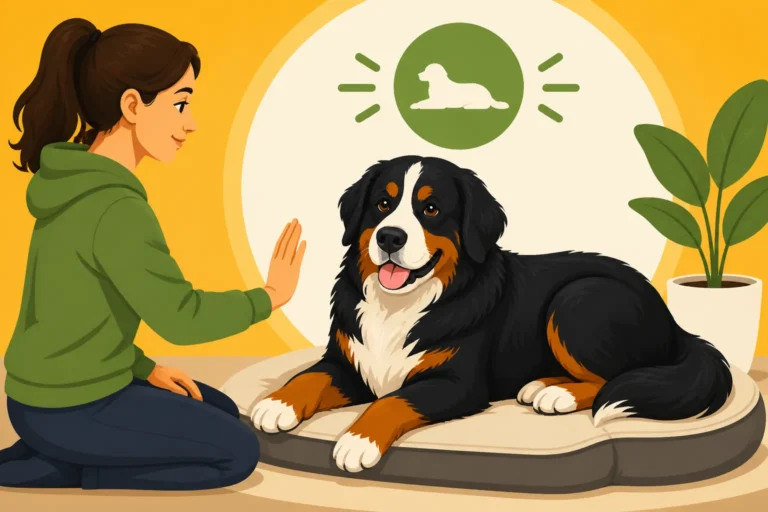
Designate a "safe zone" for your Berner – perhaps a comfy bed in a quiet corner of a room – where they know they won't be bothered. Teach children and guests to respect this space and your dog's boundaries. Always ask your Berner to come to you for attention rather than cornering them. If you need to physically guide them, use a leash or harness (if they are comfortable with it) rather than grabbing their collar or body, especially if those areas are sensitive. Knowing they have control and a predictable routine can dramatically reduce anxiety around physical contact.
Practical Strategies for Everyday Interactions
Life with a Bernese Mountain Dog involves a lot of routine handling, from grooming to vet visits. For a touch-averse Berner, these necessary interactions can be a source of immense stress. Proactive planning and a calm approach are essential to make these experiences tolerable, and ideally, even positive.
Grooming and Vet Visits: Making Them Tolerable
Grooming a Bernese Mountain Dog is a regular, non-negotiable task due to their long, thick coats. For a dog that doesn't like to be touched, this can be a huge challenge. Start by breaking down grooming tasks into tiny steps. Instead of a full brush-out, begin by just touching the brush to their least sensitive area for a second, then reward. Gradually increase the duration and coverage. Use a soft brush initially and progress to more effective tools as they tolerate it.
For vet visits, talk to your veterinarian about strategies. They might recommend "happy visits" where your Berner just comes in for treats and positive attention, without any procedures. Practice handling at home that mimics vet exams – gently touching paws, ears, opening their mouth, always paired with high-value rewards. Muzzles, when introduced positively, can also be a safety tool for everyone involved, reducing stress for the dog by knowing they can't accidentally nip. Consider how to best achieve Trimming Nails on a Struggling Bernese Mountain Dog or Teaching a Bernese Mountain Dog to Stand for Grooming with patience and rewards. Remember that Muzzling a Frightened Bernese Mountain Dog at the Clinic can be done humanely and is a tool, not a punishment.
Harnessing and Leash Work: Minimizing Stress
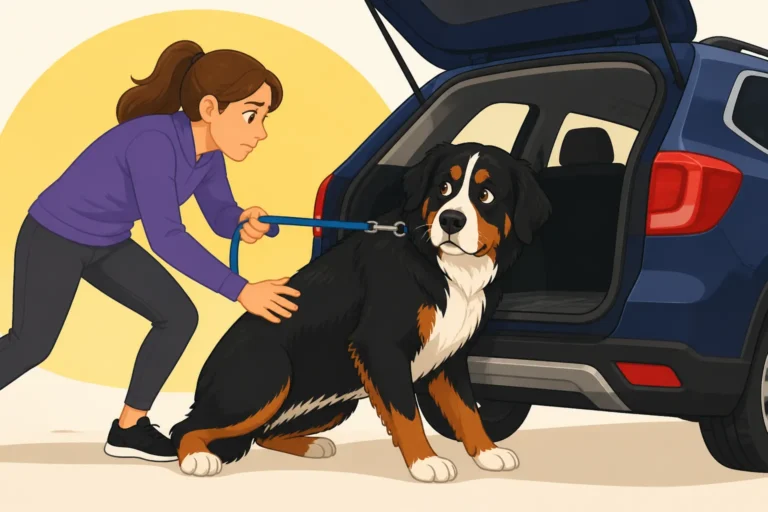
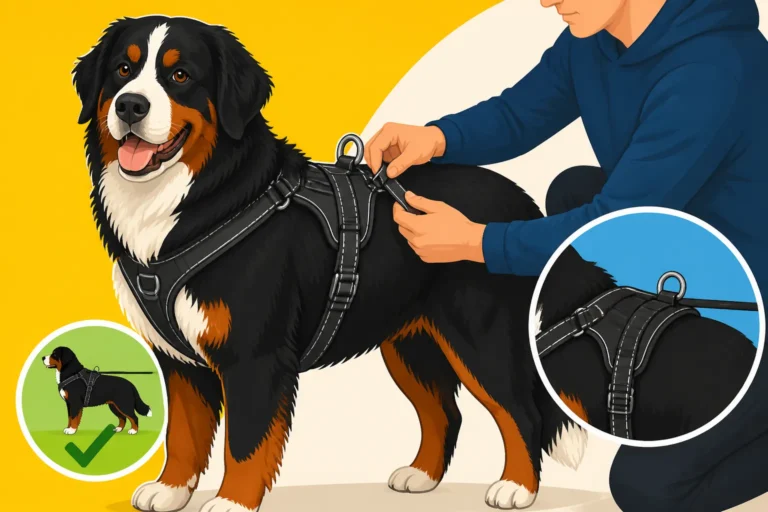
Putting on a harness or collar, or attaching a leash, involves direct physical contact. For a touch-averse Bernese Mountain Dog, this can be a point of friction. Again, positive association is key. Instead of just grabbing the harness and putting it on, present the harness with a treat. Let them sniff it, then reward. Gradually work up to them putting their head through, then fastening a buckle, always rewarding each step. If they struggle with a certain type of harness, explore alternatives like front-clip harnesses which might be easier to put on without too much fuss. Many good options for harnesses and treats can be found on Amazon.
Once the harness is on, associate it with enjoyable activities like going for a walk or playing in the yard. If your Berner resists the leash, don't drag them. Instead, attach the leash, give a treat, take a step, give another treat, and build up a positive routine. The goal is for them to see the harness and leash as signals for good things to come, rather than something they have to endure. For a hundred-pound dog, Leash Manners on a Hundred Pound Bernese Mountain Dog is important not just for control, but for minimizing pressure on the dog.
Managing Guest Interactions and Public Spaces
It’s natural for people to want to pet a beautiful Bernese Mountain Dog, but for a touch-averse Berner, this can be very overwhelming. When guests visit, explain your dog's boundaries clearly. Ask them not to approach or try to pet your dog directly. Instead, they can toss treats or simply ignore your Berner, allowing the dog to approach them if and when they feel comfortable. This helps your dog feel safe and in control.
In public spaces, be prepared to advocate for your dog. A vest that says "Do Not Pet" or "Give Me Space" can be incredibly helpful. If someone approaches, politely explain that your dog prefers not to be petted. Focus on calm, predictable walks where your dog feels secure. These measures aren't about being antisocial; they're about protecting your Bernese Mountain Dog's emotional well-being and preventing stressful encounters that could set back your training progress. It's about Teaching Strangers How to Greet a Bernese Mountain Dog effectively.
| Situation | Do's | Don'ts |
|---|---|---|
| Initiating Touch | Offer hand, let dog approach, "pet and pause" | Reach over head, hug, force interaction |
| Grooming/Handling | Short sessions, high-value treats, positive talk | Push through resistance, punish struggling |
| Guests/Strangers | Explain boundaries, ask guests to ignore/toss treats | Allow uncontrolled petting, force introductions |
| Vet Visits | Happy visits, calm demeanor, advocate for dog | Rush, scold, hold dog down without consent |
| General Interaction | Observe body language, respect space, build trust | Ignore signals, make assumptions, demand affection |
When to Seek Professional Guidance
While the strategies above can make a significant difference, there are times when the complexity of touch aversion, especially if it verges on fear or aggression, warrants professional intervention. Knowing when to call in an expert is a sign of responsible pet ownership.
Identifying When You Need a Certified Professional
If your Bernese Mountain Dog's touch aversion is severe, doesn't improve with consistent positive reinforcement, or if you notice any signs of aggression (even subtle growling, snapping, or biting attempts), it's time to seek professional help. Similarly, if the behavior is causing significant stress for you or your dog, or if it's impacting their quality of life (e.g., they can't enjoy walks because they're constantly worried about being approached), a professional can provide tailored guidance.
A professional can help identify underlying medical conditions that might be causing pain or discomfort, which is a common reason for touch aversion. For example, joint pain, ear infections, or even skin issues under their thick coat could make touching painful. A vet check-up, including a look at The Bernese Mountain Dog Health Panel, is always a good first step to rule out physical causes before embarking on behavioral modification. If a physical cause is ruled out, a behavior specialist can observe your specific interactions and dog to pinpoint precise triggers and develop a safe, effective plan.
Choosing the Right Trainer or Behaviorist
When looking for a professional, it's crucial to choose someone certified in positive reinforcement methods. Look for terms like "Certified Professional Dog Trainer (CPDT-KA)," "Certified Dog Behavior Consultant (CDBC)," or "Veterinary Behaviorist (DACVB)." Avoid trainers who advocate for aversive tools or methods (e.g., choke chains, prong collars, e-collars, alpha rolling, dominance theory). These methods can severely damage your dog's trust and escalate fear-based behaviors, especially in a sensitive breed like the Bernese Mountain Dog.
A good professional will work with you to understand the specific nuances of your dog's behavior, create a personalized training plan, and teach you how to implement it safely and effectively. They should focus on building trust and positive associations, rather than suppressing symptoms through force. They should also be patient and empathetic, understanding that this is a process that takes time and dedication.
Understanding the Long-Term Commitment
Helping a touch-averse Bernese Mountain Dog become more comfortable with physical interaction is a journey, not a sprint. It requires a long-term commitment to understanding your dog's communication, respecting their boundaries, and consistently using positive reinforcement. There might be setbacks, and some dogs may never become the "cuddle bugs" you initially envisioned, and that's okay. The goal is for them to feel safe and comfortable in their own skin, and in their home with you.
By consistently applying gentle techniques, advocating for your dog, and seeking professional help when needed, you can build a deeper, more trusting relationship based on mutual respect and understanding. Your Bernese Mountain Dog might show their affection in unique ways, and learning to appreciate those expressions will enrich your bond far more than forcing them into uncomfortable physical contact. The effort you put into understanding and accommodating them will be a testament to your love, ensuring a happier, less stressed life for your cherished Berner.
Disclaimer
This article is for general informational purposes only and does not constitute professional advice. Laws, prices and regulations vary by location and change over time. Consult a qualified professional for guidance on your specific situation.