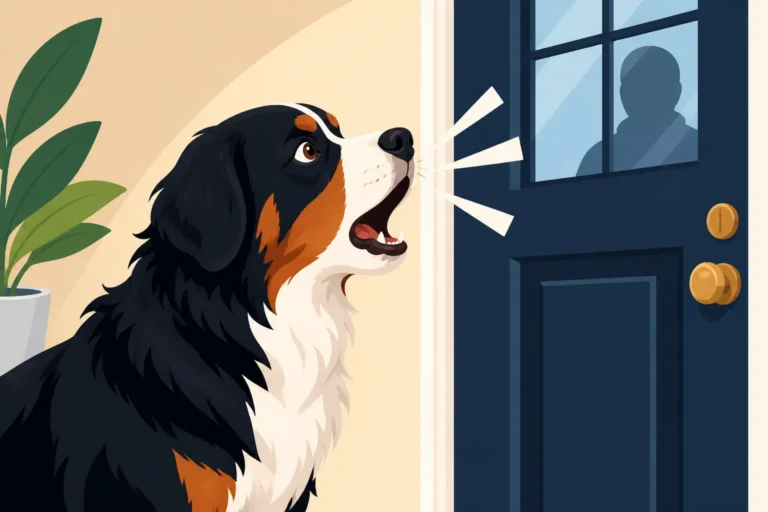
Howling From a Bernese Mountain Dog Left Behind
That heartbreaking sound – a Bernese Mountain Dog's mournful howl echoing through the empty house when you've just stepped out the door – is one of the toughest challenges a Berner parent can face. It's a sound that tugs at your heartstrings and leaves you riddled with guilt, wondering what you could possibly do to ease their distress. This guide is here to walk you through understanding why your beloved Berner might be howling when left behind and, more importantly, what actionable steps you can take to bring peace to your home and comfort to your cherished companion.
Understanding Why Your Bernese Mountain Dog Howls When Left Alone
It’s easy to dismiss a dog’s howling as just being "naughty" or "stubborn," but with a Bernese Mountain Dog, it's almost never that simple. Their deep-seated nature and sensitive dispositions mean that vocalizations like howling often stem from genuine emotional distress, not defiance. Understanding the root cause is the first, most crucial step in helping them.
The Deep-Rooted Need for Companionship
Bernese Mountain Dogs were bred for partnership. Their ancestors weren't solitary guardians; they worked alongside farmers in the Swiss Alps, herding livestock, pulling carts, and serving as faithful companions. This history has ingrained in them a profound need for close human interaction and companionship. When you leave, even if it's just for a few minutes, their ancient instincts might kick in, telling them they've been separated from their "pack." They are truly devoted dogs, and that devotion comes with a strong desire to be near their people.
Imagine for a moment their lineage: a sturdy, loyal dog trotting alongside a farmer, present for every chore, every journey. They communicated with their human, with the cattle, with other farm dogs. Suddenly, that constant presence is gone. For a Berner, being alone isn't just quiet time; it can feel like a profound disruption to their very being. They're not being manipulative; they're communicating their distress in the most innate way they know how, much like their wild ancestors would call out to locate lost pack members.
Anxiety and Fear: More Than Just Being Lonely
While a certain level of loneliness can certainly contribute to howling, for many Bernese Mountain Dogs, it escalates quickly into true separation anxiety. This isn't just about missing you; it's about a deep, often panicked, fear that you might not return, or that they are unsafe without you. This level of anxiety is utterly heartbreaking to witness and even more difficult to manage. It's a cruel twist when you just want to provide them with the best life, but your necessary absence causes such profound distress.
The howling is often just one symptom of this anxiety. You might notice other tell-tale signs: pacing near the door, excessive drooling, destructive chewing of doorframes or furniture, or even urinating or defecating indoors, despite being perfectly house-trained. These aren't acts of spite; they are clear indicators of a dog in genuine emotional turmoil. It's a far cry from a dog that's simply a bit bored. This distinction is vital because addressing anxiety requires a different approach than simply providing more toys. Many owners feel frustrated, and even a little guilty, wondering if they’ve done something wrong, but it’s important to remember that separation anxiety is a complex behavioral issue that can affect any dog, regardless of how much love and care they receive.
Learned Behavior and Attention Seeking
While often rooted in deeper emotional needs, sometimes howling can become a learned behavior. If your Bernese Mountain Dog discovers that howling, even for a short period, results in you returning, opening the door, or rushing back inside, they might start to associate that vocalization with your reappearance. It doesn't mean they're not anxious initially, but the behavior can be reinforced, making it more persistent. It's a subtle but powerful feedback loop.
This isn't to say your Berner is trying to "trick" you, but rather that dogs are incredibly intelligent and observant. If they learn that a specific action yields a desired outcome (your return), they're likely to repeat it. This is particularly challenging for owners because it blurs the lines between genuine distress and a learned coping mechanism that can sometimes appear manipulative. Differentiating between the two requires careful observation and consistency in your responses. If you consistently return while they are howling, even to scold them, you're inadvertently reinforcing the idea that howling gets your attention.
Identifying the Triggers and Severity of Howling
Before you can effectively address your Berner's howling, you need to become a bit of a detective. Understanding exactly when and why the howling starts, and how severe it truly is, will guide your intervention strategies. It's not always as simple as "I leave, they howl"; there are often subtle cues and patterns at play.
Observing Your Bernese Mountain Dog's Behavior Before You Leave
Dogs are incredibly astute observers of routine. They pick up on "pre-departure cues" – the jingle of your keys, putting on your coat, grabbing your bag, even just heading towards the door. For a Bernese Mountain Dog prone to separation anxiety, these cues can trigger an escalation of distress before you even walk out. You might notice them start to pant, pace, follow you relentlessly, or even whine softly as you go through your leaving ritual.
Setting up a simple camera (many affordable options are available on Amazon) to record your dog's behavior once you've left can provide invaluable insight. Does the howling start immediately, or after a few minutes? Is it constant, or does it come in waves? Does it accompany destructive behavior or house-soiling? This footage can help you pinpoint the exact onset of their distress and confirm other anxiety-related actions that you wouldn't otherwise see. This objective data helps you understand the full picture, allowing you to tailor your approach more effectively. A consistent routine around departure, where possible, can also help mitigate some of the anticipatory anxiety, so your dog knows what to expect, even if they don't love it.
The Impact of Environment and Routine Changes
Bernese Mountain Dogs thrive on predictability and stability. They are sensitive souls, and significant changes in their environment or daily routine can be major stressors that exacerbate separation-related issues. Moving to a new home, a new person joining or leaving the household, changes in your work schedule (meaning longer or different periods of alone time), or even just rearranging furniture can throw a sensitive Berner off balance.
Consider how a move might affect them: a familiar house holds familiar smells, sounds, and territories. Suddenly, they're in a new space, potentially with unfamiliar noises outside, different light patterns, and new boundaries. This can be unsettling for any dog, but particularly for a breed that values security and routine. Even seemingly minor shifts, like changing the time you feed them or altering their walk schedule, can contribute to a feeling of insecurity, which in turn can manifest as increased anxiety and vocalization when left alone. A stable environment helps build confidence, and disruptions can easily chip away at that confidence.
Differentiating Normal Vocalization from Distress
It's important to distinguish between a Bernese Mountain Dog's natural vocalizations and genuine distress howling. Berners, like all dogs, will bark or whine for various reasons – to alert you to something outside, to express excitement, or sometimes even just to "talk." However, distress howling typically has a distinct, often frantic, urgent quality to it. It's usually prolonged, repetitive, and may be accompanied by other behavioral signs of anxiety.
If your dog howls for a minute when you first leave, then settles, it might be an expression of momentary displeasure rather than deep panic. But if the howling continues unabated for extended periods, or if it's coupled with destruction, frantic pacing, drooling, or house-soiling, then you are almost certainly dealing with significant separation anxiety. A dog that is merely bored might chew a toy, but a dog in distress will often try to chew its way out of a crate or destroy doorframes, indicating a panic response. Understanding this difference is crucial for choosing the right path forward, as merely distracting a truly distressed dog won't be enough. For more on how they cope alone, you might want to read The Bernese Mountain Dog That Cannot Bear Being Left.
Practical Strategies to Help Your Bernese Mountain Dog Cope
Once you have a clearer picture of your Berner's howling triggers and severity, you can start implementing practical strategies. This process requires patience, consistency, and a huge dose of empathy. Remember, you're not punishing a bad behavior; you're helping your sensitive dog overcome a genuine fear.
Gradual Desensitization and Counter-Conditioning
This is the cornerstone of addressing separation anxiety. The goal is to gradually accustom your Bernese Mountain Dog to your absence, starting with extremely short periods, and counter-condition their negative associations with your departure. Instead of feeling panic, you want them to associate your leaving with something positive.
Start with tiny steps:
- Practice Pre-Departure Cues Without Leaving: Pick up your keys, put on your coat, but then sit back down. Repeat this multiple times a day without actually going anywhere. This helps to desensitize your dog to these triggers, breaking the association with your imminent departure.
- Short Absences: Start by leaving for literally a few seconds. Walk out the door, close it, and immediately come back in before your dog has a chance to howl. Reward them calmly when you return, ideally for quiet behavior. Repeat this many times.
- Gradual Increase: Slowly, and I mean slowly, increase the duration of your absence. Go from seconds to a minute, then two, then five, and so on. The key is to stay below your dog's "threshold" – the point at which they start to become anxious and howl. If they howl, you’ve pushed too far, too fast. Next time, go back to a shorter duration.
- Positive Association: Each time you leave, give your Berner a high-value, long-lasting treat or a puzzle toy stuffed with something delicious (many options are available on Amazon that can keep a big dog occupied). This helps to create a positive association with your departure. They get something wonderful when you leave! This strategy is about changing their emotional response from fear to a more neutral or even positive expectation. For more insights on building confidence through training, check out Teaching a Bernese Mountain Dog to Settle.
Creating a Safe and Comforting Space
Your Bernese Mountain Dog needs a place where they feel secure and relaxed when you're not around. This might be a crate, if they are positively conditioned to it, or a specific room in the house. The goal is to make this space a sanctuary, not a punishment zone. Ensure it’s comfortable, with a soft bed, fresh water, and a favorite chew toy.
Consider using calming aids. Dog-appeasing pheromone diffusers can sometimes help create a more serene atmosphere, mimicking the natural calming pheromones a mother dog releases. Calming music or white noise machines can also block out external triggers that might cause your dog to react. Some owners find that leaving a piece of clothing with their scent can provide comfort. The idea is to reduce sensory input that might trigger anxiety and increase elements that promote relaxation. Remember that for some Berners, particularly those with strong separation anxiety, simply having a comfy bed isn’t enough if the underlying fear isn’t addressed. However, it’s a crucial component in their overall sense of security. If you're considering crate training, our guide on Crate Training an Adult Bernese Mountain Dog can offer valuable tips.
Enrichment and Exercise Before Alone Time
A tired Berner is often a more content Berner, especially when left alone. Mental and physical stimulation are incredibly important for this breed, not just for their physical health but for their emotional well-being. Before you plan to leave, make sure your Bernese Mountain Dog gets plenty of exercise. A long walk, a good play session in the yard, or even a vigorous game of fetch can help burn off excess energy and make them more inclined to rest when you're gone.
Beyond physical exercise, mental enrichment is key. Engage their minds with training sessions, puzzle toys, or even a sniff walk where they can truly engage their powerful sense of smell. A dog whose brain has been worked is often as tired as one whose body has been exercised. Leaving them with a challenging puzzle toy or a KONG filled with frozen peanut butter or wet food can keep them happily occupied for a significant period after you leave, diverting their attention from your absence. This isn't a quick fix for severe anxiety, but it’s a vital component of managing energy levels and providing constructive outlets for their natural drives. For ideas on how to keep training fun and effective, consider reading Training Sessions Short Enough for a Bernese Mountain Dog.
Seeking Professional Help and Considering Other Options
Sometimes, despite your best efforts, your Bernese Mountain Dog's howling and anxiety persist. It's crucial to understand that this isn't a reflection of your failure as an owner; separation anxiety can be a deeply ingrained and complex issue. At this point, it's time to consider bringing in the experts and exploring all available avenues.
When to Call in a Professional Trainer or Behaviorist
If your Bernese Mountain Dog's anxiety manifests beyond just howling – think destructive chewing that damages your home, attempts to escape their enclosure leading to injury, self-mutilation (like excessive licking or chewing paws), or persistent house-soiling despite being fully trained – then it's time to seek professional help. These behaviors indicate a severe level of distress that requires targeted intervention. A certified professional dog trainer specializing in separation anxiety, or a veterinary behaviorist, can provide a tailored plan that you might not be able to develop on your own.
A professional will be able to accurately diagnose the severity of the anxiety, rule out any underlying medical conditions, and guide you through advanced desensitization and counter-conditioning protocols. They can observe behaviors you might miss and offer strategies specific to your Berner's personality and triggers. Don't view this as admitting defeat; view it as providing your beloved dog with the highest level of care and expertise they deserve to overcome a debilitating fear. Working with an expert can significantly reduce your stress and accelerate your dog's progress.
Exploring Calming Aids and Veterinary Consultations
For moderate to severe cases of separation anxiety, consulting your veterinarian is a critical step. Your vet can rule out any physical ailments that might be contributing to the anxiety or making it worse. They can also discuss various calming aids, from over-the-counter supplements to prescription medications. Supplements often include ingredients like L-theanine, tryptophan, or various herbal blends that promote relaxation. These can be found through reputable pet supply retailers and even online resources. Some training platforms, like BAXTER & Bella, offer comprehensive resources and support that might incorporate discussions around such aids in conjunction with behavioral training.
Prescription medications, when used under veterinary guidance, are not a "cure-all" but can be incredibly helpful in conjunction with behavioral modification. They work by helping to reduce your dog's overall anxiety levels, making them more receptive to learning and less likely to react with panic during your training sessions. The goal is to use medication as a tool to open a window for behavior modification, rather than a standalone solution. It’s a conversation worth having with your vet, especially if your Berner is truly suffering.
Managing Your Own Expectations and Patience
Helping a Bernese Mountain Dog overcome separation anxiety is a journey, not a sprint. It takes immense patience, dedication, and consistency from your end. There will be good days and bad days, and setbacks are a normal part of the process. It's easy to get discouraged when you feel like you're not making progress, or when a perfectly calm period is suddenly followed by a regression.
Remember to celebrate the small victories: a minute longer alone without howling, a less frantic departure, a quieter return. Your Berner's progress won't be linear, and that’s okay. Focus on incremental improvements and maintain a positive, reassuring attitude towards your dog. Your calm demeanor can have a profound impact on their emotional state. This is an investment in their long-term well-being and your shared peace of mind. Continuing to strengthen your bond and providing plenty of positive interaction when you are home will also bolster their confidence. Our article, Leaving the House Without Upsetting a Bernese Mountain Dog, dives deeper into building this confidence.
Here’s a quick overview of some common triggers and strategies:
| Trigger | Potential Symptoms | Strategies |
|---|---|---|
| Owner Departure Cues | Pacing, panting, whining, following you around. | Desensitize to cues (practice leaving ritual without actually leaving). |
| Immediate Alone Time | Howling, barking, scratching at doors, destructive chewing. | Gradual desensitization, starting with seconds of absence. |
| Lack of Mental/Physical Stimulation | Restlessness, chewing inappropriate items, sustained vocalization. | Increase exercise, provide puzzle toys, offer training sessions before leaving. |
| Sudden Routine Changes | Increased anxiety, house-soiling, persistent howling. | Re-establish consistent routines, provide comfort items, monitor via camera. |
| External Stimuli | Barking at noises outside, reactivity to passersby. | Use white noise, calming music, or keep curtains closed to reduce triggers. |
| Underlying Anxiety/Fear | Trembling, excessive drooling, self-harm, frantic escape attempts. | Consult a vet/behaviorist, consider medication alongside training. |
Disclaimer
This article is for general informational purposes only and does not constitute professional advice. Laws, prices and regulations vary by location and change over time. Consult a qualified professional for guidance on your specific situation.