What a Draft Test Asks of a Bernese Mountain Dog
Many Bernese Mountain Dog owners are captivated by the breed's heritage as a draft dog, eager to explore this unique skill, but often feel intimidated by the official requirements. A draft test is a fantastic way to honor their working lineage, but understanding precisely what’s expected can feel overwhelming. This guide will meticulously break down the components of a draft test, detailing the skills, temperament, and preparation needed for a Bernese Mountain Dog to succeed.
Understanding the Purpose of a Draft Test
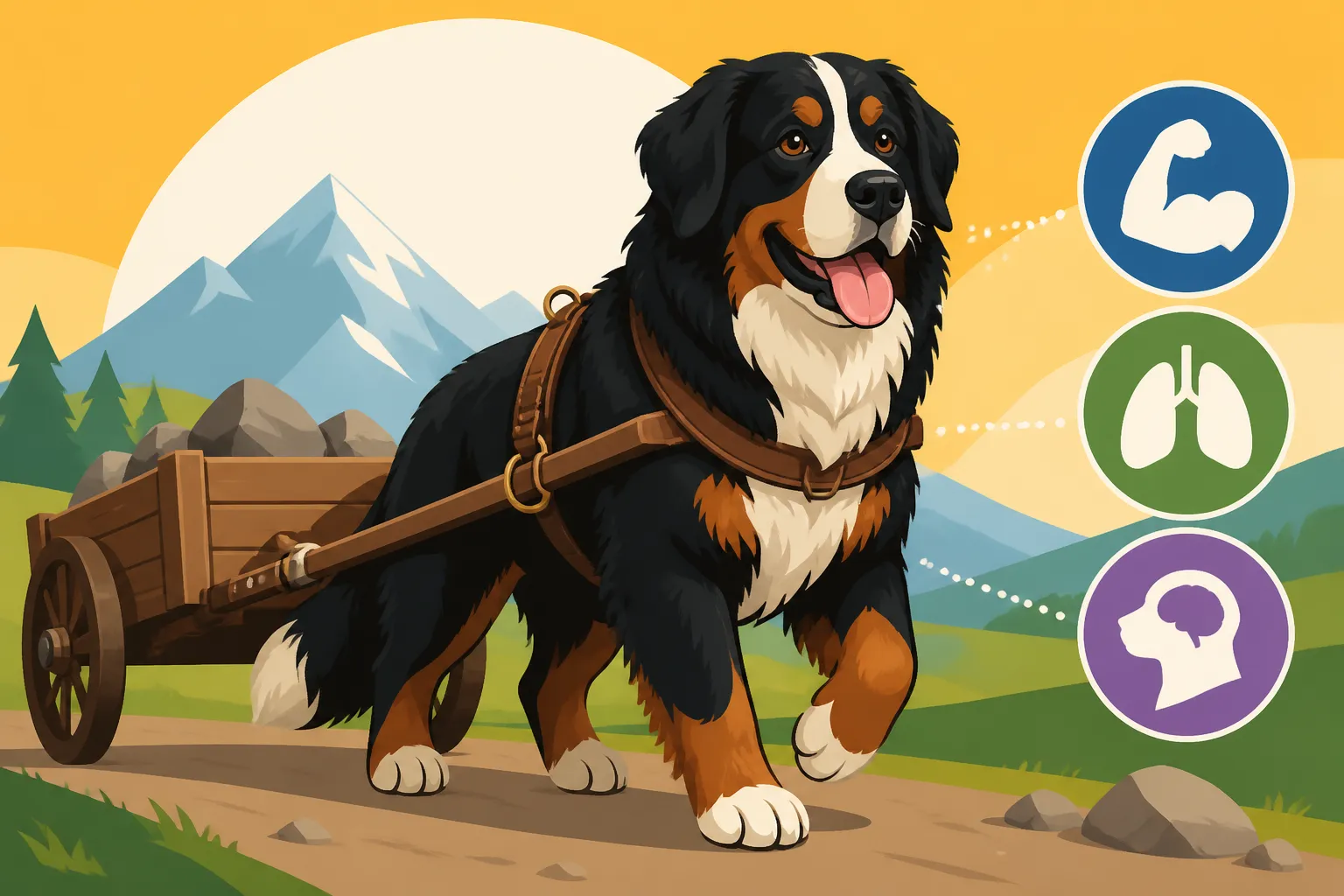
The idea of a magnificent Bernese Mountain Dog pulling a cart evokes images of their heritage in the Swiss Alps, moving goods and assisting farmers. Draft tests aren't just a fun activity; they are a direct nod to this history, designed to assess a Berner's ability and willingness to perform its traditional work in a controlled, safe environment. It’s a way to ensure that these noble dogs can still engage in the work they were originally bred for, even if the modern world no longer requires them to haul milk to market.
Historical Roots of Bernese Mountain Dog Draft Work
Originally, Bernese Mountain Dogs, or Berner Sennenhund, were versatile farm dogs. They herded cattle, guarded property, and, crucially, pulled carts laden with milk, cheese, and other farm products to market. These dogs were the tractors and delivery trucks of their day, indispensable partners to Swiss farmers navigating mountain paths. The ability to pull a cart was a core part of their utility and livelihood, making them a truly functional breed. It wasn't just about strength, but also temperament – a dog that could calmly navigate busy village streets while pulling a load. What a Bernese Mountain Dog Did on a Swiss Farm speaks more to their historical role.
In modern times, while most Berners don't have to haul milk anymore, the instinct to work, to pull, and to be a partner is still deeply ingrained. Draft tests celebrate this heritage, allowing owners to engage their dogs in a way that respects their history and provides a rewarding challenge. It's a way to keep those ancestral skills alive and showcase the breed's inherent capabilities, offering an enriching activity that taps into their genetic predispositions.
Modern Relevance and Benefits of Participation
Today, draft tests offered by organizations like the Bernese Mountain Dog Club of America (BMDCA) serve multiple purposes. Firstly, they preserve the functional working aspect of the breed, ensuring that these traits are recognized and appreciated. Secondly, they provide a wonderful bonding experience for dog and owner. The training involved requires immense trust, communication, and teamwork, deepening the relationship between you and your Berner. It’s a shared journey where you both learn and grow together.
Beyond the personal satisfaction, participating in draft work can provide mental and physical stimulation that many Berners crave. It channels their energy and strength into a constructive activity, preventing boredom and potential behavioral issues that can arise from a lack of engagement. It's also an excellent way to demonstrate the breed's temperament – a good draft dog must be steady, confident, and responsive, even when facing unusual sights and sounds. This contributes to the overall reputation of the breed as a reliable and capable companion, showcasing their calm demeanor and trainability to a broader audience.
Essential Skills and Behaviors Required
A successful draft dog isn't just strong; it's a well-mannered, attentive partner. The test evaluates a combination of basic obedience and specific carting commands, all performed with a degree of grace and control that truly highlights the Bernese Mountain Dog's disposition. This means a strong foundation is built long before any cart is even introduced, focusing on the dog’s overall behavior and responsiveness to its handler.
Foundational Obedience and Temperament
Before any cart is introduced, your Bernese Mountain Dog needs a solid foundation in basic obedience. Commands like "sit," "stay," "come," and "down" are absolutely critical, not just for the test but for safety. Imagine trying to maneuver a cart through an obstacle course if your dog decides to wander off, or if it won't reliably "stay" while you adjust equipment! Leash Manners on a Hundred Pound Bernese Mountain Dog covers essential control techniques for these powerful dogs. A Bernese Mountain Dog needs to be attentive to its handler, capable of walking calmly on a loose leash, and comfortable around strangers and other dogs without undue excitement or fear.
The temperament is equally vital. A Bernese Mountain Dog should be self-confident and good-natured, not easily spooked by strange objects, noises, or sudden movements. Judges will be looking for a dog that is willing to work, not coerced or frightened. This inherent calmness and willingness to please are hallmarks of the breed, making them excellent candidates for draft work, but it still needs to be cultivated through consistent, positive training. A positive training approach, perhaps through online courses like those offered by BAXTER & Bella, can significantly help in building this foundation without force or intimidation.
Specific Draft Commands and Maneuvers
Once basic obedience is rock-solid, you'll introduce commands specific to carting. These go beyond simple "walk" or "heel." Your Berner needs to understand commands for starting, stopping, turning left ("haw"), turning right ("gee"), backing up, and waiting patiently while you load or unload the cart. These aren't intuitive for a dog, and require patient, repetitive training with clear cues, often broken down into very small, achievable steps.
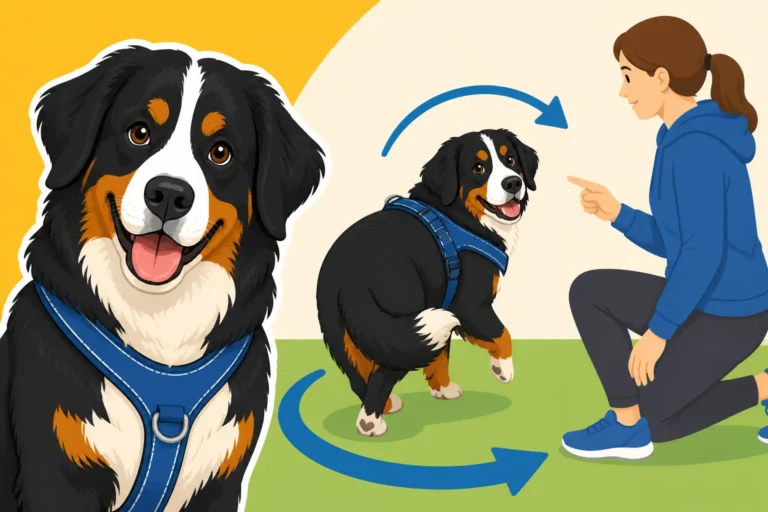
For example, teaching "haw" and "gee" involves guiding the dog with the cart, initially with food lures and body language, until they associate the verbal cue with the direction. You might start by practicing these turns without the cart, then add a lightweight cart, slowly increasing the challenge. "Whoa" must mean an immediate stop, regardless of distractions, and should be practiced in a variety of environments. "Back up" is often one of the trickiest for dogs to learn, especially when attached to a cart, requiring them to push back against the resistance. Teaching a Bernese Mountain Dog to Turn in Harness details these maneuvers and the patience required for success.
The Physical Demands and Equipment
Draft work, even at the novice level, requires a sound, healthy Bernese Mountain Dog. Their robust build makes them natural candidates, but proper equipment is not just about performance; it's paramount for the dog's comfort and safety, preventing injury and ensuring a positive experience. Without the right gear, even the most willing dog can struggle.
Proper Harness Fit and Cart Selection
The harness is perhaps the most critical piece of equipment. It must be a purpose-built draft harness, distributing the weight evenly across the dog's chest and shoulders, rather than placing pressure on the throat or spine. A poorly fitting harness can cause chafing, discomfort, and even injury, making the dog unwilling to pull and potentially leading to a negative association with carting. Think of it like a poorly fitting backpack – it might work for a short stroll, but for real work, it becomes a painful burden and can cause lasting damage. Many styles are available, with options for different body shapes.
Carts also come in various styles, from lightweight training carts to sturdier freight carts. For novice tests, a lighter cart is generally used, often made from wood or lightweight metal. The cart must be well-balanced and appropriately sized for your Bernese Mountain Dog, allowing freedom of movement without rubbing or catching. It needs to be stable enough not to tip easily, especially during turns or over uneven ground, which can startle or injure the dog. The shafts of the cart, which connect to the harness, must be long enough to prevent the cart from bumping the dog's hindquarters. Amazon offers a wide selection of draft harnesses and carts, but it’s vital to read reviews and consult experienced carting enthusiasts for recommendations. Fitting a Draft Harness to a Bernese Mountain Dog provides more detailed guidance on achieving that perfect fit.
Weight and Age Considerations for the Dog
A Bernese Mountain Dog should be physically mature before starting formal draft training or testing. This generally means at least two years old, to ensure their growth plates have closed and their joints are fully developed. Early strenuous work can put undue stress on a growing dog's skeletal system, potentially leading to long-term orthopedic issues like hip or elbow dysplasia. This is especially crucial for a large, heavy breed prone to joint problems. Joint Disease in a Hundred Pound Bernese Mountain Dog highlights the importance of protecting their joints throughout their life.
The weight pulled during a test is carefully regulated to ensure the dog's safety and well-being. For a novice draft test, the weight is usually quite modest, often around 20-30 pounds, representing a fraction of the dog's own body weight. The focus at this level is more on technique, control, and willingness, rather than brute strength. As dogs advance to higher titles, the weight requirements increase, but always with guidelines to prevent overexertion. Judges prioritize the dog's comfort and willingness above all else, ensuring the activity remains enjoyable and safe. The Twenty Pound Load a Novice Berner Carts gives a specific example of the typical starting weight requirement.
Navigating the Test Environment
A draft test isn't just about pulling a cart; it's about doing so under specific conditions, demonstrating the Bernese Mountain Dog's trainability and composure amidst various elements. The ability to perform consistently in an unfamiliar setting, with judges and other dogs present, is a key component of success.
The Course Layout and Obstacles
Draft tests are typically held in outdoor settings, often in a field or park, presenting varied terrain that might include grass, gravel, or packed dirt. The course will involve a series of prescribed maneuvers, designed to simulate real-world carting challenges. You can expect straightaways, left turns, right turns, and often a "figure eight" pattern to demonstrate control and responsiveness from both dog and handler. There will also be a "back up" exercise, where the dog must back the cart up a specified distance, and a "halt" or "stand for inspection" where the dog and cart remain stationary while a judge approaches to check the equipment and the dog's demeanor.
Beyond the basic maneuvers, courses may include obstacles like navigating narrow passages, going over a small bridge or a slight incline, or stopping at a designated mark. These elements assess the dog's ability to focus on the handler and navigate challenges calmly, rather than shying away, becoming entangled, or getting distracted. It’s not a race; precision, control, and a smooth, cooperative performance are the ultimate goals, demonstrating the dog's mastery of the task.
Handling Distractions and Environmental Factors
One of the biggest challenges in a draft test is managing distractions. The test environment is rarely sterile; there will be other dogs and their handlers waiting their turn, spectators, unfamiliar sounds (like a cart wheel squeaking or another dog barking), and various smells. A good draft dog must be able to maintain focus on its handler despite these external stimuli. This is where the foundational obedience and a confident temperament truly shine. If your Berner is constantly looking around, pulling towards other dogs, or getting spooked by a sudden noise, it will be difficult to execute the precise commands required for a passing score.
Training in varied locations, gradually exposing your Bernese Mountain Dog to different sights and sounds while in harness, is essential preparation. Practicing in busy parks, near playgrounds, or even in areas with light traffic can build their confidence and focus. This gradual exposure helps them generalize their training so they can perform reliably anywhere. Socializing a Reserved Bernese Mountain Dog Puppy emphasizes the importance of early exposure to build a confident, unflappable adult. A judge will closely observe how the dog handles these distractions – a little curiosity is natural and acceptable, but a significant loss of control or fear response is not.
Beyond the Novice Title: Advanced Challenges
Once a Bernese Mountain Dog has earned its Novice Draft Dog (DD) title, there are further opportunities to explore more complex and challenging aspects of draft work, pushing both dog and handler to new levels of skill and teamwork. These advanced titles are a testament to prolonged dedication and an even deeper understanding between dog and owner.
The Freight Haul and Specific Loading Exercises
As dogs progress to higher titles, such as Draft Dog Excellent (DDX) or even Master Draft Dog (MDD), the demands increase significantly. The "freight haul" is a significant step up from the novice test. Here, the Bernese Mountain Dog is required to pull a cart with a specified minimum weight, often considerably heavier than the novice load (sometimes a quarter to a third of their body weight, or more), over a longer distance. This isn't just about strength; it's about endurance and a sustained willingness to work, demonstrating that the dog can perform its historical function with genuine purpose.
Additionally, advanced tests often include specific loading and unloading exercises. The dog must stand patiently and remain in position while the handler loads or unloads objects into the cart. This tests their patience, stability, and understanding of the task at hand – they are not merely pulling, but actively participating in the work. The objects themselves might vary in size, shape, and weight, adding another layer of distraction and requiring the dog to be unfazed by shifting weights or unusual forms appearing in their cart. The Half-Mile Freight Haul in a Bernese Mountain Dog Test describes this challenging and impressive demonstration of sustained effort.
Brace Work and Team Coordination
One of the most impressive advanced titles is the Brace Draft Dog (BDD), where two Bernese Mountain Dogs work together as a synchronized team, pulling a single cart. This introduces a whole new level of complexity. Not only must each dog be proficient in all the individual draft commands, but they must also work in perfect synchronicity with each other, responding to the handler's cues as a single unit. They need to match pace, turn in unison, and maintain their positions side-by-side without getting tangled, interfering with one another, or crowding the shafts.
Brace work demands exceptional communication between the handler and both dogs, and critically, between the dogs themselves. It showcases the Bernese Mountain Dog's cooperative nature and the deep bond they can form, not just with their human, but with their canine partners. This level of coordination is a testament to the extensive training, patience, and innate teamwork capabilities of the breed, requiring countless hours of practice to achieve such a seamless performance. Imagine trying to get two separate minds to perform such a precise dance – it's truly remarkable when done well. What Brace Draft Work Asks of Two Bernese Mountain Dogs delves into this intricate teamwork and the unique challenges it presents.
Comparison of Novice and Advanced Draft Test Requirements
To give you a clearer picture, here's a general comparison of what you might expect between novice and advanced draft tests for a Bernese Mountain Dog. Please remember that specific rules can vary slightly between different organizations (like the BMDCA, AKC, or regional clubs), so always check the official rulebook for the most current details regarding titles, weights, and procedures.
| Feature | Novice Draft Test (DD) | Advanced Draft Test (DDX, BDD, MDD) |
|---|---|---|
| Dog's Age | Typically 24 months minimum | Typically 24 months minimum (after earning prior titles) |
| Weight Pulled | Moderate (e.g., 20-30 lbs for individual dog) | Heavier, specified freight load (e.g., 50+ lbs or proportional to dog's weight) |
| Course Length | Shorter, focused on precise maneuvers | Longer, including sustained haul over distance |
| Maneuvers | Straight lines, basic turns, halt, back up, inspection | Complex turns, narrow passages, figure 8, backing for distance, loading/unloading, sometimes varied terrain/obstacles |
| Distractions | Expected, dog must remain under control | Higher level of distractions, more demanding sustained focus |
| Teamwork | Individual dog and handler | Individual (DDX/MDD) or Brace (BDD – two dogs working together) |
| Emphasis | Willingness, basic control, safe handling of equipment | Endurance, precision, sustained focus, complex problem-solving, seamless teamwork (for brace) |
| Equipment | Properly fitted harness, well-balanced cart | Same, but potentially more robust for heavier loads and varied conditions |
| Required Skills | Solid basic obedience, specific draft commands | Mastery of all novice skills, advanced carting commands, sustained mental focus, cooperative movement (for brace) |
Disclaimer
This article is for general informational purposes only and does not constitute professional advice. Laws, prices and regulations vary by location and change over time. Consult a qualified professional for guidance on your specific situation.