Visiting a Bernese Mountain Dog Litter Before Choosing
Choosing a Bernese Mountain Dog puppy is about more than falling for a fluffy face. A litter visit can help you assess the puppies’ comfort around people, ask how they are being raised, and judge whether the breeder is open about health and temperament. This guide walks you through what to look for, what to ask, and when it’s sensible to walk away.
Before You Visit a Bernese Mountain Dog Litter
Arrange a visit with the breeder
Set up a time directly with the breeder and ask what the visit will involve. Some breeders welcome visitors when puppies are old enough and the mother is comfortable with them; others may limit access to protect young puppies from stress or infection. A thoughtful breeder should be able to explain their approach and offer another way to answer your questions if an in-person visit is not appropriate yet.
Ask whether you’ll meet the mother, where the puppies spend their time, and whether the breeder expects you to remove your shoes or follow other hygiene precautions. The mother may be tired, protective, or temporarily away from the puppies, so her not being in the room for every moment is not automatically a warning sign. What matters is whether the breeder explains the situation calmly and lets you understand the puppies’ care.
Before traveling, confirm the address, who will be present, and whether children or other dogs may come along. A quiet visit is usually more useful than a crowd of excited relatives. If you are comparing litters, use the same questions at each visit and take notes afterward; it’s easy to remember the puppy that climbed into your lap and forget the less glamorous details about health records or daily routines.
Know what a visit can and cannot tell you
A litter visit is a snapshot, not a guarantee of a puppy’s adult personality or health. A puppy that hangs back may simply be sleepy or overwhelmed, while the one bounding toward every visitor may be having a particularly lively moment. Watch how the puppies respond as a group and how they recover after a small surprise, rather than deciding on temperament from one brief interaction.
You also cannot confirm genetic health just by looking at a puppy, its parents, or a clean home. Ask which recommended health evaluations have been completed for the parents and request the relevant documentation. For background on what those checks can include, see Which Tests a Bernese Mountain Dog Breeder Should Show and The Four OFA Clearances on a Bernese Mountain Dog.
A responsible breeder should be willing to discuss the strengths and limitations of their breeding choices. If you’re trying to understand how to assess family health history, Reading Longevity Into a Bernese Mountain Dog Pedigree may help you prepare more specific questions. A pedigree can offer useful context, but it is not a promise that a dog will avoid illness or live to a particular age.
What to Observe During the Visit
Look at the puppies’ environment and everyday care
Notice whether the puppies have a clean, safe place to rest and play, with access to water when appropriate for their age and setup. Their area should not have to look like a showroom. A home with ordinary signs of dogs living there can be perfectly reasonable; what matters is whether the puppies appear cared for and whether the breeder can describe their daily routine.
Ask where the puppies sleep, how often their space is cleaned, and what kinds of gentle handling or household experiences they have had. Early exposure should be age-appropriate, not a forced parade of unfamiliar people and noisy objects. Puppies should have opportunities to rest as well as explore. If several visitors are crowding them, ask whether you can watch quietly for a few minutes instead.
Pay attention to the puppies’ general condition without trying to diagnose them. They should look reasonably clean and engaged for their age, though they may be sleepy after play or cautious around new people. If one seems unwell, or you notice something that concerns you, ask the breeder directly what they have observed and whether a veterinarian has assessed the puppy. Don’t rely on appearance alone to settle a health question.
Observe the mother and the breeder’s interaction
If the mother is present, watch whether she seems comfortable in the setting and how the breeder handles her. A mother dog may be resting, watchful, or uninterested in visitors. The useful question is not whether she performs a particular greeting, but whether she appears to be treated thoughtfully and whether the breeder can explain her behavior without dismissing reasonable concerns.
Notice how the breeder talks about each puppy. Do they describe differences in confidence, energy, or sensitivity, or do they say every puppy is “perfect” and leave you to guess? A breeder who has spent time observing a litter may be able to explain which puppies might suit a quieter home, a busy household, or an owner looking for an active companion. Those observations are helpful, but they are still predictions—not guarantees.
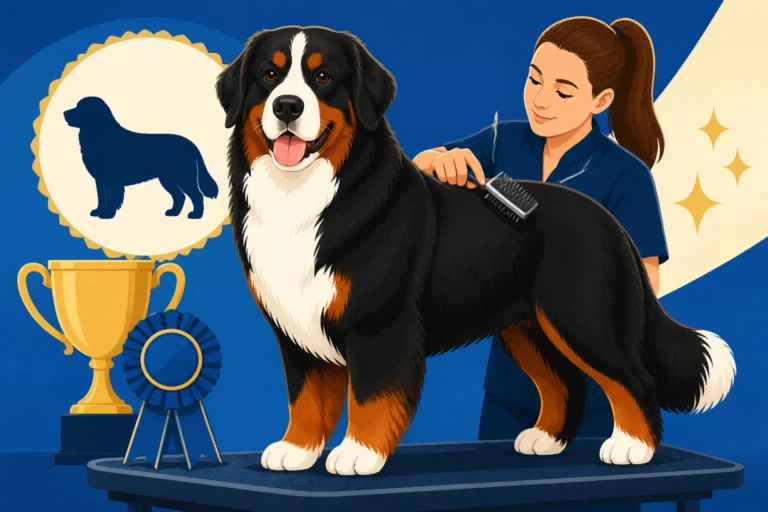
You can also ask whether the breeder has begun introducing basic grooming and handling. Bernese Mountain Dogs have a substantial double coat, and the puppies will eventually need regular brushing and other routine care. A calm, gradual introduction to touch is useful preparation. For ideas on what ongoing coat care involves, read Grooming a Bernese Mountain Dog's Long Tricolor Coat before you bring a puppy home.
Questions to Ask Before Choosing
Ask about health, records, and the breeder’s responsibilities
Ask to see documentation for the parents’ health testing, and make sure you understand which dog each record belongs to. If a breeder says a dog is “clear,” ask what was tested, by whom, and where the results can be checked. A general statement about a healthy line is not a substitute for clear, specific information.
Ask what veterinary care the puppies have received, what records will come with your puppy, and what the breeder expects you to do after pickup. The answer should be practical and specific enough to guide your next steps. You can also ask what health concerns have appeared in previous generations or related dogs. No family is completely free of health problems, so openness about known issues is more meaningful than a promise that nothing will ever happen.
Discuss the written agreement before you choose a puppy. Ask what it says about the puppy’s health, registration or identification records, and what happens if you cannot keep the dog. A breeder’s willingness to explain the contract is a good sign; pressure to sign immediately without time to read it is not. For a closer look at what paperwork and follow-up information may be included, see The Folder a Bernese Mountain Dog Breeder Hands Over and What a Bernese Mountain Dog Breeder Puts in Writing.
Ask how the breeder matches puppies with homes
A puppy visit is not necessarily a first-come, first-served contest. Some breeders choose which puppy goes to which home after observing the litter over time and learning about the families. Be ready to explain your day-to-day life honestly: how long the dog may be alone, whether you have children or other pets, how much grooming you can manage, and what kind of activity you enjoy.
Ask how the breeder describes the puppies’ temperaments and what they have noticed so far. You might say, “We want a friendly companion, but our home is fairly calm. Which puppy’s behavior has seemed like the best possible fit, and what have you seen that makes you think so?” This invites an explanation rather than a sales pitch. Remember that young puppies change as they mature, and a good match depends on both the dog and the household.
Ask what support is available after the puppy goes home. Will the breeder answer questions about settling in, feeding, or early training? What would they want you to do if a serious problem came up? The point is not to expect a breeder to replace your veterinarian or trainer. It is to understand whether they remain accountable for the dogs they bring into the world. What a Bernese Mountain Dog Asks of a New Owner can help you think through the commitment from the puppy’s side, too.
Choosing Carefully and Preparing for Pickup
Compare what you saw without rushing
After each visit, write down what you observed while it is fresh. Separate direct observations from impressions: “puppies had a clean resting area” is an observation; “this breeder is definitely trustworthy” is a conclusion that needs more evidence. If a breeder gives you records to review later, take time to do that before committing.
| What to compare | Helpful signs | Reasons to pause and ask more |
|---|---|---|
| Puppies’ setting | A safe, reasonably clean space with room to rest and move | Poor sanitation, unsafe access, or no clear explanation of where puppies are raised |
| Breeder’s answers | Specific, calm responses and records offered for review | Vague claims, irritation at ordinary questions, or pressure to decide immediately |
| Health information | Clear records tied to the parents and an explanation of the results | Verbal assurances without documents or confusion about which tests were done |
| Puppy matching | Discussion of your household and the puppies’ observed differences | A promise that one puppy is guaranteed to suit every home |
| Written agreement | Time to read the terms and ask questions | A demand to sign or pay before you understand the agreement |
| Follow-up | A clear plan for records, transition, and future questions | No meaningful plan once the puppy leaves |
No single item tells the whole story. A breeder may have a reasonable explanation for something that initially surprises you, such as a limited visitor policy. Give them a chance to explain, then decide whether the explanation makes sense and whether you feel comfortable with the answers.
If anything feels wrong, you are allowed to leave without choosing a puppy. You do not owe a breeder a deposit because you made the trip, and you do not have to accept a puppy because it has already bonded with you for an hour. If you want to broaden your search rather than settle under pressure, What a Regional Bernese Mountain Dog Club Offers may be a useful starting point for learning about breed-focused communities and breeder referrals.
Plan for the puppy’s first days at home
Before pickup, make sure you know what food the puppy has been eating, how the breeder recommends transitioning to a new diet, and which records will come with the puppy. Ask what the puppy is used to for sleeping, toileting, grooming, and car travel. Keeping familiar routines at first can make the transition less chaotic for both puppy and household.
Prepare a quiet sleeping area, a safe place for the puppy to explore, food and water bowls, a suitable collar or harness, and grooming tools appropriate for a growing dog. If you are checking options for basic supplies, Chewy can be one place to compare product descriptions and sizes; confirm that any item is appropriate for your puppy and household before buying. A large-breed puppy grows quickly, so a size that seems roomy today may not fit for long.
Ask the breeder what they send home and avoid buying duplicates before you know. Some breeders provide a small amount of the puppy’s current food or familiar bedding; others may simply give you written instructions and records. If you are building a shopping list, Chewy may help you check common supply categories, but your breeder and veterinarian are better sources for advice about a particular puppy’s feeding and medical needs. Keep the first few days uncomplicated: a Bernese Mountain Dog puppy needs time to rest, learn the household, and adjust to being away from its littermates.
A careful visit is not about finding a flawless breeder or a puppy that behaves perfectly on cue. It is about gathering evidence, asking direct questions, and noticing whether the breeder treats the dogs and your concerns with care. Give yourself permission to take notes, review paperwork at home, and wait for a litter that feels like a responsible match rather than a rushed decision.
Disclaimer
This article is for general informational purposes only and does not constitute professional advice. Laws, prices and regulations vary by location and change over time. Consult a qualified professional for guidance on your specific situation.