Buying a Bernese Mountain Dog Without Visiting the Breeder
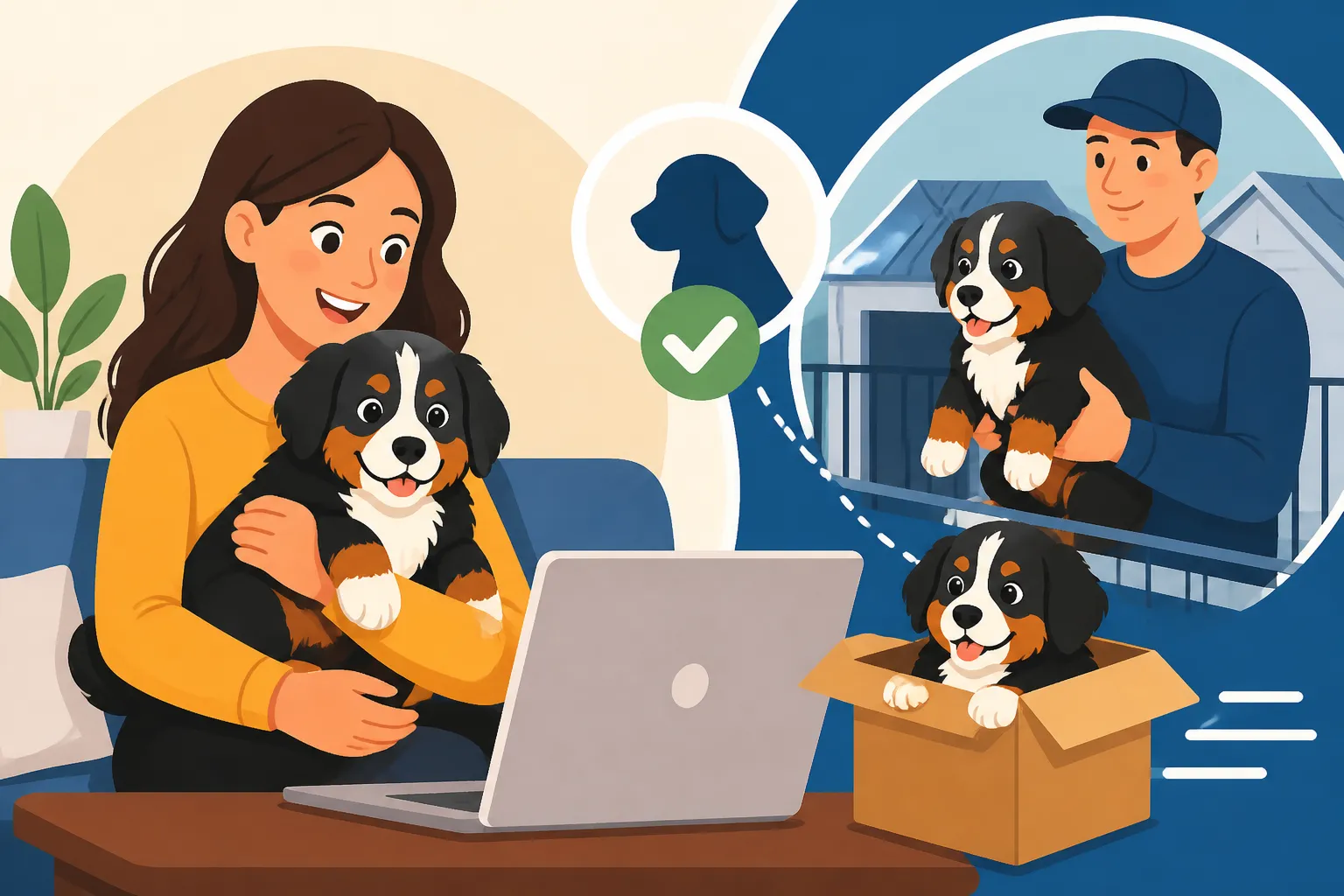
Buying a Bernese Mountain Dog without visiting the breeder can feel like a risky leap: you can’t see the home, meet the litter in person, or judge the puppy’s behavior firsthand. A remote purchase can still be approached carefully, though. This guide explains how to verify a breeder, assess health records and puppy conditions, spot warning signs, and plan safe transport before sending money.
Decide whether buying remotely is right for you
Understand what you give up by not visiting
A visit lets you observe details that are harder to judge through a screen: whether the dogs seem comfortable around people, how the puppies interact with one another, and whether the surroundings appear clean and well managed. It also gives you a chance to ask questions face to face and see how the breeder responds when you ask for something unexpected.
Remote communication can fill in some of those gaps, but it cannot reproduce the whole experience. A polished video tour may show a tidy room without revealing where the puppies spend most of their day. A friendly phone call is reassuring, but it doesn’t prove that the person you’re speaking with owns the dogs or has the litter they describe.
That doesn’t automatically make a remote purchase unsafe. Distance, mobility, work schedules, and the small number of responsible breeders in some areas can make an in-person visit impractical. It does mean you should be deliberate: verify information independently, allow time for questions, and be ready to walk away if anything feels rushed or inconsistent.
Consider alternatives before committing
Ask whether the breeder can arrange an in-person visit with someone you trust, such as a local friend or family member. A knowledgeable Bernese Mountain Dog owner, trainer, or veterinarian may notice details you would miss. If no one can visit, ask about a live video call where the breeder responds to your requests in real time rather than sending only prepared clips.
You could also widen your search or wait for a future litter from a breeder you can evaluate more thoroughly. Breed clubs and established rescue groups may help you understand what responsible placement looks like, even if they cannot personally endorse a particular breeder. The broader guide What a Bernese Mountain Dog Asks of a New Owner can help you check whether the breed’s daily needs fit your household before you take the next step.
Be cautious of treating convenience as proof of a good match. A puppy available immediately may be tempting, particularly after a long search, but availability alone says nothing about health, temperament, or breeding practices. A responsible breeder should be willing to discuss those subjects in detail and give you room to make a considered decision.
Verify the breeder and the litter from a distance
Confirm who you are speaking with
Start with a live conversation, ideally by video. Ask the breeder to show the puppies, their mother, and the area where the litter is kept. Request a simple, specific action during the call—such as showing a puppy from another angle or panning from the litter to its surroundings. This helps establish that you are seeing the actual dogs rather than a collection of reusable photos.
Then check that names and details are consistent across the breeder’s website, email, contract, and health documents. Search the breeder’s kennel name and the parents’ registered names. Ask for the sire’s and dam’s registered names and registration details, then look for records in resources such as Berner-Garde. A database entry is a useful starting point, not a guarantee: records may be incomplete, and a listing by itself does not establish that a breeder is responsible.
Ask for references from owners of previous litters, especially people whose dogs are now adults. With their permission, speak to them directly rather than relying only on written testimonials. Ask what the breeder was like after pickup, whether the dog’s records matched what they had been told, and how the breeder responded when the owner had questions or a problem.
For more on checking family history, see Searching Berner-Garde Before Buying a Bernese Mountain Dog and What the Berner-Garde Database Records. If the breeder is reluctant to share registered names, avoids a live conversation, or gives explanations that keep changing, pause rather than trying to talk yourself into trusting the situation.
Examine health testing and puppy care
Ask for the parents’ health clearances and verify them yourself where possible. For a Bernese Mountain Dog, questions commonly include hip and elbow evaluations, eye examinations, cardiac screening, and relevant genetic testing. The exact combination of tests and how they apply to a particular dog are worth discussing with a veterinarian and with experienced breed-club contacts. A breeder saying “the parents are healthy” is not the same as providing documented results.
Check that the registered names on the records match the dogs the breeder says are the parents. Ask what the results mean, whether any findings require context, and how the breeder uses them when deciding whether to breed. If you are unsure how to interpret a clearance, ask for the record itself and have your veterinarian help you understand it. The article The Four OFA Clearances on a Bernese Mountain Dog offers a useful framework for asking about screening.
Ask about the puppies’ routine veterinary care, growth, feeding, social experiences, and any health concerns observed in the litter. A thoughtful breeder should be able to describe the puppies as individuals rather than treating them as interchangeable. For example, ask which puppy tends to recover quickly after a new sound, which one prefers to watch before joining in, and how the breeder is matching puppies to homes.
A puppy’s early environment matters, but a video cannot certify that every claim is true. Request recent, unedited footage and ask when it was recorded. If a puppy appears lethargic, has discharge, seems to be breathing unusually, or is repeatedly separated from the litter without explanation, ask direct questions and seek veterinary guidance before proceeding. More on breeder screening is available in Which Tests a Bernese Mountain Dog Breeder Should Show.
Review payment, paperwork, and transport carefully
Read the contract before paying a deposit
Ask for the full written agreement before sending money. Read the sections about the puppy’s identity, health records, registration, pickup or delivery, return arrangements, and what happens if a veterinarian identifies a concern after the puppy arrives. Make sure the document names the breeder and describes the puppy you are considering, rather than leaving key details vague.
Clarify whether the deposit is refundable and what circumstances change that policy. Ask what payment methods are accepted and whether the recipient’s name matches the person or business named in the agreement. Be wary of pressure to pay immediately, requests to send money through an unusual channel, or sudden extra charges introduced after you have committed. A legitimate-looking contract does not by itself verify the seller, so check the breeder independently as well.
Ask for copies of the puppy’s veterinary records and the parents’ health documents before finalizing the purchase. Keep the contract, messages, receipts, and records together. You may also want to arrange a veterinary appointment soon after the puppy arrives; ask your clinic what information it needs and how to make the first visit as calm as possible.
| What to check | What to request | Why it matters |
|---|---|---|
| Breeder identity | Full name, kennel name, consistent contact details | Helps you check that the seller’s identity and records line up |
| Puppy and parent details | Registered names and identifying information | Lets you compare the dogs described with available records |
| Health screening | Written results for relevant parent clearances | Replaces vague assurances with information you can review |
| Puppy care | Veterinary history, feeding details, and current observations | Helps you plan care and notice missing or inconsistent information |
| Contract | Full agreement before payment | Makes responsibilities, return terms, and payment conditions clear |
| Transport | Written plan and named person or service handling the puppy | Reduces last-minute confusion and unclear handoffs |
Make a transport plan that protects the puppy
Discuss transport well before the puppy is ready to leave. Ask who will handle the puppy, how the handoff will take place, and what the journey involves. If a third party or transport company is proposed, independently confirm its identity and role. The breeder should be able to explain the plan without making you feel that basic questions are unreasonable.
Whenever practical, consider collecting the puppy yourself or having someone you trust do so. That gives you another chance to see the puppy and receive the records directly. If travel is not possible, ask for a clear itinerary, a way to communicate during the handoff, and instructions for what to do if the puppy seems unwell when delivered.
Before arrival, prepare a quiet space, safe sleeping area, food plan, and a way to get the puppy to a veterinarian. A supply checklist can be useful, but avoid buying everything before the purchase is settled. Retailers such as Chewy can help you organize routine items like food bowls, a crate, and grooming tools; check product sizing carefully because a Bernese Mountain Dog grows into a very large dog. You can make a separate list through Chewy or another retailer, but it should not distract from verifying the breeder and transport details.
Recognize red flags and make a confident decision
Slow down when the story does not add up
One warning sign alone may not prove that a breeder is acting dishonestly, but several together deserve serious attention. Be cautious if the seller refuses live video, will not provide the parents’ registered names, offers no verifiable health records, or insists that you pay before answering basic questions. Be equally cautious if the puppy is described as ready to leave unusually early or the seller cannot explain its veterinary history.
Watch for contradictions. The litter’s birth date, location, parent details, or pickup arrangements should not keep changing. Photos that appear under different names online, documents with mismatched names, and a seller who avoids showing the mother are all reasons to stop and investigate further. Don’t let urgency, a sympathetic story, or the fear that another buyer will get the puppy push you into skipping checks.
A scam can also involve someone impersonating a real breeder. Contact the breeder using contact information you find independently, rather than relying only on the number or email in a message. Ask the breeder to confirm that the litter and payment instructions are theirs. If you cannot get a clear confirmation, do not send money.
Use questions to assess the breeder’s priorities
A responsible breeder should ask about your home, experience, schedule, and plans for the dog. They may want to know how you will manage grooming, exercise, training, and veterinary care as the puppy grows. That kind of conversation is a positive sign: it suggests the breeder is thinking about the puppy’s long-term placement, not only completing a sale.
Ask how the breeder decides which puppy suits which home. A careful match may take into account energy, confidence, and how each puppy responds to people and new experiences. You should not expect a breeder to promise a puppy’s adult personality, but they should be able to explain what they have observed and what remains uncertain.
Pay attention to how the breeder handles difficult questions. A person who welcomes reasonable discussion about health and family history is easier to trust than someone who dismisses concerns or guarantees a perfectly healthy dog. No screening process can promise a disease-free life. For a broader discussion of family history and longevity, read Reading Longevity Into a Bernese Mountain Dog Pedigree and Whether Bernese Mountain Dog Breeders Track Cancer.
Once you decide to proceed, keep a written record of agreed details, save copies of every document, and confirm the handoff before the puppy travels. Plan for the first days to be quiet and predictable: a new home, new people, and a long journey can be a lot for a young dog. Keep the food routine consistent at first and ask your veterinarian when to schedule the initial examination.
After the breeder has provided the necessary information and the purchase is confirmed, you can finish preparing your home. Chewy may be one place to assemble basics such as a sturdy bed, a brush suited to a double coat, or cleanup supplies, but choose items based on your puppy’s needs and your veterinarian’s advice. If you are gathering supplies for a large-breed puppy, the guide Feeding a Bernese Mountain Dog Puppy to a Hundred Pounds can help you think through growth and feeding questions. Chewy can help with ordinary supplies; it cannot replace careful breeder verification, health review, or veterinary care.
A remote purchase should feel like a series of informed choices, not a leap of faith. If a breeder answers questions clearly, shares records you can check, welcomes a thoughtful conversation, and provides a sensible transport plan, you will have a stronger basis for deciding. If key details remain uncertain, it is okay to wait or look elsewhere. The right puppy is worth taking the time to find.
Disclaimer
This article is for general informational purposes only and does not constitute professional advice. Laws, prices and regulations vary by location and change over time. Consult a qualified professional for guidance on your specific situation.