Whether a Solid Black Bernese Mountain Dog Exists
An all-black dog with a Bernese Mountain Dog’s broad head and shaggy coat can look convincing, especially in a dim photo or before a puppy’s markings come in. But solid black is not a recognized Bernese Mountain Dog color. This guide explains what the breed standard calls for, why a dog may look all black, and how to check a dog’s background without relying on appearance alone.
What color is a Bernese Mountain Dog supposed to be
The breed’s signature coat is tricolor
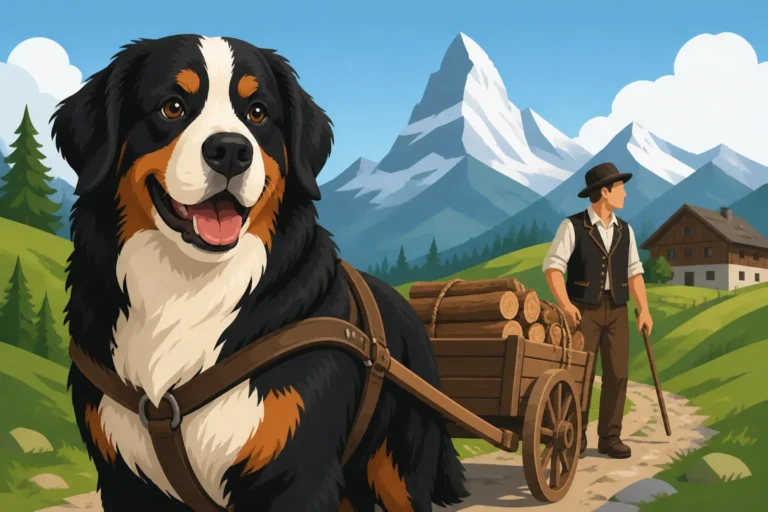
The Bernese Mountain Dog has a black base coat, but the familiar look comes from three colors working together: black, rich rust, and white. The rust markings typically appear over the eyes, on the cheeks, at the sides of the chest, and on the legs. White commonly forms a blaze on the face, a chest marking, and white on the feet or tail tip.
The precise pattern varies from dog to dog. One Berner might have a narrow white blaze; another may have a broader one. Rust markings can also differ in shape and size. These variations are part of why two Berners can look distinct while still sharing the same recognizable tricolor pattern. For more detail, see Bernese Mountain Dog Markings and What They Mean.
Black is therefore an important part of the breed’s appearance, but it is not the whole color pattern. A dog with a black coat and no visible rust or white markings does not match the standard description of a Bernese Mountain Dog. The Bernese Mountain Dog Breed Standard explains the appearance expected of a dog shown as a representative of the breed.
Why the markings matter
Breed standards describe the features a breed is meant to have, including coat color and pattern. They help judges evaluate dogs in the show ring and give breeders a shared reference for the breed’s type. They are not, on their own, a complete test of ancestry: a dog may have a documented pedigree and still have a marking or feature that does not meet the standard.
For Berners, the tricolor markings are not just decorative details. They help distinguish the breed’s characteristic look from that of other large, long-coated dogs. A very dark photo, thick fur, dirt, or a dog’s position can make white or rust areas hard to see, so it is worth examining the coat in good light before deciding it is truly solid black.
The breed’s coat is also long and dense, and that can make markings less obvious when the fur is wet, tangled, or especially thick. If you are trying to understand how the coat lies and changes the dog’s outline, Why Only the Bernese Mountain Dog Has a Long Coat offers useful context.
Can a solid black dog still be a Bernese Mountain Dog
Appearance alone cannot settle the question
A dog that appears completely black may be a mixed-breed dog with some Bernese Mountain Dog ancestry, another large breed, or a dog whose markings are hidden by lighting, coat condition, or an online image. Some dogs also have unusual or very limited markings. Those possibilities are different from saying that solid black is a normal or recognized Bernese Mountain Dog color.
If you are considering a puppy advertised as a “solid black Berner,” treat the description as a reason to ask careful questions, not as proof of either fraud or purebred status. Ask to see the puppy’s parents and the breeder’s documentation. Look at the dogs in natural light, including their faces, legs, chests, and paws, where the typical rust and white markings may be easiest to spot.
A dog’s general shape, coat length, and friendly expression can make it look Berner-like, but those features are shared with other dogs. A DNA ancestry test may estimate breed ancestry, but it does not replace a pedigree or establish that a dog meets the breed standard. If you want to compare possible color variations, Whether a Bernese Mountain Dog Can Be Any Other Color and The Colors That Put a Bernese Mountain Dog Out are helpful related topics.
| What you notice | What it may mean | A sensible next step |
|---|---|---|
| Black coat with clear rust and white markings | Typical Bernese Mountain Dog coloring | Compare the markings and pedigree with the breed description |
| Markings are hard to see in a photo | Lighting, angle, dirt, or coat may be hiding them | Ask for clear photos or view the dog in daylight |
| Dog has very little visible white or rust | Unusual markings, mixed ancestry, or incomplete information are possible | Ask for parent and pedigree documentation |
| Dog appears entirely black in person | Not the recognized Bernese Mountain Dog color pattern | Verify the dog’s background rather than relying on the label |
| Seller cannot show records or answer questions | The claimed ancestry may be uncertain | Pause and seek documentation before making a decision |
Questions to ask a breeder or seller
Ask for the registered names or identifying details of the puppy’s parents, any available pedigree paperwork, and health-testing documentation. A responsible breeder should be willing to explain the puppy’s appearance plainly and show what records support the claimed ancestry. You can also ask whether the breeder has photos of the puppy’s parents and relatives, since seeing several related dogs may help you understand the line’s typical markings.
Be cautious if the explanation changes, if the seller insists that solid black is a standard Bernese Mountain Dog color, or if paperwork is promised only after you pay. A color claim should not distract from other important questions about health, temperament, socialization, and the living conditions of the dogs. Which Tests a Bernese Mountain Dog Breeder Should Show can help you prepare for a broader discussion about responsible breeding.
It is also worth remembering that a dog with atypical markings can still be a loved and well-cared-for companion. The color question is most important when someone is making a claim about breed identity, show eligibility, or breeding. For a family choosing a pet, the dog’s health, behavior, and fit with the household matter far more than whether its markings match a show-ring ideal.
How to check what you are seeing
Look at the coat in good light
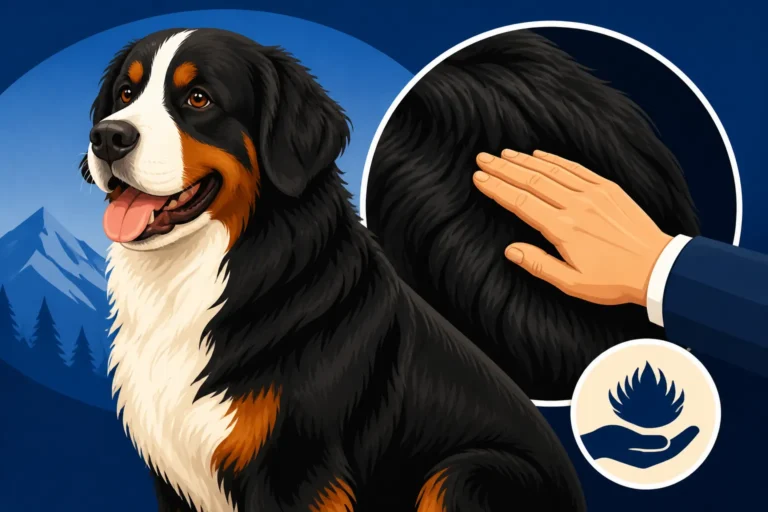
Start by viewing the dog outdoors in even daylight, or near a bright window without harsh shadows. Check the face, chest, lower legs, and paws. Those areas often show white or rust markings that disappear in dark photos. If the dog has a thick coat, gently part the fur rather than assuming the visible top layer tells the whole story.
A puppy’s coat can also change in appearance as it grows. The markings themselves do not typically transform a truly solid-black dog into the standard tricolor pattern, but a puppy’s fluff, posture, and changing coat length can make details hard to judge in a single image. Ask for recent, unfiltered photos from multiple angles, and compare them with what you see in person.
If you are visiting a litter, take your time. Look at the puppy while it is standing and moving, and observe the parents if they are available. Do not feel pressured to make a decision during a brief visit just because the seller says another buyer is waiting.
Confirm records and keep grooming separate from identification
Regular grooming can make a Bernese Mountain Dog’s markings easier to see, but grooming does not change its underlying coat color. A gentle brush-through can loosen dead hair and reveal areas hidden under the feathering. If you need a suitable brush or comb, compare options at a local pet-supply shop or through retailers such as Chewy, and choose tools intended for a long double coat rather than assuming one tool works for every dog.
Before brushing, check for mats, particularly behind the ears and around the feathering. Pulling hard on a tangle can hurt, and clipping close to the skin can cause injury if the mat is tight. A groomer familiar with double-coated dogs can help when the coat is badly tangled or the dog is uncomfortable with handling. Some owners look at Chewy when they are comparing basic grooming supplies, while others prefer to ask a groomer to recommend a brush after seeing the dog’s coat in person.
Keep the purpose of grooming clear: it helps you inspect and care for the coat, but it cannot confirm ancestry. For questions about a dog’s identity, rely on records and a careful conversation with the breeder or rescue. For routine coat care, Chewy is one place owners may compare brushes and combs, but the tool should suit the dog’s coat and be used gently.
If the dog’s history is incomplete, a veterinarian or reputable breed organization may be able to suggest practical next steps. Breed clubs can also help explain what markings are typical and what records are meaningful. The history of the breed and its distinctive appearance is covered in Why the Bernese Mountain Dog Nearly Disappeared, while The Swiss Cross on a Bernese Mountain Dog's Chest takes a closer look at a familiar white marking.
A dog that looks solid black may still be a wonderful companion, but solid black is not the recognized Bernese Mountain Dog color pattern. Check the coat in good light, ask for honest documentation, and treat any claim about breed identity as something to verify rather than something a photo can prove.
Disclaimer
This article is for general informational purposes only and does not constitute professional advice. Laws, prices and regulations vary by location and change over time. Consult a qualified professional for guidance on your specific situation.