The Body Condition a Bernese Mountain Dog Should Carry
One of the trickiest things about owning a Bernese Mountain Dog is knowing if they're at a healthy weight. Their glorious, thick double coats can be masters of illusion, making a lean dog look bulky or hiding extra pounds you didn't even know were there. This guide is dedicated to helping you "see through the fluff" and truly understand the ideal body condition for your beloved Berner, ensuring they live their healthiest, happiest life.
Understanding the Ideal Bernese Mountain Dog Physique
When you picture a Bernese Mountain Dog, you likely see a sturdy, powerful companion. They are built for work in the Swiss Alps, which means they need strength and endurance, not excess bulk. Their ideal physique is one of athletic capability, allowing them to move gracefully despite their size. We’re aiming for robust, not rotund.
The 'Mountain Dog' Build: More Than Just Fluff
Bernese Mountain Dogs have a substantial bone structure and deep chests, which contribute to their imposing appearance. However, this natural build can sometimes mislead owners into thinking a heavier dog is simply "big-boned." While they are indeed big-boned, this doesn't mean they should carry extra fat. Imagine their ancestors pulling milk carts or herding cattle through mountainous terrain; every extra pound would have been a hinderance, not an advantage. Their powerful musculature should be discernible, not hidden under layers of fat. A truly fit Berner, when you look closely beyond the fur, should show a clean outline.
The breed standard emphasizes a dog that is "sturdy and agile." Agility means being able to move freely and efficiently, which is directly impacted by weight. A dog that is too heavy will struggle with movement, placing undue stress on their joints and overall system. We want to see that functional, working dog form, even if their main job these days is snuggling on the couch. It’s about respecting their heritage and ensuring their body can still perform as it was designed.
Why Lean is Keen: The Impact on Joints
Bernese Mountain Dogs are, sadly, predisposed to a number of joint issues, including hip and elbow dysplasia. These conditions are often painful and can severely impact their quality of life. Carrying excess weight dramatically exacerbates these problems. Every extra pound acts like a constant burden on their developing and aging joints, accelerating wear and tear and making existing conditions worse.
Think of it like this: if you have a slight ache in your knee, carrying a heavy backpack all day is going to make it much, much worse. For a Bernese Mountain Dog, even a few extra pounds can be equivalent to a human carrying a significant amount of additional weight relative to their frame. Maintaining a lean body condition is one of the most proactive and impactful things you can do to support your Berner's joint health and potentially extend their comfortable, active years. It also plays a critical role in managing Joint Disease in a Hundred Pound Bernese Mountain Dog. Keeping them at their ideal weight can quite literally buy them more time without debilitating pain, particularly as they approach Arthritis in a Bernese Mountain Dog by Six.
Learning to "Read" Your Berner's Body Condition
Because of their impressive coats, simply looking at your Bernese Mountain Dog usually isn't enough to accurately assess their weight. You need to get hands-on and learn how to feel their body, just as a veterinarian would. This tactile assessment is far more reliable than a visual one, especially with all that glorious fur.
The Rib Test: Feeling, Not Seeing
The "rib test" is your most valuable tool for gauging your Berner's body condition. You should be able to easily feel, but not necessarily see, their ribs. Place the flats of your hands on your dog's side, behind their shoulder blades, and gently run your fingers along their rib cage. You should feel individual ribs without having to press hard. There should be a slight layer of fat over them, but not so much that you have to search for the bones.
If you can easily see your dog's ribs, or if they feel very prominent with no fat covering, your Berner might be underweight. This can happen for a variety of reasons, from a sudden increase in activity to an underlying health issue. Conversely, if you have to press firmly to feel the ribs, or if you can't feel them at all, your Berner is likely carrying too much weight. This is a common trap, as that plush coat can hide a significant amount of excess padding. Regularly performing this simple check, perhaps during your weekly grooming session or cuddle time, will help you notice subtle changes before they become major concerns.
The Waistline and Tummy Tuck
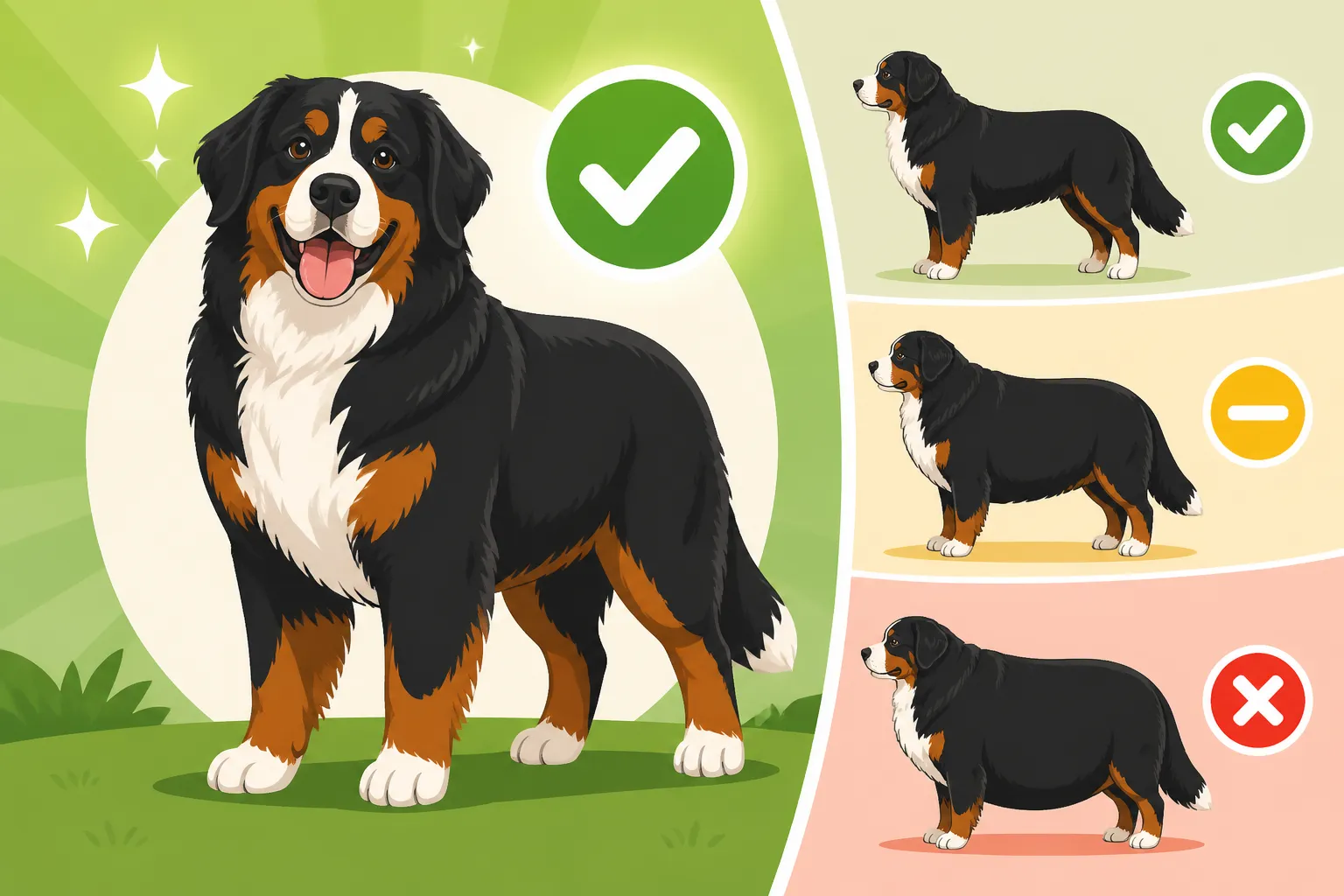
Beyond the ribs, look for a discernible waistline and a slight "tummy tuck" when viewed from above and from the side. From above, as you stand over your Berner, you should see a slight indentation behind their rib cage, where their waist narrows before flaring out again at their hips. It shouldn't be a straight line from chest to tail, nor should it bulge outwards.
From the side, their abdomen should tuck up slightly from their rib cage to their hind legs, rather than hanging low or appearing distended. This gentle upward slope indicates a good muscle tone and appropriate fat distribution. If your Berner looks like a furry barrel, or if their belly sags, these are strong indicators of excess weight. Again, don't let the coat deceive you. You might need to gently part the fur or even give a little squeeze to confirm what you're seeing (or not seeing). A healthy tuck and waistline are signs that their internal organs aren't compressed by abdominal fat and that their posture and movement are supported correctly.
Common Pitfalls in Assessing Your Berner's Weight
It's easy to fall into traps when assessing your Bernese Mountain Dog's weight, mainly because they're such magnificent, fluffy creatures! Their size alone can make us assume they should be heavier, or their endearing qualities distract us from the less-than-ideal aspects of their physique. Let's dig into some common misconceptions.
The "Fluffy" Illusion: When Coat Hides Pounds
The biggest challenge, as we've discussed, is that glorious double coat. It's thick, dense, and oh-so-cuddly, but it's also an expert at disguising a multitude of sins – including extra pounds. Many Berner owners have been surprised at the vet when their dog's weight is higher than they anticipated, simply because the fur made them look "just right." You might think your Berner looks perfectly proportionate, but underneath that luxurious mane, a different story could be unfolding.
This illusion is why those hands-on checks are so vital. Don't rely solely on what you see. Gently press along their sides, feel their spine, and check for that waistline. What feels like a solid, muscular flank might actually be a cushion of fat, making it harder for them to move and putting extra strain on their joints, especially their Hips That Fail Under a Bernese Mountain Dog's Weight. Remember that a lean dog in a heavy coat can still look substantial. It’s about feeling the underlying structure and muscle, not just admiring the fluff on top.
Misinterpreting Appetite: Always Hungry Doesn't Mean Underweight
Bernese Mountain Dogs, bless their hearts, often act like they are perpetually starving. They can be incredibly food-motivated and will happily accept every treat and leftover morsel offered. This enthusiastic appetite can lead owners to believe their dog is still growing, or perhaps isn't getting enough food, even when they are actually at or above their ideal weight. It's a classic case of their cute, pleading eyes winning over our good judgment.
Just because your Berner acts hungry doesn't mean they are truly hungry or that they need more food. Their ancestors had to forage and work for every meal, so a strong food drive is instinctual. However, in our modern homes with readily available kibble and treats, this instinct can easily lead to overfeeding. Pay attention to the quality and quantity of food you're offering, rather than simply responding to every mournful gaze or nudge with their nose. If you're concerned about their intake, tracking their actual weight and body condition score is far more reliable than interpreting their endless pleas for snacks. You'll find great guidance in Feeding an Adult Bernese Mountain Dog Safely to help manage their meals.
Tailoring Nutrition for Optimal Body Condition
Achieving and maintaining the ideal body condition for your Bernese Mountain Dog is a cornerstone of their long-term health. Nutrition plays a paramount role, and it's not just about what you feed them, but how much and when. Getting this balance right can truly make a difference in their energy levels, joint health, and overall longevity.
Choosing the Right Food: Quality Over Quantity
The market is flooded with dog food options, and it can feel overwhelming to choose. For a Bernese Mountain Dog, quality truly matters, but it doesn't always mean the most expensive bag on the shelf. Look for foods that list a high-quality animal protein (like chicken, lamb, or beef) as the first ingredient. Avoid fillers, excessive grains, and artificial colors or preservatives. These large, majestic dogs need nutrient-dense food to support their powerful bodies without adding unnecessary calories.
Consider large breed specific formulas, especially during puppyhood, as they are often formulated to support slower, more controlled growth to protect developing joints. As an adult, a good quality kibble, or even a fresh food option like those offered by Ollie, can be excellent choices. If you're exploring options, many online retailers like Chewy offer detailed ingredient lists and customer reviews that can help you make an informed decision. Remember, a dog that gets proper nutrition often feels more satisfied with appropriate portions, reducing the urge to constantly beg for more. The goal is to nourish their body, not just fill their belly.
Portion Control and Feeding Schedules
This is where many well-intentioned owners inadvertently overfeed their Berners. The feeding guidelines on dog food bags are just a starting point, often overestimating the needs of an average dog. Your Berner's individual metabolism, activity level, and age will dictate their actual caloric requirements. It’s crucial to measure their food accurately, rather than simply eyeballing it. A kitchen scale can be incredibly helpful for precise portioning, or at least a standard measuring cup.
Most adult Berners do well on two meals a day. This helps regulate their metabolism, prevents them from feeling overly hungry, and can also be a preventative measure against bloat, a serious concern for deep-chested breeds. The Half-Hour That Decides a Bloated Bernese Mountain Dog highlights the importance of managing their meal times. If you have an active Berner, they might need a bit more; a more sedentary senior dog will likely need less. Treats, while a wonderful training tool and bonding mechanism, should be factored into their daily calorie count. Opt for low-calorie options or break larger treats into smaller pieces. Monitoring their weight weekly and adjusting their food intake by a small amount (say, a quarter cup less or more) can help you fine-tune their diet to maintain that perfect body condition.
Exercise and Lifestyle for a Healthy Weight
Feeding your Bernese Mountain Dog appropriately is only half the battle; the other half is ensuring they get enough appropriate exercise. A dog that is physically active not only burns calories but also builds lean muscle, which further supports their joints and overall health. It's about finding that sweet spot between enough activity to keep them fit, but not so much that it strains their developing or aging body.
Appropriate Activity Levels for a Bernese
Bernese Mountain Dogs are not typically high-energy, go-all-day endurance athletes like some sporting breeds. They are built for steady, moderate work, and they truly appreciate a good walk or a romp in the yard. As puppies, controlled exercise is paramount. Over-exercising a young Berner can actually harm their developing joints. The old "five-minute rule" per month of age is a good guideline for walks with puppies, meaning a 4-month-old pup gets around 20 minutes of structured walking. You can read more about this in The Five Minute Rule and a Bernese Mountain Dog Puppy.
For adult Berners, daily walks of 30-60 minutes, perhaps split into two sessions, are usually sufficient. They love to be with their people, so these walks also serve as important bonding time. Consider activities like leisurely hikes (once fully grown and conditioned), carting (a wonderful historical activity for them), or even just active play in a securely fenced yard. Avoid intense, high-impact activities like aggressive jumping or long-distance running, which can put undue stress on their heavy frames. Remember that during warmer months, their thick coat makes them prone to overheating, so adjust exercise times to cooler parts of the day.
Monitoring Progress and Adjusting as Needed
Maintaining an ideal weight is an ongoing process, not a one-time achievement. Your Berner's needs will change as they age, as their activity levels fluctuate, and sometimes even with the seasons. Regularly perform the rib and waistline checks mentioned earlier, perhaps once a week. You can also weigh your Berner regularly, either at home if you have a large enough scale, or during vet visits. Tracking their weight over time provides objective data that can help you make informed decisions. Many pet supply stores, like Chewy or even general retailers on Amazon, offer pet scales for larger breeds if you want to invest in one for home use.
If you notice your Berner is starting to gain weight, don't wait until it becomes a significant problem. Make small, incremental adjustments to their food intake and increase their exercise gently. If they're looking a bit too lean, ensure you're feeding enough and consider their overall health. Consistency is key. Small, regular adjustments are much easier on your dog (and on you!) than drastic changes down the line. Remember, the goal is not just to reach an ideal weight, but to sustain it throughout their life, ensuring their overall health and mobility. This is a crucial aspect of Taking Weight Off a Bernese Mountain Dog if they do gain a little too much.
When to Seek Professional Guidance
While you know your Bernese Mountain Dog better than anyone, there are times when changes in their body condition warrant a professional opinion. Veterinarians are trained to assess overall health, interpret body condition scores, and rule out underlying medical issues that might be affecting your dog's weight. Don't hesitate to reach out to them if you have concerns.
Recognizing Warning Signs of Under or Overweight
It's one thing to notice your Berner is a little heavier than ideal; it's another to spot more concerning signs. If your Bernese Mountain Dog is rapidly losing weight without any dietary changes or increased exercise, or if they appear emaciated despite eating normally, this is a red flag. Unexplained weight loss can be a symptom of various health problems, including dental issues, parasites, digestive disorders, or even more serious conditions like cancer, which unfortunately is a significant concern for the breed, as discussed in The Cancer That Kills Half of All Bernese Mountain Dogs. Conversely, if your dog is gaining weight rapidly despite reduced food intake and regular exercise, it could indicate a metabolic issue, such as an underactive thyroid.
Other warning signs include changes in coat quality, lethargy, changes in thirst or urination, or any new lumps or bumps. If your dog is struggling to get up, lagging on walks, or showing discomfort, their weight could be a contributing factor, exacerbating existing conditions like those explored in The Bernese Mountain Dog Whose Back Legs Give Out. These are all signs that warrant a trip to the vet, not just a dietary adjustment.
Working with Your Vet and Nutritionists
Your veterinarian is your best partner in ensuring your Bernese Mountain Dog maintains optimal health. They can objectively assess your dog's body condition score, recommend appropriate calorie intake, and help you develop a personalized feeding and exercise plan. They can also perform necessary diagnostic tests to rule out any medical reasons for weight fluctuations. For instance, if you're battling persistent weight gain, your vet might suggest bloodwork to check thyroid function.
Sometimes, your vet might recommend consulting with a veterinary nutritionist, especially if your Berner has complex health needs or dietary restrictions. These specialists can formulate highly specific diets to support weight loss or gain, manage allergies, or address other health concerns. They can provide tailored advice that goes beyond general recommendations. Don't be afraid to ask questions, voice your concerns, and work collaboratively with your vet. Together, you can create a comprehensive health plan that keeps your magnificent Bernese Mountain Dog in peak condition, allowing them to enjoy every moment with you. They might also advise on Joint Supplements in a Bernese Mountain Dog's Bowl to support their frame, especially if they are getting older.
Disclaimer
This article is for general informational purposes only and does not constitute professional advice. Laws, prices and regulations vary by location and change over time. Consult a qualified professional for guidance on your specific situation.