Whether a Bernese Mountain Dog’s Coat Is Waterproof
It’s a common thought, especially when you look at a majestic Bernese Mountain Dog with their thick, luxurious coats, that they must be practically waterproof. After all, they come from the snowy, rugged mountains of Switzerland, right? Surely, nature equipped them to handle all sorts of weather. While their coat is certainly designed for protection, the idea that a Bernese Mountain Dog’s coat is truly "waterproof" is a common misconception that can lead to a lot of soggy surprises and extra work for us owners. This guide will dive into the realities of their impressive but not impenetrable coat, helping you understand what to expect when your Berner encounters water.
Understanding the Bernese Mountain Dog's Coat Structure
To truly understand how a Bernese Mountain Dog's coat handles water, we first need to appreciate its unique structure. Unlike some single-coated breeds, Berners boast a magnificent double coat, a marvel of natural engineering designed primarily for insulation in harsh mountain environments.
The Outer Coat: A Shield, Not a Barrier
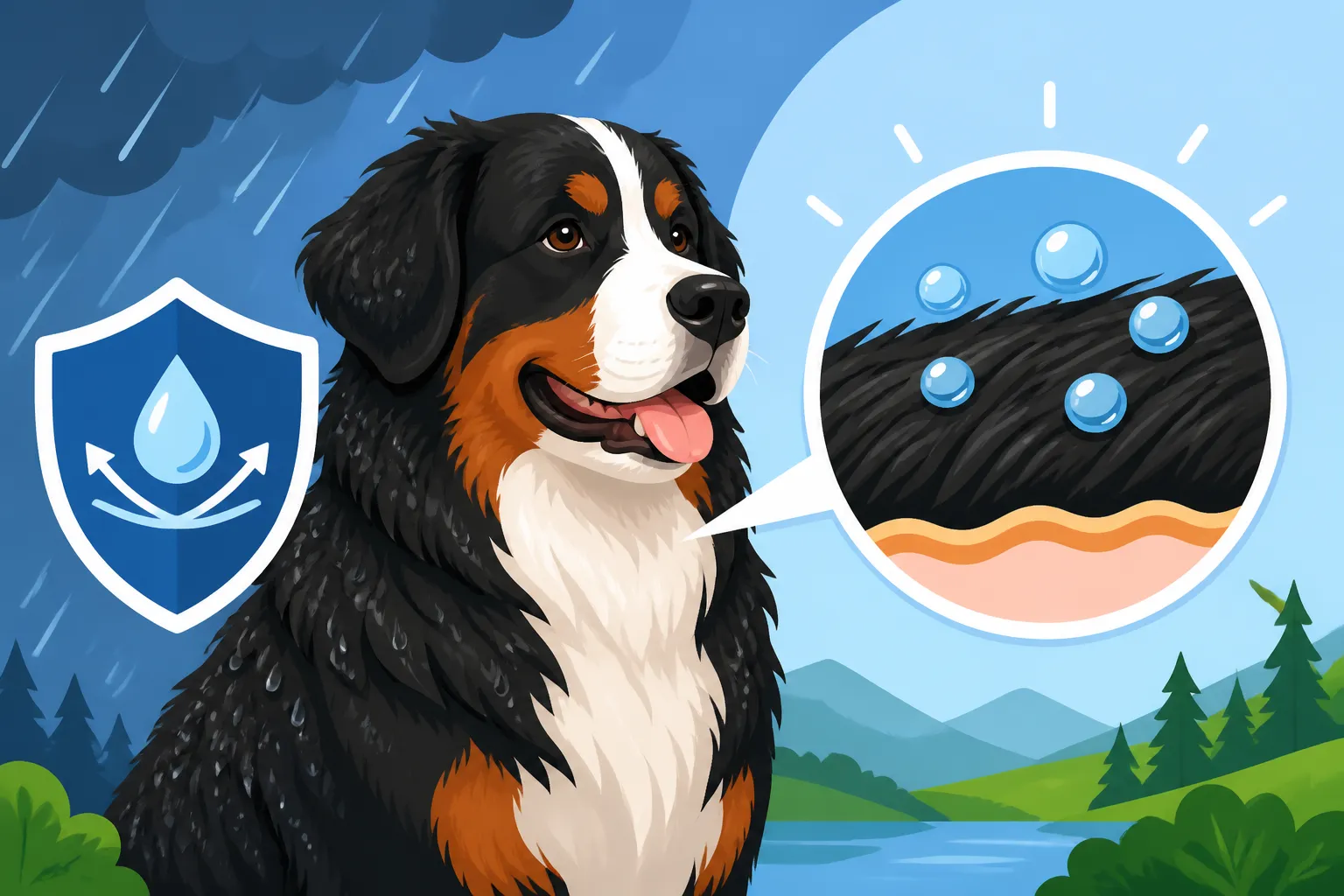
The outer layer of a Bernese Mountain Dog's coat is often described as medium-long, thick, and slightly wavy or straight. This isn't just for show; it serves as the first line of defense against the elements. The coarser texture of these guard hairs allows them to shed light rain, snow, and debris to a certain extent. Think of it like a finely woven, natural raincoat that deflects moisture on impact. You might notice water beading up and rolling off if your Berner gets caught in a light drizzle, giving the impression of being quite water-resistant. There are natural oils in their fur that contribute to this initial repellency, helping to keep moisture from immediately penetrating. However, it's crucial to understand that this is a degree of protection, not an impenetrable barrier. Prolonged exposure or a heavier downpour will eventually overcome this outer shield.
The Dense Undercoat: Insulation First
Beneath that handsome outer layer lies the true workhorse of the Bernese Mountain Dog's coat: a dense, woolly undercoat. This soft, thick layer is primarily responsible for keeping them warm in freezing temperatures. It traps a layer of air close to their body, which then warms up and acts as an insulating barrier. While incredible for warmth, this undercoat is not designed to repel water. In fact, if water manages to get past the outer guard hairs – which it will during extended wet conditions, swimming, or even heavy dew – the undercoat acts like a sponge. It absorbs and holds moisture, clinging to the skin. This isn't just uncomfortable for your dog; it can quickly lead to their skin becoming chilled, and can set the stage for other issues if not dried properly.
How Water Interacts with Their Fur
Imagine a duck's feathers – truly waterproof, allowing water to roll off entirely. Now picture a sheep's wool, which absorbs water readily. A Bernese Mountain Dog's coat falls somewhere in between, but leans far more towards the sheep than the duck when truly wet.
When your Berner first steps into light rain, you'll see those guard hairs doing their job. Water droplets might sit on top, glistening like tiny pearls, and a quick shake might send most of them flying. This is where the illusion of a "waterproof" coat often begins. Owners often marvel at how quickly their dog seems to dry off from a light splash. However, if that rain continues, or if your Berner decides a muddy puddle looks like an excellent swimming spot, the story changes dramatically. The outer hairs will become saturated, losing their ability to deflect, and the water will seep into the undercoat. Once that dense undercoat is wet, it takes a significant amount of effort and time to get it dry again. This is especially true for the "trousers" on their hind legs and the feathering on their legs, which can really hold onto moisture. The Bernese Mountain Dog Shed and What It Fills is a testament to the density of this coat, which also applies to its water-absorbing capabilities.
Water Resistance vs. Waterproof: The Reality for Bernese Mountain Dogs
It's essential to differentiate between "water-resistant" and "waterproof" when talking about a Bernese Mountain Dog's coat. These terms are often used interchangeably, but they describe very different levels of protection, especially when it comes to dog coats.
Initial Repellency: What You See First
As we discussed, the Bernese Mountain Dog's outer coat is water-resistant to a degree. This means it can resist the penetration of water to some extent, particularly from light exposure. If you're on a short walk and a few drops of rain fall, or your Berner brushes past some dewy bushes, you'll likely see the water pearl up and not immediately soak through. This natural repellency is a gift of their breed, allowing them to stay relatively dry during fleeting damp conditions. This initial protection is often what leads new owners to believe their Berner is somehow immune to getting truly wet. It gives a false sense of security that their dog can just shake off any amount of moisture.
When the Coat Gets Saturated: The Truth Comes Out
However, "water-resistant" is not "waterproof." Waterproof means no water can penetrate, no matter the duration or intensity of exposure. Think of a rain jacket made for humans – if it's truly waterproof, you can stand in a downpour for hours and remain dry. A Bernese Mountain Dog's coat simply isn't built for that.
The moment your Berner decides to take a dip in a lake, rolls around in wet snow for an extended period, or endures a persistent rain shower, you'll quickly discover the limits of their coat's water resistance. The outer guard hairs become completely saturated, and then the dense undercoat beneath rapidly absorbs water. Once the undercoat is wet, it clings heavily to their body, becoming incredibly difficult to dry. This isn't just about discomfort; a soaked undercoat loses its insulating properties, potentially leading to hypothermia in cold weather. It also creates a damp environment next to the skin, which can invite skin irritations or hot spots if not addressed promptly. Why a Damp Bernese Mountain Dog Develops Sores highlights the risks associated with prolonged dampness.
Here's a quick comparison of what "water-resistant" and "waterproof" mean in the context of a Berner's coat:
| Feature | Water-Resistant (Berner's Coat) | Waterproof (e.g., proper rain gear) |
|---|---|---|
| Protection | Resists light moisture/brief exposure | Prevents any water penetration |
| Soaking | Will eventually soak through with persistence | Remains dry regardless of exposure |
| Drying Time | Can take many hours to dry fully if soaked | Dries quickly on the surface |
| Insulation | Good when dry, poor when wet | Maintains insulation when wet (if designed to) |
| Material | Natural oils, coarse guard hairs | Synthetic membranes, sealed seams |
The Dangers of a Wet Undercoat
Beyond the sheer inconvenience of a soggy, heavy dog, a thoroughly wet undercoat presents several real dangers for your Bernese Mountain Dog:
- Hypothermia: In cooler temperatures, a wet coat can rapidly draw heat away from their body, especially if they are inactive. This can lead to a dangerous drop in body temperature.
- Skin Irritations and Infections: A perpetually damp environment close to the skin is a breeding ground for bacteria and fungi. This can manifest as hot spots, yeast infections, or other dermatological issues, leading to discomfort, itching, and potential veterinary visits. Itching Under a Bernese Mountain Dog's Thick Coat is a common problem made worse by dampness.
- Matting: As the coat dries, especially the dense undercoat, it can felt and mat incredibly quickly. Mats pull on the skin, causing pain and creating even more pockets for moisture and debris to accumulate.
- Odor: A damp, un-dried coat can develop a distinct, unpleasant "wet dog" smell that can linger and permeate your home.
Understanding these distinctions is crucial for responsible Bernese Mountain Dog ownership, particularly when planning outdoor adventures or dealing with seasonal weather changes.
Practical Implications: What This Means for Wet Weather & Grooming
Knowing that your Bernese Mountain Dog’s coat isn't waterproof impacts how you approach everything from daily walks to their grooming routine. It means being proactive rather than reactive, and having the right tools on hand.
Outdoor Activities in Rain or Snow
Your Berner, despite its thick coat, isn't immune to the discomfort of being thoroughly soaked. While they might adore romping in the snow, remember that snow melts. A long play session in fresh powder will inevitably lead to a very damp dog once they come inside. Similarly, what starts as a light drizzle can turn into a downpour, and your Berner's coat will eventually become saturated.
- Manage Expectations: Don't expect your Berner to stay dry on a long hike in the rain or after a swim. They will get wet. Plan your outings accordingly, especially in colder weather. Shorter, more frequent outings in light rain might be fine, but prolonged exposure warrants more careful consideration.
- Consider Rain Gear: While some Bernese Mountain Dogs might resist wearing clothing, a dog raincoat can be a game-changer for protecting that top layer from saturation. It won't keep them 100% dry, especially their legs and underside, but it can significantly reduce the amount of moisture that penetrates the undercoat, making drying much easier when you get home. Look for brands that offer large sizes and good coverage.
- Winter Wonderland Fun: Berners often love the snow! Their coat is fantastic for insulation in dry, powdery conditions. However, wet, heavy snow can melt and saturate their coat just like rain. Snow can also ball up in their feathering, creating discomfort and pulling on the skin. Snow Balling Up in a Bernese Mountain Dog's Coat is a common issue. A good brushing before and after snow play, and perhaps even paw balm, can help.
Grooming Challenges After Getting Wet
This is where the "not waterproof" reality really hits home. Drying a Bernese Mountain Dog after they've been thoroughly soaked is not a quick task. It's a commitment.
- Towel Drying is Just the Start: A couple of towels might absorb some surface moisture, but they won't get through that dense undercoat. You'll need more than just a rub-down.
- The Power of a Force Dryer: This is arguably one of the most essential tools for a Bernese Mountain Dog owner. A high-velocity force dryer, like those groomers use, blasts air through the coat, pushing water out from the skin level. It can cut drying time significantly, prevent matting, and ensure the undercoat is truly dry. Investing in a good quality dog-specific dryer is highly recommended. You can find options on platforms like Amazon or Chewy. How Long a Wet Bernese Mountain Dog Takes to Dry is a post that really delves into this.
- Brushing While Drying: As you dry, continuously brush the coat. This helps separate the hairs, allowing air to penetrate more effectively and preventing tangles and mats from forming as the fur dries. Focus on areas prone to matting like behind the ears, armpits, and the "trousers." Tangles Behind a Bernese Mountain Dog's Elbows and Mats in a Bernese Mountain Dog's Ruff are prime examples of problem spots.
- Preventing Skin Issues: Ensuring your Berner is completely dry after getting wet is paramount to preventing skin problems. Dampness trapped close to the skin creates an ideal environment for yeast and bacterial growth. If you notice any redness, itching, or a strange odor, it's time to check with your vet.
Products for Enhanced Protection (but not true waterproofing)
While you can't make a Bernese Mountain Dog's coat waterproof, you can certainly use products to enhance their comfort and cleanliness when wet.
- Raincoats and Protective Gear: As mentioned, a well-fitting dog raincoat provides a valuable barrier against rain and snow. Look for ones that are breathable but provide good coverage over the back and chest. For paws, consider protective boots in extreme conditions or a good paw wax to prevent snow and ice from clinging between their pads and to protect against road salt.
- Water-Repellent Sprays (Use with Caution): There are some sprays on the market designed to enhance water repellency in dog coats. While they might help light moisture bead off more effectively, they are not a substitute for proper drying and grooming. Always test on a small area first and ensure the product is safe for dogs. Never rely on these to keep your dog dry in a serious downpour or swim.
- Absorbent Towels and Robes: Super-absorbent microfiber towels or dog drying robes can be very useful for the initial soak-up before you bring out the force dryer. They can remove a surprising amount of water and contain mud and debris. Having a dedicated spot by the door with these items ready can save your floors and furniture.
Remember, these products are about managing wetness, not eliminating it. The core principle remains: a wet Berner needs thorough drying.
Caring for a Wet Bernese Mountain Dog: Tips and Best Practices
Bringing a wet Bernese Mountain Dog indoors can quickly turn your home into a damp, muddy zone if you’re not prepared. Having a solid routine and the right tools can make all the difference, transforming a potential hassle into a manageable part of life with these magnificent dogs.
Thorough Drying Techniques
The key to a happy, healthy Berner, especially after they've had a splash, is making sure they are bone-dry. This goes beyond just surface drying; you need to reach that dense undercoat and the skin underneath.
- Initial Towel Off: As soon as you come in, grab those super-absorbent microfiber towels. Gently but firmly blot and rub down your Berner. Don't just wipe the surface; try to squeeze water out of their feathering and those thick "trousers" on their hind legs. Many owners keep a designated "dog towel" by the door specifically for this purpose.
- The Force Dryer is Your Best Friend: This isn't just a luxury; it's a necessity for Bernese Mountain Dog owners. A high-velocity force dryer (not a human hairdryer, which can be too hot) is designed to blast air through the coat, separating the hairs and pushing water out from the skin level.
- Technique: Start on a low setting and slowly work your way from the back to the front, section by section. Hold the nozzle a few inches from the coat. As you dry, use your free hand to lift and separate the fur, ensuring the air gets all the way to the skin. You'll literally see the water flying off!
- Patience is Key: This process can take a good 30 minutes to an hour, depending on how wet your dog is. Be thorough, especially around the ears, armpits, belly, and tail, as these areas often stay damp longest.
- Brushing During Drying: Use a slicker brush and/or a wide-toothed comb while force drying. This helps to further separate the hairs, accelerate drying, and prevent any mats from forming as the coat dries. It also helps to distribute natural oils, keeping the coat healthy. Regular brushing helps to remove dead undercoat, which can make drying more efficient in the long run. Getting a Rake Down Through a Bernese Mountain Dog's Coat is a great resource for this.
Preventing Mats and Skin Issues
A damp coat is a prime environment for matting and skin irritation. Prevention is always better than cure.
- Regular Grooming: Even when not wet, consistent brushing is vital for a Bernese Mountain Dog. This helps to remove loose undercoat, which can trap moisture and contribute to matting. A good quality rake can get deep into the undercoat.
- Check for Hot Spots: After a thorough wetting and drying, always check your Berner’s skin. Run your hands over their body, feeling for any warm, red, or tender spots. These can quickly escalate into painful hot spots if not caught early. Pay close attention to areas that tend to stay damp, like behind the ears, under the armpits, and in the groin.
- Skin Health: Ensure your dog's diet supports healthy skin and coat. Omega fatty acid supplements can also help maintain skin barrier integrity and promote a healthy coat that naturally resists some moisture. If skin issues are a recurring problem, discuss them with your veterinarian.
Choosing the Right Gear for Wet Adventures
Having the right gear makes managing a wet Berner much easier, both for your dog and for your home.
- Dog Raincoats: As mentioned, a well-fitting raincoat, like those from Chewy, can protect a significant portion of their topcoat. Look for adjustable straps and a design that doesn't restrict movement.
- Paw Protection: In muddy or icy conditions, dog boots can protect their paw pads and minimize the amount of mud and debris tracked into your home. Alternatively, a good paw balm can create a protective barrier.
- Vehicle Protection: If your Berner frequently rides in the car after wet adventures, consider waterproof seat covers or a large dog crate liner to protect your car's interior from mud, water, and shedding fur. Amazon offers a wide variety of car protection solutions for large dogs.
Post-Adventure Routine
Developing a consistent routine after wet outings will save you time and keep your Bernese Mountain Dog healthier.
- The "Mud Room" Approach: Designate an area near an entry point (a mudroom, a large bathroom, or even a covered porch) as your Berner's "drying station." Have all your tools — towels, force dryer, brushes, and maybe a treat or two — ready.
- Immediate Action: Don't let your Berner wander through the house while still wet. Lead them directly to their drying station. The quicker you start drying, the easier it will be.
- Reward Patience: Make the drying process a positive experience. Offer praise and small treats, especially if your Berner isn't initially thrilled about the force dryer. Building a positive association will make future drying sessions much smoother.
- Check and Brush Again: Once you believe they are dry, do a final run-through with a comb to ensure there are no missed damp spots or forming mats. This final check is crucial.
- Clean Up: Have a small vacuum or dustpan and brush handy to quickly clean up any loose hair and debris that came off during the drying process.
By understanding that your Bernese Mountain Dog's coat is water-resistant, not waterproof, and implementing these caring practices, you can ensure they stay comfortable and healthy, no matter what the weather brings. They may love the elements, but it's up to us to manage the aftermath effectively.
Disclaimer
This article is for general informational purposes only and does not constitute professional advice. Laws, prices and regulations vary by location and change over time. Consult a qualified professional for guidance on your specific situation.