Why a Damp Bernese Mountain Dog Develops Sores
Anyone who shares their life with a magnificent Bernese Mountain Dog knows the sheer joy they bring, but also the unique challenges that come with their impressive size and glorious, thick coat. One of the most frustrating and often painful issues owners face is when their beloved Berner develops sores or irritated skin, especially after they've gotten wet. This guide will walk you through precisely why your damp Bernese Mountain Dog is prone to these uncomfortable skin problems, how to prevent them, and what to do if they appear.
The Unique Susceptibility of a Bernese Mountain Dog to Dampness Issues
Bernese Mountain Dogs are stunning animals, but their lineage as mountain dogs designed for cold climates means their coats are a double-edged sword when it comes to moisture. This isn't just a minor inconvenience; it's a significant factor in their skin health. Understanding why their coat and physical structure predispose them to dampness-related issues is the first step in prevention.
The Double Coat: A Trap for Moisture
Your Berner’s glorious, dense double coat is fantastic for keeping them warm in the frigid Swiss Alps, but it's not designed for quick drying in humid environments or after a swim in the local pond. The outer coat is long and slightly wavy, acting as a protective barrier, while the undercoat is thick, woolly, and incredibly insulating.
When your Bernese Mountain Dog gets wet – whether from a dip in the lake, a romp in the rain, or even a thorough bath – that water doesn't just sit on the surface. It gets absorbed and trapped deep within the dense undercoat. Imagine trying to dry a thick wool blanket by just rubbing a towel over the top; the moisture lingers underneath for hours, sometimes even days if not properly addressed. This prolonged dampness creates the perfect warm, moist environment for bacteria and yeast to flourish on the skin surface, turning a simple wet coat into a breeding ground for irritation and infection. The challenge is particularly evident in areas where the coat is thickest or where there are natural folds, like around the neck, armpits, groin, and at the base of the tail where the fur often forms a dense "flag."
Body Structure and Natural Folds
Beyond the coat itself, the Bernese Mountain Dog's body structure plays a role in trapping moisture and increasing the risk of skin issues. These are large, substantial dogs, and with that size come certain anatomical considerations.
Their deep chests and broad bodies mean there can be areas where skin rubs against skin, or where air circulation is naturally limited. Consider the armpits or the folds around the neck and jowls, especially if your Berner has a tendency to lean into you for cuddles. These areas can stay damp longer, not just from external water but also from drool, sweat, or even just condensation from their own body heat being trapped. For instance, after a vigorous play session, a Berner’s body temperature rises, and if they then lie down on a damp patch of grass, that combination of body heat and external moisture can quickly lead to irritation in those less-ventilated spots. Even if your Berner is typically meticulous about keeping themselves clean, the sheer volume and thickness of their fur can make it difficult for these specific areas to ever truly dry out naturally. It's a constant battle against physics and biology.
Common Skin Problems Caused by Persistent Dampness
When moisture gets trapped against a Bernese Mountain Dog's skin for too long, it opens the door to a variety of uncomfortable and often painful skin conditions. It’s not just a little itch; these can quickly escalate into full-blown infections that require veterinary intervention.
Hot Spots Acute Moist Dermatitis
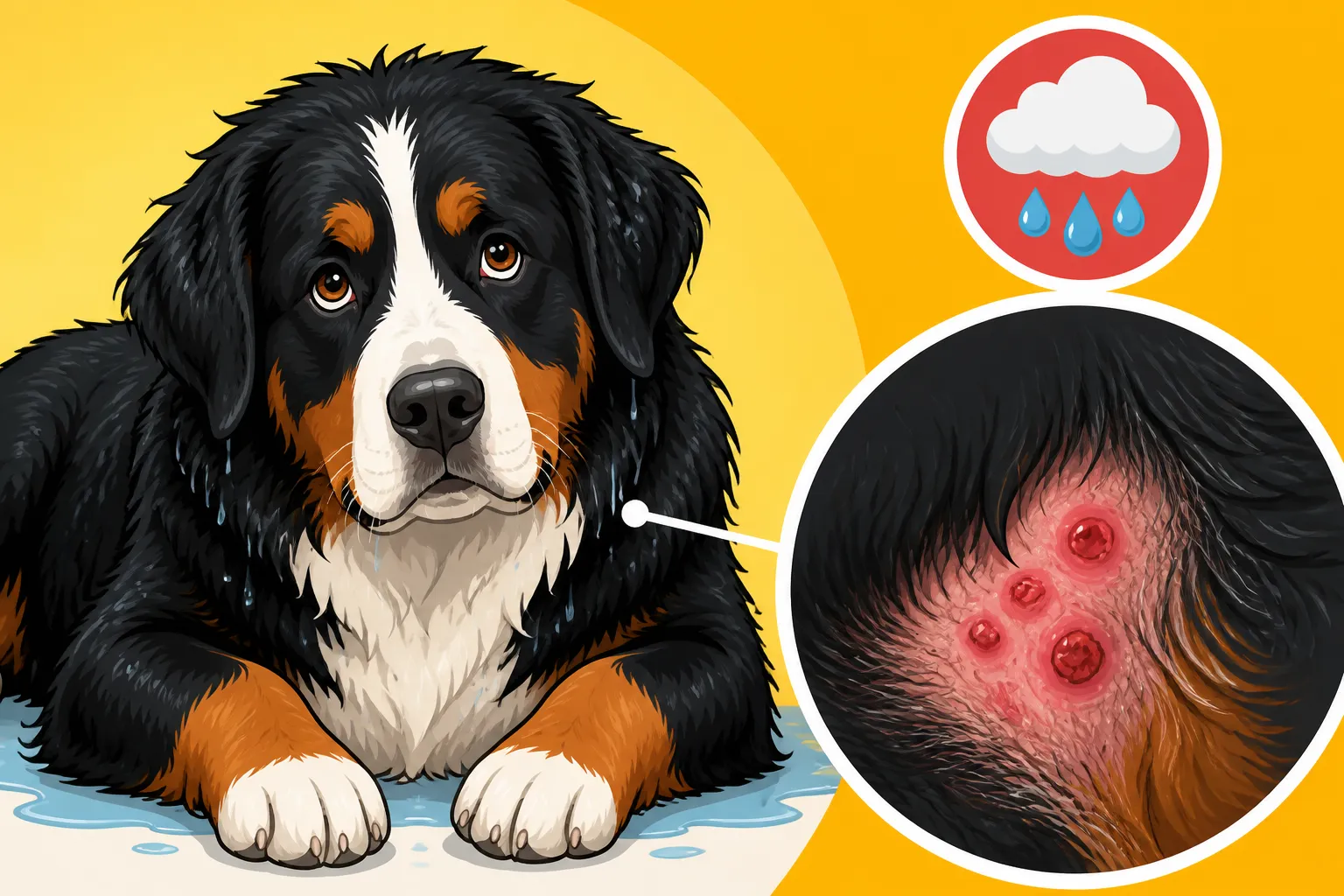
Hot spots, medically known as acute moist dermatitis, are probably the most infamous dampness-related skin issue for thick-coated breeds like Berners. They appear suddenly and can spread with alarming speed. You might notice a small patch of intensely red, moist, and inflamed skin that looks like an open wound. The hair in the affected area will often be matted down with oozing fluid.
The frustrating thing about hot spots is how quickly they spiral. Your Berner gets wet, the moisture stays trapped, and a minor irritation begins. They start to lick or scratch the area due to the discomfort, which then further damages the skin, introducing bacteria from their mouth and nails. This self-trauma only makes the problem worse, creating a vicious cycle of itching, licking, and growing irritation. Common places for these to crop up include the side of the face or neck, the base of the tail, or on the thighs, often triggered by something as simple as swimming in the local creek or a persistent flea bite that started the initial irritation. Owners often discover them after their dog has been frantically scratching or chewing at a particular spot, only to pull back the fur and find a nasty, weeping lesion underneath. The pain and itchiness can be intense, causing significant distress for your dog.
Yeast Infections Malassezia Dermatitis
Another common culprit thriving in damp, warm conditions is yeast, specifically Malassezia pachydermatis. Unlike the acute, oozing nature of hot spots, yeast infections often present more subtly at first but can become chronic and widespread if not managed.
You might first notice a peculiar, musty odor emanating from your Berner's coat, especially in areas prone to dampness like the armpits, groin, between the paw pads, or inside the ear flaps. The skin in these areas may appear reddish, greasy, and thickened, sometimes even taking on a dark, leathery texture over time. Your dog might be excessively licking their paws or scratching at their ears. This happens because yeast naturally lives on dog skin, but when conditions become overly moist and warm – say, after a long walk in humid weather or if a dog has been swimming and not thoroughly dried – the yeast population explodes. This overgrowth leads to inflammation, itching, and that characteristic smell. If your Bernese Mountain Dog has Recurring Ear Infections in a Bernese Mountain Dog, yeast could very well be a contributing factor, as the warm, dark, moist environment of the ear canal is a perfect breeding ground. Addressing these issues often requires specific antifungal treatments from your vet.
Pyoderma and Folliculitis
Beyond hot spots and yeast, persistent dampness can also pave the way for bacterial skin infections like pyoderma or folliculitis. Pyoderma is a general term for a bacterial skin infection, while folliculitis specifically refers to an infection of the hair follicles.
When the skin is constantly wet and irritated, its natural protective barrier is compromised, making it easier for common skin bacteria, often Staphylococcus, to penetrate and cause an infection. You might see small red bumps, pustules (like tiny pimples), or crusting on the skin. In more severe cases, there can be patches of hair loss, and the skin might feel scabby or flaky. These infections can be itchy and uncomfortable, leading your Berner to scratch, which can further spread the bacteria or introduce new ones. For example, if your Berner loves to roll in dewy grass in the morning, and their thick coat prevents quick drying, bacteria on the skin surface can get trapped and start to multiply in the damp environment. It's not uncommon for these bacterial infections to occur secondary to other issues, like allergies that cause initial itching and skin damage, but dampness acts as a significant amplifier.
Preventing Dampness-Related Skin Issues in Your Berner
Preventing these painful skin problems is always better than treating them, and for a Bernese Mountain Dog, it requires a proactive and consistent approach. Given their thick coats and propensity for outdoor activities, managing moisture is a cornerstone of their skin health.
The Art of Thorough Drying
This is, without a doubt, the single most critical step in preventing dampness-related skin issues in a Bernese Mountain Dog. Simply towel-drying isn't enough; you need to get down to the skin.
- After Water Play: If your Berner has been swimming in a lake, playing in the rain, or even just enjoying a good bath, you need to dry them thoroughly, immediately. Start with absorbent towels to remove as much surface water as possible. For instance, using multiple large, thirsty microfibre towels can dramatically cut down on drying time.
- For the Undercoat: The real challenge lies with the undercoat. A high-velocity dog dryer (sometimes called a force dryer) is an invaluable tool for Bernese Mountain Dog owners. These dryers blow air, not heat, at a powerful rate, literally blasting water out of the undercoat. This not only dries them much faster but also helps to de-shed loose hair, preventing mats that can trap even more moisture. Take your time, section by section, starting from the hindquarters and working your way forward, ensuring the skin is dry to the touch. If you don't have a force dryer, a regular hairdryer on a cool setting can be used, but keep it moving constantly to avoid overheating the skin. The goal is to dry them completely, inside and out. It can feel like a marathon, but trust me, it's worth it to avoid a painful hot spot. Consider the advice in How Long a Wet Bernese Mountain Dog Takes to Dry for more detailed tips.
- Focus on Problem Areas: Pay extra attention to those dense areas mentioned earlier: armpits, groin, behind the ears, and the base of the tail. These spots are often overlooked but are prime locations for issues to develop.
Regular Grooming and Coat Maintenance
A well-maintained coat is a healthy coat, and regular grooming is your secret weapon against dampness woes.
- Brushing, Brushing, Brushing: Daily or at least every-other-day brushing with the right tools, like a good slicker brush and an undercoat rake, is essential. This helps to remove loose hair from the dense undercoat, which, when matted, can trap moisture like a sponge. Think about the tips from Brushing Out a Bernese Mountain Dog's Undercoat to really get down to the skin. Matted fur not only holds water but also prevents air circulation, exacerbating the problem.
- Preventing Mats: Areas prone to matting, such as behind the ears, under the "feathers" on their legs, and around the tail, need special attention. Mats quickly turn into felt, creating impermeable barriers that lock in moisture and heat, leading to severe skin irritation underneath. If you find a small mat, gently work it out with a detangling spray and a comb. For larger, stubborn mats, it’s often best to consult a professional groomer.
- Professional Grooming: Regular trips to a professional groomer who understands double-coated breeds can be incredibly beneficial. They have the right tools and expertise to thoroughly de-shed your Berner, ensuring their coat is as healthy and breathable as possible. They can also trim the hair between paw pads, which helps prevent moisture and debris from accumulating there, another common spot for yeast infections. A skilled groomer will know how to manage The Trousers on a Bernese Mountain Dog's Hind End and other dense areas.
Environmental Control and Lifestyle Adjustments
Sometimes, preventing dampness is about managing their environment and daily routine, not just their coat.
- Humidity is the Enemy: If you live in a particularly humid climate, consider using dehumidifiers inside your home, especially in areas where your Berner spends a lot of time. This can help reduce ambient moisture that can linger in their coat.
- Smart Exercise Choices: During hot, humid months, adjust your exercise schedule. Avoid strenuous activity during the hottest parts of the day when they're more likely to get excessively sweaty and then lie down on damp ground. The Hours a Bernese Mountain Dog Should Not Walk provides crucial advice on this. Instead, opt for early morning or late evening walks when it's cooler and drier.
- Post-Walk Wipe Downs: Even if it hasn't rained, a walk through dewy grass can leave your Berner's paws and belly damp. A quick wipe down with a towel or even pet-specific wet wipes can prevent moisture from sitting on the skin.
- Sleeping Surfaces: Ensure your Berner has access to clean, dry, and breathable sleeping surfaces. Orthopedic beds with removable, washable covers are excellent. Avoid letting them sleep on damp outdoor surfaces for extended periods, especially during warmer months.
Diet and Overall Health
A healthy skin barrier also starts from within. Good nutrition plays a vital role in keeping your Berner’s skin resilient.
- High-Quality Diet: Feed your Bernese Mountain Dog a high-quality, balanced diet appropriate for large breeds. A diet rich in essential fatty acids, particularly Omega-3s, can support skin health and reduce inflammation, making their skin less susceptible to irritation.
- Supplements: Talk to your veterinarian about whether a fish oil supplement or other skin-supporting supplements might be beneficial for your particular Berner. They can advise on appropriate dosages.
- Allergy Management: If your Berner has underlying allergies (environmental or food), these can weaken the skin barrier and make them more prone to secondary infections from dampness. Working with your vet to manage allergies is crucial. Regular vet check-ups, often covered by comprehensive pet insurance like Healthy Paws, are key to catching these problems early and discussing preventative measures.
Treating Existing Dampness Sores
Despite your best efforts, sometimes a sore can still pop up. It’s important to act quickly and involve your veterinarian, as these conditions can worsen rapidly. Never try to self-diagnose or treat severe skin issues without professional guidance.
Immediate First Aid and Veterinary Consultation
As soon as you notice any redness, oozing, or excessive licking/scratching, it's time to take action.
- Clear the Area: For hot spots, the first step is often to gently trim the hair around the affected area. This allows the sore to breathe, helps with drying, and lets you see the full extent of the problem. Use blunt-nosed scissors or electric clippers with a clean blade. Be extremely careful not to cut the irritated skin. This is usually uncomfortable for your dog, so a helper is often useful.
- Gentle Cleaning: Once the hair is trimmed, you can gently clean the area with a mild antiseptic solution, such as diluted chlorhexidine or povidone-iodine. Avoid harsh chemicals or alcohol, which can further irritate the skin. Pat the area dry very thoroughly after cleaning.
- Prevent Licking: Your Berner's licking is a major factor in worsening these sores. An Elizabethan collar (cone of shame) is often necessary to prevent them from accessing and further irritating the area. This can be challenging for a large dog, but it's crucial for healing.
- Contact Your Veterinarian: Even if you've done some initial first aid, a vet visit is almost always warranted for dampness-related sores. They can accurately diagnose the type of infection (bacterial, yeast, or both) and prescribe the appropriate medication. This might include oral antibiotics or antifungals, topical creams, or medicated shampoos. Don't delay; these issues can become much harder to treat if left unchecked. A good pet insurance plan, such as one from Healthy Paws, can help manage the costs associated with these sometimes-recurrent veterinary visits.
Veterinary Treatment Options
Your vet will tailor a treatment plan based on the specific type and severity of the skin problem.
- Medicated Shampoos: For widespread issues or for recurring problems, medicated shampoos containing ingredients like chlorhexidine (antibacterial) or miconazole (antifungal) are often prescribed. These need to be used correctly, typically lathered and left on for 10-15 minutes before rinsing, several times a week. Bathtime can be a big undertaking for a Bernese, so prepare for it!
- Oral Medications: For more severe hot spots or systemic infections, oral antibiotics are frequently necessary to clear up the bacterial component. Oral antifungals may be prescribed for yeast infections. Your vet might also prescribe anti-inflammatory medications or antihistamines to reduce itching and discomfort.
- Topical Treatments: Sprays, creams, or ointments can be applied directly to localized sores to deliver medication and provide a protective barrier. Always ensure your Berner cannot lick these off, again, the cone might be needed.
- Addressing Underlying Causes: The vet will also want to investigate if there's an underlying cause exacerbating the dampness issues, such as allergies, fleas, or hormonal imbalances. Treating these root causes is crucial for long-term prevention. For example, if Itching Under a Bernese Mountain Dog's Thick Coat is a chronic issue, allergy testing might be recommended.
Long-Term Management and Support
Managing dampness-related skin issues in a Bernese Mountain Dog isn't usually a one-and-done fix; it often requires ongoing vigilance and a dedicated routine.
- Consistency is Key: Stick to your thorough drying and grooming routines, even when your Berner seems perfectly healthy. It's much easier to prevent these problems than to treat them.
- Monitor Closely: Regularly check your Berner’s skin, especially in those problematic, dense areas. A quick daily pat-down and sniff can alert you to potential issues before they become severe. Look for any redness, moisture, changes in hair texture, or unusual smells.
- Environmental Adjustments: Continue to manage humidity in your home and be mindful of outdoor conditions. Provide plenty of shaded, dry spots for your Berner to rest, especially during warm weather.
- Consult Specialists: If your Berner suffers from chronic or recurrent skin problems, your vet might refer you to a veterinary dermatologist. These specialists have advanced knowledge and tools to diagnose and manage complex skin conditions, offering tailored solutions. Healthy Paws and similar pet insurance providers can often help cover the costs of specialist consultations, making advanced care more accessible.
These beautiful, big dogs bring so much joy, but they also bring specific care needs. Understanding Why a Bernese Mountain Dog Dies Younger Than Other Giants often involves recognizing how common health issues, including skin problems, can impact their overall well-being. By being diligent about drying and grooming, you can help your Berner enjoy a much more comfortable and healthier life.
| Skin Condition | Primary Cause | Common Symptoms | Key Locations | Initial Action |
|---|---|---|---|---|
| Hot Spots | Bacterial overgrowth | Red, moist, oozing, inflamed skin; intense itching | Neck, tail base, thighs, cheeks, trunk | Trim hair, gentle clean, prevent licking, vet immediately |
| Yeast Infection | Malassezia overgrowth | Musty odor, greasy skin, redness, thickened skin | Armpits, groin, paw pads, ear flaps | Gentle clean, vet for diagnosis/antifungals |
| Pyoderma/Folliculitis | Bacterial skin infection | Red bumps, pustules, crusting, hair loss | Anywhere on body, often trunk, abdomen, groin | Clean, prevent scratching, vet for antibiotics |
Disclaimer
This article is intended for informational purposes only and does not constitute veterinary advice. Always consult with a qualified veterinarian for any health concerns or before making any decisions about your pet's medical care.