The Kind Expression a Bernese Mountain Dog Standard Wants
One of the most heartwarming things about bringing a Bernese Mountain Dog into your life is their incredibly gentle and benevolent demeanor. It's often reflected right there on their face, in what many refer to as that quintessential "kind expression." But for new owners, or even seasoned enthusiasts, understanding precisely what that means, how it's achieved, and how to nurture it can be a bit of a mystery, especially when you encounter variations. This guide will delve deep into the nuances of the Bernese Mountain Dog's kind expression, helping you appreciate its significance and recognize it in your beloved companion.
Decoding the Bernese Mountain Dog Breed Standard for Expression
When we talk about a "kind expression" in a Bernese Mountain Dog, we're not just making a sentimental observation; we're referring to a specific characteristic highly valued within the breed standard. The breed standard, which is essentially the blueprint for what a Bernese Mountain Dog should look and act like, places significant emphasis on temperament and how it manifests in their facial appearance. It’s more than just a pretty face; it’s an indicator of their true nature.
What "Kind Expression" Really Means
The phrase "kind expression" describes a look that conveys friendliness, gentleness, and an overall benevolent disposition. It suggests a dog that is self-confident and good-natured, not aggressive, fearful, or overly timid. Imagine a dog that looks at you with soft eyes, a relaxed brow, and a gentle tilt of its head – that’s the essence of it. This isn't just about how they look when they're happy and getting a treat; it's about their general demeanor when interacting with the world. A true Bernese Mountain Dog carries this kindness in their eyes and their overall facial composure, even when they're simply observing. It's a hallmark of the breed's stable and affectionate temperament. For more on the breed's desired temperament, you might want to read Self-Confident and Good-Natured in the Bernese Mountain Dog Standard.
The Importance of Temperament in the Breed Standard
The Bernese Mountain Dog breed standard outlines a dog that should be "good-natured, self-assured, peaceable, and affectionate towards familiar people; self-controlled and confident towards strangers." This mental picture directly translates to the physical expression on their face. A dog that is truly good-natured will naturally display a soft and kind expression. Conversely, a dog with a "sharp" or "shy" expression would be considered undesirable, as these traits indicate a deviation from the ideal temperament. This isn't just for show dogs; it’s crucial for every Berner, as their role as a family companion hinges on this stable, gentle nature. Owners want a dog they can trust around children and other animals, and that kind expression is often the first visual cue of that inherent reliability. The entire The Bernese Mountain Dog Breed Standard emphasizes these crucial characteristics.
Anatomy of a Kind Expression: Eyes, Ears, and Muzzle
The kind expression isn't just one singular feature; it's a symphony of several facial components working in harmony. Each part contributes to the overall impression, and understanding how they interrelate helps you truly appreciate this distinctive Berner trait.
The Gentle Gaze of a Berner's Eyes
The eyes are often considered the windows to the soul, and for a Bernese Mountain Dog, they are absolutely central to their kind expression. The standard calls for dark brown eyes, almond-shaped, and set neither too deeply nor too prominently. What's most important, however, is the look they convey. A kind expression features eyes that are soft, intelligent, and convey a sense of calm and warmth. There should be no hard stare, no darting glances that suggest nervousness, and certainly no glaring or aggressive glint. When your Berner looks at you with those gentle eyes, you feel that deep connection and unwavering loyalty that these dogs are famous for. It's a direct reflection of their inner peace and affectionate nature. You can delve deeper into The Bernese Mountain Dog Eye Shape and Color to understand more about this specific feature.
The Role of Ear Set and Muzzle Shape
Beyond the eyes, the way a Bernese Mountain Dog carries its ears and the shape of its muzzle significantly contribute to its overall expression. Their medium-sized, triangular ears should hang flat against the head when the dog is relaxed, rising slightly when alert to frame the face and enhance their curious, attentive look. A high-set or "flying" ear can make a dog look sharp or overly alert, detracting from the desired gentleness.
The muzzle should be strong and deep, neither pointed nor coarse. The lips should be close-fitting, not pendulous, creating a clean line. A relaxed muzzle, perhaps with a slight upward curve at the corners (a natural "smile"), complements the soft eyes. Conversely, a tight, pulled-back muzzle can indicate tension or discomfort, while a constantly furrowed brow might suggest anxiety. All these elements together paint the full picture of a gentle, approachable face.
Decoding Your Berner's Facial Cues
Just like humans, Bernese Mountain Dogs use their faces to communicate a wide range of emotions. Learning to read these cues can deepen your bond and help you understand your dog’s needs, especially since they don't always vocalize their feelings explicitly. It’s amazing how much a subtle shift in their facial muscles can tell you.
Recognizing Happiness and Relaxation
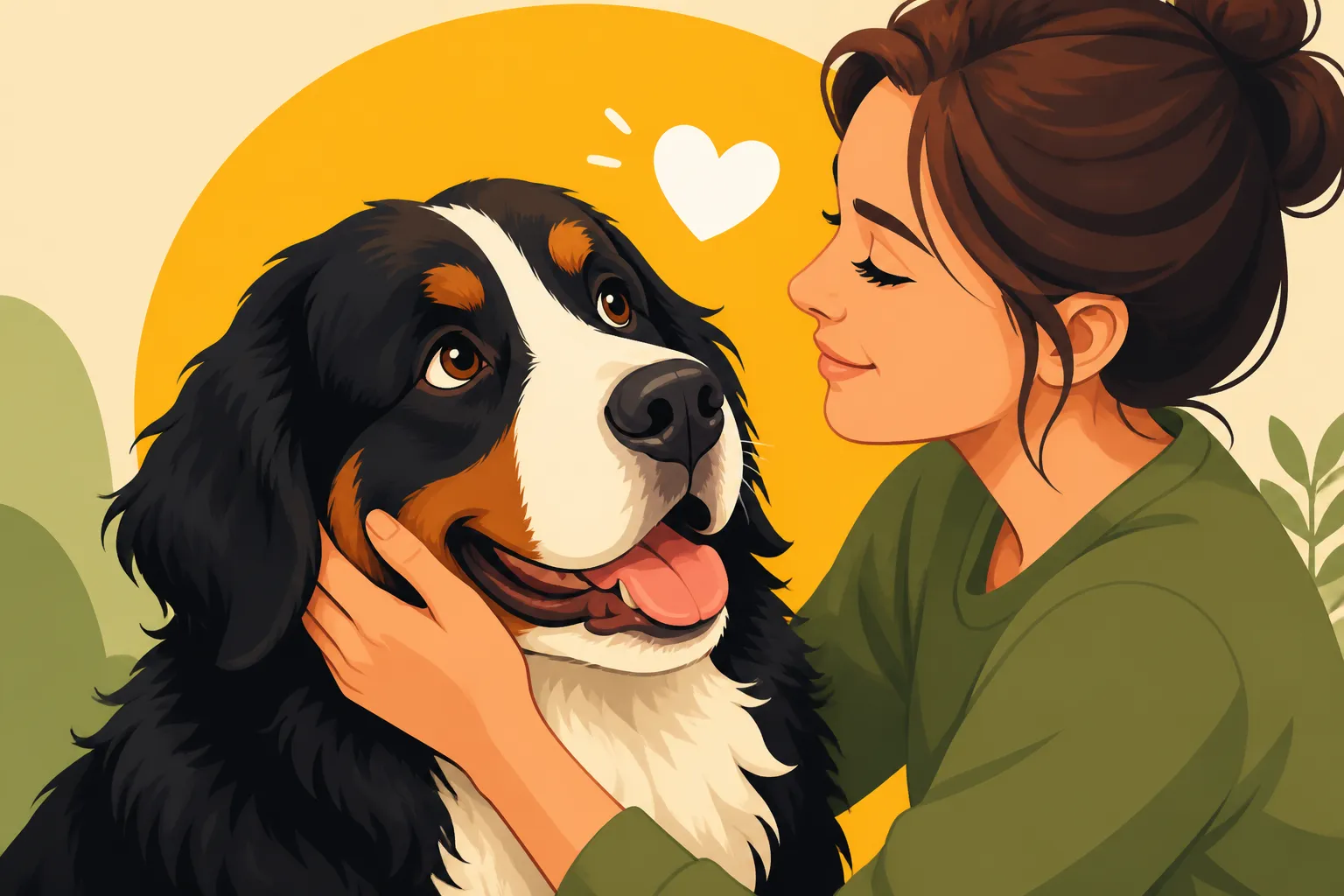
A truly happy and relaxed Bernese Mountain Dog will display that classic kind expression effortlessly. Their eyes will be soft, perhaps slightly squinted in contentment, with a relaxed brow that lacks any tension. Their mouth might be slightly open, showing a hint of tongue, or closed with a gentle, upturned curve, almost like a smile. Their ears will likely be relaxed, hanging naturally by their cheeks. Think of your Berner lounging on their favorite bed from Chewy, basking in a sunbeam – that's the picture of relaxation. Their entire face will seem to soften, conveying a sense of peace and approachability. This is the expression we all strive to see in our dogs, signaling they feel safe, loved, and content in their environment.
Identifying Curiosity and Concern
Berners are intelligent and observant dogs, and their expressions can shift quickly to reflect their interest or worry. When curious, their ears might perk up, turning slightly to catch a new sound, and their eyes will be wide, focused, and attentive, often with a slight head tilt. Their brow might show a mild furrow, indicating they are processing information. This isn't a worried look, but rather one of active engagement.
Concern, however, is a different story. If your Berner is feeling uneasy or sensing something is wrong, their expression will become more subdued. Their eyes might soften and gaze away, their ears might pull back slightly, and their brow could furrow more deeply. There might be a slight tensing of the muzzle or a subtle lip lick. It’s a delicate balance to read, as a truly concerned Berner doesn't typically show aggression, but rather a gentle apprehension. Recognizing these subtle shifts is key to understanding their emotional state and offering comfort if needed. For insights into discerning fear from aloofness, consider reading Telling Aloof From Fearful in a Bernese Mountain Dog.
Avoiding Misinterpretation: Distinguishing Shyness from a "Sharp" Expression
One of the biggest challenges for new Bernese Mountain Dog owners is correctly interpreting their dog's behavior and expressions. Sometimes, what might seem like a simple "off" look can actually be a red flag, or conversely, a natural part of their personality. The breed standard is quite clear on what constitutes an undesirable expression, and knowing the difference is crucial for responsible ownership and breeding.
Traits That Detract from a Kind Expression
Several traits are specifically mentioned in the breed standard as undesirable because they directly contradict the desired kind expression. A "sharp" expression implies a dog that looks unduly alert, perhaps even intense or suspicious, with hard eyes and a tense face. This can be interpreted as a lack of the gentle, easygoing nature expected. A "shy" expression, on the other hand, might manifest as constantly averted eyes, flattened ears, a tucked tail, or general body language that indicates fear or apprehension when approached. Neither of these expressions aligns with the confident, good-natured temperament that defines the breed. It's important to remember that these aren't just cosmetic faults; they often indicate underlying temperament issues that can affect a dog's quality of life and its ability to be a stable family member. You might find it helpful to look into What the Standard Means by an Aloof Bernese Mountain Dog to understand some of these distinctions.
The Importance of Correcting Undesirable Traits
If a Bernese Mountain Dog consistently displays a sharp or shy expression, it's often a sign of either poor breeding (where temperament wasn't prioritized) or insufficient socialization. While an undesirable expression in a show ring might lead to a lower score, in everyday life, it can lead to behavioral problems like fear-biting, excessive timidity, or a general inability to cope with new situations. It's vital for breeders to select for correct temperament, and for owners to provide early and consistent positive socialization experiences. If you notice your puppy is overly fearful or sharp, consulting with a professional trainer or behaviorist early on is crucial. They can help you implement strategies to build confidence and encourage a more balanced, kind demeanor. Training tools and resources, often available at places like Chewy, can be very helpful here.
Here's a quick reference table to help distinguish desirable from undesirable expressions:
| Feature | Desirable (Kind Expression) | Undesirable (Sharp/Shy Expression) |
|---|---|---|
| Eyes | Soft, dark brown, almond-shaped, intelligent, calm | Hard, darting, overly prominent/deep-set, fearful, aggressive |
| Brow | Relaxed, smooth, perhaps slightly furrowed in curiosity | Tense, deeply furrowed (anxious), wrinkled (suspicious) |
| Ears | Medium, triangular, flat against head when relaxed, slightly raised when alert | High-set, "flying", pulled back tightly (fearful), stiffly forward (overly alert) |
| Muzzle/Mouth | Strong, deep, clean lips, relaxed, slight natural "smile" | Tense, pulled back, snarling, trembling, excessive drooling (anxiety) |
| Overall Impression | Gentle, friendly, self-assured, approachable, benevolent | Suspicious, nervous, aggressive, timid, wary, easily startled |
The Impact of Socialization and Training on Temperament and Expression
While genetics lay the foundation for a Bernese Mountain Dog's temperament, environmental factors, particularly early socialization and ongoing training, play a massive role in shaping their personality and, consequently, their outward expression. A well-socialized and properly trained Berner is far more likely to consistently display that cherished kind expression.
Early Socialization for a Confident Canine
The period from 8 to 16 weeks is a critical window for puppy socialization. During this time, it's crucial for a Bernese Mountain Dog puppy to be exposed to a wide variety of sights, sounds, people, and other well-behaved dogs in a positive and controlled manner. This helps them develop into confident, adaptable adults who are not easily startled or fearful. A puppy that is constantly exposed to new, positive experiences is less likely to develop shyness or fear-based behaviors that would lead to an undesirable expression later in life. Imagine a puppy that has met children of all ages, heard vacuum cleaners, felt different textures underfoot, and been gently handled by many different people; that puppy grows up understanding the world isn't a scary place. This early foundation directly influences their comfort level and their ability to maintain a relaxed, kind demeanor. This is particularly important for breeds like the Berner, which can be Socializing a Reserved Bernese Mountain Dog Puppy.
Training Methods That Foster a Gentle Disposition
Training a Bernese Mountain Dog should always be positive, consistent, and reward-based. These sensitive dogs do not respond well to harsh corrections or punitive methods, which can easily damage their confidence and lead to fear or resentment, manifesting as a sharp or shy expression. Instead, focus on building trust and making learning a fun, engaging experience. Use treats from Chewy, verbal praise, and gentle encouragement. Consistent training, starting with basic obedience and gradually progressing, helps a Berner understand expectations, builds their self-confidence, and reinforces their bond with you. A dog that feels secure in its role and trusts its owner is much more likely to exhibit a relaxed, happy, and kind expression. Remember, even basic leash manners contribute to their overall comfort and confidence, making them less likely to feel anxious in public. Read about Leash Manners on a Hundred Pound Bernese Mountain Dog for more tips.
Why a Kind Expression is Paramount for the Bernese Mountain Dog
Beyond aesthetics or adherence to a breed standard, the kind expression of a Bernese Mountain Dog serves a deeply practical and emotional purpose. It's a reflection of their history, their innate nature, and their role as beloved family members.
Historical Context and Practicality
Historically, Bernese Mountain Dogs were multi-purpose farm dogs in the Swiss Alps. They guarded homesteads, herded cattle, and pulled carts laden with goods to market. This diverse workload required a dog that was not only strong and intelligent but also inherently stable and trustworthy. A dog that was overly aggressive or fearful would have been a liability on a busy farm, especially around children, livestock, and strangers visiting the farm. The kind expression, therefore, wasn't just a preference; it was a practical necessity, indicating a dog that could be relied upon in various situations without undue alarm or aggression. This historical need for a steady, amiable nature is why the "kind expression" is so deeply embedded in the breed's identity. For a deeper dive into their original roles, see What a Bernese Mountain Dog Did on a Swiss Farm.
The Berner's Role as a Family Companion
In modern times, the Bernese Mountain Dog is primarily cherished as a family companion. Their large size and striking appearance naturally draw attention, and their gentle disposition makes them wonderful partners for families, often interacting safely with children and other pets. The kind expression reassures people that this magnificent, powerful dog is indeed a gentle giant. It fosters trust and approachability, which are vital for a breed that lives so closely with its human family. Imagine the impact of a large dog with a perpetually tense or suspicious expression compared to one with soft, welcoming eyes. The kind expression is what allows Berners to easily integrate into family life, become therapy dogs, and generally embody the loving spirit for which they are so adored. It’s a testament to their enduring appeal and why so many of us fall head over heels for this incredible breed. If you're considering a Bernese Mountain Dog for therapy work, The Temperament Test a Therapy Bernese Mountain Dog Passes is an important read.
Disclaimer
This article is for general informational purposes only and does not constitute professional advice. Laws, prices and regulations vary by location and change over time. Consult a qualified professional for guidance on your specific situation.