Telling a Greater Swiss From a Bernese Mountain Dog
It's incredibly easy to confuse a Bernese Mountain Dog with a Greater Swiss Mountain Dog, especially since both are stunning, tricolored dogs hailing from the same breathtaking Swiss Alps. Owners often find themselves wondering if they've spotted a "Berner" or a "Swissy" when out and about, and even seasoned dog enthusiasts can momentarily pause. This guide aims to clear up that confusion, diving deep into the distinct physical traits, temperaments, and histories that set these magnificent breeds apart.
The Historical Roots: Cousins from the Swiss Alps
Before we delve into the nitty-gritty of telling these two magnificent breeds apart, it’s worth understanding their shared heritage. Both the Bernese Mountain Dog and the Greater Swiss Mountain Dog belong to a group of four distinct "Sennenhund" breeds originating from the Swiss Alps. "Sennenhund" literally translates to "alpine herdsman's dog," and these dogs were invaluable companions to farmers and dairymen for centuries. They performed a variety of tasks, from guarding livestock and property to droving cattle and even pulling carts laden with milk and cheese to market.
Shared Heritage, Divergent Paths
Imagine the rugged mountain farms of Switzerland, where a strong, reliable dog was an absolute necessity. These dogs weren't just pets; they were integral working members of the family, bred for their strength, endurance, and calm disposition. Over generations, regional preferences and specific working needs led to the development of distinct types. While all four Swiss breeds share the characteristic tricolor coat — black, white, and rust markings — they began to diverge in appearance and temperament based on the selective breeding efforts of the local farmers and later, dedicated fanciers. It’s this shared ancestry that makes the initial identification so challenging, but also so fascinating. You can learn more about these fascinating family members in The Four Swiss Breeds Beside the Bernese Mountain Dog.
The Evolution of Appearance
The primary divergence in their appearance really boils down to coat type, which then influenced other aspects of their development. The Bernese Mountain Dog, or "Berner Sennenhund," specifically developed in the Bern region, was appreciated for its long, thick coat. This luxurious fur provided extra insulation against the harsh mountain winters, making them particularly adept at working in colder, snowier conditions. Meanwhile, the Greater Swiss Mountain Dog, often referred to as a "Swissy," retained a shorter, denser coat, favoring a more robust and powerful build that was well-suited for heavy draft work and guarding in areas where a shorter coat might be less prone to collecting snow or burrs. These differences weren't arbitrary; they were practical adaptations to their working environments and the preferences of the people who relied on them daily.
Spotting the Physical Differences: Coat, Size, and Build
When you first encounter a Bernese Mountain Dog and a Greater Swiss Mountain Dog side-by-side, the similarities can be striking. Both are large, impressive, tricolored dogs. However, with a keen eye for detail, you'll quickly notice the distinct features that make each breed unique. It's often said that once you know what to look for, you'll never confuse them again.
The Most Obvious Clue: The Coat
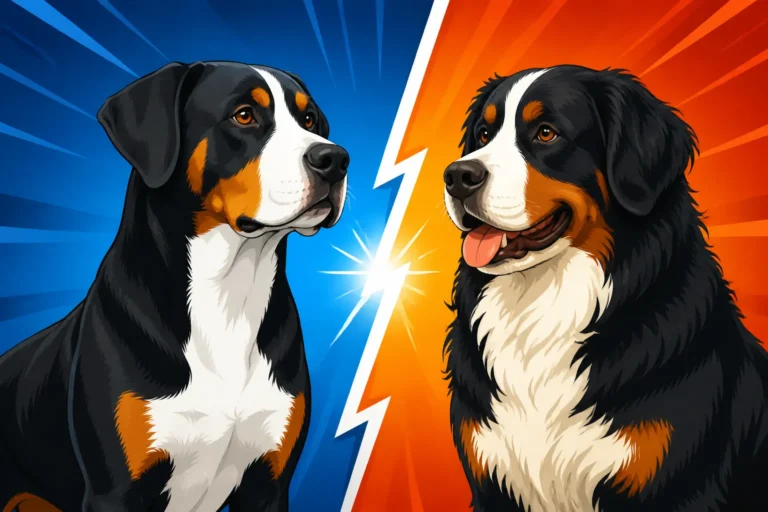
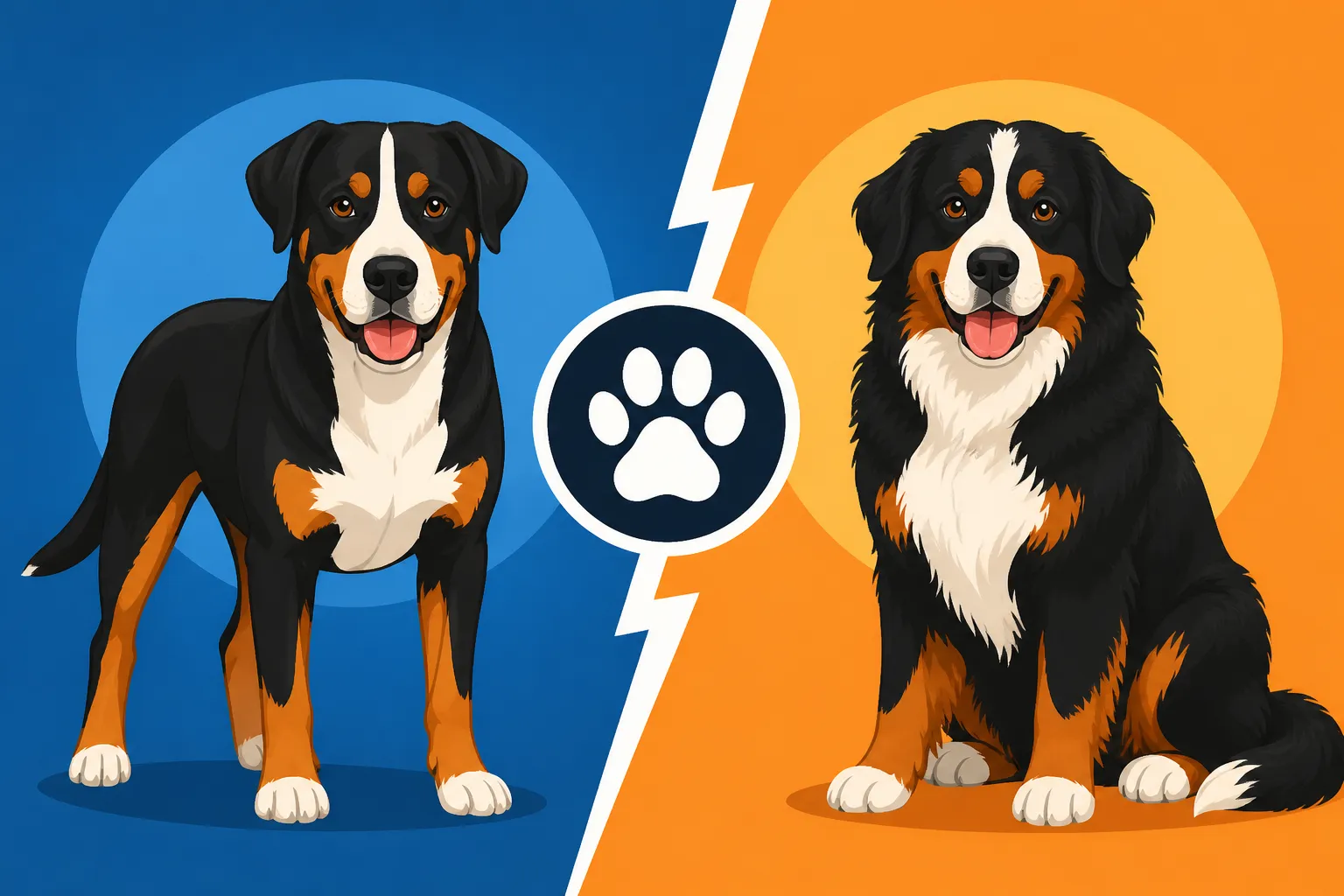
Without a doubt, the most immediate and defining characteristic that sets these two breeds apart is their coat. This is usually the first thing people notice, and it's your biggest giveaway.
- Bernese Mountain Dog: The Bernese is famous for its long, thick, and wonderfully soft double coat. This coat is straight or slightly wavy, with a rich, glossy sheen. It's designed to provide ample protection against the cold, and it gives the Berner its distinctly majestic and gentle appearance. Imagine running your hands through a cloud of luxurious fur – that's a Berner's coat. This beautiful coat, however, does come with significant grooming needs, including regular brushing to prevent matting and manage shedding. When you think of a Bernese, think of that flowing mane, the gorgeous feathering on its legs and tail, and how it handles a chill in the air. This characteristic is so strong that we even have a guide dedicated to Why Only the Bernese Mountain Dog Has a Long Coat.
- Greater Swiss Mountain Dog: In stark contrast, the Greater Swiss boasts a short, dense, and coarse double coat. This coat is designed for practicality and durability rather than luxuriousness. It's often described as tough and weather-resistant, lying close to the body. While still offering excellent insulation, it requires far less intensive grooming than its Bernese cousin. The texture is rougher to the touch, and you won't see the long feathering that defines the Berner. This shorter coat contributes to the Swissy's more rugged and powerful silhouette, emphasizing its muscular build.
Size and Stature: Subtle But Significant Differences
While both breeds are large and imposing, there are subtle differences in their overall size and build that, once you know them, become quite apparent.
- Bernese Mountain Dog: Berners are generally substantial dogs, known for their sturdy bone structure and impressive presence. Males typically stand between 25 and 27.5 inches at the shoulder, with females slightly smaller at 23 to 26 inches. Their weight can range from 80 to 115 pounds for males and 70 to 95 pounds for females. While powerful, their build often carries a degree of elegance, sometimes described as being more "square" in proportion. They have a kind, gentle expression that matches their often sweet demeanor. For more details on what’s considered standard, take a look at The Size Range the Bernese Mountain Dog Standard Allows and The Bernese Mountain Dog Breed Standard.
- Greater Swiss Mountain Dog: Swissies tend to be even more robust and powerfully built than Berners. They often appear heavier-boned and more muscular, giving them a slightly more imposing presence. Males typically stand 25.5 to 28.5 inches at the shoulder, with females ranging from 23.5 to 27 inches. Their weight can be significantly higher, with males often between 100 and 140 pounds, and females between 85 and 110 pounds. While there's overlap in size with the largest Berners, a typical Swissy will feel like a more massive dog. They tend to have a slightly more serious or alert expression, fitting their history as formidable farm dogs.
The Face and Head: A Closer Look
Beyond the coat and general build, paying attention to their heads and facial features can offer further clues.
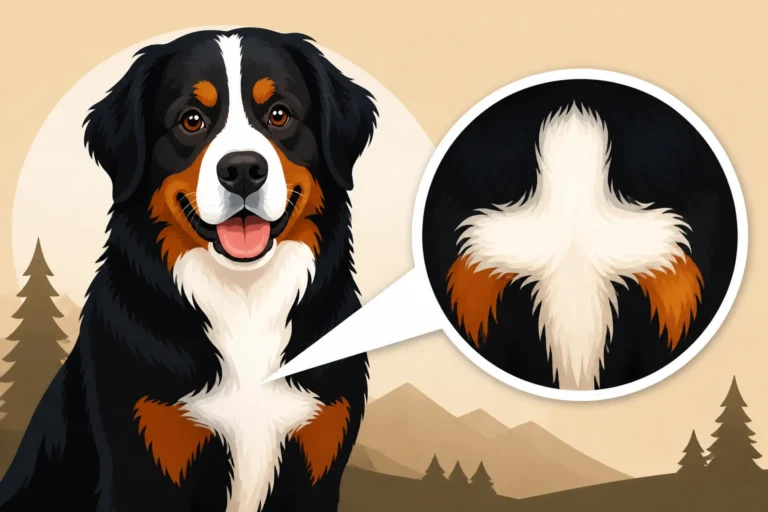
- Bernese Mountain Dog: The Berner’s head is broad and slightly rounded, with a moderate stop (the indentation between the eyes). Their muzzle is strong and relatively straight. One of their most endearing features is their dark, expressive, almond-shaped eyes, which often convey a soft, gentle, and intelligent gaze. Their ears are medium-sized, triangular, and set high, hanging close to the head. The facial markings often include a distinct white blaze running up the forehead and a "Swiss kiss" (white patch) behind the neck, though this is not always present.
- Greater Swiss Mountain Dog: The Swissy’s head is also broad, but often appears slightly flatter on top compared to the Berner. Their stop is usually more pronounced, contributing to a more powerful profile. Their eyes are dark brown, almond-shaped, and usually give a very keen, alert, and confident expression. Their ears are medium-sized, triangular, and also set high, but they might sit a little more away from the head when the dog is alert, framing a strong, intelligent face. The facial blaze on a Swissy is typically symmetrical and prominent.
Here's a quick comparison table to help you keep these distinctions straight:
| Feature | Bernese Mountain Dog | Greater Swiss Mountain Dog |
|---|---|---|
| Coat Type | Long, thick, silky, straight or wavy | Short, dense, harsh, close-lying |
| Average Height | 23-27.5 inches (male), 22-26 inches (female) | 25.5-28.5 inches (male), 23.5-27 inches (female) |
| Average Weight | 70-115 lbs (male), 70-95 lbs (female) | 85-140 lbs (male), 85-110 lbs (female) |
| Build | Sturdy, muscular, often described as more elegant, balanced | Powerful, robust, heavier bone, more rugged, athletic |
| Eye Expression | Soft, gentle, melting, intelligent | Keen, alert, confident, serious |
| Muzzle | Strong, straight, moderate stop | Strong, slightly broader, more pronounced stop |
| Grooming | High maintenance, frequent brushing needed | Low maintenance, occasional brushing |
Temperament and Personality: More Than Just Looks
While physical characteristics are the easiest way to tell these breeds apart visually, their temperaments also have distinct nuances that are important for any potential owner to understand. Both are wonderful dogs, but their personalities are not identical, and what works for one household might not be ideal for the other.
The Bernese Mountain Dog: Gentle Giants with a Softer Side
Bernese Mountain Dogs are famously known as "gentle giants." Their temperament is often described as sweet, affectionate, calm, and devoted. They thrive on companionship and want nothing more than to be a part of the family, often following their people from room to room. Berners are typically very good with children, displaying a patient and protective nature. They are generally tolerant and good-natured, making them excellent family pets.
However, their gentle nature also means they can be quite sensitive. They don't respond well to harsh training methods or prolonged isolation. A Berner who feels neglected or frequently scolded can become withdrawn or anxious. They bond very strongly with their families and can develop separation anxiety if left alone for extended periods. They also have a habit of "leaning" into their people, a charming display of their affectionate nature, as discussed in The Bernese Mountain Dog That Leans on Everyone. While generally good with strangers, some Berners can be a little reserved at first, preferring to observe before engaging. They are not typically guard dogs in the aggressive sense, but their imposing size can be a deterrent, and they will bark to alert you to anything unusual.
The Greater Swiss: Bold, Confident, and Enthusiastic
The Greater Swiss Mountain Dog, while equally devoted, tends to have a more boisterous, confident, and enthusiastic personality compared to the Berner. They are often described as being more "full of themselves" or having a bigger personality. Swissies are intelligent, often quite playful, and can retain their puppy-like exuberance for longer. They are known for their strong working drive and can be more energetic and demanding of exercise and mental stimulation.
Swissies are often more outgoing and self-assured with strangers than Berners. They can be excellent family dogs, forming strong bonds, but their higher energy levels mean they need a consistent outlet for their vigor. They can be quite vocal, using barks, "wahoos," and other sounds to communicate. While intelligent, they can also be strong-willed, requiring a firm, consistent, and positive training approach. Their working heritage means they excel in activities like carting, obedience, and hiking. They tend to mature a little slower, both physically and mentally, so patience in training is key.
Energy Levels and Training Approaches
The differences in temperament naturally lead to different energy levels and, consequently, different training needs and lifestyle requirements.
- Bernese Mountain Dogs generally have moderate energy levels. They enjoy walks, playtime in the yard, and some moderate hiking, but they are equally content to lounge around the house with their family. Their sensitivity means that positive reinforcement, consistency, and patience are paramount in training. They want to please and respond well to praise and rewards. Early socialization is crucial to help them grow into well-adjusted, confident adults. Due to their size, teaching polite leash manners and discouraging jumping up is essential from a young age.
- Greater Swiss Mountain Dogs often have higher energy and a stronger desire to "do" something. They need more regular, vigorous exercise to keep them happy and well-behaved. This could mean longer walks, jogs, engaging in dog sports, or meaningful work like drafting. Their intelligence and confidence mean they can sometimes test boundaries, so a confident and consistent handler is best. They still thrive on positive reinforcement, but their stubborn streak might require a bit more creativity and determination in training. Socialization is equally important to ensure their natural confidence doesn't turn into bossiness or reactivity. Finding durable toys and chews, perhaps from a reputable online store like Chewy, can be a lifesaver for managing their energy indoors.
Health and Lifespan Considerations: Similarities and Differences
When considering either a Bernese Mountain Dog or a Greater Swiss Mountain Dog, it's crucial to be aware of their health profiles. As large, purebred dogs, both breeds are predisposed to certain health conditions, and understanding these can help you provide the best care. While they share some general large-breed challenges, there are also significant differences in their breed-specific health concerns and typical lifespans.
Common Challenges in Giant Breeds
Both Berners and Swissies, being large and fast-growing breeds, are prone to orthopedic issues. Hip and elbow dysplasia are significant concerns, where the joints don't develop properly, leading to arthritis and pain. Responsible breeders screen their dogs for these conditions through organizations like the Orthopedic Foundation for Animals (OFA). Regular veterinary check-ups are vital, especially as they age, to monitor joint health. You can find more specific information about Berners in Joint Disease in a Hundred Pound Bernese Mountain Dog.
Another critical concern for many deep-chested breeds, including both the Bernese and Greater Swiss, is bloat (gastric dilatation-volvulus or GDV). This is a life-threatening condition where the stomach fills with gas and can twist, cutting off blood supply. Owners of both breeds need to be educated on the signs of bloat and know that it's a veterinary emergency. Measures like feeding multiple small meals, avoiding exercise immediately after eating, and considering a prophylactic gastropexy (stomach tacking) can help reduce risk.
Lifespan Expectations
Here is where a notable difference often emerges, and it's a significant consideration for prospective owners.
- Bernese Mountain Dog: Sadly, Bernese Mountain Dogs are known for their relatively short lifespan. The average lifespan for a Berner is typically 7 to 8 years. A major contributing factor to this shorter lifespan is their high incidence of cancer, particularly histiocytic sarcoma. Other cancers, such as lymphoma and mast cell tumors, are also prevalent. This is a heartbreaking reality for many Berner owners and something to be prepared for when bringing one of these loving dogs into your life. You can read more about this in Why a Bernese Mountain Dog Lives Only Seven or Eight Years and how we face Treating Cancer in a Bernese Mountain Dog. Beyond cancer, other health issues like kidney disease, heart conditions, and degenerative myelopathy (a neurological condition affecting the spinal cord) can also impact their longevity.
- Greater Swiss Mountain Dog: Generally, Greater Swiss Mountain Dogs tend to have a slightly longer lifespan than Berners, averaging around 8 to 11 years. While they are not immune to cancer, the incidence is typically lower than in Berners. They are still susceptible to other large-breed health issues, including epilepsy, eye conditions, and certain cardiac problems. Like Berners, responsible breeding practices that include health clearances are crucial for minimizing these risks. Ensuring they get proper nutrition throughout their lives, perhaps with high-quality large-breed specific food from a retailer like Chewy, can also support their health.
Understanding these health predispositions and lifespan differences is not meant to discourage, but to prepare and empower potential owners. Both breeds offer immense love and companionship, and being informed allows you to provide the best possible care for their entire, cherished lives. Ultimately, whether a Berner or a Swissy is right for you often comes down to personal preference, lifestyle, and a willingness to embrace the unique characteristics and needs of each magnificent breed. Consider what you are looking for in a companion, and you'll find guidance in resources like Whether a Bernese Mountain Dog Is Right for You. Remember that What the Bernese Mountain Dog Shares With Its Swiss Cousins highlights the deep connections that still exist despite the differences.
Disclaimer
This article is for general informational purposes only and does not constitute professional advice. Laws, prices and regulations vary by location and change over time. Consult a qualified professional for guidance on your specific situation.