The Swiss Kiss Behind a Bernese Mountain Dog’s Neck
One of the many joys of owning a Bernese Mountain Dog is admiring their absolutely stunning, signature tricolor coat. But beyond the striking black, rust, and white, there's a particular detail that often sparks curiosity and admiration: the "Swiss Kiss." If you’ve ever wondered about that beautiful, often perfectly symmetrical splash of white on the back of a Berner’s neck, this guide is here to shed some light on this charming, subtle, yet significant marking.
Unpacking the Bernese Mountain Dog's Signature Markings
When you first lay eyes on a Bernese Mountain Dog, it’s hard not to be captivated by their magnificent coat. It’s not just beautiful; it’s a hallmark of the breed, carefully described in breed standards around the world. Understanding these markings helps us appreciate the intricate genetics and history behind these gentle giants.
The Classic Tricolor Pattern
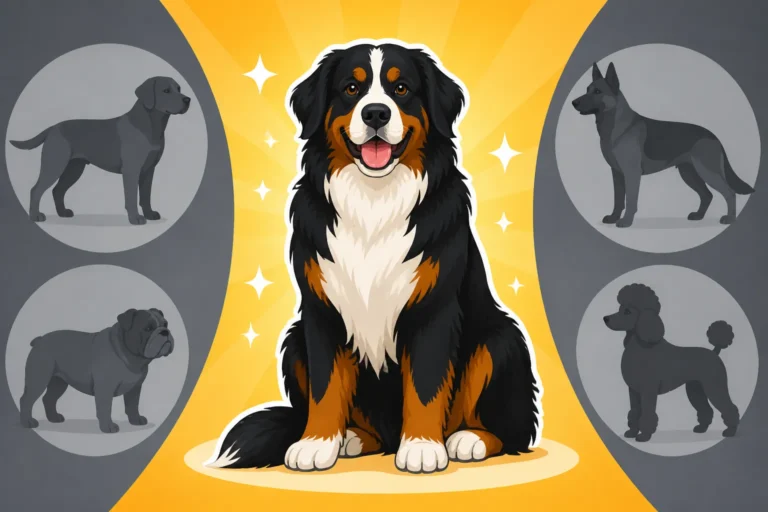
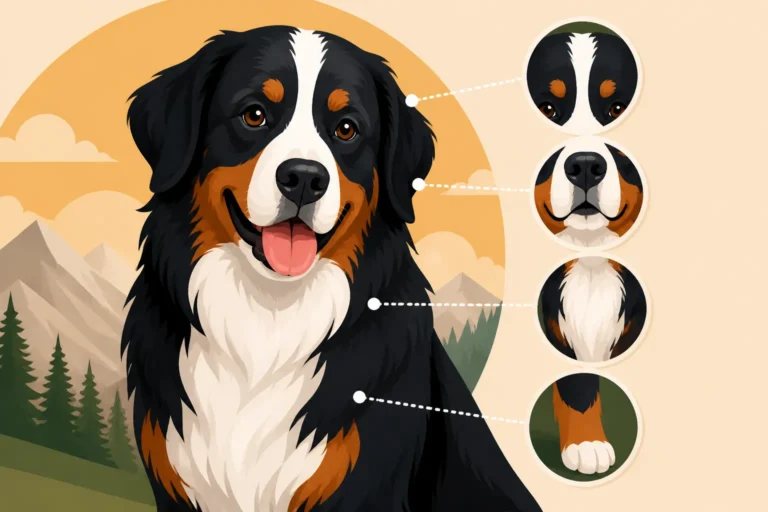
The Bernese Mountain Dog is renowned for its striking tricolor coat, a combination of jet black, rust (or tan), and pure white. This isn't just a random splash of color; it follows a very specific pattern that is central to the breed's identity. The main body color is always a deep, lustrous black, providing a strong contrast for the other two colors. Think of it like a beautifully painted canvas where black is the dominant background.
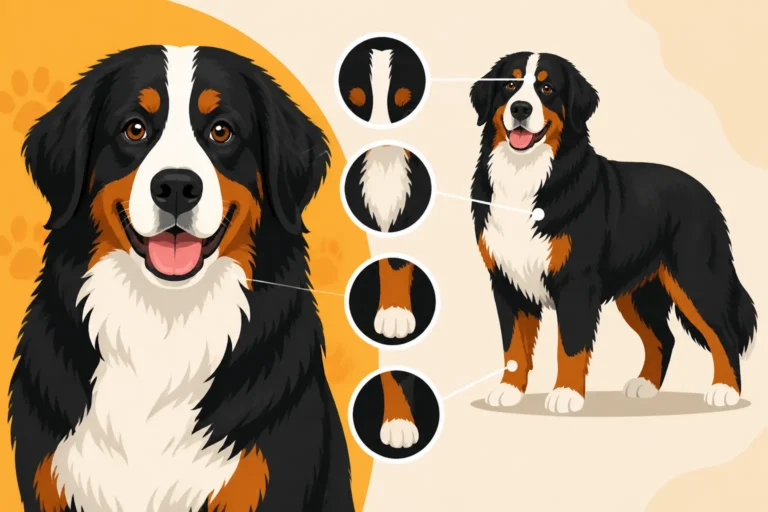
Then come the rust markings, which are typically found on the cheeks, over each eye, on all four legs, and underneath the tail. These rust points aren't just patches; they're often a rich, warm reddish-brown that glows in the sunlight, adding depth and character to the Berner's expression. They highlight their soft eyes and give a hint of the warmth beneath their calm demeanor. Finally, the white markings provide the dramatic accents, appearing on the chest, as a blaze on the face, on the feet, and, of course, the focus of our discussion today, the "Swiss Kiss" on the neck. It's this precise arrangement of colors that makes a Bernese Mountain Dog instantly recognizable and so beloved.
Where the "Swiss Kiss" Fits In
Among all these distinct markings, the "Swiss Kiss" holds a special, almost secret, place. While the big white blaze on the face and the broad chest marking are immediately obvious, the Swiss Kiss is often a smaller, more discreet patch of white located right at the nape of the neck, sometimes extending slightly onto the shoulders. It’s not always perfectly visible, especially if your Berner has a thick ruff or is lying down, but it’s there, a subtle nod to their heritage.
This marking, while not as prominent as others, is highly valued within the breed standard. It's one of those charming details that breeders look for and enthusiasts admire. It completes the picture of what a truly classic Bernese Mountain Dog should look like, tying into the historical descriptions and ideals for these dogs from their origins in the Swiss Alps. It’s a little piece of art tucked away, a sweet surprise for those who know to look for it.
What Exactly is the Swiss Kiss?
So, what exactly are we looking for when we talk about a "Swiss Kiss"? It's more than just "some white on the neck"; there's an ideal to strive for, even if nature doesn't always oblige with perfection.
Defining the Mark
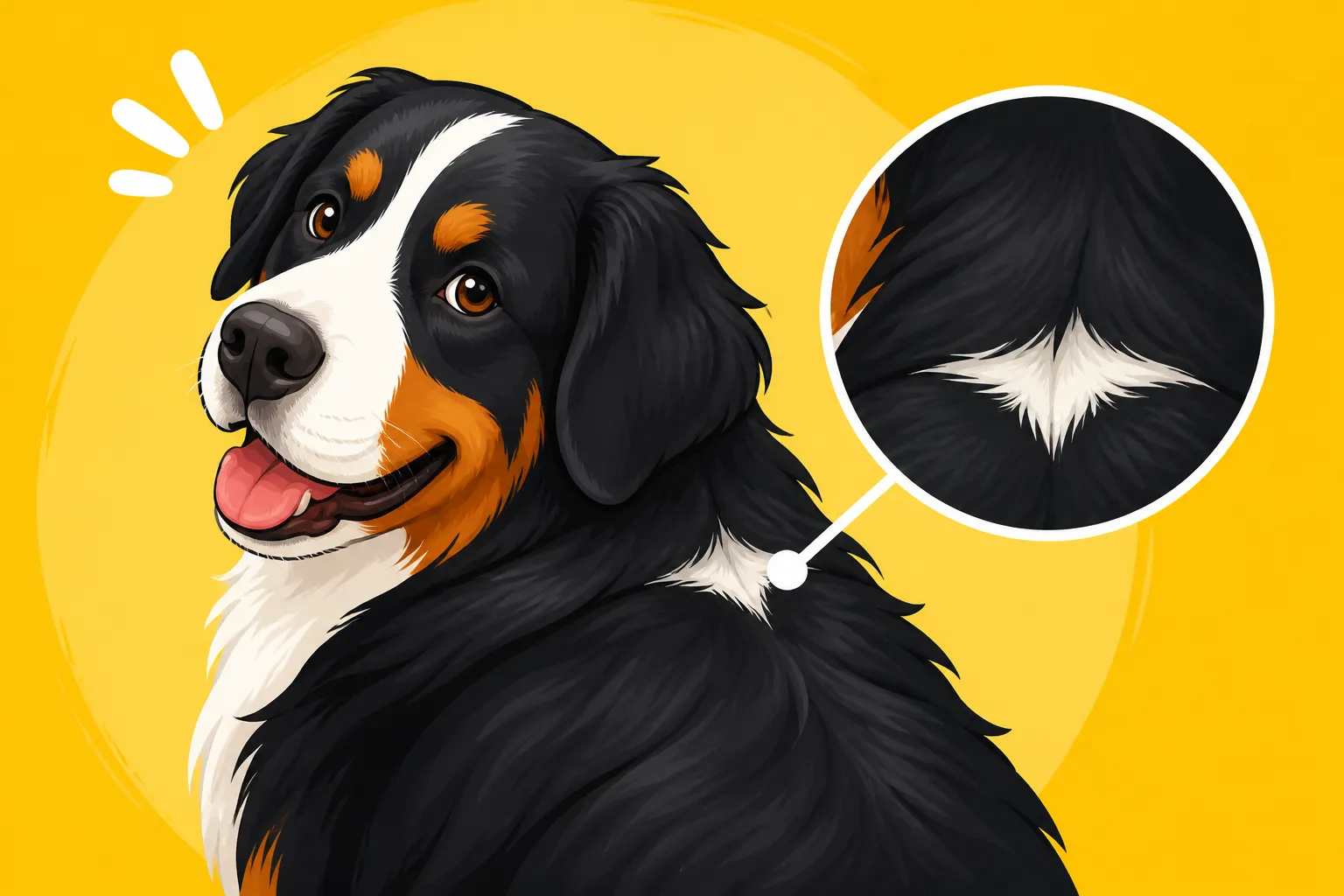
The "Swiss Kiss" refers to a distinct patch of white fur located at the back of the Bernese Mountain Dog's neck, just beneath the occiput (the bump at the back of the skull) and often extending down a bit towards the shoulders. It’s typically somewhat symmetrical, often resembling a small, inverted 'V' or a butterfly shape. The key is its placement – it's not a stray patch of white near the chest or shoulder, but specifically on the nape of the neck, directly at the center.
This particular marking is highly regarded, symbolizing purity and adherence to the breed's traditional aesthetics. It's often viewed as a sign of well-defined, correct markings, and for many breed enthusiasts, it adds an extra layer of charm to an already handsome dog. While not a disqualifying fault if absent or poorly defined in a pet-quality Berner, its presence in a show dog is often celebrated as contributing to an overall harmonious appearance. Think of it as a subtle, elegant flourish that completes their magnificent tri-color tapestry.
Variations and Ideal Placement
While the ideal Swiss Kiss is a crisp, symmetrical white mark on the nape, variations are quite common. Some Berners might have a very small, almost undetectable white patch, while others might have a larger, more diffuse area of white that blends into the white on their chest or shoulders. You might see a faint dusting of white hairs rather than a distinct patch, or perhaps an asymmetrical shape that leans to one side.
The "ideal" placement, as described in breed standards, is usually a relatively small, clearly defined white patch, centrally located on the neck, not extending too far down the back or too far up the head. The crispness of the white against the black coat is also a factor. However, it's important to remember that these are ideals for the show ring, and a beloved family pet with an imperfect or absent Swiss Kiss is no less a Bernese. The beautiful dogs we share our lives with, whether they're champions or couch potatoes, all carry the spirit of their Swiss heritage, regardless of the precise contours of their white markings. For more on the standards, you might find The Bernese Mountain Dog Breed Standard an interesting read.
The Significance of the Swiss Kiss
Beyond being just a pretty detail, the Swiss Kiss carries weight in the world of Bernese Mountain Dogs, reflecting both breeding ideals and historical connections.
Breed Standard and Aesthetics
Within the breed standard, the presence and quality of the Swiss Kiss are part of the overall assessment of a Bernese Mountain Dog's markings. While often considered a "minor" marking compared to the foundational black coat, the rust points, and the prominent white blaze and chest, it contributes to the desired harmonious balance of colors. A well-defined Swiss Kiss, along with other correct white markings (like the perfectly balanced facial blaze and the elegant white "Swiss Cross" on the chest), is what creates the visually stunning appearance that defines the breed.
Breeders often strive for dogs that conform closely to these aesthetic ideals, as it indicates careful breeding and selection for type. Judges in the show ring evaluate the clarity, symmetry, and placement of all markings, and a striking Swiss Kiss can certainly catch the eye, contributing to the dog's overall "typey" appearance. It's not just about pretty colors; it's about honoring the specific pattern that has been cultivated and cherished through generations of Bernese Mountain Dogs, ensuring that future generations maintain the distinctive look that makes them so special. You might wonder What the Bernese Mountain Dog Breed Standard states about these details.
Cultural and Historical Context
The term "Swiss Kiss" itself is evocative, immediately conjuring images of the breed's mountainous homeland. While not a functional marking like, say, the thick double coat that protected them from the Alpine cold, the distinct tricolor pattern, including this charming neck patch, is deeply intertwined with the breed's history as farm dogs from the Bernese Oberland region of Switzerland. These dogs were developed to be hardy, versatile companions, pulling carts, guarding livestock, and providing companionship.
The specific markings, including the Swiss Kiss, became part of the visual identity that distinguished the Dürrbächler (as they were originally known) from other farm dogs in the region. Early breeders and enthusiasts, like Franz Schertenleib and Albert Heim, were instrumental in standardizing the breed and preserving its unique appearance. The "Swiss Kiss" became a charming nickname that reflects not just the marking itself, but also the enduring affection and pride associated with these magnificent dogs and their Swiss heritage. It’s a little secret handshake, a badge of honor, linking every Berner back to its Alpine roots. This heritage is fascinating, and you can learn more about Franz Schertenleib and the Bernese Mountain Dogs He Found.
Beyond the Kiss: Other Key Markings
While the Swiss Kiss is a lovely detail, it's part of a much larger, intricate tapestry of markings that define the Bernese Mountain Dog. Let's explore some of the other essential features of their magnificent coats.
The Iconic Swiss Cross on the Chest
Perhaps even more recognizable than the Swiss Kiss, the "Swiss Cross" is the prominent white marking found on the Bernese Mountain Dog's chest. This is typically a broad, symmetrical white patch that starts under the chin, widens over the chest, and ideally tapers down to a point or a slightly narrower band between the front legs. Its name, of course, is a direct reference to the national symbol of Switzerland, a clear link to the breed's origin.
The Swiss Cross is a vital part of the breed standard, contributing significantly to the overall balanced appearance. It should be clean, clear white, contrasting sharply with the black coat, and ideally symmetrical. Dogs with an unbroken chest marking that forms a distinct "cross" shape are often highly prized in the show ring. However, like all markings, there can be variations. Some dogs might have a less defined or asymmetrical chest patch, or it might be broken up by black or rust hairs. Regardless, this large white area is a dominant feature, drawing the eye and adding to the Berner's majestic presence. For a deep dive into this, check out The Swiss Cross on a Bernese Mountain Dog's Chest.
Rust Markings and Their Importance
The rust, or tan, markings are the warm, inviting accents that truly bring the Bernese Mountain Dog's coat to life. These rich, reddish-brown areas are strategically placed: typically over each eye, on the cheeks, along the sides of the white chest marking, on all four legs, and beneath the tail. Without these rust points, a Berner would simply be a black and white dog, losing much of its distinctive charm and "soft" expression.
These markings serve several important aesthetic purposes. The rust patches over the eyes give the dog a gentle, almost questioning expression, enhancing their renowned kind demeanor. The rust on the cheeks and legs adds depth and definition to their sturdy build. The ideal rust is a clear, rich, medium-to-dark tan, without being too light or too dark, and clearly delineated from the black and white. Variations in intensity and spread are common, but the presence of these markings in the specified areas is crucial for a dog to be considered a true Bernese Mountain Dog. They are an integral part of the tricolor pattern, providing the necessary warmth and balance.
The White Blaze and Facial Symmetry
The white blaze on a Bernese Mountain Dog's face is another critical marking that contributes greatly to their overall facial expression and breed type. This blaze typically starts between the eyes, running up the forehead and ideally widening towards the top of the skull. A narrower strip often continues down the muzzle to the nose. The ideal blaze is symmetrical, well-defined, and not too wide or too narrow, framing the dog's intelligent, dark eyes.
This facial blaze, along with the rust points above the eyes, helps create the "sweet" or "kind" expression that is so characteristic of the breed. It brightens the face and adds to their friendly, approachable look. Just like the Swiss Kiss and Swiss Cross, variations in the blaze are common. Some Berners might have a very narrow blaze, others a broad one that almost covers the entire muzzle. Some might have a "split" blaze, or an asymmetrical one. While the breed standard describes the ideal, a Berner's unique blaze is often part of what makes them individually endearing to their families. The overall balance of white on the face is what makes each Berner's face so captivating.
Common Misconceptions and Quirks
Even with well-defined breed standards, nature loves to play its own game, leading to some common questions and variations in Bernese Mountain Dog markings.
Does Every Bernese Have a Perfect Kiss?
It's a common misconception that every Bernese Mountain Dog must have a perfectly formed, distinct Swiss Kiss. While it's an admired trait and part of the ideal breed standard, the reality is that many Berners, even those from excellent lines, might have variations or might not have a Swiss Kiss at all. Genetics can be a funny thing, and the expression of these white markings can be incredibly varied.
You might find a Berner with a very faint dusting of white hairs on the nape, rather than a clear patch. Others might have a larger, more irregular patch that doesn't quite fit the "ideal" shape or placement. And then there are those who simply have no white marking on their neck at all. For a family pet, these variations are absolutely meaningless. They don't affect the dog's health, temperament, or ability to be a loving companion. For show dogs, a less-than-perfect Swiss Kiss might be a minor aesthetic consideration, but it's rarely a major fault unless accompanied by other significant deviations from the standard. So, don't worry if your cherished Berner's "Kiss" isn't picture-perfect; their heart is what truly matters.
Markings Changing Over Time
Another interesting quirk is how a Bernese Mountain Dog's markings can sometimes appear to change or evolve as they grow from a puppy into an adult. When they're tiny fluff balls, their coats are incredibly dense and often appear much darker, and the white markings can seem brighter and crisper. As their adult coat comes in, especially during their first year or two, the contrast might soften slightly, or the edges of white markings might become a little less defined.
For instance, the clarity of the white on the legs or the symmetry of the blaze can sometimes shift subtly. The rust markings, which can be quite faint in very young puppies, will typically deepen and become richer in color as the dog matures. This is a natural process related to hair growth cycles and the development of the adult coat. While the core pattern remains, the nuances can change. It’s rare for a Swiss Kiss to disappear entirely if it was present, but its prominence or definition might fluctuate. It's just another part of watching your beautiful Bernese grow and blossom into their full, majestic self.
Caring for a Bernese Mountain Dog's Coat Markings and All
A Bernese Mountain Dog's coat, with all its beautiful markings including the Swiss Kiss, needs consistent care to stay healthy and looking its best. This isn't just about aesthetics; it's vital for their skin health and comfort.
Gentle Grooming to Preserve the Coat
The Bernese Mountain Dog boasts a magnificent double coat – a dense undercoat for insulation and a longer, somewhat wavy outer coat that repels water. While this coat is stunning, it's also a serious commitment to maintain. Regular, gentle grooming is absolutely essential to prevent matting, reduce shedding, and keep their skin healthy. You'll want to brush your Berner several times a week, if not daily, especially during seasonal shedding periods when they "blow" their undercoat.
Focus on getting a good deshedding brush or an undercoat rake that can reach through the outer coat to the dense underlayer. Areas prone to matting include behind the ears, under the legs, and around the "trousers" on their hindquarters. Gently working through these areas will not only keep them comfortable but also showcase their beautiful tricolor pattern, including that lovely The Swiss Kiss Behind a Bernese Mountain Dog's Neck. For those deep tangles, a good detangling spray and a wide-toothed comb can be lifesavers. Many Berner owners find excellent tools and conditioning sprays on sites like Chewy, which offers a wide array of options specifically for long-coated breeds. Remember, gentle strokes and patience are key; you don't want to pull at their skin or make grooming an unpleasant experience.
Dealing with Shedding and Matting
Let's be realistic: Bernese Mountain Dogs shed. A lot. Especially twice a year during their major coat blow. Managing this shedding is a big part of Berner ownership, and it directly impacts the health and appearance of their markings. If shed hair isn't removed, it can quickly get tangled with the live coat, forming mats that can be painful, pull at the skin, and even lead to skin infections if moisture gets trapped underneath.
Consistent brushing with the right tools is your best defense against both shedding overload and matting. A force dryer, like those you can find on Chewy, can also be incredibly effective after baths to blast out loose undercoat. While a Bernese Mountain Dog's coat should never be shaved (it interferes with their natural temperature regulation and can damage the coat permanently), regular trims to neaten their feet, hocks, and sanitary areas are perfectly fine. If you encounter a mat that you can't gently brush out, it's always better to carefully cut it out with blunt-nosed scissors or consult a professional groomer rather than letting it become a bigger problem. Think of their coat as a finely woven tapestry; proper care ensures every color and marking, from The Swiss Cross on a Bernese Mountain Dog's Chest to the delicate Swiss Kiss, remains vibrant and distinct. It's a labor of love, but oh, is it worth it for these magnificent dogs.
| Marking Name | Location | Description | Significance |
|---|---|---|---|
| Swiss Kiss | Nape of the neck | Small, symmetrical white patch, often 'V' or butterfly-like | Adherence to breed standard, aesthetic detail, charming |
| Swiss Cross | Chest | Broad, symmetrical white patch, usually tapers between legs | Iconic, strong link to Swiss heritage, major aesthetic |
| Facial Blaze | Forehead and muzzle | White stripe from between eyes to nose, ideally symmetrical | Contributes to kind expression, facial symmetry |
| Rust Markings | Cheeks, over eyes, legs, under tail | Rich reddish-brown points, clearly delineated | Provides warmth and depth to expression, key tricolor element |
| White Feet | Paws and lower legs | Pure white "socks," sometimes extending slightly up legs | Clean finish, aesthetic balance |
Disclaimer
This article is for general informational purposes only and does not constitute professional advice. Laws, prices and regulations vary by location and change over time. Consult a qualified professional for guidance on your specific situation.