Whether a Bernese Mountain Dog Can Be Any Other Color
It’s perfectly natural to be curious about the incredible variety we see in the canine world, and when you fall in love with a breed like the Bernese Mountain Dog, you start noticing all their unique characteristics. One question that often comes up, especially for those new to the breed or just admiring from afar, is whether Bernese Mountain Dogs actually come in colors other than their signature tricolor. This guide will dive deep into the specific color requirements of the Bernese Mountain Dog, explaining why their classic look is so important to the breed standard and what it means for any variations you might encounter.
The Foundation of the Bernese Mountain Dog Standard
When we talk about a "breed standard," it's not just a fancy document for dog shows; it's essentially the blueprint for what a purebred dog of a specific breed should look like, how it should move, and even hints at its temperament. For Bernese Mountain Dogs, this standard is incredibly specific about color, and for good reason. It’s what makes a Berner instantly recognizable and has been preserved for generations.
Why Standards Exist
Think of a breed standard as a historical document and a guide for preservation. It was created by the early enthusiasts and breeders who wanted to ensure that the Bernese Mountain Dog retained its unique characteristics and working abilities. These characteristics include not just the beautiful tricolor coat, but also their sturdy build, their gentle expression, and their balanced movement. Without a standard, breeds could quickly become diluted, losing the very traits that define them. It's about maintaining consistency and health within the gene pool, helping breeders make informed decisions to produce predictable, healthy puppies. The Bernese Mountain Dog Breed Standard outlines these expectations in great detail, covering everything from ear set to tail carriage.
The standard helps distinguish Bernese Mountain Dogs from other similar breeds, like their shorter-coated Swiss cousins. It ensures that when you see a Bernese, it embodies the essence of what the breed is meant to be. This isn't about being exclusive or judgmental; it's about honoring the heritage and the specific qualities that drew us to these wonderful dogs in the first place. Every aspect, down to the exact placement of their white and rust markings, contributes to this historical and functional identity.
The Importance of Breed Purity
The concept of breed purity, especially concerning appearance, directly ties into the idea of maintaining a clear lineage and health profile. For a Bernese Mountain Dog, their tricolor coat is a hallmark of this purity. Deviations from this pattern can sometimes indicate mixed heritage or, in rarer cases, genetic anomalies. While a dog's genetic makeup can produce unusual colors, these variations fall outside the recognized standard and are not considered purebred Bernese Mountain Dog colorings. This doesn't make the dog any less lovable, but it does mean they wouldn't be recognized as a standard Bernese Mountain Dog in official breed competitions or registries.
Breeders committed to the standard work tirelessly to ensure their lines consistently produce dogs that meet these criteria. This involves careful selection of breeding pairs, often tracking pedigrees back through generations, and performing health clearances. The goal is to produce not just beautiful dogs, but healthy ones with stable temperaments that align with the breed's historical purpose. This commitment extends beyond mere aesthetics, aiming to maintain the structural integrity and inherent nature of the Bernese Mountain Dog.
The Iconic Tricolor Coat: What Defines a Bernese
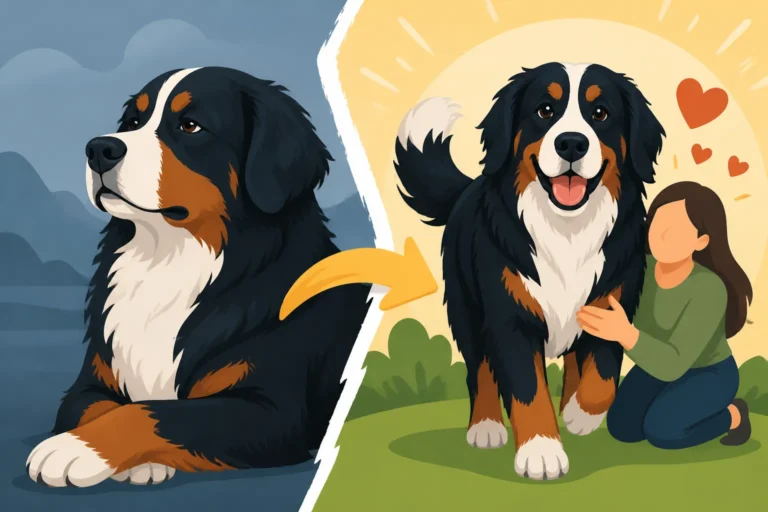
The Bernese Mountain Dog's tricolor coat is truly a work of art, a perfect combination of black, white, and rust that makes them instantly recognizable. It's a key part of Bernese Mountain Dog Markings and What They Mean and is not just a preference, but a strict requirement of the breed standard. Any deviation from this specific combination of colors and their typical distribution would be considered a fault in the show ring, and in some cases, a disqualification.
The Black Base Coat
The vast majority of a Bernese Mountain Dog's body, back, sides, and neck should be a rich, jet black. This isn't a charcoal grey or a faded black, but a deep, intense pigment that provides a striking contrast to the other two colors. This black serves as the canvas upon which the white and rust markings are painted, highlighting their vibrancy. A truly well-pigmented Bernese will have a profound black that doesn’t fade or appear dull.
When you look at a Bernese, that expansive black blanket across their back is what often strikes you first. It's meant to be a solid, consistent color, without patches of lighter fur or white hairs marring its depth. This strong black base is a genetic trait that breeders work hard to maintain, as it is foundational to the overall tricolor appearance. It's a dense, beautiful coat that, while requiring regular grooming, defines their powerful and elegant silhouette.
The Rust Markings
The rust markings are the warm, reddish-brown accents that add depth and dimension to the Bernese Mountain Dog's coat. You'll typically find these rich tan or rust points on specific areas of the dog's body: above each eye (often referred to as "eyebrows"), on the cheeks, on all four legs, and sometimes subtly on the chest. These markings should be clearly defined and a deep, rich color, not a pale fawn or muddy brown. Rust Markings on a Bernese Mountain Dog are critical to their characteristic expression and overall balanced appearance.
The placement and intensity of these rust markings are important. They frame the face, giving the Berner its famously gentle and intelligent expression. On the legs, they create a beautiful transition from the black body to the white feet. A Berner with strong, well-defined rust markings truly exemplifies the breed's aesthetic. These aren't just random splashes of color; they are strategically placed by genetics to enhance the dog's classic appeal.
The White Markings
Finally, the white markings complete the tricolor picture, adding brightness and definition. There are specific areas where white is expected and desired. Most notably, a white blaze should run up the dog's forehead, ideally not extending past the eyes, and forming an inverted 'V' shape on the muzzle. The chest should display a prominent white "Swiss cross," a classic marking often wide and symmetrical. White is also typically found on the tip of the tail (though not always required), and, crucially, on all four feet. The Swiss Cross on a Bernese Mountain Dog's Chest is perhaps the most iconic of these white patterns.
The crispness and symmetry of the white markings are highly valued. A Bernese with clean, bright white on their chest and feet, along with a well-defined facial blaze, epitomizes the breed standard. While some variation in the extent of white is allowed, excessive white on the body or white areas in unexpected places are considered deviations. These white markings serve not just an aesthetic purpose but historically aided in identification in snowy Swiss landscapes.
Understanding "Faults" and "Disqualifications" in the Show Ring
When breeders and judges evaluate a Bernese Mountain Dog, they're not just looking for a pretty dog; they're assessing how closely that dog conforms to the breed standard. Deviations from this standard are categorized as "faults" or "disqualifications," with color being one of the most visible aspects for assessment. It's a nuanced system that aims to reward dogs that best represent the ideal characteristics of the breed.
Minor Deviations vs. Serious Faults
In the world of dog shows, not every little variation from the ideal is treated equally. Minor deviations in color or markings might be considered a "fault." For example, if a Bernese has slightly muddy rust markings instead of vibrant ones, or if their white blaze is a little off-center, these might be considered minor faults. They don't necessarily preclude a dog from participating or even placing in a show, but they will be noted and could cost points against a dog with more perfect markings. It’s all about degree. A small black spot within a white marking on the chest might be a fault, whereas a large patch of white on the back might be a more serious fault.
Think of it like this: a human supermodel might have a tiny mole on her cheek that doesn't detract from her overall beauty, but a large, distracting tattoo on her face might prevent her from getting certain jobs. The same principle applies to Bernese Mountain Dogs. These minor faults are often subjective and weigh differently depending on the judge and the overall quality of the dog. Breeders are constantly striving to reduce these faults through selective breeding, but perfection is a rare thing, and many beloved Berners have minor deviations that don't impact their quality of life or their ability to be fantastic companions.
When Color Becomes a Disqualification
This is where things get serious in the show ring. A "disqualification" means that a dog is immediately eliminated from competition because its deviation from the standard is so significant that it fundamentally alters the breed's identity or suggests a serious genetic flaw. For Bernese Mountain Dogs, certain color patterns are absolute disqualifiers. The Colors That Put a Bernese Mountain Dog Out of the show ring are very clear: any color other than the specified tricolor (black, rust, and white) is a disqualification. This means a Bernese Mountain Dog that is all black, or black and white without rust, or has fawn markings, cannot compete as a purebred Bernese.
Similarly, extensive white that covers a large portion of the body (e.g., a white "collar" extending beyond the neck onto the back), or significant patches of black within the white areas, might also be disqualifying. Blue eyes, which can sometimes appear in dogs with diluted color genes, would also be a disqualification. These strict rules are in place to ensure that the breed maintains its distinct appearance and genetic integrity. While such dogs can still make wonderful pets, they simply do not conform to the established standard of the Bernese Mountain Dog breed.
Exploring Rare and "Off-Color" Bernese Mountain Dogs (and the Controversy)
Sometimes, you might hear whispers or even see photos online of a Bernese Mountain Dog that looks… different. Perhaps it’s a blue merle, or entirely black and white, or even has more white than usual. These "off-color" Bernese are often subjects of curiosity and sometimes controversy within the breed community. It's important to understand the origins and implications of these variations.
The Genetics Behind Unusual Colors
Dogs, like all living creatures, carry a complex array of genes that determine their physical traits, including coat color. While the Bernese Mountain Dog breed standard calls for a very specific tricolor pattern, occasionally, recessive genes can surface, leading to unexpected color expressions. For instance, a gene for dilution might result in a "blue" (grey) Bernese, where the black pigment is diluted, or a "liver" (brown) color if the black pigment is completely suppressed. These are not recognized Bernese colors, and reputable breeders actively avoid lines that carry such genes, as they indicate a deviation from the established breed characteristics.
Another possibility is that such a dog might be a mixed breed, even if it has many Bernese-like features. The rise in popularity of designer breeds, for example, has introduced many new color combinations that are not native to purebred Bernese Mountain Dogs. While these dogs can be beautiful and healthy, it's crucial to understand they are not purebred Bernese Mountain Dogs according to the breed standard. Genetic testing can sometimes confirm the presence of these recessive color genes or identify mixed ancestry, providing clarity for owners.
The Health Implications of Non-Standard Colors
The primary concern with unusual coat colors often extends beyond aesthetics to potential health implications. In some breeds, certain color genes are linked to specific health issues. For example, the merle gene, which creates mottled patches of color, is associated with hearing and vision problems in several breeds, especially when two merle dogs are bred together. While merle is not a color gene typically found in purebred Bernese Mountain Dogs, its appearance in a Berner-like dog would immediately raise questions about its genetic background and potential health risks.
Similarly, an abundance of white on a dog's coat, especially around the ears, can sometimes be linked to deafness in other breeds. While this isn't a common issue directly tied to Bernese Mountain Dog color genetics, it highlights why a strict breed standard, developed over time, often has underlying health considerations. Reputable breeders prioritize health and temperament above all else, and any deviation from standard coloring should prompt questions about the genetic health screening of the parents. Even if a particular non-standard color doesn't directly cause a health problem, it can be an indicator of less rigorous breeding practices where health clearances might not have been a top priority.
Ethical Breeding Practices
This is where the rubber meets the road. Ethical breeding practices for Bernese Mountain Dogs strictly adhere to the breed standard, prioritizing health, temperament, and conformity. This means only breeding dogs that possess the correct tricolor markings and have undergone comprehensive health screenings like those found when looking up a dog on the Looking Up a Bernese Mountain Dog on the OFA Website. A responsible breeder will never intentionally breed for "rare" or "off-color" Bernese Mountain Dogs, as these colors fall outside the standard and can sometimes be indicative of poor breeding choices or even undisclosed mixed ancestry.
Any breeder who advertises "rare color" Bernese Mountain Dogs should be viewed with caution. Often, these puppies are sold at inflated prices, preying on a buyer's desire for something unique, without necessarily guaranteeing the dog's health or purebred status. Ethical breeders focus on improving the breed, not on creating novelty. They will provide transparency about their breeding stock, their health clearances, and their commitment to the established The Bernese Mountain Dog Breed Standard. If you’re looking for a healthy, well-adjusted Bernese, always seek out breeders who demonstrate a deep understanding and respect for these principles, ensuring you receive a truly wonderful companion.
The Difference Between Appearance and Temperament
While color and markings are paramount in the show ring and for preserving the visual integrity of the Bernese Mountain Dog breed, it's essential to remember that a dog's coat color has absolutely no bearing on its personality, intelligence, or capacity for love. For many prospective owners, the incredible temperament of a Berner is far more important than whether its rust markings are perfectly symmetrical.
Focus on Health and Disposition
When choosing a Bernese Mountain Dog, especially one that will be a beloved family member, the focus should always be on health and disposition first. A dog's genetics for color are distinct from its genetics for temperament or its predisposition to certain diseases. You want a Berner who is confident, good-natured, and stable, not one who is shy or aggressive, regardless of how perfectly tricolor its coat might be. Reputable breeders, like those adhering to What the BMDCA Asks of Bernese Mountain Dog Breeders, understand this implicitly. They screen for genetic health conditions, ensure their breeding dogs have excellent temperaments, and socialize their puppies extensively.
A healthy Bernese will have a strong, sturdy frame, clear eyes, and an energetic outlook, all contributing to a happy life. The Sturdy Frame a Bernese Mountain Dog Standard Describes is vital for their longevity and active lifestyle. These are the traits that truly matter for a pet owner. A "faulty" blaze or slightly faded rust markings won't affect how your dog greets you at the door, cuddles on the couch, or interacts with your family. Prioritize a puppy from parents with excellent health clearances and proven stable temperaments, and you’ll likely end up with a wonderful companion, even if they aren't destined for the show ring.
The "Pet Quality" Bernese
This brings us to the concept of "pet quality" versus "show quality." A "show quality" Bernese Mountain Dog is one that meticulously adheres to every aspect of the breed standard, including color and markings, to a degree that makes it competitive in conformation events. A "pet quality" Bernese, on the other hand, is a dog that might have a minor fault or two in appearance – perhaps a patch of white that's a bit too large, or a slight asymmetry in its facial blaze – but is otherwise a perfectly healthy, well-tempered example of the breed. Whether a Pet-Quality Bernese Mountain Dog Costs Less is a question many consider, and often, these dogs are available for a lower price because they aren't suitable for showing or breeding, but they are absolutely perfect for a family.
These dogs are every bit as Bernese as their show-ring counterparts. They possess the same loving nature, the same intelligence, and the same desire to be part of the family. The distinction is purely aesthetic and relates to a highly specific ideal. Many wonderful Bernese Mountain Dogs enriching homes across the country are "pet quality" dogs, cherished for their personality and companionship. When buying from a reputable breeder, they will be transparent about a puppy's "quality" and explain why a particular puppy might be better suited as a family pet than a show dog. You can get all the necessary supplies for any Bernese, pet or show quality, from stores like Chewy, ensuring they have everything they need to thrive.
Where to Find a Bernese Mountain Dog with the Correct Markings
If you're set on a Bernese Mountain Dog that truly embodies the classic look, finding a reputable breeder is your most important step. They are the guardians of the breed standard and are committed to producing healthy, well-tempered puppies that also carry the iconic tricolor coat. It's a journey that requires patience and careful research, but it's well worth the effort.
Reputable Breeders and Their Practices
A reputable Bernese Mountain Dog breeder will be deeply knowledgeable about the breed standard, not just the color, but also temperament, health, and structure. They won't just tell you about the puppies; they'll educate you about the breed as a whole. They are passionate about preserving the Bernese Mountain Dog and will have stringent breeding practices. This includes performing all recommended health clearances on their breeding stock – hips, elbows, eyes, and heart – to minimize the risk of inherited diseases. They will be transparent about their dogs' pedigrees and health histories, often sharing information from databases like the Berner-Garde. What a Bernese Mountain Dog Breeder Puts in Writing for health guarantees and contracts is a key indicator of their integrity.
They will also be selective about who they sell their puppies to, often requiring an application process and interviewing prospective owners to ensure a good match. They will allow you to visit their facility (or offer virtual tours if distance is a factor) to meet the parent dogs and see the puppies in a clean, nurturing environment. These breeders are not just selling puppies; they are placing family members and want to ensure their dogs go to loving, responsible homes. They will also be a lifelong resource for you, ready to answer questions and provide support as your Bernese grows.
What to Look for in a Puppy
When you finally get to meet a litter of Bernese Mountain Dog puppies, it's easy to be overwhelmed by their cuteness. However, it's important to look beyond the wagging tails and puppy breath. First, observe their overall health: clear eyes, clean ears, a shiny coat, and good body condition. The puppies should be active, playful, and curious, but also comfortable being handled. Temperament is crucial; look for a puppy that is neither overly shy nor overly boisterous, showing a balanced disposition.
For markings, you can visually assess if the puppies have the classic tricolor pattern: the strong black base, the distinct rust markings above the eyes, on the cheeks, and legs, and the white blaze, chest cross, and feet. While puppies' markings can subtly change as they grow, the basic pattern should be evident. A breeder will be able to point out the specific markings and explain any minor deviations that might make a puppy "pet quality." Remember, a well-bred Bernese Mountain Dog, regardless of minor aesthetic imperfections, will bring immense joy and companionship to your life. You can stock up on all your puppy essentials, from high-quality food to durable toys, from trusted retailers like Chewy, making sure your new family member has everything they need right from the start.
Disclaimer
This article is for general informational purposes only and does not constitute professional advice. Laws, prices and regulations vary by location and change over time. Consult a qualified professional for guidance on your specific situation.