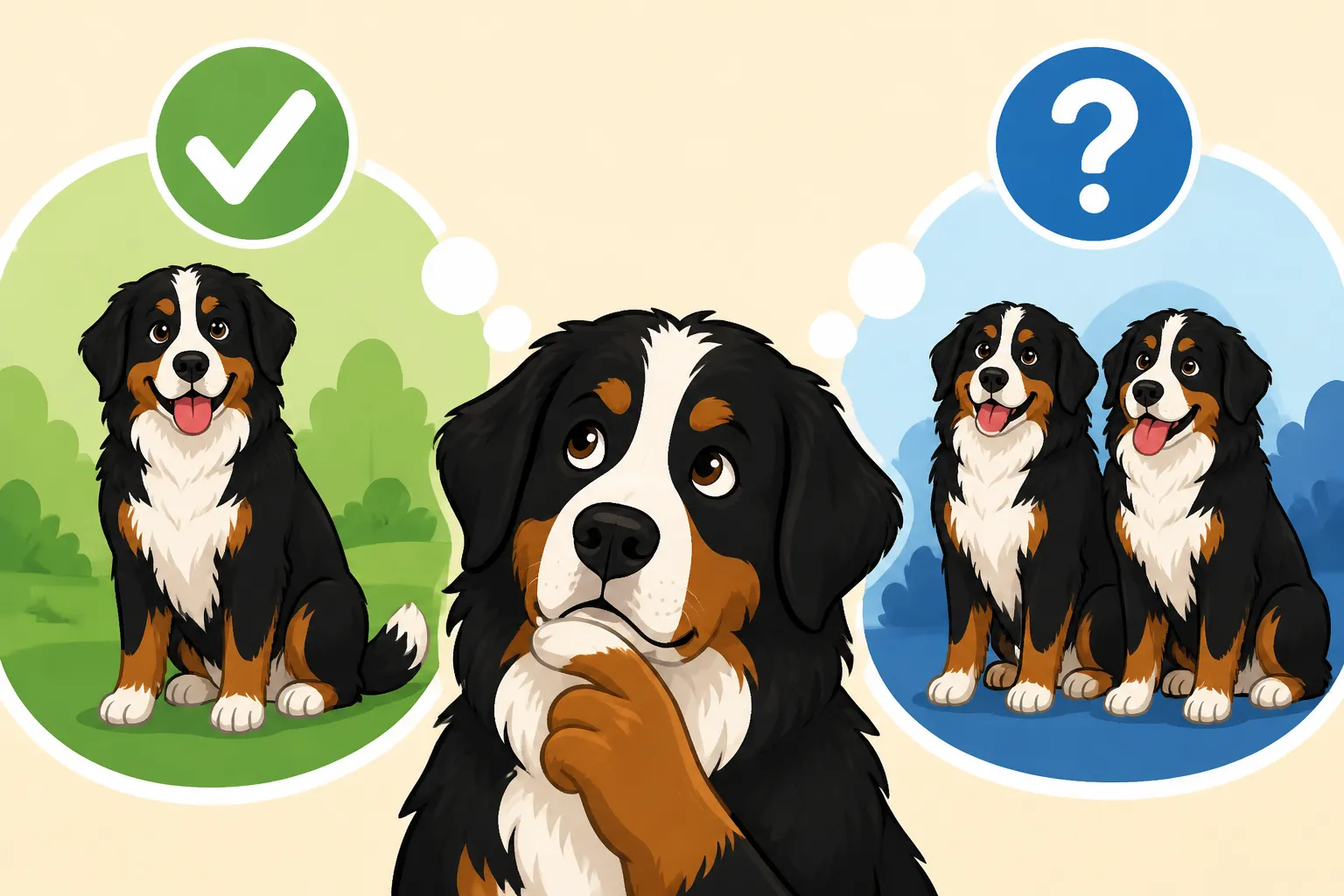
Whether Anyone Should Get a Second Bernese Mountain Dog
Adding a second Bernese Mountain Dog can sound like the easiest way to double the cuddles, but it also doubles the hair, care routines, costs, and decisions about space and attention. The right answer depends on your current dog’s health and temperament, your household’s capacity, and whether you want another dog—not simply a companion for the first one.
Start with your current Berner, not the puppy photos
Is your first dog actually ready to share the household?
A friendly dog is not automatically a dog who wants to live with another dog. Your Berner may enjoy meeting dogs on walks or at a friend’s house yet feel differently about sharing a sofa, toys, food, or your attention every day. Look at how your dog responds to other dogs in ordinary situations, especially when the other dog approaches a valued person or resting place.
Consider what happens when your dog is tired, uncomfortable, or startled. Does your Berner move away calmly, or stiffen, guard resources, hide, or become overwhelmed? A history of tense encounters does not necessarily rule out a second dog, but it is a reason to slow down and seek guidance from a qualified trainer or veterinary behavior professional before making a commitment.
It also helps to be honest about your first dog’s current needs. A Berner who is anxious when left alone, struggling with a health issue, or in the middle of a major training challenge may need more focused support before a newcomer arrives. A second dog may bring companionship, but it is not a reliable treatment for separation distress or behavior difficulties. For that question, read The Bernese Mountain Dog That Cannot Bear Being Left.
Is your first Berner healthy enough for the change?
A young, robust dog may have the energy to play and adapt quickly. An older or sore dog may prefer quiet, predictable days and find a bouncy puppy exhausting. Berners can also hide discomfort, so changes such as reluctance to rise, sensitivity around handling, or reduced interest in play are worth discussing with your veterinarian before planning a new arrival.
Think beyond whether the dogs might get along. Could your current Berner rest undisturbed? Would you be able to separate the dogs for meals, training, and downtime? If your first dog has arthritis or mobility limitations, could a newcomer accidentally bowl them over while playing? These practical details are easy to overlook when imagining two dogs curled up together.
The age and health of your first dog should shape the timing, not just the choice of puppy. Some households do well with an age gap; others find that a new dog brings too much activity into a home where the older dog needs more help. What a Bernese Mountain Dog Needs Once It Slows can help you think through the care demands of a Berner whose pace is changing.
Would a second Berner fit your life if the dogs did not become best friends?
It is lovely when two dogs choose to nap together or play in the yard, but that outcome cannot be promised. They may become close companions, peaceful housemates, or dogs who need to spend some of the day apart. Your decision should still make sense if they enjoy each other without being inseparable.
Ask yourself whether you would welcome a second dog for their own personality and needs, even if the first dog mostly ignores them. If the only reason to add another is to keep your Berner entertained, pause. Your existing dog still needs walks, attention, enrichment, and companionship from you; another dog does not take those responsibilities off your hands.
If you are still deciding whether the breed’s everyday demands fit your household, Whether a Bernese Mountain Dog Is Right for You is a useful place to review the broader commitment. A second Berner is not just another version of the first: individual dogs can differ in sociability, energy, confidence, and health.
Make an honest plan for time, space, and money
Can you give each dog individual attention?
Two dogs can share a walk, but they cannot always share every part of their care. A puppy needs frequent, patient training and close supervision. Your first Berner may need one-on-one time to maintain training and feel secure. Both dogs need individual attention from you, even if they enjoy each other’s company.
In the early weeks, you may need to feed them separately, provide separate rest areas, and supervise play. You might also need to take them out at different times while the puppy is learning household routines. If you work long hours or already find it hard to fit in grooming and exercise, picture the actual weekday schedule—not the idealized weekend version.
A simple calendar can reveal pressure points. Write down work hours, school runs, walks, meals, grooming, training, and veterinary appointments. Then add the likely needs of a second dog. If the plan only works when everything goes perfectly, it may not be a workable plan yet.
Is your home set up for two large dogs?
Berners need room to move around without constantly colliding, especially when one is excited or still learning manners. Think about doorways, stairs, car access, sleeping spots, food storage, and where each dog can retreat. A home does not need a huge yard to suit two dogs, but it does need a realistic plan for safe movement, toileting, rest, and exercise.
The car deserves special attention. Can both dogs travel safely in the vehicle you have? Is there room for a crate or other appropriate restraint, and can you get the dogs in and out without straining yourself? A large dog who refuses to climb into a vehicle can turn a routine appointment into a difficult lift, so plan for this before you need it.
Also consider the small household logistics that add up: separate bowls, two beds, leads and harnesses, grooming equipment, and a way to keep food and chews from becoming points of conflict. If you use Chewy to organize routine food or supply deliveries, make a list for both dogs and confirm that you can manage separate feeding needs rather than assuming one product or schedule suits them equally. The brand mention is a planning example, not a substitute for veterinary advice about diet.
Can your budget absorb the second dog’s everyday and unexpected costs?
A second large dog means more than another bag of food. Routine care, grooming, training, parasite prevention, boarding, equipment, and emergency care all need a place in your budget. Costs can rise unevenly: a quiet year may be followed by a year with dental work, an injury, or a chronic condition that needs ongoing attention.
Consider whether you could pay for care for both dogs at the same time. If one dog needs surgery or frequent appointments, can you still cover the other dog’s regular needs? What would happen if you had to pay for a pet sitter while one dog was recovering? These are not reasons to expect the worst; they are useful questions for deciding whether the household has enough financial breathing room.
The costs of two Berners can be harder to estimate if you only think in terms of food. Eight Years of Bernese Mountain Dog Bills and The Running Costs of a Hundred Pound Bernese Mountain Dog can help you identify categories to include. If Chewy is part of your routine for ordering food or household pet supplies, compare your planned list for two dogs with what you currently keep on hand, and leave room in the budget for items that cannot be conveniently bought in advance.
| What to plan for | Questions to ask before adding a second Berner |
|---|---|
| Daily routine | Can you provide separate training, rest, and attention when needed? |
| Introductions | Can you supervise meetings and separate the dogs safely? |
| Space | Does each dog have a quiet place to eat and rest? |
| Transport | Can both dogs travel safely to appointments and boarding? |
| Grooming | Can you manage brushing, bathing, and coat care for two dogs? |
| Budget | Can you handle routine expenses and unexpected care for either dog? |
| Backup support | Is there someone who can help if you are ill, away, or overwhelmed? |
Choose the right second dog and introduce them gradually
Puppy, adult, or rescue: which option fits your first dog?
A puppy can be appealing, but the energy and constant learning may be a lot for an older Berner. Puppies explore with their mouths, make mistakes, and need regular supervision. Your first dog may be patient, but they should not be expected to teach the puppy everything or tolerate unwanted pestering all day.
An adult dog can offer a clearer picture of size and temperament, though you still need time to learn how they behave in your home. A rescue dog may have an unknown or incomplete history with other dogs. Ask the rescue or foster caregiver what they have observed, what situations the dog has experienced, and what support is available if the transition is difficult. Avoid treating a brief, successful meeting as proof that the dogs are ready to share every resource.
Think about energy and play style as well as age. A confident, persistent puppy may overwhelm a calm adult; a timid newcomer may be unsettled by a boisterous resident dog. The goal is not to find a perfect match on paper but to choose a dog whose needs you can meet while protecting the wellbeing of the dog already at home. The First Month With a Rescued Bernese Mountain Dog offers a helpful perspective on the adjustment period.
How should the first meetings happen?
Plan introductions in a calm, controlled setting rather than bringing the newcomer straight into the resident dog’s favorite resting spot. If possible, begin with space between the dogs and allow them to notice each other without pressure. Keep the first meeting short enough that both can remain relaxed, and give each dog the option to move away.
At home, use barriers, separate rooms, or other safe arrangements so the dogs can settle without being expected to interact constantly. Feed them separately, pick up high-value chews and toys at first, and supervise shared time. Watch the whole body, not just wagging tails: a dog may show stress through stiffness, turning away, repeated lip licking, or trying to leave.
Do not rush to leave the dogs alone together simply because a few supervised sessions went well. Build familiarity gradually and adjust based on how each dog responds. If there is growling, snapping, persistent chasing, resource guarding, or fear, separate them calmly and get qualified help rather than forcing more contact. For more on this stage, see Introducing a Bernese Mountain Dog to a Second Dog.
What if you already have children, cats, or other animals?
The decision involves everyone who shares the home. Children need clear rules about not disturbing either dog while eating, sleeping, or resting, and adults need to supervise interactions. Two large dogs playing together can knock a child over even without meaning to, so think about where play can happen safely.
If you have a cat or another small animal, consider how both dogs behave around them. A dog who has previously lived calmly with a cat may still react differently when a new dog joins the household. Provide the smaller animal with secure spaces and escape routes, and avoid leaving animals together unsupervised until you have a strong, reliable understanding of their behavior.
A second dog should not be expected to fix tension between a Berner and another pet. If your home already has an animal who is fearful or frequently chased, address that problem first. A Bernese Mountain Dog and the Household Cat covers some of the considerations for a mixed-pet household.
Decide whether the timing is right
What signs suggest you may be ready?
You are in a stronger position to add a second Berner if your current dog is reasonably settled, you understand their social preferences, and you have enough time to meet two dogs’ needs separately. You also have a practical introduction plan, room for safe separation, and a budget that includes care for both dogs.
Readiness does not mean having a perfect home or knowing exactly how the dogs will behave. It means being willing to adapt if the first plan does not work. You may need to slow down introductions, hire a qualified trainer, or change how the dogs share rooms and resources. If those possibilities feel manageable rather than overwhelming, that is a useful sign.
It can help to have a trial period or staged arrangement when working with a reputable rescue, provided the rescue offers a clear process and the arrangement is safe for all involved. Ask what happens if the match is not suitable, and make sure any expectations are understood before bringing a dog home.
When is it kinder to wait?
Waiting may be the best choice if your current Berner is unwell, uncomfortable around dogs, or already struggling with changes at home. It may also be sensible if you are facing a move, a new baby, a major work change, or another disruption that will reduce your time and predictability.
A pause is not a failure. You can use the time to work on your resident dog’s training, build savings, improve the home setup, or learn more about the type of dog who might suit your household. If your Berner is in adolescence, remember that behavior and maturity can still be developing; The Bernese Mountain Dog Adolescent Stage may help you think about whether another transition would add too much at once.
Sometimes the most loving decision is to keep giving your current dog the attention and stability they enjoy. A second Berner can be a wonderful addition, but it is not a requirement for a happy first dog.
How can you make the decision without pressure?
Write down why you want another dog and separate the practical reasons from the emotional ones. Wanting another Berner because you love the breed is understandable. Wanting a playmate for your dog is understandable too, but it should not be the only reason. The second dog deserves to be wanted as an individual, with their own temperament, needs, and future care.
Talk through the plan with everyone in the household. Agree on who handles walks, grooming, training, feeding, and vet visits. If the answer to every task is “we’ll figure it out later,” take time to make the plan more specific. If a breeder or rescue is involved, ask thoughtful questions about temperament, health history, introductions, and what support they provide after placement. What a Bernese Mountain Dog Asks of a New Owner can help you revisit the commitments that come with welcoming another dog.
The best answer is the one that protects both dogs’ quality of life. If your current Berner is comfortable with other dogs, your household has time and resources, and you are ready to care for two distinct personalities, a second may be a good fit. If not, waiting—or deciding to remain a one-Berner home—can be just as thoughtful.
Disclaimer
This article is for general informational purposes only and does not constitute professional advice. Laws, prices and regulations vary by location and change over time. Consult a qualified professional for guidance on your specific situation.