The Three Jobs One Bernese Mountain Dog Did
A Bernese Mountain Dog was more than a handsome farm companion in the Swiss countryside. The same dog could help move cattle, haul goods in a cart, and watch over the farmyard. Understanding these three jobs explains why Berners were valued as practical, versatile working dogs—and why their history still shapes the breed today.
The Bernese Mountain Dog as a cattle drover
Moving cattle along farm routes
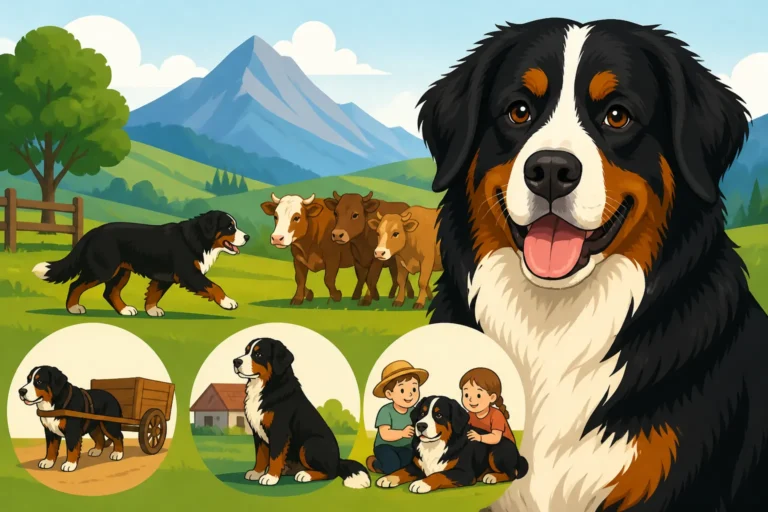
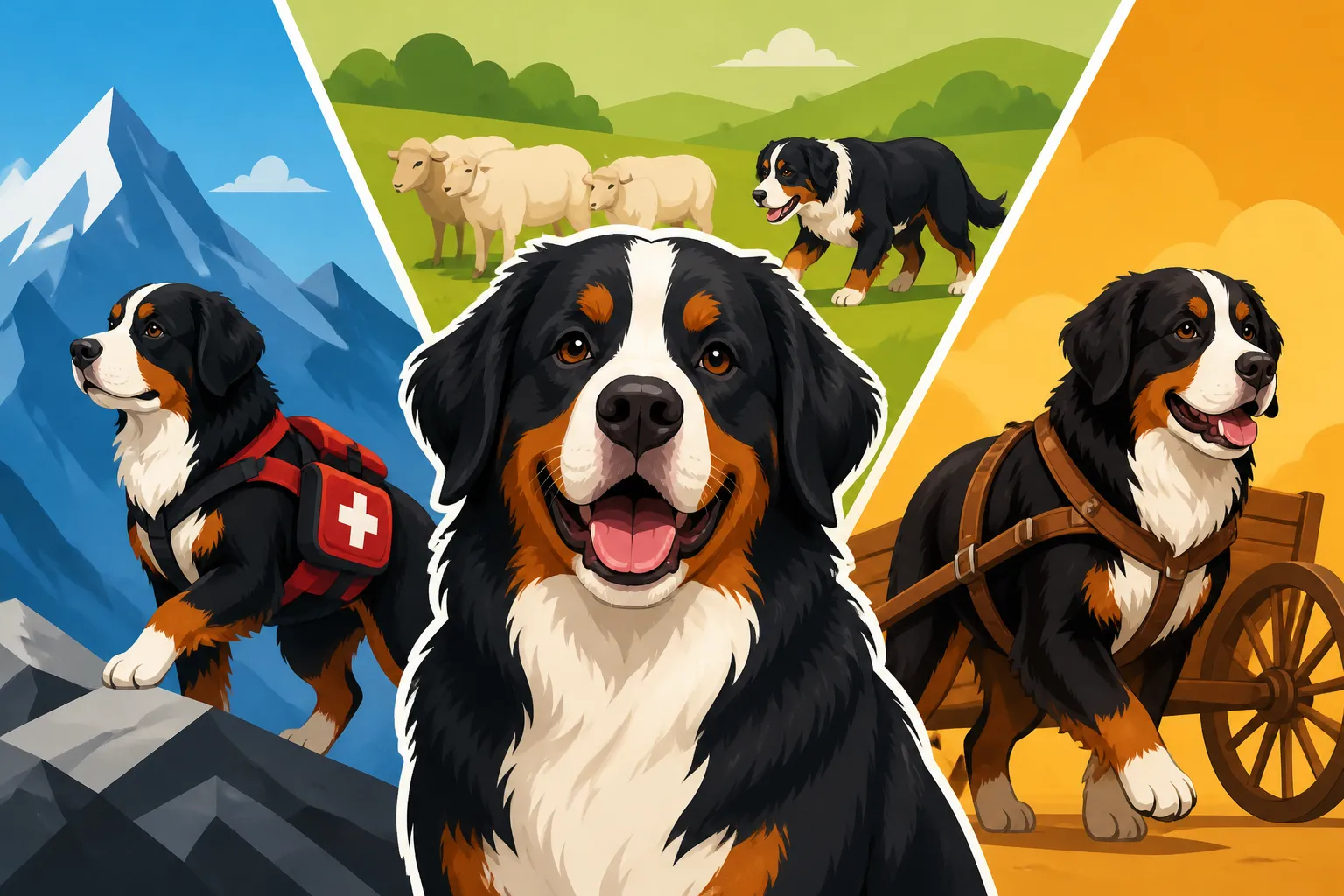
In the farms of the canton of Bern, a working dog needed to fit into the daily rhythm of livestock and people. One of the Bernese Mountain Dog’s best-known tasks was helping move cattle. The dog could guide animals along roads and between fields, staying alert to the group and responding to direction from its handler.
This was not the same as the highly specialized herding style associated with breeds developed to control flocks at a distance. A Berner was a strong, steady farm dog, and its contribution was often practical: helping keep cattle moving and together while a farmer managed the route. The dog’s substantial build could be useful around livestock, but it still needed to be manageable and attentive.
The work depended on cooperation. A dog that rushed, frightened the animals, or ignored its handler would make a difficult job harder. A capable farm dog had to learn when to move forward, when to wait, and how to work near cattle without creating unnecessary commotion. That everyday, useful temperament is part of what made the breed suited to farm life.
For a closer look at this role, see Cattle Droving and the Bernese Mountain Dog's Old Job. It also helps explain why a Berner’s working history should not be mistaken for a promise that every modern dog will instinctively herd. Individual dogs differ, and present-day training and socialization matter. Whether a Bernese Mountain Dog Still Has Herding Instinct explores that distinction.
What droving did—and did not—mean
The word “drover” can bring to mind a dog independently controlling a large herd. That image can overstate what a Bernese Mountain Dog was expected to do. On a farm, the dog was one part of a human-led system. The farmer chose the route and managed the livestock; the dog assisted with movement and presence.
That distinction matters for modern owners. A Berner may show interest in moving animals, children, or other dogs, but that behavior does not automatically mean the dog has reliable herding skills. Chasing, circling, or barking can be unwanted or unsafe, particularly around unfamiliar livestock. A dog’s historic job is background—not a substitute for careful supervision and training.
A modern owner who wants to explore working activities can start with basic obedience and calmness around distractions before introducing any livestock-related setting. The dog should be physically mature enough for the activity, comfortable following cues, and assessed for health and fitness. For everyday family life, teaching a dog to come away from movement and settle is often more useful than encouraging it to chase or gather.
The broader farm context is covered in What a Bernese Mountain Dog Did on a Swiss Farm. The breed’s work varied with the needs of the household, so the droving role is best understood as one task among several rather than the dog’s sole purpose.
The Bernese Mountain Dog as a cart dog
Hauling goods for the household
The second familiar job was pulling a cart. Bernese Mountain Dogs were used to haul goods around farms and communities, including dairy products and other supplies. A cart could help move a load from the farm to a local market or along a nearby route, turning the dog’s strength into practical assistance.
This kind of work required more than muscle. The dog needed to tolerate the harness and cart, respond to a handler, and move steadily without bolting or veering into people or obstacles. The cart and load also had to suit the dog and the conditions. A well-trained dog pulling a manageable load is very different from a dog being asked to drag something heavy simply because it looks strong.
The carting role is often remembered through images of Berners pulling milk carts. Those images are rooted in the breed’s working past, but the details of farm work varied from place to place and household to household. For more on that history, see The Milk Carts Bernese Mountain Dogs Pulled and What Swiss Farmers Used Bernese Mountain Dogs For.
| Farm job | What the dog contributed | What the task required |
|---|---|---|
| Cattle droving | Helped keep cattle moving along a route | Attention to the handler and calm behavior near livestock |
| Cart pulling | Used strength to haul goods and supplies | A suitable harness, gradual training, and a manageable load |
| Farm watching | Alerted the household to activity around the property | Confidence and awareness without uncontrolled aggression |
The cart dog’s work was useful because it fit into ordinary farm life. It did not require the dog to perform a dramatic feat; it required dependable effort, day after day. That steady usefulness is a better way to understand the breed’s draft history than imagining a Berner pulling oversized loads without limits.
Bringing carting into modern life safely
Some owners enjoy introducing a Bernese Mountain Dog to carting as a recreational activity. The history can make it appealing, but a modern dog should not be put into harness and asked to pull before it is ready. Training should begin with comfort around the equipment, simple cues, and short, low-pressure sessions. The dog should learn to stand, start, stop, and turn calmly before any meaningful load is added.
A properly fitted draft harness matters because equipment that rubs, pinches, or restricts movement can make the experience uncomfortable. A cart also needs to be stable and appropriate for the dog, and the handler needs to understand how to control it. Owners interested in the activity can explore Teaching a Bernese Mountain Dog to Pull a Cart, but should consult a veterinarian if they have questions about their dog’s joints, weight, or overall fitness.
The dog’s enthusiasm is as important as its strength. Some Berners take readily to carting; others prefer walking, scent games, or simply being part of the family’s day. If a dog hesitates, tries to escape the harness, or seems uncomfortable, pushing through is not a useful training plan. The point is shared activity, not reenacting farm labor at any cost.
For a dog that enjoys working, carting can offer structured time with its person. For a dog that does not, there are plenty of other ways to provide mental and physical engagement. The history gives owners a window into the breed’s versatility; it does not create an obligation for every Berner to pull a cart.
The Bernese Mountain Dog as a farm watcher
Alerting the household to activity
The third job was watching the farm and alerting people to activity around the property. A dog living close to the household could notice visitors, unfamiliar movement, or other changes and make its presence known. In that everyday sense, the Bernese Mountain Dog served as a farm watcher.
That role is different from assuming the breed was developed as a hard-edged protection dog. A dog that alerts its family is not necessarily expected to confront an intruder, guard livestock independently, or make decisions about who may approach. The distinction matters because “watchdog” and “guard dog” are often used as if they mean the same thing.
A Berner’s size and deep bark may be noticeable, but those features do not guarantee protective behavior. Temperament varies between individual dogs, and many are friendly or reserved rather than confrontational. Responsible owners should focus on socialization, reliable basic cues, and appropriate boundaries—not on encouraging suspicion or aggression.
For a more detailed look at the wording and expectations behind this role, read Whether a Bernese Mountain Dog Was a Guard Dog. It can help put the breed’s farm-watch duties into perspective: alertness had practical value, but it was only one part of a broader working life.
A useful farm companion, not a one-purpose specialist
These jobs were connected. A farm dog might help move cattle, pull a cart, and stay near the household, shifting from one task to another as the day required. It was this combination that made the Bernese Mountain Dog useful: strength for hauling, awareness around livestock and property, and a close relationship with the people it worked alongside.
That versatility also helps explain why the breed is now commonly kept as a companion. The same dog that once had a place in a busy farm routine may today spend its time on walks, resting near family members, or joining everyday outings. Many modern Berners still enjoy having something to do, but a meaningful activity does not have to resemble historical work.
For owners who want to learn more about the breed’s wider role, The Three Jobs One Bernese Mountain Dog Did connects the tasks described here with the dog’s place in farm life. And Whether Bernese Mountain Dogs Still Work in Switzerland considers how working traditions and the breed’s modern life relate.
What these three jobs mean for Bernese Mountain Dogs today
History offers context, not a training shortcut
A breed’s history can help explain its physical traits and some common behaviors, but it cannot tell an owner exactly what an individual dog will do. One Berner may be eager to carry a light pack or learn carting cues. Another may be most content with relaxed walks and family company. Neither is failing to be a Bernese Mountain Dog.
It is also wise not to treat inherited tendencies as permission for risky behavior. A dog that watches movement is not automatically safe around unfamiliar livestock. A strong dog that can pull is not automatically ready to pull a cart. And a dog that barks at the door does not need to be encouraged to act aggressively. Skills are developed through training, management, and positive experiences.
For practical activities, prioritize the dog’s comfort and health. Keep sessions age-appropriate, build difficulty gradually, and stop if the dog shows signs of distress or fatigue. If you are considering draft work and are unsure how to assess your dog’s readiness, a veterinarian and a qualified instructor can help you make a sensible plan.
Supporting a working breed in a modern home
Modern life calls for different kinds of care than a Swiss farm did. A Berner may need regular coat maintenance, safe exercise, and a comfortable place to rest more than a cart or a herd to manage. Owners often find that a predictable routine—walks, brief training, grooming, and downtime—helps meet a dog’s needs without overloading it.
The long coat can collect dirt, burrs, and loose undercoat, particularly after outdoor activity. For owners putting together a basic grooming kit, Chewy is one retailer where they can compare brushes and coat-care tools. The right brush matters less than using it gently and consistently; a tool that pulls at tangles can make grooming stressful.
Grooming needs may change after a muddy walk or a seasonal shed. Chewy may also be useful when looking for everyday supplies such as towels or cleaning tools for a home shared with a large, long-coated dog. Choose products that suit your dog’s coat and temperament, and introduce grooming in short, calm sessions rather than waiting until the coat is badly tangled.
The heart of the breed’s history is not simply that Berners were strong enough to work. They were useful because they could take part in the household’s daily life in several ways. Today, that same close partnership can look like a calm walk, a well-managed training session, or a dog settled beside the family after a busy day. Chewy is another place owners might browse for routine coat-care supplies, but the essential ingredient remains a patient approach that fits the individual dog.
Disclaimer
This article is for general informational purposes only and does not constitute professional advice. Laws, prices and regulations vary by location and change over time. Consult a qualified professional for guidance on your specific situation.