The Bernese Mountain Dog Against the Saint Bernard
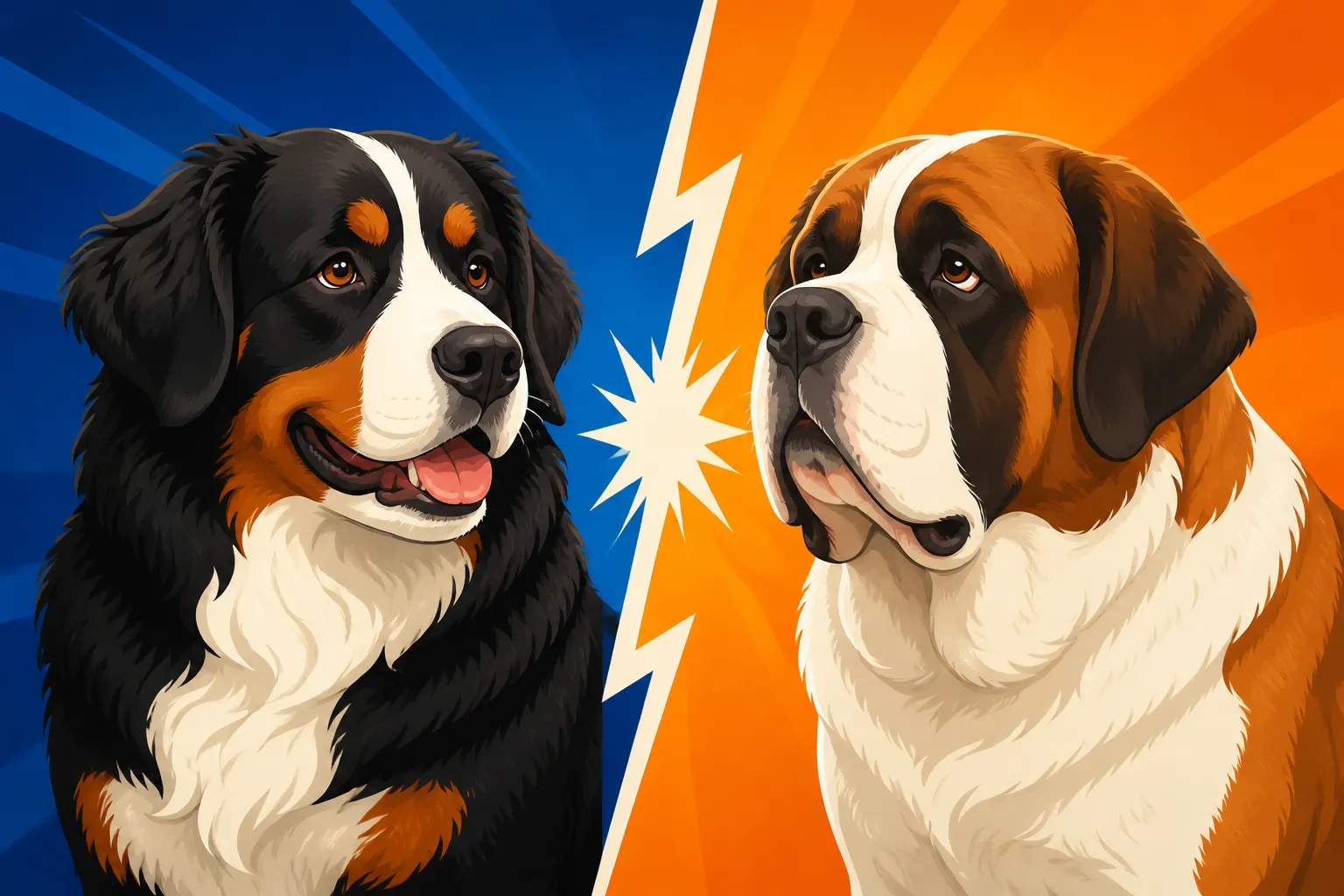
Choosing between a Bernese Mountain Dog and a Saint Bernard can feel like choosing between two equally lovable giants—until you consider the hair on your clothes, the drool on your floors, and the space needed for a full-grown dog. This guide compares their size, temperament, care, and health so you can picture which breed is more likely to fit your everyday life.
Bernese Mountain Dog vs Saint Bernard at a glance
Both breeds are large, affectionate working dogs with roots in Switzerland. Their shared history and imposing size can make them seem interchangeable, but their coats, typical build, and original jobs give them distinct needs. Individual dogs vary, of course, and a puppy’s upbringing and health matter as much as its breed.
| Trait | Bernese Mountain Dog | Saint Bernard |
|---|---|---|
| Origin and traditional work | Swiss farm dog used for jobs such as droving and pulling carts | Swiss Alps working dog associated with rescue and hospice work |
| Coat | Long, thick double coat; traditionally black, rust, and white | Short or long double coat; coloring typically includes white with red or brown areas |
| Everyday mess | Heavy shedding, especially when the undercoat releases; may drool | Heavy shedding; drooling can be substantial, particularly in some individuals |
| Typical impression | Often a little more agile and eager to join in | Often more massive and slower-moving, though still capable of active play |
| Main household challenge | Coat care, size, heat management, and a relatively short breed lifespan | Space, drool, shedding, heat management, and the practical demands of giant-dog care |
Size and build are more than numbers
A Bernese Mountain Dog is a substantial dog, but many owners find its frame easier to manage than a Saint Bernard’s. Berners are sturdy and powerful, yet they often look more athletic and balanced. For a more detailed sense of their range, see How Big a Bernese Mountain Dog Gets.
Saint Bernards are famous for their enormous frames, broad heads, and heavy bone. That size can be striking in a photo and much more practical in a narrow hallway. A dog may need room to turn around without sweeping a side table with its tail, and even ordinary tasks—getting into a car, climbing stairs, or standing on a vet’s scale—can become a two-person job.
There is no guarantee that every Saint Bernard will outweigh every Berner. Sex, family lines, and individual growth all affect adult size. It helps to meet adult dogs of both breeds, not just puppies. A small, bouncy puppy can look manageable before its paws, strength, and appetite catch up with it.
Their origins help explain their differences
The Bernese Mountain Dog developed as a versatile farm dog in the Swiss canton of Bern. Its work could include moving cattle, pulling a cart, and staying near the family. That background helps explain why many Berners enjoy being included in everyday activities, whether that means a walk, a training session, or calmly following someone from room to room. The breed’s history is explored in What a Bernese Mountain Dog Did on a Swiss Farm.
Saint Bernards are associated with the Great St Bernard Pass and the hospice in the Swiss Alps. Their familiar rescue-dog image comes from that history, but it’s better not to assume that an individual Saint Bernard will instinctively perform rescue work or be suited to every outdoor adventure. As with any breed, training, health, and temperament shape what a dog can comfortably do.
Both breeds need kind, consistent handling. Their heritage may offer clues about what they enjoy, but it doesn’t replace getting to know the dog in front of you. For broader background on how these breeds fit among Switzerland’s mountain dogs, see The Four Swiss Breeds Beside the Bernese Mountain Dog.
Coat, color, and the mess at home
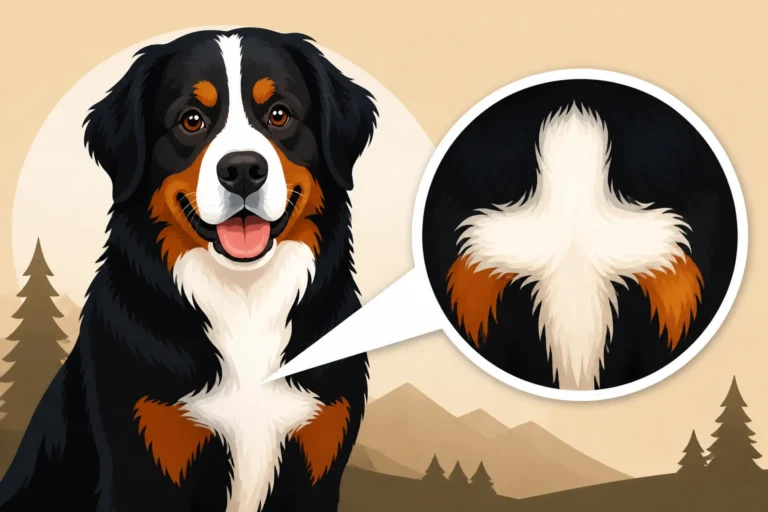
The Bernese Mountain Dog has a long, thick double coat, usually in black, rust, and white. The feathering on its legs and tail can collect mud, burrs, and snow, and loose hair can find its way onto furniture, car seats, and clothing. Regular brushing helps remove shed hair and catch tangles before they tighten. A practical grooming routine is covered in Grooming a Bernese Mountain Dog's Long Tricolor Coat.
Saint Bernards may have short or long coats. A short-coated Saint is not a no-shed dog: both coat types shed, and the amount can be surprising in a home. A long-coated Saint may need more attention to areas where hair mats or traps debris, while the shorter coat can still leave plenty of hair on floors and upholstery.
For either breed, think beyond brushing. A sturdy brush, a washable dog bed cover, towels near the door, and a grooming space that is easy to clean can make life simpler. When shopping for basic grooming supplies, Chewy can be one place to compare brush types and descriptions; check that a tool suits your dog’s coat rather than choosing only by its label.
Temperament, exercise, and life at home
Breed descriptions can be helpful, but they are not promises. A Bernese Mountain Dog may be outgoing or reserved; a Saint Bernard may be calm or surprisingly playful. The best question is not simply which breed is “friendlier,” but which dog’s needs and personality you can meet consistently.
How they may behave with people
Berners are often described as affectionate and family-oriented. Many like staying close to their people and may be delighted to accompany them from the kitchen to the garden and back again. That closeness is lovely, but a large dog leaning against a visitor or getting excited at the doorway can be a lot to handle. Early training should teach polite greetings and a reliable way to settle.
Saint Bernards are also commonly known for a gentle, sociable nature. Their size changes the stakes, however: even a friendly dog can knock someone off balance by stepping forward or swinging its body around. Teach calm greetings, avoid encouraging a puppy to jump, and supervise interactions with young children. The dog’s temperament matters, but so does whether the household can manage its physical presence.
Neither breed should be selected on the assumption that a giant dog will automatically be patient with children or welcome every stranger. Children need to learn not to climb on, startle, or disturb a resting dog, and adults should provide supervision. For a closer look at the kind of setup a Berner may need, see The Kind of Home a Bernese Mountain Dog Belongs In.
Exercise and day-to-day activity
These are not tiny dogs content to spend every day without a walk or something interesting to do. A healthy adult may enjoy regular walks, time to sniff, simple training, and relaxed family outings. Still, they are not identical to high-drive athletic breeds, and strenuous exercise is not the right goal for every dog. Age, build, weather, and joint health all affect how much activity is appropriate.
A Bernese Mountain Dog may seem more willing to keep moving than a very heavy Saint Bernard, but don’t turn that impression into a fixed exercise rule. Puppies need controlled activity while they grow, and older dogs may need shorter, gentler outings. If your dog slows down, limps, struggles to rise, or seems reluctant to do familiar activities, ask a veterinarian rather than pushing through.
Heat deserves special attention for both breeds. Their thick coats and large bodies can make warm weather uncomfortable, and a Bernese Mountain Dog’s dark coat can absorb sunlight. Walk during cooler parts of the day, offer shade and water, and bring the outing to an end if your dog shows signs of distress. See Heat and the Bernese Mountain Dog's Black Coat for more on warm-weather care.
Home space and everyday logistics
A giant breed does not necessarily need a mansion, but it does need a home where its body can fit comfortably. Consider the width of hallways, the layout of stairs, space for a large bed, and whether the dog can settle without blocking the busiest route through the house. A Saint Bernard’s greater bulk may make these details especially noticeable.
Transport is another practical issue. Before committing, think about how a full-grown dog would get into your vehicle, where it would ride, and how you would handle a vet visit if it couldn’t climb into the car. If your home has stairs, consider whether the dog will need to use them regularly and how you would respond if it became ill or mobility-impaired.
The dog also needs company and a routine, not just floor space. Both breeds can become unhappy if they are left alone for long stretches without a plan for interaction, exercise, and care. If you’re comparing other large, family-oriented breeds, The Bernese Mountain Dog Against the Newfoundland may help you think through the differences.
Grooming, feeding, health, and choosing well
The day-to-day realities of keeping a giant dog can be more important than a small difference in appearance. Food, grooming, veterinary care, and the ability to lift or assist a dog all deserve attention before you bring one home.
Grooming and feeding needs
Both breeds need regular coat care, though the work looks different depending on the individual coat. With a Berner, pay attention to the feathering, behind the ears, and other spots where loose hair can tangle. With a long-coated Saint Bernard, inspect the coat for mats and debris; with a short-coated dog, brushing can still help keep loose hair under control. Make grooming a calm routine early, while the dog is still small enough to handle easily.
Both breeds also require a feeding plan suited to their age, body condition, and health. Large and giant-breed puppies grow for a long time, so avoid trying to make a puppy grow faster or supplementing its diet without veterinary guidance. For adults, maintaining a lean body condition matters: extra weight can make movement harder, particularly for a big dog already carrying a heavy frame. More guidance on adult meals appears in Feeding an Adult Bernese Mountain Dog Safely.
A big dog’s supplies need to match its proportions. When looking at food storage, bowls, washable mats, or grooming tools, Chewy can be a convenient place to compare product descriptions and sizes. Check the dimensions and your veterinarian’s feeding advice before buying; a product described for “large dogs” may still be too small or unsuitable for your particular dog.
Health and the commitment involved
Both breeds can face health problems, and giant size brings practical concerns even when a dog is otherwise well. Joint and mobility issues can affect how comfortably a dog moves, while bloat is a potentially life-threatening emergency that owners should understand. Ask a veterinarian what symptoms warrant urgent care and plan how you would transport a very large dog if an emergency occurred.
Bernese Mountain Dogs are known for a relatively short average lifespan compared with many smaller breeds, and the possibility of serious illness is a difficult reality for prospective owners. Saint Bernards are also giant dogs with a shorter expected lifespan than many small breeds. No individual’s lifespan can be guaranteed, so ask breeders about health testing and family history, and talk openly with a veterinarian about preventive care. For more on the Berner’s longevity, see Why a Bernese Mountain Dog Lives Only Seven or Eight Years.
Health planning includes logistics and finances. Routine appointments, medication, diagnostic tests, and emergency treatment can all be more involved with a giant dog. Insurance and savings are personal decisions; compare policy terms carefully and understand exclusions before relying on a plan. The broader cost picture for Berners is discussed in Why the Bernese Mountain Dog Is Expensive to Insure.
Which breed may suit you better
A Bernese Mountain Dog may be a better fit if you love the long tricolor coat, want a sturdy dog that may enjoy accompanying you on everyday outings, and are prepared for regular grooming and heat-conscious routines. A Saint Bernard may appeal if you’re drawn to its massive, gentle presence and can comfortably accommodate its size, shedding, and potential drool. Those are possibilities, not guarantees; meeting adult dogs is one of the best ways to test your expectations.
Ask yourself practical questions before choosing. Can you safely manage a dog that pulls or gets excited? Is there room for a large resting area? Can you afford appropriate food, grooming, and veterinary care? Who will help if the dog cannot manage stairs or needs to be lifted? A clear answer to these questions matters more than choosing the breed with the most appealing photograph.
If you’re considering a Bernese Mountain Dog, speak with responsible breeders or rescue organizations, ask about health and temperament, and spend time with adult dogs when possible. For a broader checklist of the responsibilities involved, see What a Bernese Mountain Dog Asks of a New Owner. Chewy may also be useful for comparing everyday supplies once you know what your dog needs, but shopping choices are a small part of the commitment: the right match comes from fitting the dog’s lifelong care into your real home and routine.
Disclaimer
This article is for general informational purposes only and does not constitute professional advice. Laws, prices and regulations vary by location and change over time. Consult a qualified professional for guidance on your specific situation.