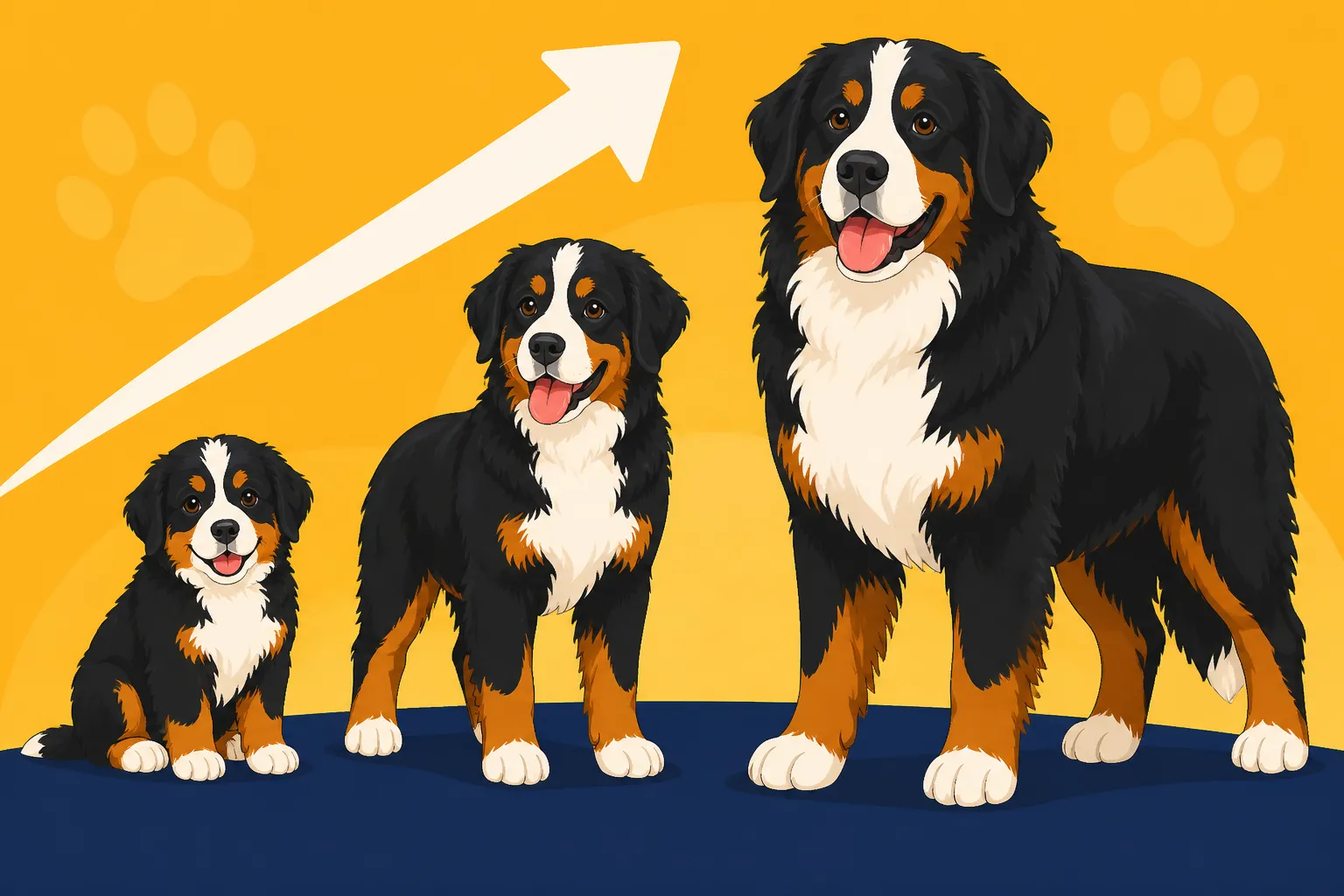
How Big a Bernese Mountain Dog Gets
One of the first questions, and often the most intimidating, when you fall in love with a Bernese Mountain Dog puppy is, "Just how big is this adorable fluff ball going to get?" It’s a completely valid concern, and honestly, a crucial one. These aren't your average medium-sized dogs; they're magnificent, large, and imposing creatures, and their size has implications for everything from your car to your couch to your budget. This guide is here to walk you through everything you need to know about the impressive stature of the Bernese Mountain Dog, from their growth spurts to their adult dimensions, and what that means for life with one of these gentle giants.
Understanding the Bernese Mountain Dog's Stature: More Than Just "Big"
When we talk about a Bernese Mountain Dog's size, it's not just a number on a scale or a measurement with a tape. It encompasses their overall presence, their bone structure, their deep chest, and even how much space they take up when they decide to sprawl out on your living room rug. Their size is a defining characteristic, rooted in their history as working dogs in the Swiss Alps, where they needed strength and endurance.
The Official Breed Standard: What It Really Means
The breed standard is essentially the blueprint for what a Bernese Mountain Dog "should" look like, as defined by kennel clubs. It's not just about aesthetics; it outlines the functional traits that make a Berner a Berner. For size, the standard typically specifies a height range for both males and females.
For male Bernese Mountain Dogs, the ideal height at the shoulder (or withers) usually falls between 25 to 27.5 inches. For females, it's a bit smaller, generally ranging from 23 to 26 inches. Now, these are ideals, and individual dogs can certainly be a little outside these ranges and still be perfectly healthy and wonderful companions. What's more important than hitting an exact number is that the dog is well-proportioned and sturdy, carrying their weight gracefully without appearing too leggy or too squat. You'll often hear breeders talk about The Sturdy Frame a Bernese Mountain Dog Standard Describes because it's so vital to their overall health and function.
The standard also touches on the overall impression: a large, powerful, and agile dog. It’s not just about height but the solid bone and muscle mass that comes with it. This is why a Bernese Mountain Dog feels substantial when you meet one – they're not just tall, they're broad and deep-chested.
Why Size Matters for Bernese Mountain Dog Health
Their large size, while undeniably majestic, brings with it a unique set of health considerations. For instance, fast growth in puppies can predispose them to orthopedic issues down the line. This is why you'll often hear about the importance of specialized large breed puppy food and careful exercise protocols for young Berners. Their sheer body mass puts a lot of strain on their joints, making conditions like hip and elbow dysplasia unfortunately common. We've talked extensively about Hips That Fail Under a Bernese Mountain Dog's Weight and it's a direct consequence of their size and rapid growth.
Beyond joint health, a deep-chested breed like the Bernese Mountain Dog is also more prone to bloat, a life-threatening condition where the stomach twists. Their large size means that when this happens, it can progress incredibly rapidly, often within hours. Understanding these risks isn't about fear-mongering; it's about being a responsible owner who can recognize potential issues and seek prompt veterinary care. You can read more about Bloat in a Deep-Chested Bernese Mountain Dog to be prepared.
Their weight also impacts medication dosages, anesthesia protocols, and even the simple act of lifting them if they're injured or unwell. Everything is scaled up, including the potential costs and complexities of their care.
The Bernese Mountain Dog's Growth Journey: From Fluffy Puppy to Gentle Giant
Watching a Bernese Mountain Dog puppy grow is truly astounding. They start as tiny, clumsy bundles of fluff and transform into massive, majestic dogs in what feels like the blink of an eye. But this growth isn't uniform; it happens in distinct stages, each with its own quirks and care requirements.
Puppyhood: Rapid Growth and Critical Development Stages
From the moment you bring home your 8-week-old Bernese Mountain Dog puppy, prepare for a growth explosion. In their first few months, they'll gain several pounds a week! It's incredible to witness. This rapid growth period, particularly between 2 to 8 months, is crucial for their skeletal development.
During this time, it's paramount to feed a high-quality large-breed puppy food designed to support slow, steady growth, rather than maximizing size quickly. Too much protein or calcium can actually be detrimental, contributing to developmental orthopedic diseases. Your vet might recommend a specific brand or type, and many Berner owners find excellent options on platforms like Chewy, which often have a wide selection of specialized large-breed formulas.
Exercise also needs to be carefully managed. While a Bernese Mountain Dog puppy has boundless energy, their growth plates are still open and vulnerable. Too much high-impact exercise, like jumping or long runs, can cause irreversible damage. Think short, gentle walks and supervised play on soft surfaces. A good rule of thumb is the "five-minute rule": roughly five minutes of structured exercise per month of age, twice a day. So, a four-month-old puppy might get two 20-minute walks. This isn't about restricting them; it's about protecting their delicate, growing bodies.
Adolescence: When the Berner Fills Out
Once they pass their first birthday, the frantic vertical growth starts to slow down significantly. However, a Bernese Mountain Dog isn't truly "done" growing. What happens next is the filling-out stage, which can continue until they are two, sometimes even three years old. During adolescence, they start to gain muscle mass, their chest deepens, and they achieve that broad, powerful appearance the breed is known for.
This stage can be a bit awkward. They might look a little gangly or disproportionate for a while, as different parts of their body mature at different rates. Their energy levels might still be quite high, but their coordination improves, and they start to carry themselves with more grace. It's during this time that consistent training becomes even more vital. A large, boisterous adolescent Bernese Mountain Dog who hasn't learned Leash Manners on a Hundred Pound Bernese Mountain Dog can be a handful, to say the least!
Mentally, too, they are still developing. While physically nearing maturity, their minds are often still very much in a puppy phase. This can sometimes feel frustrating, as you have a huge dog with the brain of a playful, easily distracted youngster. Patience and positive reinforcement are your best friends during this adolescent period. You might even find yourself looking up Why a Bernese Mountain Dog Stays a Puppy Until Three and nodding along!
Reaching Full Adult Size: The Slow Finish Line
Most Bernese Mountain Dogs reach their full height by about 12-18 months of age. But, as mentioned, they will continue to put on weight and muscle, broadening and deepening their chests, until they are closer to two or even three years old. This means that while they might look tall enough at 18 months, they haven't quite reached their full, imposing adult presence.
It’s a subtle shift, but an important one. You might not notice it day-to-day, but looking back at photos, you'll see how they mature from a lanky teen to a magnificent adult. This slow filling-out is natural and healthy, as it allows their bones and joints to gradually strengthen under the increasing load. By the time they hit their third birthday, you'll have a fully mature, impressive Bernese Mountain Dog who embodies the true spirit of the breed.
Typical Height and Weight Ranges for Adult Bernese Mountain Dogs
Let's get down to the numbers. While every Bernese Mountain Dog is an individual, there are general ranges you can expect for adult males and females. These figures come from the collective experience of breeders, owners, and the breed standard.
Male Bernese Mountain Dog Dimensions
Adult male Bernese Mountain Dogs are the larger of the sexes.
- Height (at withers): Typically 25 to 27.5 inches (63.5 to 70 cm). This is measured from the ground to the highest point of their shoulder blades.
- Weight: Generally ranges from 80 to 115 pounds (36 to 52 kg). However, some larger males can weigh more, occasionally pushing 120-130 pounds, especially if they are well-muscled.
It's important to remember that weight should always be proportionate to their height and bone structure. A healthy male Berner should have a clearly discernible waist when viewed from above, and you should be able to feel their ribs without pressing hard. Being overweight is a huge burden on their already susceptible joints.
Female Bernese Mountain Dog Dimensions
Female Bernese Mountain Dogs are typically a bit smaller and often have a slightly more refined build, though they are still substantial dogs.
- Height (at withers): Usually 23 to 26 inches (58 to 66 cm).
- Weight: Generally ranges from 70 to 95 pounds (32 to 43 kg). Again, some can be a little over or under this range while remaining healthy.
Just like with males, body condition is key. A lean, healthy female Bernese Mountain Dog is far better off than one carrying extra pounds. Their majestic presence isn't diminished by a healthy weight; it's enhanced by their athleticism and comfort.
Here's a quick reference table for average adult Bernese Mountain Dog sizes:
| Characteristic | Male Bernese Mountain Dog | Female Bernese Mountain Dog |
|---|---|---|
| Height (at withers) | 25 – 27.5 inches | 23 – 26 inches |
| Weight | 80 – 115 pounds | 70 – 95 pounds |
| General Build | More substantial, heavier bone | Slightly more refined, lighter bone |
Factors Influencing a Berner's Final Size
Several factors can play a role in how big your Bernese Mountain Dog ultimately gets:
- Genetics: This is by far the most significant factor. A puppy's size potential is largely inherited from its parents and their lineage. This is why a reputable breeder will be transparent about the size of their breeding dogs and their ancestors. You can often learn a lot by looking into What the Berner-Garde Database Records for a particular line, as it often includes height and weight data for many dogs.
- Nutrition: While genetics set the potential, proper nutrition allows that potential to be met healthily. As discussed, large-breed puppy food is essential. Overfeeding or feeding inappropriate diets can lead to excessive, rapid growth, which can be detrimental to joint development. Underfeeding can stunt growth, but this is less common with conscientious owners.
- Gender: As you can see from the ranges above, males are consistently larger and heavier than females.
- Health: Chronic illness or significant parasitic burdens during crucial growth periods can impact a puppy's ability to reach its full genetic potential. A healthy start is crucial.
- Exercise: Appropriate exercise, neither too little nor too much, contributes to proper muscle and bone development, allowing the dog to grow into its frame correctly.
It's a delicate balance, and working closely with your veterinarian is the best way to ensure your Bernese Mountain Dog grows up as healthy and robust as possible.
Navigating the Challenges of a Giant Breed: Practical Considerations
Owning a large dog like a Bernese Mountain Dog isn't just about their impressive looks; it comes with practical considerations that often surprise first-time giant breed owners. From the moment they step paw in your home, their size impacts almost every aspect of your life together.
Space Requirements and Your Home Environment
A hundred-pound dog needs space. This might seem obvious, but it's often underestimated. While Berners aren't usually hyperactive indoor dogs – they're more likely to be found draped across your floor – they still need room to stretch out, turn around, and navigate your home without constantly bumping into furniture or people.
Consider:
- Crate Size: If you plan to crate train, you'll need one of the largest crates available. A 48-inch crate is often the minimum for an adult Berner to stand up, turn around, and lie down comfortably. These are substantial pieces of furniture themselves!
- Sleeping Areas: Forget those cute little dog beds. Your Bernese Mountain Dog will need an extra-large, orthopedic bed to support their heavy joints. You might even find them preferring the cool, hard floor.
- Doorways and Hallways: While they can fit, a Berner’s sheer bulk means navigating narrow spaces can feel tight, especially for guests.
- Furniture: Prepare for dog hair (lots of it!) and possibly slobber on your furniture if you allow them on it. Also, consider the wear and tear a 100+ lb dog can inflict.
- Outdoor Space: A yard, while not strictly mandatory if you commit to daily walks, is highly beneficial for a Bernese Mountain Dog to stretch their legs and enjoy some fresh air. It should be securely fenced, of course.
We often chat about Sizing a Household Up for a Bernese Mountain Dog because it's such a common concern, and rightly so! It’s not just about square footage, but about creating an environment where a large dog can thrive comfortably.
Transporting a Large Bernese Mountain Dog
This is where many owners realize just how big their dog truly is. Your standard sedan might not cut it anymore.
- Car Size: A Bernese Mountain Dog needs ample space in a vehicle, ideally a station wagon, SUV, or minivan. They need enough room to lie down comfortably, not just squeeze in. Many Berner owners end up with larger vehicles specifically to accommodate their furry family member. The Car a Bernese Mountain Dog Owner Ends Up Buying is a very real phenomenon!
- Safety: Just like humans, dogs should be secured in a vehicle. A large travel crate or a sturdy seatbelt harness specifically designed for large breeds is essential. In an accident, an unrestrained 100-pound dog becomes a very dangerous projectile.
- Getting In and Out: Even with a suitable vehicle, lifting a heavy Bernese Mountain Dog in and out can be challenging, especially as they age or if they have joint issues. Ramps or sturdy steps can be invaluable.
- Travel Costs: If you travel with your Bernese Mountain Dog, be prepared for additional costs. Some hotels charge extra for large breeds, and airline travel (especially cargo) for a dog this size can be incredibly expensive and stressful.
The Impact of Size on Daily Care and Supplies
The sheer volume of a Bernese Mountain Dog means that everything costs more and requires more effort.
- Food: A hundred-pound dog eats a lot. We’re talking several cups of high-quality kibble per day. This means larger bags, more frequent purchases, and a higher monthly food bill. Sites like Chewy are fantastic for setting up recurring deliveries of large bags, saving you trips to the store. You can quickly see A Month of Food for a Bernese Mountain Dog becomes a significant line item in your budget!
- Grooming Supplies: Brushes, combs, and shampoo are needed in larger quantities and often need to be industrial-strength to handle their thick double coat. Bathing a Bernese Mountain Dog can be a production, often requiring a dedicated wash station or professional groomers.
- Medication & Vet Bills: From flea and tick prevention to antibiotics, medication dosages are based on weight. A Bernese Mountain Dog will require higher doses, which translates to higher costs. Vet procedures, too, are scaled by weight, from anesthesia to surgical supplies. What Oncology Bills Reach for a Bernese Mountain Dog can be truly staggering, and it's something many owners face given the breed's predispositions.
- Gear: Collars, harnesses, and leashes need to be extra strong and durable. Toys need to be giant-breed appropriate to withstand powerful jaws and enthusiastic play.
- Waste Management: Yes, we have to talk about it! A large dog produces a large amount of waste. You'll need plenty of sturdy poop bags and a plan for disposal.
Embracing a Bernese Mountain Dog means embracing a lifestyle adjusted to their grand scale. It's a commitment, but one that countless owners find incredibly rewarding.
Comparing Bernese Mountain Dog Size to Other Giant Breeds
Understanding where the Bernese Mountain Dog stands in the spectrum of giant breeds can help set expectations and highlight their unique physical characteristics. They are certainly large, but how do they compare to their cousins and other popular giants?
Bernese Mountain Dogs vs. Other Sennenhund Breeds
The Bernese Mountain Dog is one of four Swiss mountain dog breeds, collectively known as Sennenhunds. These breeds share a common heritage as farm dogs from the Alps and typically feature the distinctive tricolor coat pattern.
- Greater Swiss Mountain Dog: Often the largest of the Sennenhunds, the Greater Swiss Mountain Dog (or "Swissy") can be taller and heavier than a Berner. Males can reach 28.5 inches and easily weigh over 120 pounds. They have a short, dense coat, which makes their size feel even more robust compared to the Bernese's fluffy appearance. Telling a Greater Swiss From a Bernese Mountain Dog often comes down to their coat length and overall bone structure.
- Appenzeller Sennenhund: Significantly smaller than the Bernese, Appenzellers are medium-sized dogs, usually under 23 inches tall and weighing 50-70 pounds. They are energetic and agile, reflecting their heritage as cattle herders.
- Entlebucher Sennenhund: The smallest of the four, the Entlebucher is also a medium-sized herding dog, typically under 20 inches and weighing 45-65 pounds.
So, within their immediate family, the Bernese Mountain Dog is definitely on the larger side, only surpassed by the Greater Swiss. The long, thick coat of the Berner can sometimes make them appear larger than a Swissy of similar dimensions, but generally, the Swissy has more overall mass.
How Berners Stack Up Against Other Popular Giants
When compared to other well-known giant breeds, the Bernese Mountain Dog holds its own, though its specific build and presence are unique.
- Newfoundland: Newfoundlands are often heavier and more massive than Bernese Mountain Dogs, with males commonly exceeding 130-150 pounds and standing at a similar or slightly greater height. Their barrel chests and dense, water-resistant coats contribute to their formidable bulk. The Newfoundland feels more "cobby" and stocky.
- Saint Bernard: Historically renowned for their immense size, Saint Bernards are typically taller and significantly heavier than Bernese Mountain Dogs. Males can easily reach 30 inches or more and weigh well over 150 pounds, sometimes even exceeding 200 pounds. They have a much larger head and a more powerful, mastiff-like build.
- Great Pyrenees: While comparable in height, Great Pyrenees tend to be a bit lighter in build than Bernese Mountain Dogs, although they possess a similarly impressive, dense coat that can make them appear larger. Males typically range from 27-32 inches in height and 100-160 pounds in weight, but often appear more athletic and less "stocky" than a Berner.
- Leonberger: Leonbergers are often slightly taller than Berners, with males reaching 31 inches, and can be heavier, ranging from 120-170 pounds. They also possess a magnificent, dense coat and a generally more elongated, elegant profile compared to the Berner's squarer build.
Compared to these giants, the Bernese Mountain Dog strikes a wonderful balance: large and powerful, but with an approachable and often softer expression. They are substantial without being overwhelmingly huge, embodying a sturdy elegance unique to their breed.
Debunking Myths: "Mini" Berners and Oversized Dogs
In the world of popular dog breeds, especially those with such endearing qualities as the Bernese Mountain Dog, myths and misconceptions about size are bound to pop up. It’s important to separate fact from fiction when considering bringing one into your home.
The Truth About "Miniature" Bernese Mountain Dogs
Let's be absolutely clear: there is no such thing as a "Miniature Bernese Mountain Dog" as a recognized breed. If you see someone advertising puppies by this name, or a "Teacup Berner," please be very wary. These are not purebred Bernese Mountain Dogs.
What are they then? They are typically one of two things:
- Mixed Breeds: Most often, these are Bernedoodles (Bernese Mountain Dog x Poodle mix) bred with a Miniature or Toy Poodle to reduce their size. While Bernedoodles are a popular cross, they are not Bernese Mountain Dogs. Their size, coat, and temperament can vary wildly depending on the Poodle parent. While some breeders aim for specific sizes in Bernedoodles, calling them "Mini Bernese Mountain Dogs" is misleading.
- Unscrupulous Breeding: In rarer, and more concerning, cases, "miniature" might refer to undersized purebred Bernese Mountain Dogs, potentially from runts of litters, or bred from parents that are intentionally smaller than the breed standard. This can indicate poor breeding practices, potentially leading to health issues. Selecting for smaller size outside of the standard can inadvertently lead to other health problems or a departure from the true temperament of the breed.
The idea of a smaller version of a beloved giant breed is appealing to many who might not have the space or capacity for a full-sized Berner. However, it's vital to seek out responsible breeders if you are considering a crossbreed, and to understand that a truly miniature purebred Bernese Mountain Dog does not exist. You can look into Whether a Mini Bernese Mountain Dog Is a Real Breed for more specific information.
When a Bernese Mountain Dog Is Considered "Too Big"
Just as "miniature" Berners are a misnomer, sometimes dogs are bred to be excessively large, beyond the breed standard. While the standard provides a height range, some breeders might aim for dogs on the very upper end, or even exceeding it, thinking that "bigger is better."
However, exceeding the established breed standard, particularly in a giant breed, can come with significant health drawbacks:
- Increased Joint Strain: More weight on an already large frame exacerbates the risk of hip and elbow dysplasia, arthritis, and other orthopedic issues.
- Shorter Lifespan: Generally, larger and heavier dogs tend to have shorter lifespans. This is sadly already a concern for Bernese Mountain Dogs, whose lifespan is notoriously short, often only 7-8 years. An overly large Berner might experience an even shorter life. You can learn more about Why a Bernese Mountain Dog Lives Only Seven or Eight Years.
- Cardiovascular Strain: A larger body means the heart has to work harder to pump blood, potentially leading to heart problems earlier in life.
- Practical Difficulties: As discussed, an already large dog presents logistical challenges. An even larger dog amplifies these: finding suitable crates, fitting in cars, handling them physically, and increased costs for everything.
Reputable Bernese Mountain Dog breeders focus on breeding healthy, well-tempered dogs that fall within the breed standard for size, conformation, and temperament. They prioritize health and longevity over extreme size, understanding the delicate balance required for a giant breed to thrive. When evaluating a puppy, consider the size of the parents and their health clearances, rather than simply looking for the biggest puppy in the litter.
Supporting Healthy Growth and Maintaining an Ideal Weight
Ensuring your Bernese Mountain Dog reaches their full genetic potential in a healthy way, and then maintaining that ideal weight throughout their life, is one of the most important things you can do for their well-being. It directly impacts their joint health, energy levels, and overall longevity.
Nutritional Needs for Optimal Bone and Joint Development
For a Bernese Mountain Dog puppy, nutrition is paramount. The goal isn't to make them grow as fast as possible, but rather to facilitate slow and steady growth.
- Large Breed Puppy Food: This is non-negotiable. These specialized formulas are designed with slightly lower protein, fat, and crucially, calcium and phosphorus levels than regular puppy foods. This helps prevent rapid growth spurts that can stress developing bones and joints. Many high-quality brands offer excellent large-breed puppy options. When my own Berner puppy was growing, I relied heavily on online retailers like Chewy to get the specific large-breed food my vet recommended, often setting up auto-shipments so I never ran out.
- Controlled Portions: Follow the feeding guidelines on the food bag, but always consult your vet and adjust based on your puppy's individual growth rate and body condition. Overfeeding is one of the biggest risks to a growing giant breed.
- No Supplements (Unless Vet Prescribed): Resist the urge to add calcium or other supplements to your puppy's diet unless specifically instructed by your veterinarian. Excess calcium can be just as detrimental as too little, leading to developmental orthopedic diseases.
- Transition to Adult Food: Your vet will advise when to transition your Bernese Mountain Dog from puppy to adult large breed food, typically around 12-18 months, once their rapid growth phase is mostly complete.
Exercise Considerations for a Growing Giant
As mentioned earlier, exercise for a growing Bernese Mountain Dog must be carefully managed.
- Controlled and Low-Impact: Focus on structured walks on soft surfaces (grass, dirt trails) rather than pavement. Avoid forced running, jumping, or long-distance activities until their growth plates have closed, usually around 18-24 months. Think gentle leash walks, short play sessions in the yard, and mental stimulation.
- Swimming: This can be an excellent low-impact exercise for Bernese Mountain Dog puppies and adults alike, once they are comfortable in the water and know how to swim safely. It builds muscle without stressing joints.
- Monitor for Lameness: Always be vigilant for any limping, stiffness, or changes in gait. These could be early signs of joint issues. If you notice a Limping Bernese Mountain Dog Should Be Scanned, don't hesitate to consult your vet. Early intervention is key.
Once they are fully grown, Berners still benefit from moderate exercise, but they are not high-energy endurance dogs. Daily walks, perhaps some light hiking, and opportunities to play are usually sufficient.
Monitoring Your Bernese Mountain Dog's Body Condition
This is arguably the most critical ongoing aspect of managing a giant breed's weight.
- Regular Weight Checks: Weigh your Bernese Mountain Dog regularly, especially as a puppy, to track their growth. Even as an adult, a yearly weigh-in at the vet is a good idea.
- Body Condition Score (BCS): Learn how to assess your dog's body condition. You should be able to easily feel their ribs without seeing them, and they should have a discernible waist when viewed from above. Their tummy should tuck up slightly from their chest.
- The "Fluff Factor": Bernese Mountain Dogs have thick, fluffy coats that can easily hide excess weight. Don't rely solely on visual cues. Get your hands on them regularly to feel their ribs, spine, and hip bones. A Berner can easily be carrying an extra five or ten pounds without it being immediately obvious under all that fur.
- Adjust Diet as Needed: If you notice your Bernese Mountain Dog gaining too much weight, cut back on calories, treats, and increase gentle exercise. Even a few extra pounds can significantly impact their joints over time. On the flip side, an underweight Berner might need a calorie boost, perhaps through slightly larger portions or a more energy-dense food.
Maintaining an ideal body weight is perhaps the most significant gift you can give your Bernese Mountain Dog to help them live as comfortably and healthily as possible for every precious year they are with you. It’s an ongoing commitment, but watching your magnificent Berner thrive makes every effort worthwhile.
Disclaimer
This article is for general informational purposes only and does not constitute professional advice. Laws, prices and regulations vary by location and change over time. Consult a qualified professional for guidance on your specific situation.