Leash Manners on a Hundred Pound Bernese Mountain Dog
Oh, the sheer joy (and sometimes sheer terror!) of walking a Bernese Mountain Dog on a leash. If you've ever found yourself being unexpectedly towed down the sidewalk by what feels like a small freight train, or felt your shoulder pop trying to resist the sudden lunge towards a captivating squirrel, you are absolutely not alone. Handling a magnificent hundred-pound dog who decides they know best where to go can be a true test of strength, patience, and sometimes, your balance. This guide is here to walk you through understanding why your Berner pulls and, more importantly, how to teach them graceful, enjoyable leash manners so that those walks become a pleasure for both of you.
Understanding the Bernese Mountain Dog's Natural Instincts on Leash
When your beautiful Bernese Mountain Dog decides to drag you down the street, it's not usually out of malice or disrespect. It's often a combination of instinct, exuberance, and sheer physical capability. These dogs were bred for specific roles, and those roles often involved using their substantial strength. Trying to overpower a creature that weighs as much as an adult human is a losing battle, both for your body and your relationship with your dog.
The Power Behind the Pull: Draft Dog Heritage
Let's remember where Berners come from. Their ancestors weren't dainty lap dogs; they were working dogs in the Swiss Alps, bred to pull carts laden with milk, cheese, and supplies from farms to market. This isn't just a cute historical tidbit; it's deeply ingrained in their genetic makeup. They possess incredible strength and a natural inclination to lean into a harness and pull. When they feel pressure on their chest or shoulders from a leash attached to a harness, their instinct often isn't to stop pulling, but to pull harder. This is the fundamental challenge we face when trying to teach them to walk politely. It's like asking a sled dog to gently trot by your side when every fiber of its being is telling it to go, go, go! Ignoring this powerful instinct is futile; instead, we need to redirect it.
"Gentle Giant" Doesn't Mean "Feather Light"
It's easy to be lulled into a false sense of security by the Bernese Mountain Dog's generally calm and gentle demeanor indoors. They are often described as "gentle giants," and they certainly live up to that moniker when they're curled up at your feet or gently interacting with children. However, this gentle nature doesn't magically translate to being feather-light on the leash. A hundred-pound dog, especially one still growing or full of youthful energy, can generate an astonishing amount of force. If they spot something interesting – another dog, a person they want to greet, a fascinating smell – that gentle giant can transform into a powerful locomotive in an instant. This sudden shift can easily catch an unprepared owner off guard, leading to pulled muscles, falls, or simply a deeply unpleasant walk. Understanding that their physical presence is always significant, regardless of their mood, is the first step in effective leash training.
Adolescent Energy and the Growing Berner
Bernese Mountain Dogs mature slowly, often remaining in an adolescent phase both mentally and physically until they are two or even three years old. This means you're dealing with a large, powerful dog that still has the brain and impulse control of a much younger animal. During this phase, their energy levels can be unpredictable, and their focus easily fractured by the exciting world around them. What might have been an easy walk with a six-month-old puppy can become a struggle when that same dog is a year and a half old and has quadrupled in strength and weight, yet still acts like a rambunctious teenager. They're still learning about the world, testing boundaries, and sometimes, simply bursting with unchanneled energy. Patience and consistent training are absolutely paramount during these formative years to help them navigate their powerful bodies with grace and responsiveness. You might find yourself needing to revisit Why a Bernese Mountain Dog Stays a Puppy Until Three multiple times during this period.
The Foundation: Early Training and Socialization for Leash Manners
You know the saying, "An ounce of prevention is worth a pound of cure"? With a Bernese Mountain Dog and leash manners, it’s more like "a few ounces of early training are worth a hundred pounds of wrestling later." Laying a solid foundation when your Berner is a puppy is crucial. It sets the stage for a lifetime of enjoyable walks and makes the challenges of adolescence much more manageable. Don't wait until they're big and strong to start thinking about leash training.
Puppy Steps: Introducing the Leash and Collar
The very first step happens almost immediately after you bring your Bernese Mountain Dog puppy home. Don't jump straight to walks around the block. Start by simply introducing the collar or harness and leash indoors in a positive way. Let them wear a lightweight collar for short periods, associating it with good things like meal times or play. Once they're comfortable, attach a light leash and let them drag it around the house under supervision. This desensitizes them to the feel of it. Then, pick up the leash and just walk a few steps, praising and rewarding them for any slack in the line. The goal is to make the leash and collar a neutral, even pleasant, part of their world, not a symbol of restriction or impending struggle. Short, frequent sessions are far more effective than long, frustrating ones at this stage.
Socializing for a Calm Canine Citizen
A well-socialized Bernese Mountain Dog is generally a calmer, more confident dog, which directly translates to better leash manners. If every new sight, sound, or smell on a walk sends them into a frenzy of excitement or fear, loose-leash walking becomes an uphill battle. Exposing your puppy to a wide variety of positive experiences with different people, other well-behaved dogs, various environments, and everyday noises is essential. Take them to dog-friendly stores, sit on a bench at a park (from a distance at first), and let them observe the world calmly. Enroll in puppy classes where they can learn appropriate interactions. The more comfortable and less reactive your Berner is to their surroundings, the less likely they are to lunge, bark, or pull intensely when faced with distractions on a walk. This proactive approach can really help Socializing a Reserved Bernese Mountain Dog Puppy.
Basic Obedience as Your Leash-Walking Backbone
Loose-leash walking isn't just about the leash; it's about your dog's overall understanding of basic obedience cues and their relationship with you. Commands like "sit," "stay," "come," and especially "watch me" or "focus" are invaluable tools. If your Berner can reliably focus on you amidst distractions, you have a much better chance of maintaining their attention and preventing pulling. Practice these commands in low-distraction environments first, then gradually introduce more challenging settings. Use high-value treats and enthusiastic praise to make training fun and rewarding. When your Bernese Mountain Dog learns that paying attention to you brings good things, they're much more likely to choose to walk nicely by your side rather than pulling ahead. Consider looking into What a Bernese Mountain Dog Will Actually Work For to maximize your training efforts.
Choosing the Right Tools for a Hundred-Pound Dog
When you're dealing with a large, powerful breed like a Bernese Mountain Dog, the right equipment isn't just a convenience; it's a necessity for safety, control, and effective training. The wrong gear can exacerbate pulling, cause discomfort, or even injure your dog. Investing in appropriate tools is a crucial part of your loose-leash walking strategy.
Harness vs. Collar: What Works Best for a Berner?
This is a big one for Bernese Mountain Dog owners. A standard neck collar, while fine for identification, offers very little control over a determined puller. The pressure it applies to their throat can be uncomfortable, even harmful, and can lead to coughing or choking. For a breed already prone to issues like bloat, putting pressure on their neck can be especially concerning.
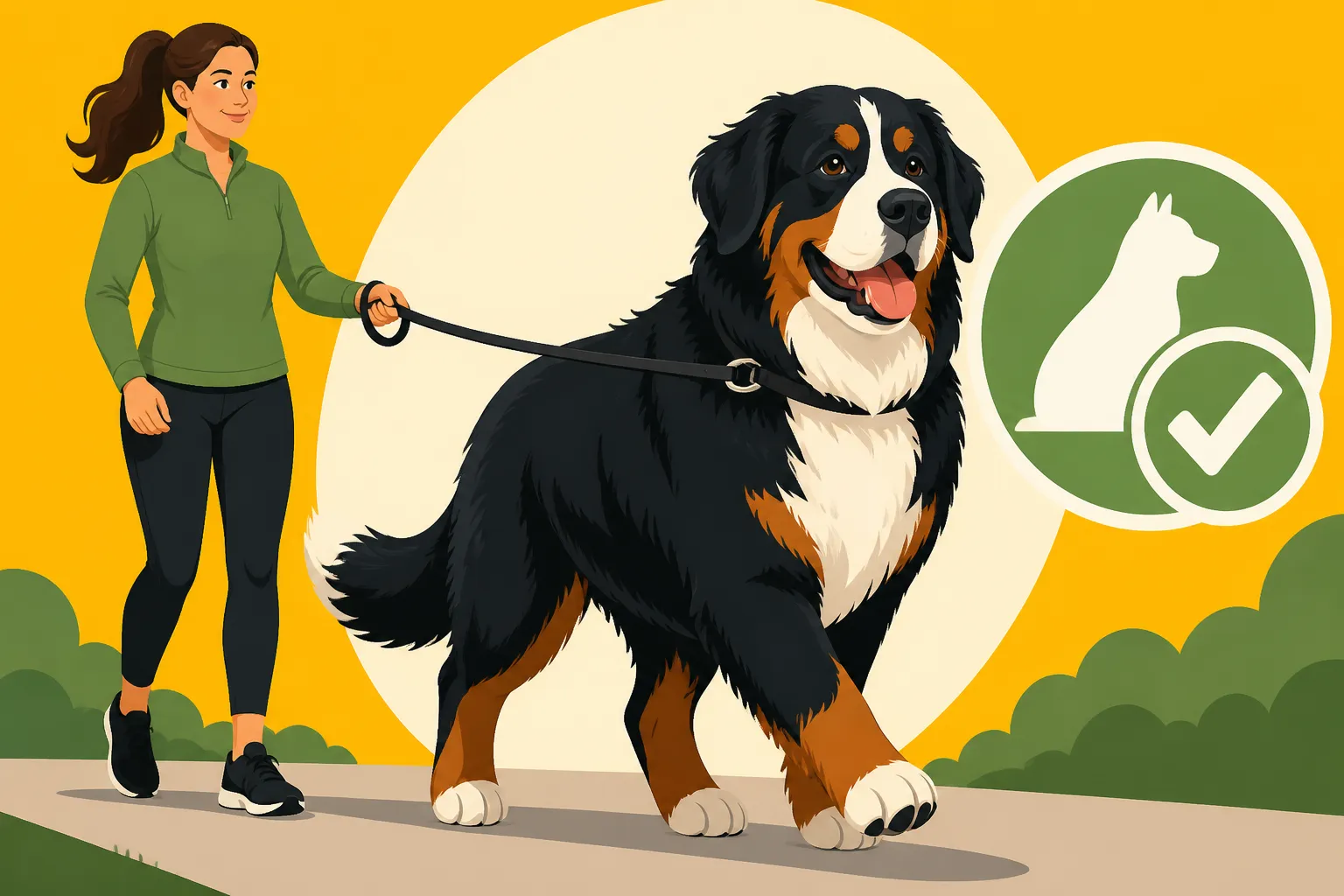
Front-clip harnesses are often the go-to recommendation for large, strong pullers like Berners. Instead of clipping on the back, the leash attaches to a ring on the dog's chest. When your dog pulls, the leash redirects their momentum, gently turning them to the side rather than allowing them to pull forward with full force. This makes it much harder for them to gain traction and pull you along. Brands like Ruffwear, Blue-9 Balance Harness, and Freedom No-Pull Harness are popular choices among large dog owners. They distribute pressure more evenly across the chest and shoulders, which is generally more comfortable for your dog and offers you significantly more leverage. You can often find a good selection of these on platforms like Amazon.
Back-clip harnesses are great for dogs that already walk well on a leash, as they avoid neck pressure. However, for a Berner that pulls, a back-clip harness can inadvertently encourage pulling by allowing them to lean their full weight into it, much like a sled dog's harness.
Here's a quick comparison of popular leash attachment points:
| Attachment Point | Pros | Cons | Ideal For |
|---|---|---|---|
| Standard Collar | Good for ID tags, easy to put on | No control over pulling, can cause choking/injury | Dogs with excellent leash manners, short-term |
| Back-Clip Harness | Reduces neck pressure, comfortable | Can encourage pulling, less control for strong dogs | Dogs who don't pull, small dogs |
| Front-Clip Harness | Redirects pulling force, good control | Can get tangled, requires proper fit | Strong pullers, training loose-leash walking |
| Head Halter | Excellent control, gentle redirection | Requires desensitization, some dogs dislike it | Very strong pullers, reactive dogs |
Leash Length and Material: Finding Your Control Zone
The leash itself is just as important as what it's attached to. For training loose-leash walking with a Bernese Mountain Dog, a standard 4-6 foot leash made of durable nylon or leather is ideal. This length gives your dog enough room to walk comfortably beside you without allowing them to stray too far ahead or get tangled. Avoid retractable leashes, especially with a powerful dog. They teach your dog that pulling is necessary to gain distance, offer little to no control in emergencies, and can cause serious injuries to both dog and handler.
Consider the material as well. A thick, comfortable handle is essential for your grip. Leather leashes are durable and become softer over time, providing a good feel. Nylon leashes are also robust and often more affordable. Whichever you choose, ensure it feels secure and comfortable in your hand, because a hundred pounds of dog can exert a lot of pressure!
The Role of Head Halters and Gentle Leaders
For those truly challenging Bernese Mountain Dogs who seem to ignore all other forms of redirection, a head halter (sometimes called a Gentle Leader, which is a specific brand name) can be a game-changer. These devices loop around your dog's muzzle and behind their head, giving you control over their head direction. Where the head goes, the body follows. When your dog tries to pull, the halter gently turns their head to the side, making it uncomfortable to pull forward.
It's important to introduce a head halter slowly and positively. Many dogs initially resist them, trying to paw them off their face. Start with very short periods, rewarding heavily with treats and praise when it's on. Never yank or use it forcefully. The goal is gentle guidance, not punishment. Over time, many dogs acclimate to them and they can provide a level of control that no other tool can, making walks much safer and more enjoyable. They are particularly useful for dogs that are reactive or incredibly strong. BAXTER & Bella, for instance, often discusses positive reinforcement techniques that can be applied to introducing such tools gently.
Effective Training Techniques for Loose-Leash Walking
Once you have the right equipment, it's time to put it to use with effective training techniques. Remember, consistency and patience are your best friends when teaching a Bernese Mountain Dog anything, especially a skill that requires self-control in exciting environments.
The "Stop-Start" Method: Reinforcing Slack
This is a classic and highly effective technique for teaching loose-leash walking. The premise is simple: the moment your Bernese Mountain Dog puts tension on the leash by pulling, you stop walking. Completely. Stand still like a tree. Don't say anything, don't yank the leash, just stop. Wait for the leash to go slack, even for a second. The moment it slackens, reward them with a "yes!" or a clicker, and a high-value treat, then immediately start walking again. If they pull again, stop again.
The beauty of this method is that it clearly communicates to your dog: pulling stops forward momentum, while a loose leash allows us to keep moving. Berners love to explore and move forward, so this withholding of what they want (forward motion) is a powerful motivator. Practice this in low-distraction areas first, like your backyard, and gradually move to more stimulating environments. It can feel tedious at first, but with consistent application, your Berner will quickly connect the dots.
Changing Direction: Keeping Your Berner Engaged
Another excellent strategy is to become unpredictable with your walking path. Instead of always walking in a straight line, frequently change direction. If your Bernese Mountain Dog starts to forge ahead, without any warning, suddenly turn and walk in the opposite direction. This forces them to pay attention to you to avoid being yanked off balance (gently, of course, with a front-clip harness). When they check in with you and adjust their pace or direction to match yours, reward them instantly.
You can also weave, make circles, or abruptly stop and wait for them to look at you. The goal is to make you the most interesting thing on the walk, or at least the guide they need to pay attention to. This technique helps to build engagement and reinforces that walking nicely means staying connected to your movements. It helps them understand that you are leading the walk, not them.
Rewarding the Right Behavior: Timing is Everything
Positive reinforcement is key for Bernese Mountain Dogs. They respond wonderfully to praise, affection, and especially delicious treats. The timing of your reward is absolutely critical. You want to mark and reward the precise moment the leash is slack or your Berner makes a good decision (like looking at you instead of pulling). If you wait too long, they might not associate the reward with the desired behavior.
Carry high-value treats – something truly irresistible like small pieces of cheese, cooked chicken, or hot dogs. Use a verbal marker like "yes!" or a clicker the instant the behavior happens, then follow immediately with the treat. Over time, your Berner will learn that a loose leash and paying attention to you are highly rewarding. Don't be shy about treating frequently, especially in the initial stages of training. As they improve, you can gradually reduce the frequency of treats, replacing them with praise and occasional surprises. This approach is fundamental to success and aligns with methods taught by resources like BAXTER & Bella. What a Bernese Mountain Dog Will Actually Work For is a great resource here.
Addressing Common Leash-Related Challenges
Even with the best intentions and training, Bernese Mountain Dogs can present some unique challenges on the leash. Their size, combined with typical dog behaviors, means these challenges can be magnified. Let's tackle some of the most common issues.
Reactivity and Distractions: Squirrels, Dogs, and People
Ah, the sudden lunge! Whether it's a squirrel darting across the path, another dog approaching, or an excited person eager to pet your beautiful Berner, these distractions can instantly turn a calm walk into a wrestling match. Reactivity can stem from excitement, fear, or frustration. The key is to manage their environment and teach them to respond differently.
- Management First: If you know certain triggers are unavoidable, try to create distance. Cross the street, turn down a side path, or simply increase the space between your dog and the distraction. The goal is to keep your Berner under their "threshold" – the point at which they lose control and react.
- Counter-Conditioning: When you see a trigger (e.g., another dog) at a distance where your Berner is aware but not yet reacting, immediately start feeding them high-value treats, one after another. The moment the trigger passes or disappears, stop the treats. The idea is to change their emotional response from "OMG, squirrel!" to "OMG, squirrel means treats!" This positive association slowly re-wires their brain.
- "Look at That" Game: Teach your Berner to look at the distraction and then immediately look back at you for a reward. This helps them acknowledge the trigger without reacting excessively. As they improve, you can gradually decrease the distance to the trigger. This is a skill that takes a lot of repetition and patience. Reading Fear in a Bernese Mountain Dog That Retreats can provide insight into subtle signs of anxiety that might contribute to reactivity.
Lunging and Barking: When Politeness Breaks Down
When your Berner isn't just pulling but also lunging and barking at other dogs or people, it's often a sign of over-excitement, frustration, or insecurity. This can be intimidating for others and stressful for you. It's crucial to address this behavior promptly and safely.
- Identify the Root Cause: Is your Berner trying to play? Are they scared? Are they frustrated they can't greet? Observing their body language (tail position, ear set, facial expression) can give you clues.
- Controlled Exposure: With the help of a friend and their calm, dog-friendly dog (or a neutral person), practice controlled encounters. Start at a significant distance where your Berner notices the other dog/person but doesn't react. Reward for calm observation. Gradually decrease the distance, always staying below their threshold.
- Interruption and Redirection: If your Berner starts to lunge or bark, a sharp verbal interrupter (like a consistent "Nope!" or "Easy!") followed immediately by redirecting their attention to you (e.g., "watch me," "sit") can be effective. Reward them for redirecting. The head halter, mentioned earlier, can be invaluable here for gaining immediate control and preventing the lunge from gaining momentum. This can be a significant part of Handling a Bernese Mountain Dog at the Vet, where controlled behavior is crucial.
The Bernese Mountain Dog That Refuses to Move
Sometimes, the challenge isn't pulling, but the exact opposite: your Bernese Mountain Dog digs in their heels and refuses to budge. This can happen for a variety of reasons – they're tired, they've found an irresistible smell, they're scared, or perhaps they've simply decided they're done with the walk. Moving a hundred pounds of determined Berner can be impossible.
- Patience and Encouragement: First, take a deep breath. Yelling or yanking will likely make them dig in further. Try positive encouragement. Use an upbeat voice, clap your hands gently, or offer a high-value treat to lure them forward.
- Check for Discomfort: Sometimes, a sudden refusal to move can indicate pain or discomfort. Check their paws, watch their gait, and observe if they seem sore. If it's a recurring issue, a vet visit might be in order. This could relate to early signs of Joint Disease in a Hundred Pound Bernese Mountain Dog.
- Make Yourself More Interesting: If they're simply being stubborn or engrossed in a smell, try to re-engage them. A fun toy, a game of "find the treat" on the ground ahead, or even just sprinting a few steps away (if safe to do so) can sometimes break their trance.
- Practice Short Walks: If your Berner frequently stops, start with shorter walks and gradually increase the duration as their stamina and focus improve. End on a positive note before they decide to stop. If this happens consistently, you may need to reconsider Whether a Bernese Mountain Dog Refuses to Walk in Heat or if the conditions are simply too much for them.
Consistency and Patience: The Long Game with a Large Breed
Training a Bernese Mountain Dog, especially when it comes to leash manners, is not a one-and-done event. It's an ongoing process that requires immense consistency and endless patience. These intelligent, but sometimes independently-minded, dogs need clear, repetitive guidance to truly master good habits. Remember, you're building a foundation that will last their entire (albeit sometimes too short) lifetime.
Establishing a Routine and Sticking to It
Dogs thrive on routine, and Bernese Mountain Dogs are no exception. Establishing a consistent schedule for walks, training sessions, and playtime helps them understand expectations. If walks are always at the same time and always involve the same clear rules for leash manners, your Berner will learn faster.
- Daily Practice: Even if it's just a short walk around the block, make loose-leash walking a focus every single time you clip on the leash. Don't have "pulling walks" and "nice walks." Every walk is a training opportunity.
- Clear Rules: Ensure that everyone who walks your Bernese Mountain Dog understands and applies the same rules and techniques. If one person allows pulling and another doesn't, it will confuse your dog and slow down progress significantly.
- Positive Reinforcement: Always reward desired behavior. Make it more rewarding for them to walk nicely than to pull. This consistency in reinforcement helps solidify the behavior you want to see.
Involving the Whole Family in Training
A Bernese Mountain Dog is a family dog, and their training should be a family affair. It's incredibly important that every member of the household who will be walking the dog is on the same page regarding leash manners and training techniques.
- Unified Commands: Everyone should use the same verbal cues and hand signals.
- Consistent Expectations: Discuss what loose-leash walking looks like, what to do when the dog pulls (e.g., the stop-start method), and how to properly reward good behavior.
- Practice Sessions: Have family members practice walking the Berner individually and together, offering feedback and support. This ensures that the dog learns to walk politely with anyone, not just the primary trainer. This comprehensive approach is vital, especially when you consider A Bernese Mountain Dog Around Children. You want everyone to be safe and confident.
When to Seek Professional Guidance
Sometimes, despite your best efforts, you might feel stuck or overwhelmed. This is perfectly normal, especially with a strong, intelligent breed like the Bernese Mountain Dog. There's no shame in asking for help from a qualified professional.
- Experienced Trainers: Look for a certified professional dog trainer (CPDT-KA) who has experience with large breeds and uses positive reinforcement methods. They can offer personalized advice, identify subtle issues you might be missing, and provide hands-on guidance.
- Specialized Classes: Advanced obedience classes or even specific loose-leash walking workshops can be incredibly beneficial. These environments provide structured practice with distractions, which is a great way to proof your Berner's skills.
- Behavioral Consultations: If your Bernese Mountain Dog exhibits significant reactivity, fear, or aggression on walks, a veterinary behaviorist or a certified applied animal behaviorist (CAAB) might be necessary. They can help diagnose underlying behavioral issues and develop a comprehensive modification plan. A good resource for finding such professionals, as well as online courses, can be found via BAXTER & Bella. Whether a Balanced Trainer Suits a Bernese Mountain Dog is a good question to explore before making a choice. Getting external help can make all the difference in turning frustrating walks into joyful adventures.
Disclaimer
This article is for general informational purposes only and does not constitute professional advice. Laws, prices and regulations vary by location and change over time. Consult a qualified professional for guidance on your specific situation.