A Bernese Mountain Dog Around Children
Bringing a magnificent Bernese Mountain Dog into a family with children is a dream for many, but it also comes with understandable questions and concerns. The sheer size of these dogs can make parents pause, wondering how such a large animal will coexist peacefully with little ones, especially when puppies are famously clumsy and energetic. This comprehensive guide aims to ease those worries by diving deep into the Bernese temperament, essential training, and crucial management strategies to ensure a safe, loving, and harmonious relationship between your gentle giant and your children.
The Bernese Mountain Dog Temperament: A Foundation of Gentleness
Bernese Mountain Dogs are renowned for their incredible dispositions, often referred to as "gentle giants" for good reason. Understanding their innate nature is the first step in appreciating why they can be such wonderful family companions, even with the presence of active, curious children.
Natural Affection and Patience
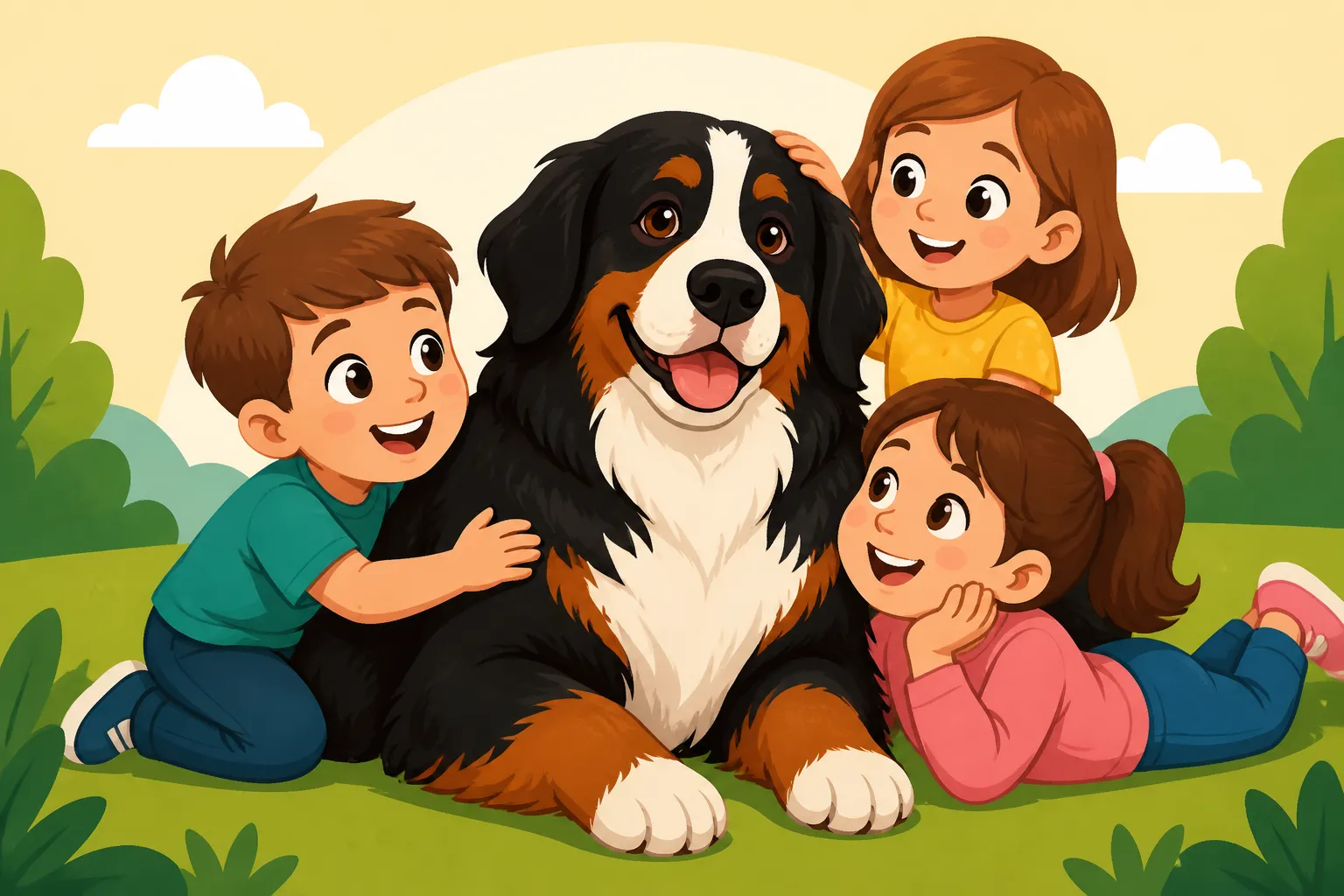
At their core, Bernese Mountain Dogs are bred to be loyal, affectionate, and deeply devoted family members. They thrive on companionship and want nothing more than to be by their people's side, participating in whatever the family is doing. This inherent desire for connection translates into a remarkable patience, especially with children. They often tolerate the unpredictable movements, excited squeals, and sometimes clumsy affection that kids offer, far more gracefully than many other breeds. It’s not uncommon to see a Berner calmly accept a child’s hug, a gentle tug of the fur, or even just lean into their space, enjoying the physical closeness. This isn't just tolerance; it's often a genuine, deep-seated affection that makes them truly special.
Their history as farm dogs in the Swiss Alps meant they lived and worked alongside families, often being responsible for guarding children, livestock, and property. This background instilled in them a strong protective instinct, not in an aggressive sense, but more as a watchful, responsible guardian. They naturally tend to be very forgiving and slow to react negatively, preferring to withdraw rather than escalate. This calm demeanor is an invaluable trait when sharing a home with young, developing humans who are still learning appropriate boundaries and social cues. They become an integral part of the family tapestry, often seeking out the warmth and commotion of family life.
Size vs. Temperament: Understanding the Gentle Giant
The most striking feature of a Bernese Mountain Dog is undeniably their impressive size. Adult males can easily weigh over 100 pounds, and even females are substantial. This physical presence can be intimidating, and it's important to acknowledge that a large dog, regardless of its gentle nature, always carries the potential for accidental injury, especially with small children. A playful bump, an excited leap, or even just turning around too quickly can inadvertently knock a child over. This isn't maliciousness; it's simply a consequence of their mass and enthusiasm.
However, it's crucial not to mistake their size for inherent aggression or boisterousness. Unlike some larger breeds that might be prone to high energy or a strong prey drive, Berners tend to be more deliberate in their movements indoors and generally possess a calm, stable temperament. The "gentle giant" moniker truly fits when you observe their interactions. They often seem acutely aware of their body and will try to be careful, particularly around very small children. Despite this natural inclination, owners must always remain vigilant and actively manage interactions. Training them to be spatially aware and to move slowly around children is paramount, as is teaching children to give the dog space. The potential for a hundred pounds of love to accidentally send a toddler sprawling is very real, so prevention and proactive training are always the best approach. Whether a Toddler Is Safe Beside a Bernese Mountain Dog delves into this more deeply.
Early Socialization: Building a Positive Relationship from Puppyhood
The foundation for a successful relationship between your Bernese Mountain Dog and your children is laid during puppyhood through careful and consistent socialization. This isn't just about exposure; it's about creating positive, structured experiences.
Puppy Exposure to Children
Introducing a Bernese Mountain Dog puppy to children in a controlled, positive manner is absolutely vital. This process starts from the moment the puppy comes home. The goal is to build positive associations, teaching the puppy that children are a source of good things – gentle pets, calm voices, and perhaps even treats (administered by adults, of course). Begin with short, supervised sessions. For instance, have older children sit quietly on the floor while the puppy is on a leash or in a confined area, allowing the puppy to approach them at its own pace. Reward calm curiosity. Avoid overwhelming the puppy with too many children or overly boisterous interactions initially.
It's equally important to teach children how to interact respectfully with a puppy. Small children, especially, need explicit guidance on gentle petting, avoiding pulling ears or tails, and understanding when a puppy needs space. Older children can be taught to offer treats gently and play appropriately with toys, rather than using their hands. Think of it as a two-way learning street: the puppy learns children are safe and fun, and the children learn how to be safe and fun for the puppy. This early positive conditioning is essential because it shapes the puppy's perception of children for life, preventing fear or over-excitement from developing later on. You want the puppy to view children as welcome, predictable members of the household, not as unpredictable playthings or scary unknowns.
Learning Appropriate Play
A Bernese Mountain Dog puppy's play style might be enthusiastic, but it needs to be tempered to be safe around children. This is where teaching bite inhibition, not jumping, and gentle interactions comes into play. Puppies explore the world with their mouths, and they don't naturally understand the difference between nibbling a sibling and mouthing a child's hand. When a puppy mouths a child, it's crucial to redirect that behavior immediately to an appropriate chew toy. This teaches them what they can chew on. If the mouthing is too hard, a brief "ouch" or a yelp, followed by ignoring the puppy for a moment, can signal that the play has become too rough. Teaching a Bernese Mountain Dog Puppy to Stop Mouthing provides more detailed guidance on this.
Similarly, jumping up is a common puppy behavior that needs to be addressed early, especially with a large breed like a Berner. A jumping Bernese puppy can easily bowl over a child, even accidentally. Every time a puppy tries to jump, turn your back or gently block them, only offering attention when all four paws are on the floor. Consistency is key, and all family members must reinforce these rules. Enrolling in a puppy class can be incredibly beneficial here, as it provides a structured environment for learning these basic manners around distractions. Look for online courses like those offered by BAXTER & Bella, which provide comprehensive resources and support for teaching appropriate behaviors right from puppyhood, often with specific guidance for families. These courses can equip you with the tools to manage their energy and enthusiasm, channeling it into constructive play.
Establishing Boundaries and Rules for Both Dog and Child
For any large dog and child pairing, clear boundaries and consistent rules are non-negotiable. This protects both your Bernese and your children, fostering mutual respect and understanding within the home.
Defining Safe Spaces for Your Bernese
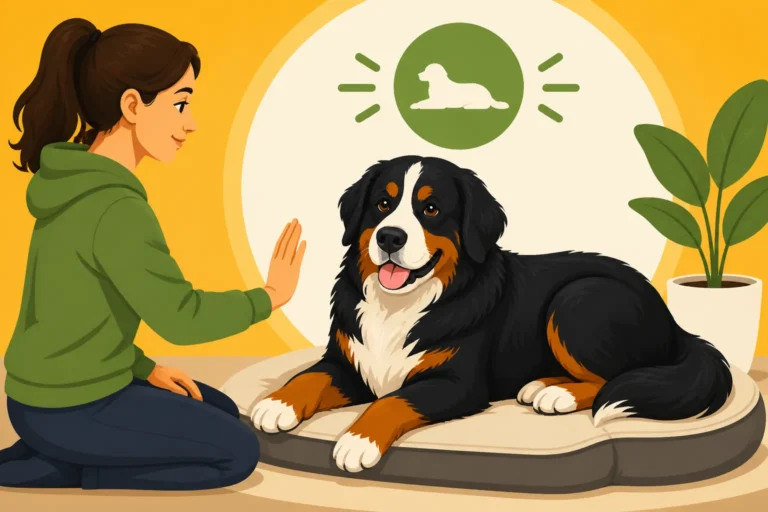
Just like children need their own quiet time and personal space, your Bernese Mountain Dog needs a designated retreat where they can go to relax undisturbed. This "safe space" could be a comfy dog bed in a quiet corner, a specific room accessible only to the dog, or a sturdy crate. The most important rule around this space is that when the dog is there, they are not to be approached, petted, or disturbed by children (or adults, for that matter). This teaches children to respect the dog's need for peace and allows the dog to feel secure and have an escape route from overstimulation.
Imagine a busy afternoon: kids running around, laughter, toys everywhere. Your Bernese might love being part of the action, but even the most patient dog can get overwhelmed. Having a crate, perhaps one sourced from a wide selection on Amazon, covered with a blanket, can provide a perfect den. Teach your children that if the dog goes into its crate or onto its special bed, they must leave it alone. Practice this rule diligently. If a child tries to bother the dog in its safe space, gently but firmly redirect the child away. This rule isn't just about the dog's comfort; it's a critical safety measure, as even a very gentle dog might snap if cornered and unable to escape.
Teaching Children Respectful Interaction
Beyond respecting safe spaces, children need explicit lessons on how to approach, pet, and generally interact with a Bernese Mountain Dog in a respectful and safe manner. This is an ongoing education that adapts as children grow and the dog matures. Start with the basics: "Be a tree" if the dog jumps, meaning stand still and ignore it. "Be a rock" if the dog mouths, meaning pull hands away and become still. Teach children to always approach a dog calmly, never running up to it or startling it. Petting should be gentle, on the shoulders or chest, avoiding sensitive areas like the head, tail, or paws, especially for children who might not have a soft touch.
A crucial lesson is to never disturb a dog while it's eating, sleeping, or chewing on a prized toy. These are times when even the most placid dog can be easily startled or feel threatened, potentially leading to an unwanted reaction. Role-playing these scenarios can be very effective with older children. For younger kids, constant supervision and redirection are necessary. For instance, if you see a child reaching for the dog's bowl, gently move the child away and explain why it's important to let the dog eat in peace. Establishing a routine where the dog eats in a separate, quiet area can also prevent conflicts. This reciprocal respect builds a stronger, safer bond between your Berner and your children. Introducing a Bernese Mountain Dog to a Newborn offers specific advice for the earliest stages.
Managing Interactions: Supervision and Training are Key
Even with the best temperament and early socialization, proactive management and consistent training are the cornerstones of a safe household with a Bernese Mountain Dog and children.
Constant Supervision with Young Children
This cannot be stressed enough: no dog, regardless of its breed or temperament, should ever be left unsupervised with very young children. This rule applies absolutely to a large breed like the Bernese Mountain Dog. While they are known for their gentle nature, accidents can happen in a split second. A child might accidentally step on a paw, pull an ear, or stumble into the dog, causing a startled reaction. The dog, even if only trying to get away or expressing discomfort, could inadvertently scratch or knock the child over.
Imagine a toddler, still unsteady on their feet, attempting to hug a sleeping Bernese. The dog might wake up startled, try to move, and accidentally bump the child, sending them tumbling. This isn't aggression; it's simply a lack of coordination and communication. Until children are old enough to fully understand and consistently follow rules of respectful interaction, and until the dog is completely reliable in all situations (which often means well past puppyhood), an adult must always be present and actively engaged when the dog and young children are together. This means no quick trips to another room, no checking your phone while they play. Your presence is the primary safety net, allowing you to intervene, redirect, and teach both child and dog appropriate behavior in real-time. This level of diligence protects both parties and builds trust.
Training for Calmness and Control
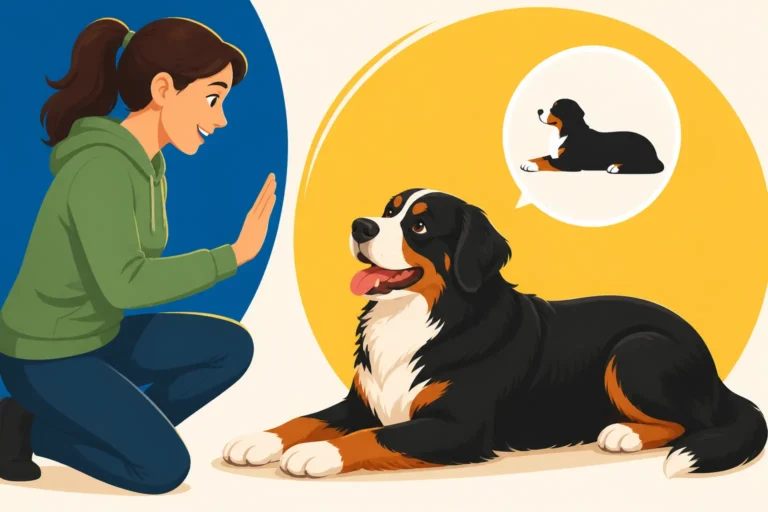
Training isn't just about teaching tricks; it's about establishing clear communication and control, which is vital in a household with children. Commands like "sit," "stay," "down," "off," and "go to your bed" become indispensable tools for managing interactions. For a Bernese Mountain Dog, teaching them to stay in a "down" position while children are active, or to "go to your bed" when things get too boisterous, allows you to maintain control and prevent over-excitement or accidental bumps.
Consistency in training is paramount, and every family member who is old enough should be involved in reinforcing these commands. If your Bernese learns that "off" means getting off people, whether it's a child or an adult, that behavior becomes universal. Reward calm behavior around children lavishly with praise and treats. For example, if your Berner is lying quietly while children are playing nearby, acknowledge and reward that calmness. A common issue with large dogs is their tendency to lean or jump when excited, and while often affectionate, it can be dangerous for children. Specific training to mitigate these tendencies is crucial. The Bernese Mountain Dog That Knocks a Child Over highlights the importance of managing this behavior to prevent accidents. Utilizing positive reinforcement training methods, perhaps through an online program like BAXTER & Bella, can ensure everyone in the family uses the same cues and rewards, leading to a well-behaved dog who understands its role in the family.
Addressing Common Challenges and Misconceptions
Even with a naturally gentle breed like the Bernese Mountain Dog, certain behaviors and situations require careful attention to ensure a harmonious environment with children. Understanding these challenges helps in proactively addressing them.
The "Bernese Lean" and Unintended Nudging
One of the most endearing, yet sometimes problematic, traits of a Bernese Mountain Dog is the "Bernese Lean." This is when they slowly, deliberately, and often quite forcefully, lean their full body weight against your legs. It's a classic sign of affection, seeking comfort and connection. However, when a 100-pound dog leans into a small child, it can easily unbalance and knock them over. It's an act of love, but one that needs careful management around little ones.
Training your Bernese to only lean on command or to be more mindful of their body in tight spaces is important. You can teach them to "sit" for attention instead of leaning, or to "come front" for a pet rather than pushing against legs. When they do lean, gently redirect them to a sit, rewarding them for maintaining a seated position while receiving affection. This helps them understand that while their affection is appreciated, there are more appropriate ways to express it, especially with fragile family members. The Bernese Mountain Dog That Leans on Everyone provides further insights into this charming but sometimes cumbersome trait and how to manage it in a family setting.
Resource Guarding and Food Safety
Resource guarding, where a dog becomes defensive over food, toys, sleeping spots, or even people, is a natural instinct for many dogs, regardless of breed. While Bernese Mountain Dogs are generally not prone to severe resource guarding, it's a behavior that must be proactively prevented, especially in a home with children. A child innocently reaching for a dropped toy or getting too close to a food bowl could trigger a protective growl or snap from a dog who feels its resources are threatened.
Prevention starts early. From puppyhood, teach your Bernese that human hands near their food bowl are a good thing. Practice approaching their bowl while they eat and dropping an even tastier treat into it. This builds a positive association: "human hands near my food mean more good food." Similarly, teach your children to never approach the dog while it's eating or chewing on a valued item. Provide your Bernese with their meals and high-value chews in a quiet, undisturbed location, away from the hustle and bustle of children's play. If children are involved in feeding, ensure it's always under adult supervision, with the child placing the food down and then immediately stepping back. This removes any potential for conflict and helps foster respect for the dog's eating time.
Dealing with Over-Excitement or Play Biting
Bernese Mountain Dog puppies, like all puppies, can be bundles of over-excited energy and playful nipping. They have sharp puppy teeth, and their mouthing, while usually not aggressive, can be painful for tender child skin. This is especially true given their growth rate; they can be quite large while still in their clumsy, mouthy puppy phase. An overly excited Berner puppy might jump, nip at clothing, or mouth hands in play. A Bernese Mountain Dog Puppy Biting in Play explores this common puppy behavior.
It's crucial to teach bite inhibition and to channel this play drive appropriately. When a puppy mouths a child, immediately remove the child from the situation or redirect the puppy's attention to an appropriate chew toy. Loud "yelps" or "ouches" from children can sometimes help, as puppies learn from the reactions of their littermates. If a puppy gets too excited around children, put them on a leash for a brief "calm down" period, or give them a puzzle toy to settle their energy. Providing plenty of appropriate chew toys, which can be easily found on Amazon, helps satisfy their natural urge to chew. Consistent training, paired with managing the environment (such as crating the puppy during times of high child activity), will help your Berner learn to be a calm and gentle playmate. Remember, they stay a puppy mentally for longer than smaller breeds, so patience is key in navigating this stage.
The Growing Bernese and Growing Children: Adapting Over Time
The journey of raising a Bernese Mountain Dog with children is dynamic. Both the dog and the children will grow and change, and your approach to their interactions needs to evolve accordingly.
Adolescence and Energy Levels
One common misconception is that large breeds mature faster or are inherently calm from a young age. While Bernese are often calm as adults, their adolescent phase can be surprisingly prolonged and energetic. It's frequently said that a Bernese Mountain Dog "stays a puppy until three years old," which means you'll have a large, strong, and sometimes clumsy dog with puppy energy for a significant period. Why a Bernese Mountain Dog Stays a Puppy Until Three discusses this in detail. This prolonged adolescence means that jumping, mouthing, and general exuberance can resurface or intensify even after early training.
During this stage, your management strategies might need to be reinforced. What worked for a tiny puppy might not be sufficient for a 90-pound teenager. Continue with consistent training, focusing on impulse control exercises like "leave it" and "stay." Ensure they get adequate physical and mental exercise to burn off excess energy, which will help them be calmer around children. Daily walks, puzzle toys, and supervised playtime in a secure yard are excellent ways to do this. Remember that while their size means they need physical outlets, high-impact activities should be limited until their growth plates have closed, usually around 18-24 months, to protect their joints. Maintaining a calm and predictable household routine can also help an adolescent Berner feel secure and less prone to hyperactive outbursts.
Involving Children in Dog Care
As children grow, involving them in the care and training of your Bernese Mountain Dog can be a powerful way to foster a deeper bond, teach responsibility, and solidify their understanding of the dog's needs. Age-appropriate tasks build positive interactions and a sense of partnership. For older children (typically 8+ and with a mature understanding), this could include supervised feeding, where they measure out food and place the bowl down. They can help with grooming by gently brushing the dog's coat, especially the softer areas, or wiping paws after a walk. They can also participate in supervised walks, perhaps holding a second leash for short periods, always with an adult maintaining primary control.
Even younger children can assist with simpler tasks like helping to fill the water bowl, picking up dog toys, or giving treats during training sessions (always under adult guidance). The key is that these tasks should be structured, positive, and never put the child or dog in a vulnerable position. Avoid tasks that involve direct confrontation or situations where the dog might react negatively. The goal is for children to feel like valuable contributors to the dog's well-being, learning empathy and understanding what it takes to care for another living creature. This shared responsibility deepens their connection and reinforces the dog as a cherished family member, not just a plaything.
Choosing the Right Bernese: Breeder Considerations
When bringing a Bernese Mountain Dog into a family with children, the choice of breeder and an understanding of the dog's lineage become even more critical. A responsible breeder is your first line of defense in ensuring a healthy, well-tempered companion.
Screening for Temperament in Breeding Lines
A good breeder will not only be knowledgeable about the Bernese Mountain Dog breed standard but will also prioritize temperament above all else, especially when puppies are going to homes with children. They should be able to tell you about the temperaments of both parent dogs, how they interact with children, strangers, and other animals. Ask to meet the mother (and ideally the father, if he's on-site) and observe their demeanor. Are they calm and friendly? Do they seem comfortable with people? A breeder should be transparent about any shyness, aggression, or hyperactivity in their lines, even if rare.
Furthermore, a responsible breeder will perform early socialization on their puppies, exposing them to various sights, sounds, and gentle human interactions, including children, from a very young age. This early exposure, even before they come home with you, helps build a resilient and confident temperament. Don't be afraid to ask direct questions about how the puppies are socialized, what their daily routine involves, and what traits the breeder aims to produce. A breeder who cares deeply about placing the right puppy in the right home will be just as interested in your family dynamics, including the ages and activity levels of your children, as you are in their puppies. A Bernese Mountain Dog Growing Up With Small Children goes into further detail about this crucial stage.
Understanding Health and Longevity for Family Life
The health and longevity of your Bernese Mountain Dog are intrinsically linked to their ability to be a good family dog, especially around children. A dog suffering from chronic pain due to joint issues or discomfort from other health problems may become irritable, withdrawn, or less tolerant of the unpredictable nature of children. Bernese Mountain Dogs, unfortunately, are prone to certain health concerns, including hip and elbow dysplasia, various cancers, and bloat, which can significantly impact their lifespan and quality of life. The Bernese Mountain Dog Health Panel lists the various health checks crucial for this breed.
A reputable breeder will perform all recommended health clearances on their breeding stock – typically OFA certifications for hips and elbows, a cardiac exam, and an eye exam. They should also be open about the longevity in their lines and any incidence of cancer or other genetic diseases in previous generations. While no breeder can guarantee perfect health, choosing a puppy from health-tested parents significantly reduces the risk of inherited conditions. Discussing these issues with your breeder, and understanding the breed's typical lifespan Why a Bernese Mountain Dog Lives Only Seven or Eight Years, helps set realistic expectations and prepares you for the journey ahead, ensuring you bring a dog into your home that has the best possible chance of a long, healthy life as a beloved family member.
Creating a Harmonious Household: Long-Term Strategies
Building a lasting, positive relationship between your Bernese Mountain Dog and your children is an ongoing process that requires commitment from all family members. It's about nurturing understanding, respect, and communication.
Continuing Education for All Family Members
The education around dog-child interactions doesn't stop once the puppy is past its teething phase or the children understand a few basic rules. It's a continuous journey that evolves as both dog and children mature. For children, this means reinforcing lessons about respectful interaction, understanding dog body language, and knowing when to give space. As they get older, they can learn more nuanced cues, like recognizing when the dog is simply tired versus when it might be feeling anxious or overwhelmed. They can learn to identify subtle signs of stress in a dog, such as lip licking, yawning, or turning its head away.
For adults, continuing education means staying informed about canine behavior, refreshing training techniques, and adapting to any changes in the dog's temperament or needs as it ages. It also involves being proactive in seeking professional help if any behavioral issues arise, rather than letting them fester. There are many excellent books, online resources (like BAXTER & Bella's ongoing training modules), and local trainers who specialize in family dog dynamics. Attending even an occasional advanced obedience class with your Berner can reinforce good manners and keep their minds engaged. A well-educated family is a safe family, equipped to navigate the complexities and joys of sharing life with a large, loving Bernese Mountain Dog.
Recognizing Stress Signals in Your Bernese
One of the most powerful tools for ensuring safety and harmony is teaching everyone in the family, especially older children, to recognize stress signals in your Bernese Mountain Dog. Dogs communicate primarily through body language, and understanding these subtle cues can prevent uncomfortable or even dangerous situations before they escalate. A dog doesn't usually bite or snap without giving prior warnings, but these warnings are often missed by humans.
Common stress signals in dogs include:
- Lip licking: Especially when there's no food involved.
- Yawning: Again, when not tired.
- Turning head or body away: A clear sign they want space.
- "Whale eye": When the whites of their eyes are visible because they're looking away or nervously.
- Stiff body posture: No loose, relaxed movements.
- Tucked tail: A sign of fear or insecurity.
- Panting: When not hot or exercising.
- Freezing in place: Becoming completely still.
- Growling: This is a clear warning that should always be heeded and never punished.
Teaching children that if they see these signs, it means the dog needs space, can be life-saving. It's about respecting the dog's communication and understanding that they are giving a signal for help. If you notice your Bernese displaying these signals around children, it’s a cue for you to intervene, remove the child, or give the dog a break in its safe space. This creates an environment where the dog feels heard and respected, reducing the likelihood of them feeling the need to escalate their warnings. This thoughtful approach is central to A Bernese Mountain Dog Around Children.
Here is a table summarizing key aspects of Bernese Mountain Dogs and children:
| Aspect | Do's | Don'ts | Why It Matters |
|---|---|---|---|
| Supervision | Always supervise interactions with young children. | Never leave young children unsupervised with the dog. | Prevents accidental injury and allows for immediate intervention and teaching. |
| Safe Spaces | Provide a quiet, undisturbed retreat for your dog. | Allow children to bother the dog in its crate or on its bed. | Gives the dog a sense of security and a place to decompress. |
| Interaction Rules | Teach gentle petting on shoulders/chest. Guide children to be calm. | Allow tail/ear pulling, climbing, or rough play. | Fosters mutual respect and prevents the dog from becoming fearful or reactive. |
| Eating/Sleeping | Ensure dog eats/sleeps undisturbed, ideally in a separate area. | Let children approach the dog while it's eating, sleeping, or chewing. | Reduces resource guarding and startle responses, critical for safety. |
| Training | Consistently train commands like "sit," "stay," "off," "down." | Allow jumping, mouthing, or overly boisterous behavior around children. | Establishes control and communication, preventing accidental harm. |
| Body Language | Teach older children to recognize dog stress signals. | Ignore signs of discomfort (lip licking, yawning, stiff body). | Empowers children to act safely and prevents escalation of unwanted behaviors. |
| Involvement | Involve children in age-appropriate care (feeding, grooming) under supervision. | Force children to interact with the dog if they are fearful or unwilling. | Builds responsibility, strengthens bonds, and creates positive associations. |
| Exercise | Ensure the dog receives adequate physical and mental stimulation. | Allow an under-exercised dog to be overly rambunctious around children. | A tired dog is a good dog; reduces hyperactivity and improves calmness. |
Disclaimer
This article is for general informational purposes only and does not constitute professional advice. Laws, prices and regulations vary by location and change over time. Consult a qualified professional for guidance on your specific situation.