Whether a Bernese Mountain Dog Refuses to Walk in Heat
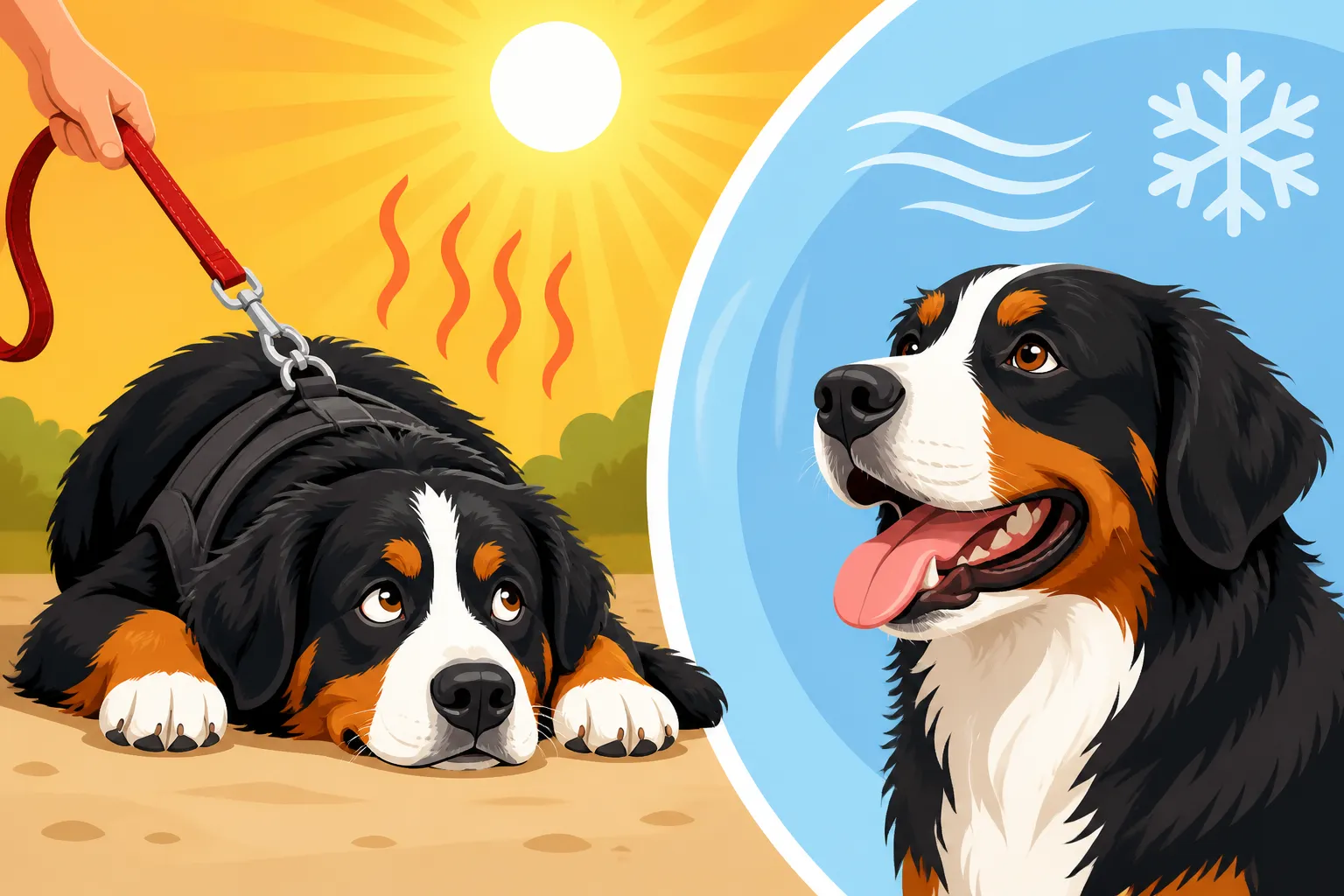
It's a familiar scene for many Bernese Mountain Dog owners: you've got the leash in hand, you're ready for a walk, and your usually eager companion decides to become a furry, immovable lump on the cool kitchen floor. This isn't stubbornness, nor is it a sign of disrespect; it's your Berner communicating, in the clearest way possible, that the weather conditions are simply too hot for them. This guide will help you understand why your Bernese Mountain Dog might refuse to walk in the heat, the very real dangers that come with pushing them, and how you can adapt your routines to keep your beloved companion safe and happy during warmer months.
Why Your Bernese Mountain Dog Becomes a Statue in the Heat
When your Bernese Mountain Dog digs their heels in and refuses to budge on a hot day, it's not a challenge to your authority. Instead, it's a deep-seated instinct for self-preservation kicking in. These magnificent dogs were bred for life in the chilly Swiss Alps, and their physiology is simply not equipped for sustained activity in high temperatures. Ignoring these signals can have severe, even life-threatening, consequences.
The Double Coat's Dilemma: Insulation, Not Air Conditioning
One of the most defining features of a Bernese Mountain Dog is their beautiful, thick double coat. While this coat is a marvel of natural engineering, providing incredible insulation against freezing temperatures and protection from harsh elements, it becomes a significant liability in the heat. Many people mistakenly think that thick fur keeps a dog cool, but it largely works by trapping air – whether that air is warm or cold. In warm weather, it traps heat close to their body, making it very difficult for them to release excess warmth.
Imagine wearing a heavy wool coat in summer; that's essentially what your Berner is dealing with. Their coat is designed to retain heat, which is fantastic for pulling carts through snow, but disastrous for a stroll on a sunny afternoon. The dense undercoat, which sheds profusely in spring, continues to act as a barrier against heat dissipation even after a good brushing, reducing the effectiveness of their primary cooling method: panting.
Heatstroke is a Real Threat: Understanding the Risk
Bernese Mountain Dogs are highly susceptible to overheating and heatstroke. Their combination of a heavy double coat, dark coloration (which absorbs more solar radiation), and a generally lower tolerance for heat due to their ancestral environment makes them a prime candidate for heat-related illnesses. Unlike humans who sweat profusely across their skin, dogs primarily cool themselves by panting and through the pads of their feet. When the ambient temperature is too high, or the humidity makes it difficult for panting to effectively evaporate moisture, their internal body temperature can rise rapidly and dangerously.
A refusal to walk is often the first, and most crucial, sign that your Berner is starting to feel the effects of the heat. They might seem sluggish, lag behind, or simply plop down and resist all efforts to get them moving. This isn't misbehavior; it's a clear cry for help, indicating their body is struggling to regulate its temperature. Understanding The Temperature a Bernese Mountain Dog Stops Coping is vital for any owner.
"Stubborn" or Self-Preservation? Reading Your Berner's Cues
It's easy to misinterpret a Bernese Mountain Dog's refusal to move as stubbornness. After all, they can be wonderfully strong-willed creatures when they want to be! However, when it comes to heat, this behavior is almost always driven by instinct and discomfort, not defiance. A truly stubborn Berner might argue about doing a trick they know or staying still for a grooming session, but they rarely put themselves in harm's way for the sake of being difficult.
Learn to differentiate between a Berner who’s simply trying to test boundaries and one who is genuinely overheating. Look for other subtle cues: excessive panting, drooling, a reluctance to engage, seeking shade, or even a change in the color of their gums (they might appear darker red). If you see these signs, combined with a refusal to walk, your dog is telling you, unequivocally, that it's too hot. Pushing them forward at this point would be a serious error, potentially leading to a medical emergency like Heat Stroke in a Bernese Mountain Dog.
The Dangers of Pushing a Berner in Hot Weather
Many well-meaning owners underestimate just how quickly a large, thick-coated dog like a Bernese Mountain Dog can succumb to heat-related illness. What might seem like a manageable temperature for you can be dangerous for your Berner. Understanding the progression of heat stress is critical to preventing severe outcomes and making informed decisions about their exercise routine.
Beyond Discomfort: Recognizing Heat Exhaustion and Heatstroke
Heat exhaustion is the first stage of heat-related illness and is characterized by a significant increase in body temperature, but typically without major organ damage. Symptoms often include heavy panting, increased drooling, weakness, dizziness, and mild dehydration. Your Berner might seek shade, refuse treats, or appear generally lethargic. At this point, prompt intervention can prevent things from escalating.
However, if heat exhaustion is ignored, it quickly progresses to heatstroke, which is a medical emergency. Heatstroke occurs when the dog's body temperature rises to a critical level, causing systemic damage to organs like the brain, kidneys, liver, and heart. Symptoms become much more severe: staggering, collapsing, vomiting, diarrhea (sometimes bloody), seizures, rapid heart rate, and even coma. At this stage, time is of the essence, and immediate veterinary attention is crucial. Waiting even a few minutes can significantly impact the outcome. Knowing Cooling a Collapsed Bernese Mountain Dog in the Field is vital for emergencies.
Long-Term Consequences of Overheating
Even if a Bernese Mountain Dog recovers from a bout of heat exhaustion or heatstroke, there can be lasting health impacts. Organ damage, particularly to the kidneys or brain, might not be immediately apparent but can manifest later as chronic health problems. For instance, a dog that suffers severe heatstroke might have a higher risk of developing kidney issues or neurological problems down the line. The body's clotting system can also be affected, leading to dangerous internal bleeding.
Repeated exposure to overheating can also weaken their overall resilience and potentially shorten their already precious lifespan. Considering Why a Bernese Mountain Dog Lives Only Seven or Eight Years, anything we can do to protect their health is incredibly important. Preventing heat-related incidents is far easier, and infinitely kinder, than trying to treat them after the fact. It reinforces the need for responsible dog ownership, especially for a breed so vulnerable to temperature extremes.
Strategies for Safe Summer Walks (or Alternatives)
Living with a Bernese Mountain Dog means adapting your lifestyle to their needs, especially when it comes to managing warm weather. It requires proactive planning and a willingness to explore alternative ways to keep them exercised and mentally stimulated.
Timing is Everything: Early Mornings and Late Evenings
The most straightforward and effective strategy for walking your Bernese Mountain Dog in warmer climates or during summer months is to adjust your schedule. This often means embracing the very early morning hours or waiting until well after sunset. Aim for times when the air temperature is at its lowest, and crucially, when the pavement has had ample time to cool down.
Remember, the ground absorbs heat throughout the day and retains it long after the sun goes down. What feels comfortable to your hand might be scorching hot for your dog's sensitive paw pads. A quick check with the back of your hand on the pavement for seven seconds is a good rule of thumb; if it's too hot for you, it's too hot for them. Focus on short, purposeful walks for potty breaks rather than long, strenuous excursions. Pavement Temperature and a Bernese Mountain Dog's Pads is a critical factor to consider.
| Air Temperature (°F) | Pavement Condition | Bernese Mountain Dog Activity Recommendation |
|---|---|---|
| Below 60 | Cool | Normal activity, longer walks possible. |
| 60-70 | Warm | Monitor closely, stick to shade, bring water. |
| 70-80 | Hot | Short, early/late walks only. Avoid direct sun. |
| 80+ | Scorching | Essential potty breaks only, no walks. Seek cool alternatives. |
Hydration and Cooling Gear: Essential Tools
Proper hydration is non-negotiable for a Bernese Mountain Dog, especially when there's any risk of heat exposure. Always carry fresh water and a portable bowl on any outing, no matter how short. Encourage them to drink frequently. At home, ensure they have constant access to multiple water sources, perhaps even adding ice cubes to their bowl to make it more appealing and help slightly with cooling.
Beyond water, consider investing in specific cooling aids. Cooling vests, which you soak in water before putting on your dog, can provide evaporative cooling for their core. Cooling mats, often filled with gel that activates under pressure, offer a cool spot for them to lie down indoors or on a shaded patio. These products are readily available on platforms like Amazon and can make a significant difference in their comfort levels. Remember, The Case Against Shaving a Bernese Mountain Dog in June – their coat, while a challenge, also provides some protection from direct sun.
Alternative Activities When Walks Aren't Possible
When the heat makes traditional walks unsafe, it’s not an excuse for your Bernese Mountain Dog to become a couch potato! They still need mental and physical stimulation. This is where creativity and enrichment activities truly shine.
- Indoor Training Sessions: Short, engaging training sessions indoors can burn energy and keep their minds sharp. Work on basic obedience, teach new tricks, or practice advanced skills. Even 10-15 minutes of focused training can be surprisingly tiring for a large dog. If you're looking for structured online guidance, resources like BAXTER & Bella offer comprehensive training programs that you can follow from the comfort of your air-conditioned home, providing excellent mental enrichment without overheating your pup.
- Puzzle Toys and Snuffle Mats: Food-dispensing puzzle toys or snuffle mats can keep your Berner occupied for extended periods, making them use their brains to "hunt" for their kibble or treats. This mental work is exhausting in a good way.
- Hydrotherapy or Supervised Swimming: If you have access to a safe, temperature-controlled pool or body of water, supervised swimming can be an excellent low-impact exercise that keeps them cool. Always ensure safety and proper entry/exit points for a large dog. Whether a Bernese Mountain Dog Swims to Cool Off can be a great option for some, but always with caution.
- Cool Room Relaxation: Sometimes, the best activity is simply letting them rest in the coolest part of your home. Provide an orthopedic bed in an air-conditioned room or next to a fan. Keeping a Room Cool Enough for a Bernese Mountain Dog can be a lifesaver.
By being mindful of the weather, providing proper hydration and cooling aids, and offering engaging alternatives, you can ensure your Bernese Mountain Dog remains healthy and happy, even when the thermometer soars. Always err on the side of caution when it comes to heat and these wonderful, thick-coated giants.
Disclaimer
This article is for general informational purposes only and does not constitute professional advice. Laws, prices and regulations vary by location and change over time. Consult a qualified professional for guidance on your specific situation.