How Much Weight a Bernese Mountain Dog Should Pull
It’s easy to look at a majestic Bernese Mountain Dog and imagine them happily pulling a cart, harkening back to their ancestral roles in the Swiss Alps. But the reality is, figuring out exactly how much weight your beloved Berner can, or should, pull is a nuanced question that goes far beyond their impressive size. This guide aims to help you understand the responsible way to engage your Bernese Mountain Dog in drafting, ensuring their safety, health, and enjoyment every step of the way.
Understanding the Bernese Mountain Dog's Natural Aptitude for Drafting
Bernese Mountain Dogs were bred for draft work, carting milk and other goods across the mountainous terrain of Switzerland. This historical purpose has left them with a strong build and an innate desire to work alongside their human companions. However, their physical structure and temperament mean that while they have the aptitude, it's crucial to approach drafting with careful consideration and proper training.
Historical Context and Breed Physique
Historically, Berners were true working dogs, built for endurance and strength. Their sturdy bone structure, deep chest, and powerful hindquarters were perfectly adapted for pulling loads. They are robust dogs, designed to withstand the elements and exert steady force. However, it's important to remember that the life of a modern Bernese Mountain Dog, even one from excellent lines, is vastly different from their ancestors. Today's dogs are often bred more for conformation and companionship, and while the physical traits remain, their conditioning and lifestyle need to be carefully managed to prepare them for any demanding activity.
The romantic image of a Berner pulling a cart is lovely, but we must acknowledge that their bodies, while strong, are also prone to certain joint issues like hip and elbow dysplasia. This means that while they can pull, we have a responsibility to ensure we're not putting undue stress on their developing or aging joints. Their enthusiasm might be boundless, but their physical limits need respect.
Instinct Versus Training
Many Bernese Mountain Dogs show a natural inclination for pulling, especially when they're excited to go somewhere or see something. You might notice your Berner pulling hard on the leash, which, while frustrating in daily walks, is a tiny glimpse of their inherent drive. This instinct, however, is not the same as trained, controlled, and safe drafting. True drafting involves specific commands, proper equipment, and a gradual introduction to weight. It's about channeling that natural desire into a focused, enjoyable activity.
It's not enough to simply hook them up to a cart and expect them to know what to do. They need to learn forward commands, turns, stops, and how to ignore distractions while in harness. This kind of training builds confidence and partnership, turning a raw instinct into a refined skill. A strong foundation in obedience and leash manners is paramount before even thinking about adding a cart or any significant weight. Without it, you’re setting both of you up for frustration and potential injury.
Age and Development: When to Start Drafting Training
One of the biggest mistakes an eager owner can make is starting formal weight pulling too soon. A Bernese Mountain Dog might look robust at a young age, but their bones and joints are still developing, and putting stress on them prematurely can lead to lifelong issues. Patience is truly a virtue here.
Puppyhood Considerations
For a Bernese Mountain Dog puppy, the focus should be entirely on healthy growth, socialization, and basic obedience. Their growth plates, the soft areas at the ends of their bones, are still open and incredibly vulnerable to injury. High-impact activities or any form of weight-bearing exercise, including pulling even light loads, can cause irreversible damage. Think of it like a growing child's bones – you wouldn't have them lifting heavy weights before they're fully grown, right? The same principle applies here.
During puppyhood, gentle walks, supervised play, and mental enrichment are key. Introduce them to the idea of a harness, get them comfortable with novel sensations, but keep any "pulling" confined to light walks on a leash. Some trainers might recommend introducing a very light, empty cart (or even just a stick dragged behind them) just to get them used to the concept of something following, but this should be done with extreme caution and no actual weight. Premature strain can easily lead to problems like Joint Disease in a Hundred Pound Bernese Mountain Dog or worsen underlying predispositions.
Adolescence and Physical Maturity
Generally, Bernese Mountain Dogs are not considered physically mature enough for serious drafting or weight pulling until they are at least two years old, sometimes even closer to three. This allows their growth plates to fully close and their skeletal structure to strengthen. Even then, the progression should be slow and deliberate. What you can do during adolescence is continue with conditioning, build muscle tone, and introduce them to the equipment in a non-stressful way.
This means letting them wear the drafting harness around the house, slowly introducing them to the cart (unattached), and practicing directional commands. Think of it as preparatory school for their future drafting career. This is also a good time to pursue hip and elbow clearances, as outlined in OFA Clearances a Bernese Mountain Dog Should Have, to ensure there are no underlying orthopedic issues that would make drafting unsafe. It’s a long game, but one that pays off with a healthier, happier working dog.
Factors Influencing Weight-Pulling Capacity
While Berners are generally strong, not all Bernese Mountain Dogs are created equal when it comes to pulling weight. Several factors contribute to their individual capacity, and understanding these will help you set realistic expectations and ensure your dog's well-being.
Health and Conditioning
A Bernese Mountain Dog's overall health is the absolute top priority. Before considering any weight-pulling activities, a thorough veterinary check-up is essential. This isn't just a routine visit; it should specifically assess their musculoskeletal health, cardiac function, and general fitness. Any pre-existing conditions, particularly those related to joints like arthritis, or heart murmurs, should rule out serious drafting. Even minor limps or stiffness can be exacerbated by pulling.
Beyond a clean bill of health, physical conditioning plays a huge role. A couch potato Berner, no matter how young or seemingly healthy, is not ready to pull weight. They need to be gradually conditioned through regular exercise, including varied terrain walks, light jogs (if appropriate for their age), and activities that build core strength and muscle. Think of it as an athlete training for a sport. You wouldn't expect a marathon runner to perform without consistent training, and your Berner is no different. A slow, steady program to build Building a Bernese Mountain Dog's Fitness for Draft Work will be far more beneficial than sporadic, intense bursts of activity.
Individual Temperament and Drive
While the breed has a general aptitude, individual Berners have unique personalities and levels of drive. Some will take to drafting with immense enthusiasm, practically bouncing with excitement when they see their harness. Others might be more hesitant, confused, or simply not interested in the activity. It's crucial to respect your dog's individual temperament. Drafting should be an enjoyable partnership, not a forced labor.
A Bernese Mountain Dog with a strong desire to please and a confident, stable temperament will generally be a better candidate for drafting. A shy or anxious dog might find the sensation of the harness, the cart behind them, or the attention from onlookers overwhelming. Start small, keep it positive, and always watch for signs of stress or disinterest. If your Berner isn't enjoying it, there are plenty of other wonderful activities you can do together. The goal isn't to force them into a role, but to find activities they genuinely love.
Safe Weight Limits and Progressive Training
When it comes to the actual weight, there's a common guideline, but it's not a hard-and-fast rule. Every dog is an individual, and a conservative approach is always best. We're aiming for enjoyment and healthy exercise, not setting world records.
Starting Small
For a beginner Bernese Mountain Dog, especially one just learning to pull a cart, the initial "weight" should be negligible. We're talking about an empty cart or even just the shafts and wheels with very little resistance. The purpose at this stage is to get them comfortable with the sensation of the harness, the sounds of the cart, and the mechanics of turning and stopping with something attached. Think of it as driving practice without cargo.
Once they are comfortable with an empty cart and understand basic commands like "walk on," "whoa," and "haw/gee" (left/right), you can begin adding very light weight. A good starting point for a fully mature, conditioned Bernese Mountain Dog is around 10-20% of their body weight. So, for a 100-pound Berner, that's 10-20 pounds. This could be a couple of small bags of sand, a few bricks, or even a child's toy. The emphasis is on building confidence and strength gradually.
Gradual Increase and Monitoring
The key to safe weight pulling is a slow and steady progression. Never jump from an empty cart to a heavy load. Increase the weight incrementally, perhaps by 5-10 pounds at a time, and only when your dog is consistently comfortable and enthusiastic with the current load. Always observe your dog closely for any signs of strain, fatigue, or discomfort.
Here’s a general guideline for recreational drafting, though competitive weight pulling can involve much higher percentages:
| Dog's Condition | Recommended Starting Weight (as % of body weight) | Maximum Recreational Weight (as % of body weight) | Notes |
|---|---|---|---|
| Puppy (under 2 years) | 0% (empty cart only, for introduction) | 0% | Focus on basic training, comfort with harness/cart |
| Adult (2+ years, conditioned, healthy) | 10-20% (empty cart + light load) | 50% (on ideal surfaces, after significant conditioning) | Always prioritize dog's comfort and health; avoid hard surfaces |
| Older/Less Conditioned Adult | 5-10% | 25-30% | Focus on light, enjoyable exercise; shorter sessions |
Please note: These are general guidelines. A fully conditioned, healthy Bernese Mountain Dog might be able to pull more in a competitive setting, but this requires specialized training and veterinary oversight. For the average pet owner, keeping the weight well within the recreational limits is safer and more enjoyable for the dog. Think about the surface as well – pulling on grass or dirt is much easier on their joints than pavement.
Equipment Essentials for Safe Drafting
You wouldn't run a marathon in flip-flops, and your Berner shouldn't be asked to pull weight without the right gear. Proper equipment is non-negotiable for safety, comfort, and effective training.
The Right Harness
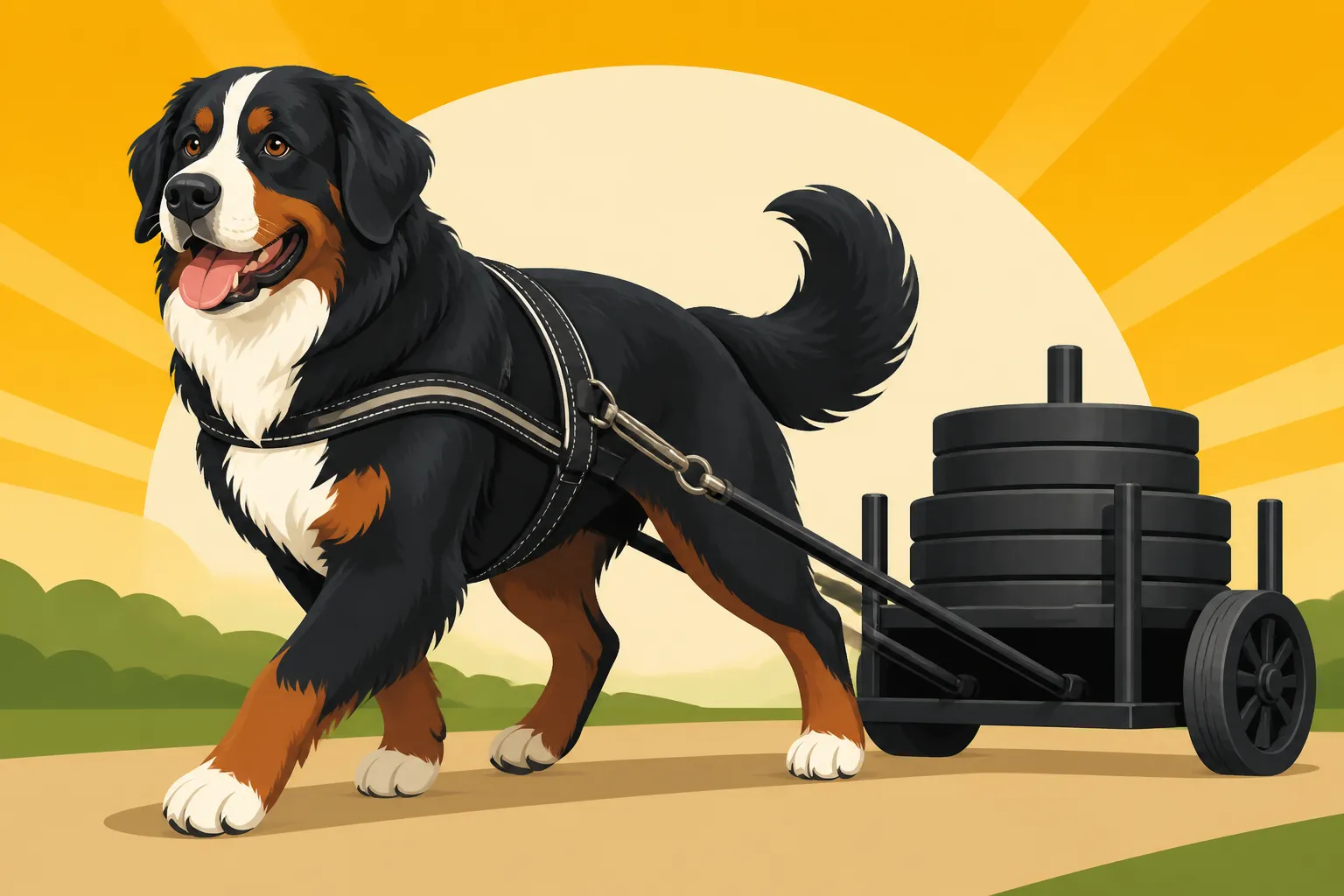
This is perhaps the most critical piece of equipment. A standard walking harness or collar is absolutely not suitable for drafting. You need a purpose-built drafting or pulling harness that distributes the weight evenly across your dog's chest and shoulders, without putting pressure on their throat, spine, or sensitive areas. These harnesses are typically wide, padded, and designed for optimal load distribution. Brands like K9 Kargo or specialized custom harness makers are excellent choices, though you can often find good quality, general purpose drafting harnesses on platforms like Amazon.
The harness must fit perfectly. A harness that is too loose can shift and rub, causing chafing and discomfort. One that is too tight can restrict movement or breathing. It's often recommended to have a professional fitter, or at least someone experienced in drafting, help you select and adjust the harness. Remember, your Berner's comfort directly impacts their willingness and ability to pull safely. A good fitting harness is an investment in your dog's well-being and performance.
Carts and Loads
The cart itself needs to be appropriate for your Bernese Mountain Dog's size and the type of work you intend to do. For beginners, a lightweight training cart that is easy to maneuver is ideal. As your dog progresses, you might consider more robust carts designed to carry more significant loads. The cart should be stable, have good wheels that roll easily, and be well-balanced so it doesn't tip or put awkward pressure on the shafts connected to the harness.
When adding loads, consider not just the weight but also the balance. Distribute weight evenly within the cart to prevent it from pulling to one side or becoming unstable. Avoid bulky, unwieldy items that could shift unexpectedly. For training, easily adjustable weights like sandbags or specific weight-pulling blocks are useful. Always inspect your cart before each session for loose parts, squeaky wheels, or anything that could pose a hazard. You can explore a variety of cart options and accessories, as well as review customer feedback, on reputable online marketplaces. Understanding Choosing a Cart That Fits a Bernese Mountain Dog is paramount.
Recognizing and Preventing Strain or Injury
Even with the best intentions and proper training, things can go wrong. Being vigilant for signs of strain and implementing preventative measures are vital aspects of responsible drafting.
Signs of Discomfort or Fatigue
Your Bernese Mountain Dog can't tell you in words if something hurts or if they're tired, so you need to be their advocate. Watch for subtle changes in their gait, attitude, and body language during and after a session. Signs of discomfort might include:
- Lagging behind or refusing to pull: If your usually enthusiastic Berner suddenly slows down or stops altogether, it's a big red flag.
- Changes in posture: Head held low, hunched back, or favoring a leg.
- Stiffness or limping: Especially noticeable after a session or the next day.
- Excessive panting or drooling: Beyond what's normal for the exertion level.
- Whining or vocalizing: A clear sign of distress.
- Reluctance to get into the harness or approach the cart: Indicates a negative association.
If you notice any of these signs, stop the activity immediately. Remove the harness and cart, and allow your dog to rest. If symptoms persist, a vet visit is in order. Remember, their stoic nature might mean they hide pain until it's significant, so paying attention to the small details is crucial. Consider checking resources like Whether a Bernese Mountain Dog Hides Discomfort for more insights.
Importance of Vet Checks and Rest
Regular veterinary check-ups are important for any large breed, but especially for working dogs. For Berners involved in drafting, annual or even semi-annual orthopedic evaluations can help catch potential issues before they become serious. Your vet can assess joint health, muscle condition, and overall fitness for the activity.
Rest and recovery are just as important as the training itself. Don't overdo it. Keep sessions short, especially when starting out, and allow ample rest days between drafting sessions. Just like human athletes, dogs need time for their muscles to repair and strengthen. Ensure they have a comfortable, supportive bed to rest on, especially after any strenuous activity.
Warm-ups and cool-downs are also critical. A brisk 5-10 minute walk before hooking up the cart helps prepare their muscles, and a similar walk afterward helps prevent stiffness and aids in recovery. Providing proper nutrition and hydration before, during, and after sessions supports their energy levels and physical repair. If you are looking for general training advice, even for puppies, BAXTER & Bella offers online resources that can help lay a good foundation for a well-behaved dog, which translates into a better drafting partner down the line.
Remember, the goal of drafting with your Bernese Mountain Dog is to enjoy a fulfilling activity together, honoring their heritage in a safe and responsible way. By prioritizing their health, using appropriate equipment, and listening to their cues, you can create wonderful memories and strengthen your bond.
Disclaimer
This article is for general informational purposes only and does not constitute professional advice. Laws, prices and regulations vary by location and change over time. Consult a qualified professional for guidance on your specific situation.