OFA Clearances a Bernese Mountain Dog Should Have
Bringing a Bernese Mountain Dog into your life is an absolute joy, but it's also a significant commitment, especially when you face the sad reality of their often-shorter lifespans and common health challenges. One of the best ways we, as devoted Berner parents, can advocate for our beloved companions and make informed choices is by understanding health clearances. This comprehensive guide will walk you through the essential OFA clearances a Bernese Mountain Dog should have, detailing why they matter and how they help secure a healthier future for these magnificent dogs.
Understanding OFA and Why It Matters for Berners
When you first hear about "OFA clearances," it can feel like stepping into a labyrinth of acronyms and medical jargon. But don't let that overwhelm you. At its heart, OFA is a tool, a guiding light, for ensuring our Bernese Mountain Dogs have the best possible start and a healthier life. It’s all about transparency and responsibility in breeding.
What is the Orthopedic Foundation for Animals OFA?
The Orthopedic Foundation for Animals, or OFA, is a not-for-profit organization established in 1966. Its primary mission is to promote the health and welfare of companion animals through objective evaluation of inherited disease and through research. Essentially, OFA maintains a public database of health screening results for various genetic diseases in purebred dogs. Think of it as a comprehensive health report card for dogs, especially those used for breeding. Veterinarians submit X-rays and other test results to OFA's team of independent veterinary specialists, who then evaluate them against established criteria.
The genius of the OFA database is its public accessibility. Reputable breeders voluntarily submit their dogs for screening, and the results — whether good, bad, or indifferent — are then made available online. This transparency allows prospective puppy buyers, like you and me, to research a puppy's parents and grandparents, verifying that the breeder is actively working to minimize inherited diseases in their lines. It's a cornerstone of ethical breeding practices and a crucial resource for anyone looking to bring a healthy Berner home. Without such a system, it would be nearly impossible to track genetic health issues across generations, leaving us all guessing.
The Unique Health Challenges of Bernese Mountain Dogs
It’s no secret that our beloved Berners, despite their majestic presence and sweet dispositions, often face a heartbreaking reality: a significantly shorter lifespan compared to many other breeds. If you've ever found yourself asking, "Why a Bernese Mountain Dog Lives Only Seven or Eight Years", you're not alone. This is a frustration that weighs heavily on every Berner owner's heart. Their average lifespan hovers around 7 to 8 years, and a major contributor to this brevity is their predisposition to certain inherited health conditions.
Specifically, joint problems and certain aggressive cancers are tragically prevalent in the breed. Conditions like hip and elbow dysplasia can lead to debilitating pain and mobility issues, significantly impacting a dog's quality of life even at a relatively young age. Then there's the shadow of cancer, particularly forms like Histiocytic Sarcoma, which can strike with devastating speed. These challenges make it even more critical for Bernese Mountain Dog breeders to be diligent with health clearances, screening their breeding stock to reduce the likelihood of passing on these difficult conditions. It's not a perfect solution, as genetics are complex, but it's the best proactive step we have. This vigilance helps ensure that the next generation of Berners has a better chance at a longer, healthier, and happier life.
The Core OFA Clearances Every Berner Parent Should Know
When discussing Bernese Mountain Dog health, certain OFA clearances are non-negotiable. These are the foundational screenings that every responsible breeder should have for their breeding dogs, and every prospective puppy owner should demand to see.
Hip Dysplasia: The Foundation of Joint Health
Hip dysplasia is perhaps one of the most widely recognized orthopedic conditions, particularly in large breeds like the Bernese Mountain Dog. It’s a complex, multifactorial disease where the ball and socket of the hip joint don’t fit together perfectly, leading to instability, pain, and eventually degenerative joint disease or osteoarthritis. For a hundred-pound Bernese Mountain Dog, every pound of their magnificent weight puts stress on those joints, and if the hips are compromised, it can lead to immense discomfort and a reduced quality of life. This is why a proper OFA hip evaluation is absolutely critical.
OFA uses a panel of three independent, board-certified veterinary radiologists to evaluate X-rays of a dog's hips. They assign one of seven classifications: Excellent, Good, Fair (these three are considered "passing" or "normal"), Borderline, Mild, Moderate, or Severe. Dogs with any grade below Fair should ideally not be used for breeding, as they are more likely to pass on the genetic predisposition for hip dysplasia. The evaluation can only be performed once the dog is 24 months (2 years) of age or older, as their skeletal system needs to be fully mature for an accurate assessment. Seeing parents with "Good" or "Excellent" hip scores gives you a much better chance of getting a puppy with sound hips, though it's important to remember that genetics are never a guarantee.
Elbow Dysplasia: Another Critical Joint Concern
Just as important as hip evaluations are those for elbow dysplasia. This is another inherited condition common in larger, fast-growing breeds, and it encompasses several developmental abnormalities of the elbow joint. Unlike hip dysplasia, which has a multi-grade system, OFA evaluates elbows with a simpler classification: Normal (no evidence of elbow dysplasia) or Grade I, II, or III (indicating increasing severity of dysplasia). For a Bernese Mountain Dog, a Grade I elbow can still cause significant lameness and pain, affecting their ability to move freely and enjoy typical Berner activities.
The consequences of elbow dysplasia can range from mild lameness to severe, crippling arthritis. It can manifest as early as 4-6 months of age, though an official OFA clearance is only given after the dog reaches 24 months of age, similar to hip evaluations. Breeders who skip elbow clearances are taking a serious risk with their lines and, ultimately, with the health of the puppies they produce. If you're looking into The Front-End Lameness a Bernese Mountain Dog Develops in a Bernese Mountain Dog, you'll often find that elbow issues play a significant role. Ensuring both parents have "Normal" elbow clearances is a fundamental step in trying to avoid elbow dysplasia or other debilitating joint issues in your future companion.
Beyond Hips and Elbows: Additional Recommended Clearances
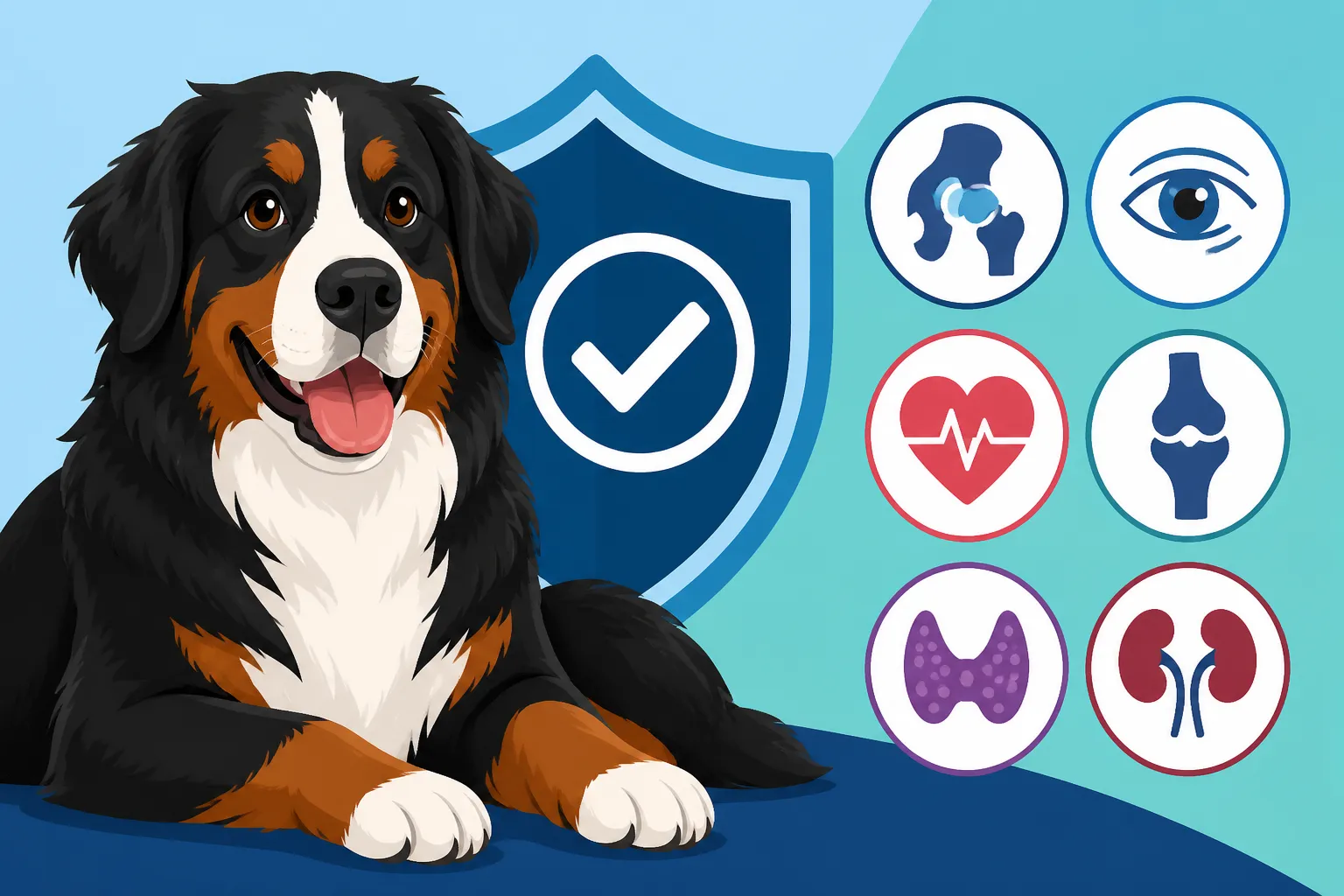
While hips and elbows are foundational, responsible Berner breeding extends to other vital health screenings. These additional clearances address common issues that can significantly impact a Bernese Mountain Dog's well-being.
Eye Examinations OFA Eye
Our Berners’ expressive, soulful eyes are a huge part of their charm, but they can also be prone to certain inherited conditions. The OFA Eye certification, formerly known as CERF (Canine Eye Registration Foundation), involves a thorough examination by a board-certified veterinary ophthalmologist. This specialist looks for a range of inherited eye diseases, some of which can lead to vision impairment or even blindness. Conditions like entropion (eyelids rolling inward), ectropion (eyelids rolling outward), or cataracts can be present in Bernese Mountain Dogs. Progressive Retinal Atrophy (PRA), though less common in Berners than some other breeds, is another condition that ophthalmologists screen for.
These eye exams should be conducted annually for breeding animals, as some conditions can develop or progress over time. The results are then submitted to OFA, where they are recorded. While not always debilitating in the same way as severe hip or elbow dysplasia, eye conditions can certainly diminish a dog's quality of life and often require expensive veterinary intervention, sometimes including surgery. A clear OFA Eye certification indicates that, at the time of examination, the dog's eyes were free from observable inherited disease. It’s a relatively simple, non-invasive test that provides valuable peace of mind.
Cardiac Health: Listening to the Heart
The heart of a Bernese Mountain Dog works tirelessly to pump blood through their large frame, and ensuring its health is another important step in responsible breeding. OFA offers cardiac clearances, which typically involve an examination by a board-certified veterinary cardiologist. While not as prone to certain congenital heart defects as some breeds, Berners can still be affected, and a thorough cardiac screening is a valuable component of a comprehensive health panel.
The cardiac evaluation usually involves at least an auscultation, where the cardiologist listens for heart murmurs or other irregularities. For breeding dogs, many responsible breeders will opt for a more in-depth echocardiogram, which is an ultrasound of the heart that allows the cardiologist to visualize its structure and function. This can detect conditions like subvalvular aortic stenosis (SAS) or dilated cardiomyopathy (DCM), although SAS is more commonly associated with breeds like Golden Retrievers and Newfoundlands. Getting these clearances done helps ensure that parents aren't passing on genetic predispositions to heart conditions that could lead to an early demise or significantly impact a dog's quality of life. It’s another layer of protection, complementing other critical screenings to give puppies the best possible chance at a long, healthy life.
The Role of Genetic Testing and Bernese-Specific Screenings
Beyond the traditional radiographic evaluations for joints and physical exams for eyes and heart, modern veterinary science offers invaluable genetic tests. These tests specifically target conditions known to affect Bernese Mountain Dogs, offering crucial insights into a dog's genetic makeup and potential to pass on certain diseases.
Degenerative Myelopathy DM Testing
Degenerative Myelopathy, or DM, is a progressive neurological disease that affects the spinal cord, leading to weakness in the hind limbs and eventually paralysis. It's a devastating condition. While not exclusive to Bernese Mountain Dogs, they are one of the breeds for which a genetic test is available. This test, often referred to as the DM test, identifies a mutation in the SOD1 gene.
The results of the SOD1 test classify dogs into three categories:
- Clear (N/N): The dog does not carry the mutation and cannot pass it on to offspring.
- Carrier (A/N): The dog carries one copy of the mutation and can pass it on to approximately 50% of its offspring. Carriers typically do not develop DM symptoms themselves.
- At-Risk (A/A): The dog carries two copies of the mutation and is at risk of developing DM. This doesn't mean they will definitely develop it, but their risk is significantly higher. They will also pass on the mutation to all of their offspring.
Responsible breeders use these results to make informed breeding decisions, aiming to avoid breeding two carriers together, which could produce at-risk puppies. While a "carrier" status isn't necessarily a disqualifier for breeding, careful pairing with a "clear" dog is essential to prevent "at-risk" offspring. The OFA database includes DM test results, allowing for public verification of a dog's genetic status. This test offers a vital tool in battling this insidious disease within the breed.
Von Willebrand's Disease vWD Testing
Von Willebrand's Disease (vWD) is another important genetic condition to screen for in Bernese Mountain Dogs. It's a hereditary bleeding disorder caused by a deficiency in von Willebrand factor, a protein necessary for normal blood clotting. Dogs affected by vWD may experience excessive bleeding from minor cuts, prolonged bleeding after surgery or injury, nosebleeds, or even bleeding gums. Imagine the stress and danger if your Berner needed an emergency surgery and had an undiagnosed clotting issue! This is why understanding What Von Willebrand Disease Means for a Bernese Mountain Dog is so crucial.
Fortunately, a genetic test is available to identify dogs that are clear, carriers, or affected by vWD. Similar to DM, responsible breeders use these results to ensure they don't produce affected puppies. OFA also includes vWD test results in its public database. Knowing your dog's vWD status is not just important for breeding; it's critical for their personal veterinary care. If your Berner is a carrier or, especially, affected, your vet needs to be aware of this before any surgical procedure, even routine ones like spaying or neutering. This allows them to take necessary precautions to prevent excessive bleeding complications.
Histiocytic Sarcoma: The Berner's Greatest Foe and OFA's Limitations
Now, let's talk about the elephant in the room for Bernese Mountain Dog owners: cancer. Specifically, Histiocytic Sarcoma (HS) is an aggressive and often rapidly fatal cancer that unfortunately claims a significant number of Berners. It's a devastating diagnosis, and many Berner parents unfortunately find themselves asking, "What Bernese Mountain Dogs Die Of" far too often. While we've discussed several crucial OFA clearances, it's important to understand a key limitation: OFA does not directly offer a "clearance" for cancer in the same way it does for hip or elbow dysplasia. There isn't a simple genetic test or X-ray that can definitively say a dog is "clear" of cancer risk.
However, this doesn't mean responsible breeders ignore cancer. Far from it. This is where other resources become paramount. The Berner-Garde database, for instance, is an invaluable tool where breeders and owners can voluntarily submit health information, including causes of death and cancer diagnoses, often including specific types of cancer like Histiocytic Sarcoma. By carefully researching pedigrees through databases like Berner-Garde, breeders can identify lines with a history of longevity and fewer instances of early-onset cancer. While OFA focuses on specific, testable inherited conditions, the fight against cancer in Berners relies on a broader, more collaborative effort that includes genetic research, detailed health record keeping, and selective breeding practices that prioritize longevity and robust health. It's a constant battle, but by being informed, we contribute to the collective effort to reduce this heartbreak.
Navigating the OFA Database and Choosing a Reputable Breeder
Understanding what OFA clearances are is the first step; the next is knowing how to use this information effectively when bringing a Bernese Mountain Dog into your home. This involves actively researching potential puppies' lineage and engaging with breeders about their health testing protocols.
How to Look Up OFA Records
The Orthopedic Foundation for Animals (OFA) website is your best friend when it comes to verifying health clearances. It’s incredibly straightforward to use, but knowing exactly what to look for will make your search much more effective.
Here’s a step-by-step guide:
- Visit the OFA Website: Go to the official OFA website (www.ofa.org).
- Use the Search Function: Look for the "Search OFA Database" link, usually prominent on the homepage.
- Enter Dog's Information: You can search by a dog’s registered name or registration number (e.g., AKC number). If you only have the registered name, start there. Be prepared for variations in spelling or nicknames. Sometimes, simply searching by breed and then filtering by registered name can help.
- Review the Results: Once you find the dog, click on their name to see their individual health record. This page will display all the OFA-recorded health clearances for that specific dog. You’ll see sections for hips, elbows, eyes, heart, and genetic tests like DM and vWD.
- Look for Key Information:
- "CHIC" Number: The Canine Health Information Center (CHIC) program is a collaboration between the OFA and participating parent clubs. A CHIC number signifies that a dog has had all the health screenings recommended by its breed's parent club (in this case, the Bernese Mountain Dog Club of America). This is a gold standard to look for.
- Dates and Results: Pay attention to the dates the tests were performed and the actual results (e.g., "Hips: Good," "Elbows: Normal," "DM: Clear"). Ensure the dog was at least 24 months old for hip and elbow evaluations.
- Parental Information: Often, a dog's OFA page will link to its parents and offspring if they are also in the database, allowing you to trace health lines.
This proactive research allows you to verify a breeder's claims and get a transparent view of the health history behind your potential puppy. Don't be shy about digging into these records – it’s a crucial step in ensuring you're supporting ethical breeding and bringing home the healthiest possible companion.
Here’s a simplified table illustrating what to look for and understand in OFA results:
| Clearance Type | Recommended Age for Evaluation | Passing Grade (OFA) | Significance for Bernese Mountain Dogs |
|---|---|---|---|
| Hips | 24 months + | Excellent, Good, Fair | Critical for preventing debilitating joint pain and arthritis in a heavy-set breed. "Hips That Fail Under a Bernese Mountain Dog’s Weight" is a constant concern. |
| Elbows | 24 months + | Normal (Grade 0) | Essential for mobility and comfort, as elbow dysplasia is common and can cause severe lameness. Checking "Elbow Grades on a Bernese Mountain Dog" helps avoid future pain. |
| Eyes | Annually (breeding animals) | Normal | Screens for inherited eye conditions that can affect vision and quality of life. |
| Cardiac | 12 months + (auscultation), 24 months + (echocardiogram) | Normal | Screens for congenital heart defects. A comprehensive "The Cardiac Exam a Bernese Mountain Dog Should Have" is vital to ensure heart health. |
| DM (SOD1) | Any age (genetic test) | Clear (N/N) | Identifies risk of Degenerative Myelopathy, a progressive neurological disease. Understanding "How Fast Degenerative Myelopathy Progresses in a Berner" is key to making informed breeding choices and preparing for potential future health challenges. |
| vWD (Type 1) | Any age (genetic test) | Clear (N/N) | Detects Von Willebrand's Disease, a hereditary bleeding disorder, crucial for anticipating surgical risks. |
What to Ask a Breeder About Clearances
Choosing a Bernese Mountain Dog puppy from a reputable breeder is paramount, and discussing health clearances is a key part of that conversation. Don't be afraid to ask direct and detailed questions; a good breeder will welcome your scrutiny and be transparent.
Here are some essential questions to pose:
- "Can I see the OFA certificates for both parents?" Don't just take their word for it. A reputable breeder will have physical or digital copies of the OFA certificates for both the sire and dam (and often the grandparents). These certificates clearly state the dog's registered name, registration number, birthdate, and the results for hips, elbows, eyes, heart, and genetic tests like DM and vWD. You should be able to cross-reference these with your own search on the OFA website.
- "Do your breeding dogs have CHIC numbers?" As mentioned, a CHIC number indicates that all recommended health screenings for the breed have been completed. This demonstrates a comprehensive approach to health testing.
- "At what age were the hip and elbow evaluations performed?" Confirm that hip and elbow clearances were done at or after 24 months of age, as this is when the joints are fully mature for an accurate assessment. Preliminary evaluations done earlier are not considered final.
- "What is the average lifespan of the dogs in your breeding program's lineage?" While not an OFA clearance, this question speaks to the broader health picture, especially with the Berner's shorter lifespan. A good breeder will be open about the longevity of their lines, often having submitted records to databases like Berner-Garde.
- "What insurance company do you recommend, and have your dogs ever had claims for inherited conditions?" While not directly about clearances, this opens a conversation about real-world costs. Ethical breeders often have pet insurance themselves, perhaps with providers like Healthy Paws, to cover unexpected events. It’s also a chance to understand if a breeder has ever had to make claims for conditions like hip dysplasia in their lines, even with clearances. It’s a good reality check.
Be wary of breeders who:
- Tell you "my vet checked them, they're fine" without providing OFA registration numbers or certificates.
- Claim clearances aren't necessary because their dogs "look healthy."
- Are unable or unwilling to discuss specific health concerns common to the breed.
- Offer significantly lower prices for puppies without documented clearances.
Remember, investing in a puppy from health-tested parents is an investment in a potentially healthier, longer life for your Bernese Mountain Dog. It might seem like a lot of information, but it’s a crucial step in being a responsible and well-prepared Berner parent. While no breeder can guarantee perfect health, especially with conditions like cancer that lack a simple genetic test, opting for parents with robust OFA clearances significantly stacks the odds in your favor. And should unforeseen health issues arise, having a good insurance policy from a company like Healthy Paws can also offer vital financial protection.
Disclaimer
This article is intended for informational purposes only and does not constitute veterinary advice. Always consult with a qualified veterinarian for any health concerns or before making any decisions about your dog's care.