Whether Neutering Changes a Bernese Mountain Dog’s Manners
For many Bernese Mountain Dog owners, the decision to neuter their beloved companion often comes with a swirling mix of hope and apprehension, especially when it comes to potential shifts in behavior. You've likely heard tales of dogs becoming calmer, less aggressive, or even lazier after the procedure, alongside warnings that their personality might change for the worse. It's a huge step, and it's completely natural to want to understand what impact, if any, neutering will truly have on your Berner's cherished manners and temperament. This guide will help you navigate the often-conflicting information, offering a realistic look at how neutering might, or might not, alter your Bernese Mountain Dog's behavior.
The Expectations Versus Reality of Neutering and Behavior
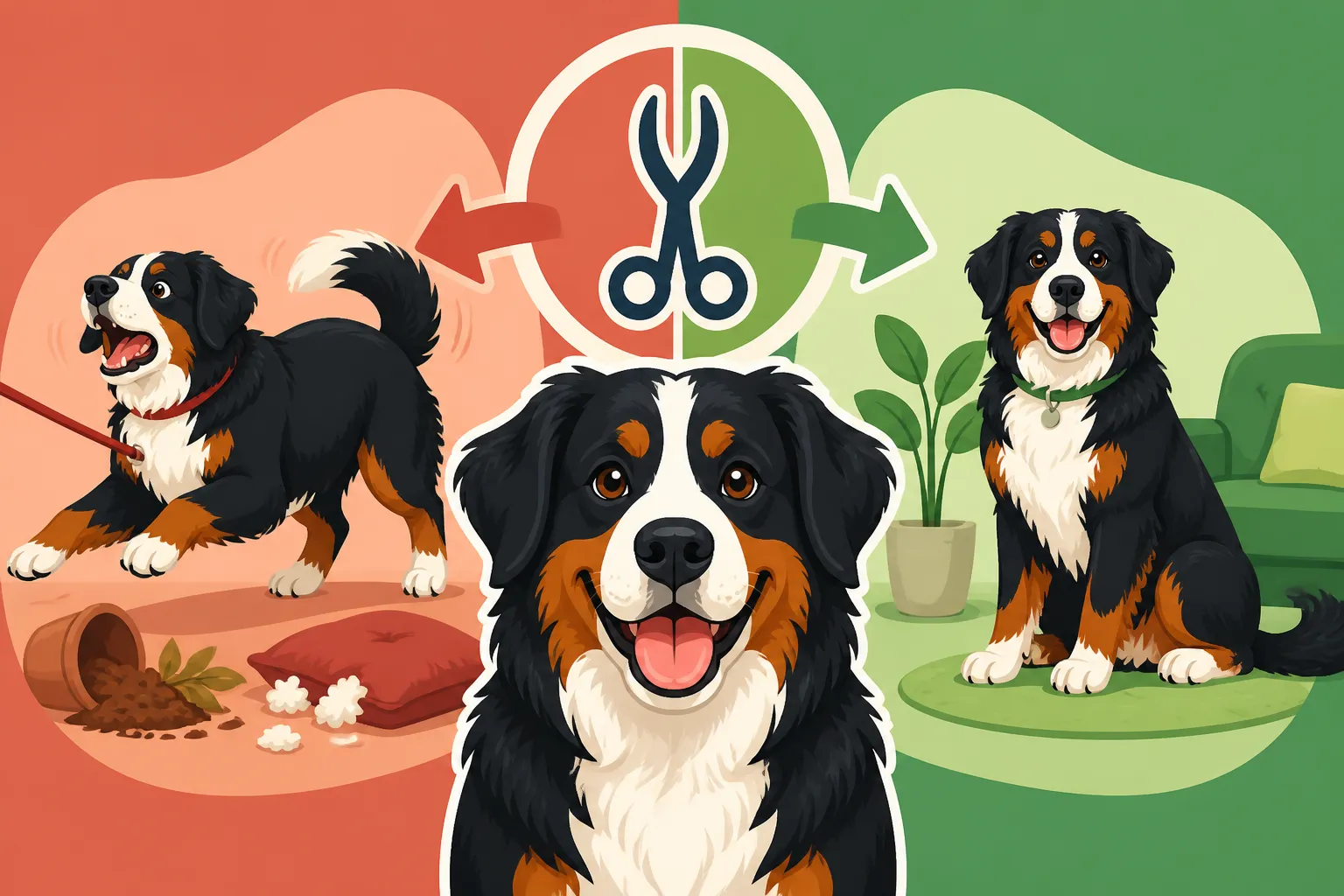
It's common for owners to consider neutering with a specific behavioral problem in mind, hoping it will be the magic bullet. Perhaps your Berner boy is starting to lift his leg on every bush, or he's getting a bit too interested in the female dogs at the park. Maybe you've noticed some tension with other male dogs. While neutering can indeed influence certain hormone-driven behaviors, it's crucial to understand that it's not a guaranteed fix for every single behavioral nuance. A dog's temperament is a complex tapestry woven from genetics, early experiences, ongoing training, and their environment.
We often project our desires onto the outcome, imagining a perfectly calm, non-marking, impeccably behaved companion instantly after the surgery. However, behavior is rarely that simple. Behaviors that have become ingrained habits over time, or those rooted in anxiety or lack of socialization, are unlikely to vanish with a single surgical procedure. It takes consistent effort and understanding to shape a dog's character, and neutering is just one piece of a much larger puzzle.
What Owners Hope Neutering Will "Fix"
The list of behaviors owners often hope neutering will resolve is quite extensive, and it typically centers around issues linked to male hormones. Roaming, for instance, is a big one. An intact male dog’s instinct to seek out a female in heat can be incredibly strong, leading them to tunnel under fences, bolt from yards, and generally be less reliable with recall. Aggression, particularly male-on-male aggression, is another major concern. Owners might notice their Berner stiffening up or reacting negatively to other male dogs, especially if they are also intact.
Mounting, or humping, is also frequently cited. While it can be a sign of sexual frustration, it’s also often a display of excitement, stress, or even a learned attention-seeking behavior that isn’t purely hormonal. Similarly, excessive marking indoors or outdoors is often attributed to testosterone. While neutering can significantly reduce the drive behind these behaviors, if they've become well-practiced habits, your Berner might still engage in them out of routine. For issues like a Berner that pulls intensely on the leash due to excitement, or one that barks excessively at the mail carrier, neutering is unlikely to provide a direct solution, as these are primarily training and management challenges. Consider exploring resources like BAXTER & Bella for online training programs that can address these behavioral patterns with consistent, positive reinforcement methods, regardless of your dog's intact status.
Behaviors Most Directly Influenced by Hormones
When we talk about behaviors that are most directly influenced by male hormones like testosterone, we're looking at those deeply tied to reproduction and competition. Roaming to find a mate is perhaps the most significant. The scent of a female in heat can travel for miles, overriding even the most diligent training. Neutering removes this intense biological drive, often leading to a marked decrease in wandering tendencies, simply because the motivation isn't there anymore. Similarly, the instinct to mark territory with urine, a communication signal to other dogs, can be significantly reduced.
Aggression, especially what's termed "intact male aggression" towards other males, also often sees improvement. This type of aggression is usually rooted in competition for resources or status, and testosterone certainly fuels that competitive drive. After neutering, many owners report a noticeable calming in their Berner's interactions with other male dogs. However, it's crucial to distinguish this from fear-based aggression, resource guarding, or aggression stemming from poor socialization, which will require dedicated training and behavioral modification, not just surgery. Furthermore, even with reduced hormone levels, if a dog has learned to react aggressively over time, that learned response won't disappear overnight. The potential for a gentler, more focused attitude toward training after neutering can certainly help in re-shaping these learned behaviors, but it's not a passive process.
Understanding Hormonal Shifts and Developmental Stages
The physical and behavioral development of a Bernese Mountain Dog is a journey that spans years, not just months. Their large size means they mature slower than smaller breeds, often retaining a "puppy-like" demeanor and energy well into their second or even third year. This extended developmental period means that the timing of neutering can have a more profound impact on their growth plate closure and overall skeletal health, which in turn, can indirectly affect their activity levels and comfort.
Hormones, primarily testosterone in males, play a significant role throughout this extended development. This isn't just about reproductive urges; these hormones influence everything from bone density and muscle mass to cognitive processes and confidence levels. Understanding these intricate connections helps paint a clearer picture of why simply removing the source of these hormones can lead to a cascade of effects, some predictable, others more nuanced. It highlights that the decision isn't just about behavior, but about the entire well-being of your Berner.
The Role of Testosterone and Its Decline Post-Neutering
Testosterone, often seen as the quintessential "male" hormone, is far more than just a driver of sexual behavior. In a growing Bernese Mountain Dog, it plays a vital role in the closure of growth plates in bones, influencing bone density, muscle development, and even the final size and structure of the dog. Studies suggest that early neutering, before these growth plates have naturally fused, can lead to dogs with slightly longer limbs and a different bone structure, which some experts believe may increase the risk of certain orthopedic issues later in life. This is a significant consideration for a large breed prone to Joint Disease in a Hundred Pound Bernese Mountain Dog and Hips That Fail Under a Bernese Mountain Dog's Weight.
Once a male Bernese Mountain Dog is neutered, the testicles, which are the primary producers of testosterone, are removed. This doesn't mean testosterone levels drop to zero overnight; rather, they gradually decline over a period of weeks. The behavioral changes linked to this decline are also gradual, not instantaneous. You won't see a completely different dog the day after surgery. Instead, over time, the intense drive to roam or mark might lessen. For a Berner that's already developed strong habits, this decline might make retraining easier, as the underlying hormonal push is reduced. It's about taking away one significant piece of the motivational puzzle, but the learned patterns often remain and require consistent effort to modify.
The Critical Window for Socialization and Training
Regardless of whether you choose to neuter your Bernese Mountain Dog, or at what age, the most profound influence on their manners and overall behavior comes from consistent socialization and training during their critical developmental periods. A Bernese Mountain Dog puppy has a relatively short window, typically up to around 16 weeks of age, where they are most receptive to new experiences and forming positive associations with the world around them. Exposing them to a wide variety of sights, sounds, people, and other well-behaved dogs during this time is paramount for building a confident, well-adjusted adult. Without this foundation, any behavioral issues that arise later, whether from fear, reactivity, or undersocialization, will be far more challenging to address.
Even beyond the puppy stage, ongoing training and socialization throughout adolescence and into adulthood are non-negotiable for a large, powerful breed like the Berner. A dog's brain continues to develop, and their learning capacity remains high. Issues like pulling on the leash, jumping on guests, or reactivity to novel stimuli are almost always a result of insufficient training and management, not simply hormone levels. Platforms like BAXTER & Bella offer structured online training programs that can be invaluable for owners at any stage, providing the tools and guidance to shape behavior effectively. Whether your dog is intact or neutered, dedicating time to clear communication, positive reinforcement, and consistent boundaries is the bedrock of a well-mannered companion. This foundation will always outweigh the direct behavioral impact of neutering alone.
The Debate Around Optimal Neutering Age for Bernese Mountain Dogs
The question of when to neuter a Bernese Mountain Dog has become a significant topic of discussion among veterinarians, breeders, and owners alike. Gone are the days when early neutering (around 6 months of age) was universally recommended without much thought. Current research, especially concerning large and giant breeds, suggests a more nuanced approach, weighing the benefits of delayed neutering for physical development against the potential challenges of managing an intact dog for a longer period.
This isn't a simple right-or-wrong answer; it's a decision that needs careful consideration of your individual dog's health, temperament, lifestyle, and your ability to manage an intact male. For a breed like the Bernese Mountain Dog, known for its rapid growth and susceptibility to certain orthopedic conditions, the timing can be particularly impactful. Understanding the various viewpoints and their supporting evidence is key to making an informed choice that prioritizes your Berner's long-term well-being.
Physical Health Considerations and Later Neutering
For Bernese Mountain Dogs and other large breeds, the prevailing wisdom has shifted towards considering later neutering, often after their growth plates have fully closed, which can be anywhere from 18 to 24 months of age or even later. The argument here is rooted in the role of sex hormones in skeletal development. These hormones, including testosterone, signal the growth plates in long bones to close. If a dog is neutered before these plates fuse naturally, they may continue to grow for a longer period, resulting in taller dogs with lighter bone structures. Some studies suggest this altered growth can put additional strain on joints and may be linked to an increased risk of orthopedic issues like The Knee a Bernese Mountain Dog Tears at Four or hip and elbow dysplasia.
Allowing your Berner to mature with their natural hormones can also contribute to denser bone mass and a more developed musculature, which can provide better support for their large frame. Of course, this benefit must be weighed against other factors. For example, if you have an intact male Bernese Mountain Dog, you'll need to be extra vigilant about managing his environment to prevent accidental breedings or exposure to risks like The Half-Hour That Decides a Bloated Bernese Mountain Dog. You'll also need to consider the slightly increased risk of certain cancers, though studies on this topic are often complex and sometimes conflicting, depending on the specific cancer and breed. The conversation with your vet should be thorough, covering everything from joint health to potential cancer risks, to help you make the best decision for your specific dog.
Behavioral Implications of Early vs. Late Neutering
The age at which a Bernese Mountain Dog is neutered can subtly influence behavioral development, though the effects are not always as dramatic or predictable as some believe. Early neutering, often before six months, typically means that testosterone-driven behaviors like strong urges to roam, aggressive posturing towards other intact males, or excessive marking might never fully develop or manifest as strongly. Some owners find this appealing, as it can make managing an adolescent male easier, particularly if they are not experienced with intact dogs. However, some anecdotal reports and studies suggest that early neutering might, in some cases, contribute to increased shyness, anxiety, or reactivity in certain dogs, possibly due to the absence of hormones that contribute to confidence or complete neurological development.
Conversely, delaying neutering allows a Berner to mature fully under the influence of its natural hormones. This means allowing for complete skeletal development, which as discussed, may have orthopedic benefits. Behaviorally, it means you will need to actively manage an intact male through adolescence and into adulthood. This requires a dedicated approach to training and environmental management to prevent unwanted behaviors from becoming entrenched. If an intact male Bernese Mountain Dog learns to roam, mark incessantly, or show aggression towards other males, neutering later might reduce the intensity of these behaviors, but it won't erase the learned habit. For instance, if your Berner has been constantly marking indoors, even after neutering, he might still attempt to mark out of habit. In such cases, focused behavioral modification and retraining, perhaps guided by an online training resource like BAXTER & Bella, would be essential to address the ingrained pattern.
| Behavior Aspect | Impact of Early Neutering (e.g., < 1 year) | Impact of Late Neutering (e.g., > 1.5 – 2 years) |
|---|---|---|
| Roaming/Escaping | Often prevents strong development of mate-seeking drive; lower incidence. | Established mate-seeking drive may be reduced but not entirely eliminated if habitual. |
| Marking Behavior | Less likely to develop strong territorial marking habits. | Existing marking habits may decrease in frequency but require retraining to stop entirely. |
| Male-on-Male Aggression | May prevent or reduce hormonally-driven competitive aggression. | Hormonally-driven aggression may lessen, but learned reactivity will persist. |
| Mounting/Humping | May reduce hormonally-driven mounting; other causes (excitement, stress) remain. | Hormonal component reduced; learned or stress-related humping continues. |
| Confidence/Shyness | Some theories suggest potential for increased shyness/anxiety in certain individuals. | Allows full hormonal development, potentially contributing to natural confidence. |
| Overall Energy | Often no significant change; depends more on individual personality and exercise. | Often no significant change; depends more on individual personality and exercise. |
| Physical Stature | May result in slightly taller, lankier dogs due to delayed growth plate closure. | Allows for full, natural skeletal and muscular development. |
| House Training | No direct impact on ability to be house-trained. | No direct impact on ability to be house-trained. |
Comprehensive Approach to Bernese Mountain Dog Behavior
Ultimately, the decision to neuter, and the timing of it, is a personal one that should be made in consultation with your veterinarian and potentially a qualified canine behaviorist. It's not a standalone solution for behavior but rather one component within a holistic approach to raising a well-adjusted Bernese Mountain Dog. Their impressive size and loyal, gentle nature mean that responsible ownership involves understanding their unique needs beyond just surgical considerations.
Focusing on consistent training, proper environmental management, and continuous enrichment will always yield the most significant results in shaping your Berner's manners. These powerful dogs thrive on companionship and purpose, and channeling their natural intelligence and desire to please through positive training methods will build a stronger bond and a happier, more harmonious household, whether they are intact or neutered.
Beyond Neutering: The Power of Consistent Training
It’s easy to get caught up in the idea that neutering will solve all behavioral woes, but for a Bernese Mountain Dog, consistent training is the true cornerstone of good manners. A hundred-pound dog, regardless of its hormonal status, needs to understand basic commands like sit, stay, come, and most importantly, walk politely on a leash. Without these fundamentals, any underlying behavioral tendencies, whether hormonal or not, can escalate into significant challenges simply because the dog lacks the appropriate alternative behaviors. Think about it: if your Berner isn't taught a reliable recall, he'll be much more likely to roam whether he's intact or not, especially if a squirrel catches his eye!
Positive reinforcement methods are incredibly effective for Bernese Mountain Dogs, who are generally sensitive souls and do not respond well to harsh corrections. They thrive on praise, treats, and toys. Focusing on what you want your Berner to do, rather than constantly correcting what you don't, will build their confidence and willingness to engage. This includes addressing things like A Bernese Mountain Dog That Pulls Its Owner Over or Stopping a Bernese Mountain Dog Jumping Up. Resources like BAXTER & Bella provide comprehensive online training programs that can guide you through these stages, ensuring that you're building a strong foundation of communication and trust with your dog. Remember, neutering might reduce the drive for certain behaviors, but training provides the tools for appropriate behavior.
Environmental Management and Owner Responsibilities
Managing a Bernese Mountain Dog, especially an intact male, requires a significant commitment to creating a safe and stimulating environment. This means ensuring your yard is securely fenced to prevent any escape attempts motivated by a female in heat or simply curiosity. Even if your Berner is neutered, a secure yard is vital for their safety and to prevent them from wandering off. When out and about, a sturdy leash and harness are non-negotiable. For a powerful breed, investing in high-quality walking gear from platforms like Amazon is crucial for control and comfort. Options like front-clip harnesses can be particularly helpful for Leash Manners on a Hundred Pound Bernese Mountain Dog.
Furthermore, responsible ownership extends to managing interactions with other dogs. If you have an intact male, it's prudent to be mindful of how he interacts with other intact males and especially with females. Dog parks might not always be the best environment for intact dogs, as they can sometimes be magnets for conflict. Instead, controlled playdates with known, friendly dogs can offer valuable socialization. Keeping your Berner mentally stimulated with puzzle toys (also readily available on Amazon), regular training sessions, and appropriate exercise can also preempt many behavioral issues, simply by keeping their brilliant minds engaged and preventing boredom. Exercising a Bernese Mountain Dog in Summer might look different from winter walks, but mental exercise is always in season!
Consulting Your Veterinarian and Trainer
The decision regarding neutering your Bernese Mountain Dog, including the optimal timing, is best made as part of an ongoing conversation with your trusted veterinarian. They can provide personalized advice based on your dog's individual health history, genetic predispositions, and current lifestyle. Your vet can discuss the nuanced medical pros and cons, such as the potential impact on joint health if neutered early versus the slightly elevated risk of certain conditions, like prostate issues or some cancers, in intact males. They can also provide a realistic outlook on how hormone changes might affect specific behaviors your Berner is exhibiting.
Beyond medical advice, don't hesitate to seek guidance from a certified professional dog trainer or a canine behaviorist. They can help you assess your Berner's current behavior, identify the root causes of any challenges, and develop a tailored training plan. A good trainer understands that behavior is multi-faceted and will help you distinguish between behaviors that might be influenced by hormones versus those that are learned, fear-based, or simply a lack of appropriate guidance. They can also offer strategies for managing an intact dog effectively, or assist with retraining after neutering if old habits persist. This collaborative approach ensures you're addressing both the physical and behavioral health of your Bernese Mountain Dog comprehensively.
Disclaimer
This article is for general informational purposes only and does not constitute professional advice. Laws, prices and regulations vary by location and change over time. Consult a qualified professional for guidance on your specific situation.