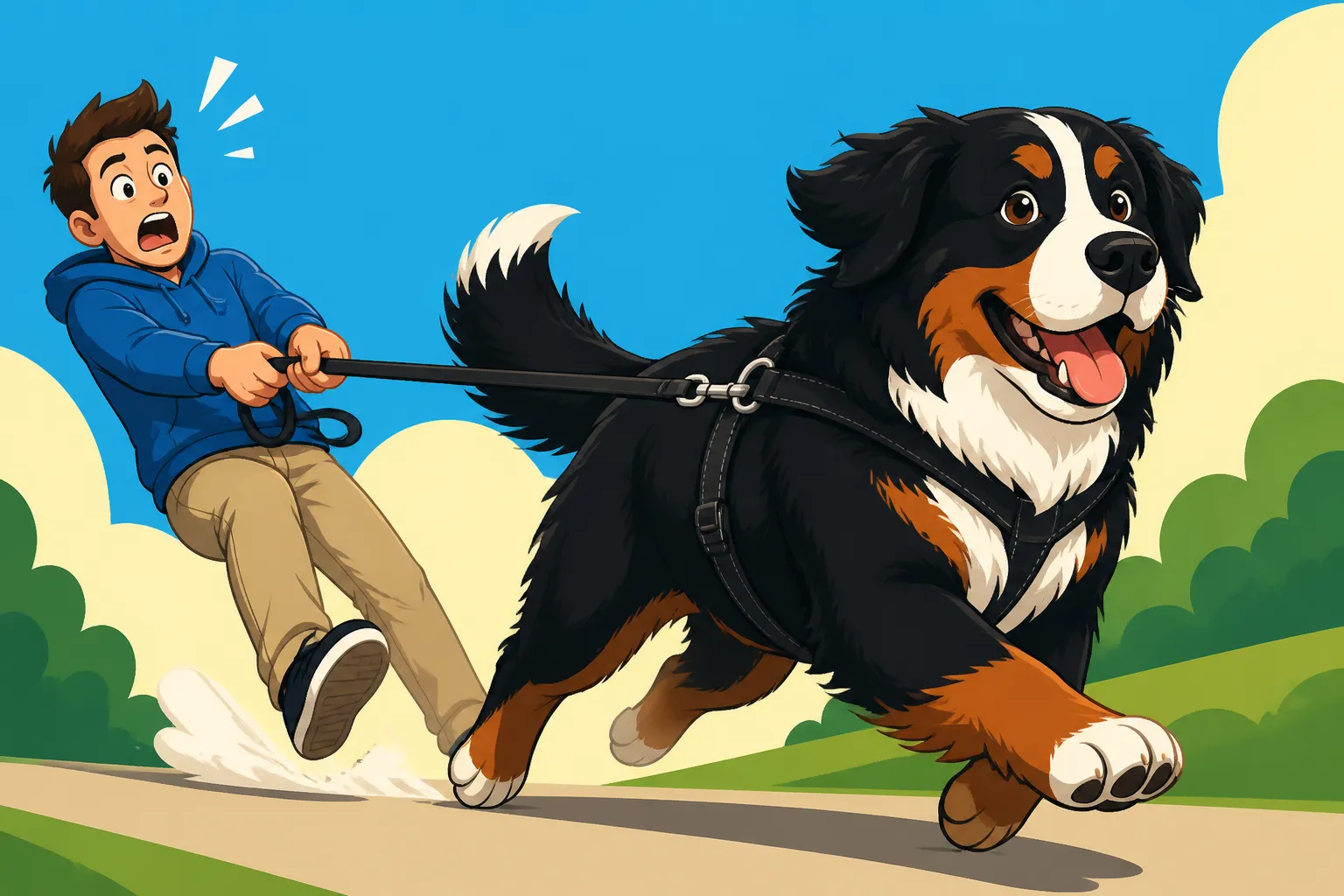
A Bernese Mountain Dog That Pulls Its Owner Over
There are few things as frustrating, or frankly, as terrifying, as being unexpectedly dragged down the street by your beloved Bernese Mountain Dog. These magnificent giants are powerful, and when they decide to pull, it can feel like you're strapped to a runaway train, making walks a source of dread rather than joy. This guide is here to help you understand why your Berner might be pulling you over, equip you with the right tools, and walk you through effective training strategies to reclaim control and enjoy peaceful walks together.
Understanding Why Your Bernese Mountain Dog Pulls
It's easy to get frustrated when your big, beautiful Berner is yanking your arm out of its socket, but it's important to remember that they aren't doing it to be malicious. There are very specific reasons why a Bernese Mountain Dog, or any dog for that matter, develops a pulling habit. Understanding these root causes is the first step toward finding a solution that actually works.
Instinctual Drive and Breed Strength
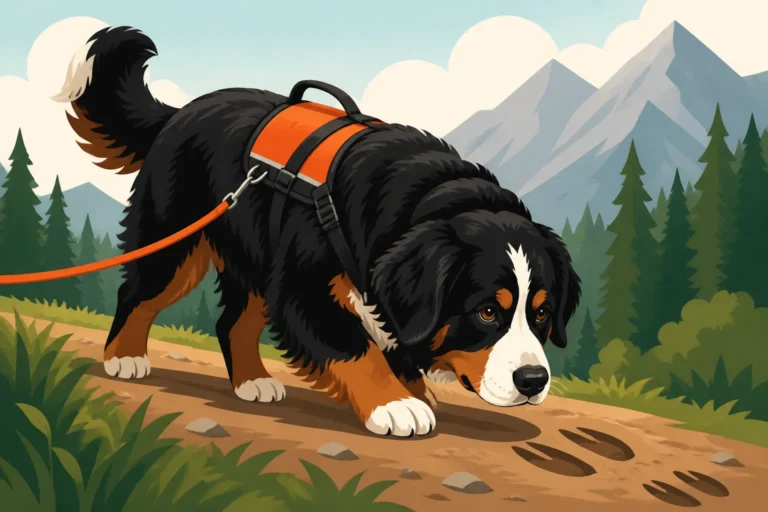
Let's face it, Bernese Mountain Dogs were historically bred for draft work, for pulling carts laden with milk or goods across the Swiss Alps. They have a deep, instinctual drive to lean into a harness and use their immense strength. It’s in their DNA! When you put a leash and collar on them, their natural inclination, especially if not taught otherwise, is to use that powerful shoulder and chest strength to get where they want to go. A hundred pounds of pure, enthusiastic dog muscle can be an unstoppable force, especially if they're still learning their Leash Manners on a Hundred Pound Bernese Mountain Dog.
Imagine a young Berner, full of zest, encountering a squirrel or a new scent on a walk. Their natural instinct is to pursue, and their body is perfectly designed for that kind of powerful forward momentum. Without specific training to counteract this, they’re just being a Berner, doing what feels natural and rewarding to them. They might not even fully grasp their own impressive size and how easily they can send a human flying.
Lack of Early Leash Training
Many of us bring home a cute, fluffy Berner puppy, and those early walks are often a breeze. They're small, easily distracted, and not yet strong enough to be a real challenge. This is often where the foundation for pulling begins, unintentionally. If a puppy learns that pulling gets them closer to that exciting smell, that friendly dog, or that interesting person, it becomes a self-reinforcing behavior. Every time they pull and reach their goal, they've just had a successful training session in pulling.
By the time they've grown into that powerful adolescent stage, around 6-12 months, that little tug has become a mighty heave. If consistent loose-leash training wasn't a priority from the very beginning, unwinding that ingrained habit becomes a much bigger task. It’s not that they're being disobedient; they simply haven't been taught an alternative, or the rewards for pulling have always outweighed the benefits of walking nicely.
Excitement and Environmental Stimuli
For a Bernese Mountain Dog, the world is a fascinating place, full of sights, sounds, and smells. The sheer excitement of going for a walk, seeing another dog, a person, a blowing leaf, or catching the faint scent of a rabbit can be overwhelming. This surge of excitement often translates directly into pulling. They want to get there now, and they apply all their physical might to achieve that goal.
Think about how your Berner acts before a walk – often bouncy, thrilled, perhaps even vocal. This heightened state of arousal makes it much harder for them to focus on you or remember their training. They’re simply too overstimulated to calmly walk by your side. If your Berner hasn't been adequately socialized as a puppy, or if they are naturally a bit reserved, these encounters can also cause fear or anxiety, leading to a strong desire to either flee or get closer for a sniff, both of which can result in significant pulling. Socializing a Reserved Bernese Mountain Dog Puppy is crucial for helping them navigate the world calmly.
The Dangers and Frustrations of a Pulling Bernese Mountain Dog
Dealing with a Berner that pulls isn't just a minor inconvenience; it genuinely impacts your daily life and can even pose serious risks. It's perfectly normal to feel exasperated, embarrassed, or even scared when your dog's strength is pitted against yours.
Physical Risk to Owner and Dog
This is perhaps the most immediate and concerning aspect. A sudden lunge from a hundred-pound Bernese Mountain Dog can easily cause you to lose your balance, especially on uneven terrain, slippery sidewalks, or if you're caught off guard. I've heard countless stories, and even experienced a few close calls myself, of owners being pulled off their feet, resulting in sprains, fractures, or painful scrapes. It's not just adults; a child walking a pulling Berner is an accident waiting to happen, highlighting why Whether a Child Can Walk a Bernese Mountain Dog is such an important consideration.
Beyond the owner, constant pulling can also be detrimental to your dog's health. The pressure on their neck from a traditional collar can lead to tracheal damage, neck strain, and even exacerbate underlying issues, especially in a large breed. It can also put undue stress on their developing joints, particularly if they are still growing. This isn't just about comfort; it's about long-term well-being for both ends of the leash.
Enjoyment of Walks Drained
Walks are supposed to be a bonding experience, a time for you and your Bernese Mountain Dog to explore the world together and get some fresh air. When your dog is constantly pulling, that joy quickly evaporates. Instead of relaxing and observing your surroundings, you're constantly tense, bracing for the next tug, wrestling the leash, and trying to steer a furry battleship. It transforms a pleasant outing into a chore, a test of strength and endurance.
Many owners find themselves shortening walks, avoiding certain routes, or even skipping walks altogether because the experience has become so unpleasant. This deprivation, both for you and your Berner, is a real shame. Your Bernese Mountain Dog needs regular exercise and mental stimulation, and if pulling prevents them from getting it, it can lead to other behavioral issues at home. It truly drains the pleasure out of what should be a cherished part of your day.
Reputational and Social Impact
Let's be honest, walking a dog that's dragging you down the street isn't a great look. You might feel a sense of embarrassment when your Berner barks and lunges, or when you have to apologize to passersby because your dog nearly bowled them over. People might cross the street to avoid you, or offer unsolicited (and often unhelpful) advice. This can make you feel isolated and unwilling to take your dog to public places, further limiting their socialization and your enjoyment.
It's also about safety and perception within your community. A large dog that appears out of control, even if it's just enthusiastic and not aggressive, can make people nervous. This can lead to tension with neighbors, or make it difficult to enjoy dog-friendly parks or patios. You want your Bernese Mountain Dog to be a welcome, well-behaved member of the community, not a source of stress or anxiety for others. After all, the majestic appearance of a Berner should evoke admiration, not fear of being pulled over.
Essential Equipment for Managing a Pulling Berner
Before we even get into specific training techniques, having the right gear is absolutely foundational. Trying to teach a Bernese Mountain Dog not to pull with just a flat collar can be like trying to stop a freight train with a piece of string – it's just not going to work effectively, and it can cause discomfort or even injury to your dog.
No-Pull Harnesses
A well-designed no-pull harness is often the first line of defense against a powerful puller. Unlike traditional harnesses that clip on the back, encouraging a dog's natural opposition reflex to pull more, no-pull harnesses typically feature a clip at the front, on the dog's chest. When your Bernese Mountain Dog pulls forward, the leash pressure redirects them gently to the side, turning their body rather than allowing them to pull straight ahead. This makes it incredibly difficult for them to get leverage.
Look for harnesses that are well-padded and designed for large breeds, ensuring comfort and preventing chafing under those beautiful long coats. Brands like Easy Walk or Freedom No-Pull harnesses are popular choices. You can find a wide variety of these harnesses readily available on platforms like Amazon, making it easy to try different styles to see what works best for your Berner's unique build and pulling style. Remember, the goal isn't to cause pain, but to make pulling inefficient and uncomfortable for your dog, while being completely safe. For more on this, check out Front-Clip Harnesses on a Hundred Pound Bernese Mountain Dog.
Head Halters
For some very strong or persistent pullers, a head halter (sometimes called a head collar) can be a game-changer. These work much like a halter on a horse, giving you control over the dog's head, and where the head goes, the body often follows. When your Berner pulls, the pressure is applied gently around their muzzle and behind their ears, which often causes them to stop pulling and redirect their attention to you.
It's important to introduce a head halter very gradually and positively, using lots of treats and praise, as many dogs initially find them odd or even slightly irritating. You want your dog to associate the halter with good things, not punishment. Never use a head halter to yank or jerk your dog's head. When used correctly, they can provide excellent control and allow you to walk a large, strong Bernese Mountain Dog with much greater ease.
Appropriate Leashes and Collars
While a no-pull harness or head halter does most of the heavy lifting, the leash and collar still play a role. For a Bernese Mountain Dog, you'll want a strong, durable leash that is comfortable for you to hold. Standard 6-foot leashes made of nylon or leather are generally preferred. Avoid retractable leashes, as they actually teach dogs to pull by providing constant tension, and they offer very little control over a powerful dog like a Berner, creating safety hazards.
Even with a no-pull device, a flat buckle collar with your dog's ID tags is essential. This is your dog's primary identification and is important for safety, even if it's not the main tool for leash control. Ensure it fits snugly enough that it won't slip over their head, but loose enough to be comfortable. Never use choke chains or prong collars, especially with a breed as sensitive and physically robust as a Bernese Mountain Dog. These tools can cause serious physical and psychological harm and are not aligned with modern, positive reinforcement training methods.
| Equipment Type | How It Works | Pros | Cons | Best For |
|---|---|---|---|---|
| Front-Clip Harness | Leash clips on chest; pulling turns dog to side. | Reduces pulling without pain; easy to use; comfortable. | Can cause leash tangles with legs; dog may still pull somewhat. | Most Berners with moderate to strong pulling habits. |
| Head Halter | Controls dog's head; where head goes, body follows. | Excellent control over strong pullers; stops lunging. | Requires careful introduction; some dogs dislike wearing it. | Very strong, persistent pullers or those who lunge/react. |
| Flat Collar | Leash clips on back of neck; standard collar. | Good for ID tags; comfortable for well-trained dogs. | Offers minimal control for pullers; can strain neck/trachea. | Well-trained dogs that already walk nicely on a loose leash. |
| Back-Clip Harness | Leash clips on back between shoulder blades. | Comfortable; good for dogs not prone to pulling. | Can encourage pulling by engaging opposition reflex; less control. | Dogs with no pulling issues or those wearing it for comfort/ID. |
Training Techniques to Teach Loose-Leash Walking
Now that you've got the right equipment, it's time to put in the work! Loose-leash walking isn't something a Bernese Mountain Dog inherently knows; it's a skill that needs to be taught patiently and consistently. Remember, Berners are sensitive and intelligent; positive reinforcement is always the key. The Bernese Mountain Dog That Quits After One Correction can be a real thing, so keep it positive!
Foundation: Reward-Based Training
The cornerstone of successful loose-leash training with any dog, especially a sensitive giant like a Bernese Mountain Dog, is positive reinforcement. This means rewarding the behavior you want to see, rather than punishing the behavior you don't. When your Berner walks with a loose leash, even for a step, that's your moment to reward them! Use high-value treats (small, soft, and super tasty) that your Berner absolutely loves. You can also use verbal praise or a quick pet if that's what motivates them. Knowing What a Bernese Mountain Dog Will Actually Work For is vital here.
Start in a low-distraction environment, like your quiet backyard or an empty room. Hold the leash loosely. The instant your Berner takes a step forward without tension on the leash, say "Yes!" or click a clicker, and immediately give them a treat right at your side. The goal is to make walking next to you, with a loose leash, the most rewarding thing in the world. Gradually increase the number of steps they take before getting a reward, always ensuring the leash remains slack.
The "Stop and Go" Method
This is a classic and highly effective technique for teaching loose-leash walking. It's simple: if your Bernese Mountain Dog pulls, you stop moving. The moment they put tension on the leash, you become a statue. Stand completely still. Wait. Don't say anything, don't yank the leash. Just wait for the leash to go slack, even if it's because they turned to look at you or paused to sniff something.
The instant that leash slackens, even for a second, praise them ("Good!"), and immediately start walking again. If they pull again, you stop again. This teaches them that pulling gets them nowhere, but a loose leash is the signal to continue moving forward, which is what they want. Be prepared to stop a lot in the beginning, especially with a powerful Berner. This method requires patience and consistency, but it effectively communicates the rules of the leash.
Changing Direction (The "Tree" Method)
Similar to the "Stop and Go" method, changing direction makes pulling unproductive. As you walk, the moment you feel tension on the leash, instead of just stopping, abruptly change direction. Turn 90 degrees, or even 180 degrees. If your Bernese Mountain Dog is still pulling, you might have to take a step or two in the new direction before they catch up and realize they're now behind you.
The key is that as soon as they get back to your side and the leash slackens, you reward them. This teaches your Berner to pay attention to where you are going and to keep an eye on you, rather than just forging ahead. It breaks their focus on whatever they were pulling towards and redirects it back to you, the leader of the walk. This method is particularly useful for dogs that tend to pull straight ahead with powerful force.
"Watch Me" Command
A solid "Watch Me" or "Look" command is invaluable, especially for a Bernese Mountain Dog prone to pulling due to excitement or distraction. This command teaches your dog to make eye contact with you on cue, which helps them focus and ignore environmental stimuli.
To teach it, start in a quiet environment. Hold a treat near your eye. When your Berner looks at your face, say "Watch Me!" (or "Look!") and immediately give them the treat. Practice this many times, gradually increasing the duration of eye contact before the reward. Once they reliably offer eye contact, start practicing it on walks. When you see a potential distraction ahead (another dog, a person, a particularly interesting bush), use your "Watch Me" command. The moment they look at you, reward them generously. This helps them learn to check in with you before reacting to the environment, preventing pulling before it even starts.
Consistency and Management in Real-World Scenarios
Training a Bernese Mountain Dog not to pull is an ongoing process, not a one-time fix. These are intelligent, strong dogs, and generalizing their training from a quiet backyard to a busy park takes dedication. It’s all about setting them up for success and being consistent with your rules, no matter where you are.
Daily Practice and Short Sessions
Just like us, dogs learn best in short, positive bursts. Aim for 5-10 minute training sessions multiple times a day, rather than one long, exhausting session. This keeps your Bernese Mountain Dog engaged and prevents them from getting bored or frustrated. Practice loose-leash walking during every walk, even if it's just a quick trip to the mailbox. Every moment on the leash is a training opportunity. For more on managing training duration, see Training Sessions Short Enough for a Bernese Mountain Dog.
Start training in low-distraction environments and gradually increase the level of distraction as your Berner improves. Don't expect them to perform perfectly in a busy downtown area if they haven't mastered it on a quiet street. Build up their confidence and skill level slowly. Celebrate small victories – a few steps of loose-leash walking is a huge win in the beginning!
Managing Distractions in Public
Public spaces are full of tempting distractions for a Bernese Mountain Dog. When you're out and about, be proactive. Scan your environment. If you see another dog, a person, or anything that might trigger pulling, create distance, increase your pace, or use your "Watch Me" command before your Berner reacts. The goal is to intervene before they even have a chance to pull.
Carry those high-value treats with you everywhere! If your Bernese Mountain Dog manages to maintain a loose leash past a challenging distraction, reward them enthusiastically. This helps them associate calm behavior around distractions with positive outcomes. If they do pull, calmly apply your "Stop and Go" or changing direction methods. It might mean your walk takes longer initially, but it's an investment in future enjoyable walks.
Enlisting Family Members
Loose-leash walking training needs to be a household effort. Everyone who walks your Bernese Mountain Dog must use the same commands, techniques, and equipment. Inconsistency will only confuse your Berner and slow down their progress. Hold a family meeting to discuss the training plan and ensure everyone is on the same page.
Practicing together can also be beneficial. One person can hold the leash and practice the "Stop and Go" method, while another acts as a "distraction" or helps capture moments of loose-leash walking with a clicker and treats. This unified approach reinforces the desired behavior much more quickly and clearly for your dog. Remember, a Bernese Mountain Dog thrives on routine and clear expectations, and that includes who is holding the leash.
When to Seek Professional Help for Persistent Pulling
Sometimes, despite your best efforts, a Bernese Mountain Dog's pulling can feel insurmountable. This isn't a reflection of your failure as an owner; it simply means it's time to bring in the big guns. There's no shame in seeking professional guidance, especially with a powerful breed like a Berner.
Recognizing When You're Stuck
If you've consistently applied the training techniques, invested in the right equipment, and feel like you're making little to no progress, or perhaps even regressing, it's a good sign that you might need professional help. Maybe your Bernese Mountain Dog is still lunging at everything, or their pulling is so strong that you literally cannot keep your balance. Perhaps you're feeling overwhelmed, frustrated, or simply defeated.
Another indicator is if the pulling is accompanied by other concerning behaviors, such as excessive barking, lunging, or displaying fear or aggression towards other dogs or people. These complex behaviors often require the eye of an experienced professional to properly diagnose and address. Don't wait until the situation becomes unsafe or you're completely burnt out on walking your dog.
Finding a Qualified Trainer or Behaviorist
When looking for professional help, seek out a certified professional dog trainer (CPDT) or a veterinary behaviorist who specializes in positive reinforcement methods. Avoid trainers who advocate for harsh corrections, intimidation, or punishment-based tools like shock collars, choke chains, or prong collars. These methods can damage your relationship with your sensitive Bernese Mountain Dog and often suppress behavior rather than truly changing it, leading to potential fallout behaviors down the line.
A good trainer will observe you and your Bernese Mountain Dog, assess the specific challenges, and develop a customized training plan. They can offer hands-on guidance, demonstrate techniques, and help you troubleshoot issues you might not have considered. Online resources, like the structured programs offered by BAXTER & Bella, can also provide excellent foundational training and support, sometimes bridging the gap before one-on-one sessions, or serving as an ongoing resource. Always check references and ensure their philosophy aligns with humane, effective training.
Addressing Underlying Behavioral Issues
Sometimes, pulling isn't just about a lack of leash manners; it can be a symptom of a deeper behavioral issue. For instance, a Bernese Mountain Dog who pulls relentlessly towards other dogs might be doing so out of frustration, over-excitement, fear, or even leash reactivity. In these cases, simply applying loose-leash walking techniques might not fully resolve the underlying emotional response.
A professional trainer or veterinary behaviorist can help identify these nuances. They might suggest behavior modification protocols that address anxiety, reactivity, or over-arousal, in addition to leash skills. This holistic approach ensures that you're treating the root cause of the pulling, not just the symptom. They can also advise on proper The Bernese Mountain Dog Health Panel to rule out any physical discomfort that might be contributing to changes in gait or willingness to walk. With the right support, you can turn those dreaded walks into genuinely enjoyable adventures with your beautiful Bernese Mountain Dog.
Disclaimer
This article is for general informational purposes only and does not constitute professional advice. Laws, prices and regulations vary by location and change over time. Consult a qualified professional for guidance on your specific situation.